『宇宙戦争』の和訳・英文法解説です。
<流れ>
①かっこを振っていない英文
②単語注(①でアスタリスクを振ったところ)
③設問
④かっこを振った英文
⑤設問の答え
⑥訳
第1章 第4段落
問題編 前半
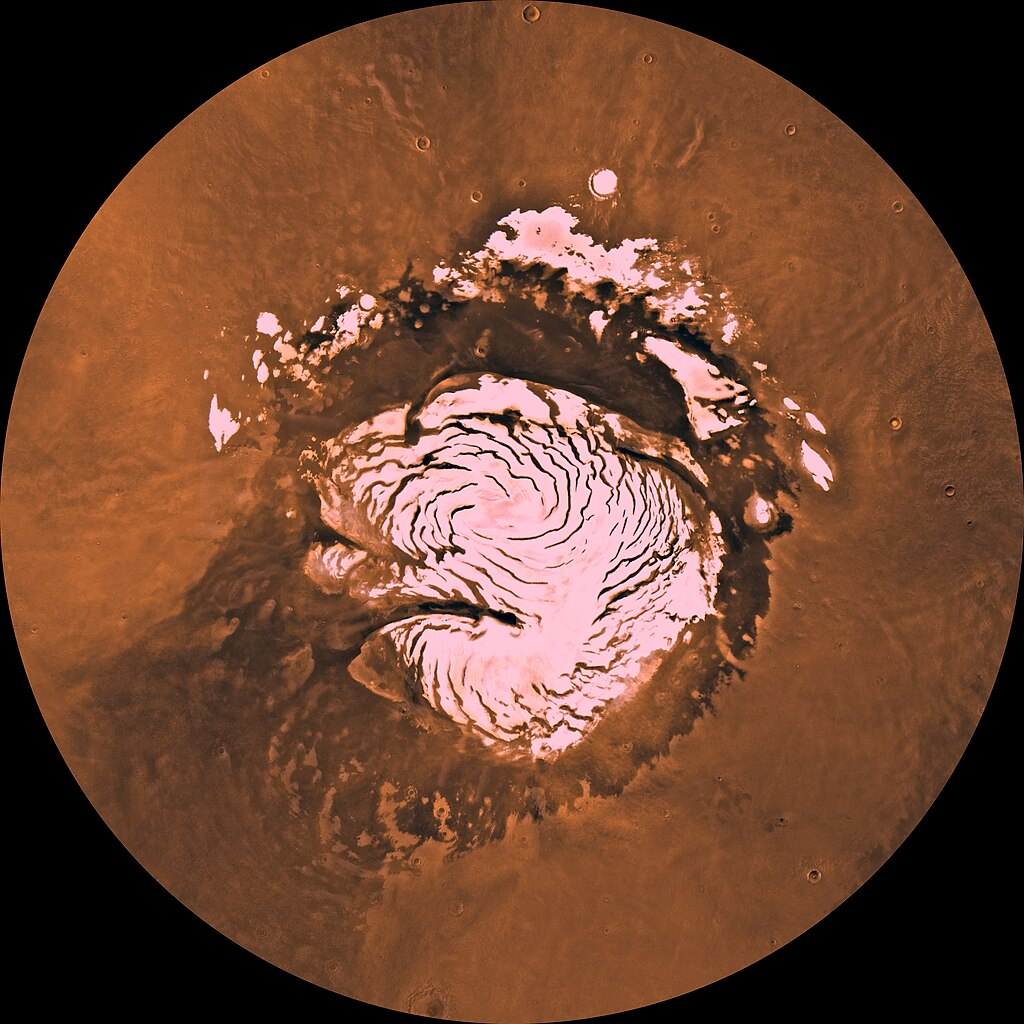
The secular* cooling* that must someday overtake* our planet has already gone far indeed with our neighbour. Its physical* condition is still largely a mystery, but we know now that even in its equatorial* region the midday* temperature barely approaches that of our coldest winter. Its air is much more attenuated* than ours, its oceans have shrunk* until they cover but a third of its surface, and as its slow seasons change huge snowcaps* gather and melt about* either pole* and periodically* inundate* its temperate* zones. That last stage of exhaustion*, which to us is still incredibly remote, has become a present-day problem for the inhabitants* of Mars.
secular長期間の・ずっと続く cooling寒冷化 overtake襲う physical自然の equatorial(<equator)赤道付近の midday(cf.midnight)真昼の・昼間の attenuated希薄な shrunk(<shrink)縮小する snowcap氷冠 about近くで pole極 periodically定期的に inundate水浸しにする exhaustion枯渇 inhabitant住人
1. 赤アンダーライン(第1文)の文型表示してね!
2. オレンジの「but」の意味は?
3. 緑の「and」が繋いでいるものは?
4. 赤の「as」の意味は?
5. ピンクの「either」の意味は?
解答編 前半
<英文解釈記号ルール>
〔〕→関係詞句・節
【】→接続詞句・節
《》→挿入句・節
[ ] →名詞句・節
()→副詞句・節
〈〉→形容詞句・節
The secular* cooling* 〔that must someday overtake* our planet〕 has already gone far indeed with our neighbour. Its physical* condition is still largely a mystery, but we know now [that (even in its equatorial* region) the midday* temperature barely approaches that of our coldest winter]. Its air is much more attenuated* than ours, its oceans have shrunk* 【until they cover but a third of its surface】, and 【as its slow seasons change】 huge snowcaps* gather and melt about* either pole* and periodically* inundate* its temperate* zones. That last stage of exhaustion*, 《which to us is still incredibly remote》, has become a present-day problem for the inhabitants* of Mars.
1. 第1文の文型表示は上の通り。coolingがS、has goneがV、farがCかな。goは第2文型を取ることがあって、そのときの補語はマイナスイメージですね!
2. オレンジの「but」の意味は「ほんの~だけ」。onlyと一緒。ほかにも「を除いて」(=except)という意味もあります。ここは「海が1/3だけ」なのか「1/3以外は海(海は2/3)」なのか、常識と照らし合わせて訳しましょう。もともとは地球と同じく7割が海のはずですから、ここでは「たった1/3が海」という意味にすべきです。
※そのあとのa third=one third
3. 緑の「and」が繋いでいるものは、3つの文章。…than ours, its oceans…のところがカンマになってるけど、andの代用ですね。
4. 赤の「as」の意味は「~のとき」「~の際に」。「~につれて」だとちょっと変なのかな。
5. ピンクの「either」の意味は、「両方」。either sideとか、「対」を表す言葉を修飾するときにはその意味になることが多いですね。
全訳 前半
わたしたちの惑星にもいつか起こることには違いないけれども、長期の寒冷化はかの隣人たちにとって既にとても深刻になっていた。火星の自然状態は大部分がまだ謎ではあるが、赤道付近であっても日中気温は地球の最寒季の日中気温に辛うじて届くくらいであるということがいまのところわかっている。火星の大気は地球の大気よりはるかに希薄である。海は縮小して表面のたった3分の1しかない。ゆっくりと季節が移るときに、巨大な冠雪が両極に集まったり融けたりして定期的に温暖な地域を水浸しにする。我々にとってはまだ信じられないほど遠い未来の話だが、枯渇の最終段階は火星の住人にとって喫緊の問題となっていた。

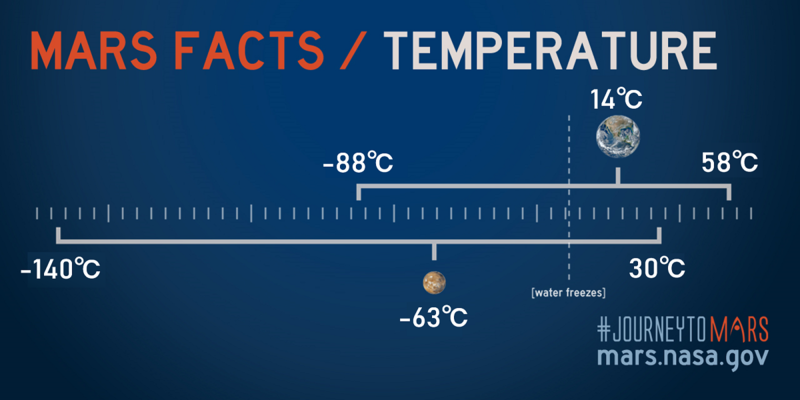
この段落では火星の自然環境が述べられているが、以下の日本科学未来館のサイトが参考になると思う。
https://blog.miraikan.jst.go.jp/articles/20210528post-419.html
①「日中気温は地球の最寒季の日中気温に辛うじて届く」:火星の平均気温はー63℃。たしかに寒い。日中になって気温が上がっても、−10℃とか−20℃とかなのだろう。
②「大気ははるかに希薄」:火星の大気は地球の1/160だ。
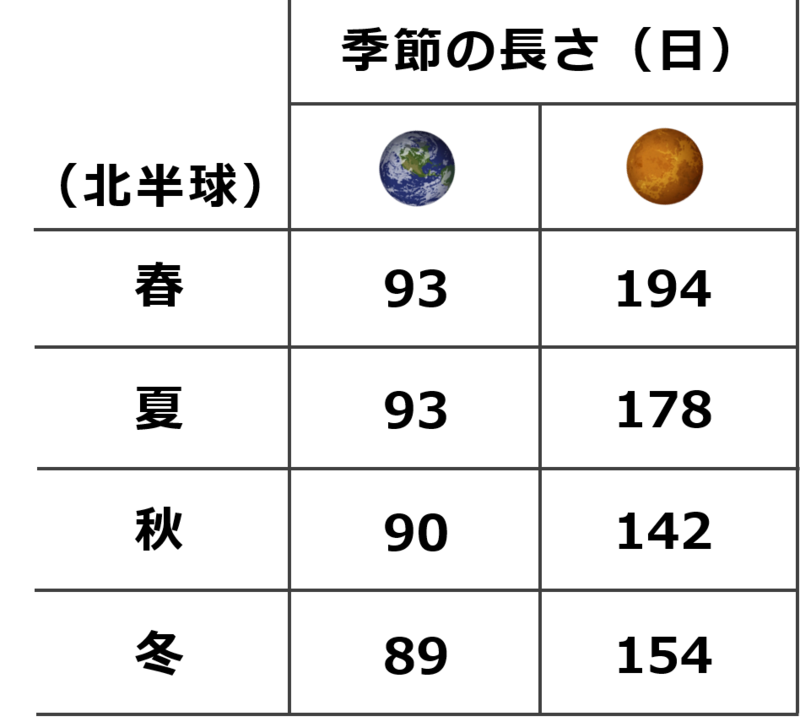
③「ゆっくりと季節が移る」:火星の1年は地球の2倍もある。
火星に海があることは、21世紀では否定されている。ただ、1900年ごろは極冠や四季の存在は確認されていたから、「海もあるんじゃないか」という説があった(ただ20世紀初頭に否定される)。
ということで、1900年においてこの段落の記述は「科学的にありうる」ものだった。わたしたちは「すべて科学的に正しい」として読み進めていこう。
今回も長いので前後半に分けている。
問題編 後半
The immediate pressure of necessity* has brightened* their intellects, enlarged* their powers, and hardened* their hearts. And looking across space with instruments, and intelligences such as we have scarcely dreamed of, they see, at its nearest distance only 35,000,000 of miles sunward* of them, a morning star of hope, our own warmer planet, green with vegetation* and grey with water, with a cloudy atmosphere eloquent* of fertility*, with glimpses* through its drifting* cloud wisps* of broad stretches* of populous* country and narrow, navy-crowded seas.
necessity(<necessary)必要性 brighten(<bright+en)有望にする enlarge(<en+large)増やす harden(<hard+en)非情にする sunward(<sun+ward) 太陽の方に vegetation草木 eloquent雄弁に物語る fertility(<fertile) 肥沃さ glimpse一見 drift漂う wispはしきれ stretch広がり populous(<polulation)人口の多い
6. 茶色の「and」が繋いでいるものは?
7. 紫の「as」の品詞は?
8. 最終文(青色アンダーライン)の文型表示は?
9. 灰色の「of」が修飾してるのは何?
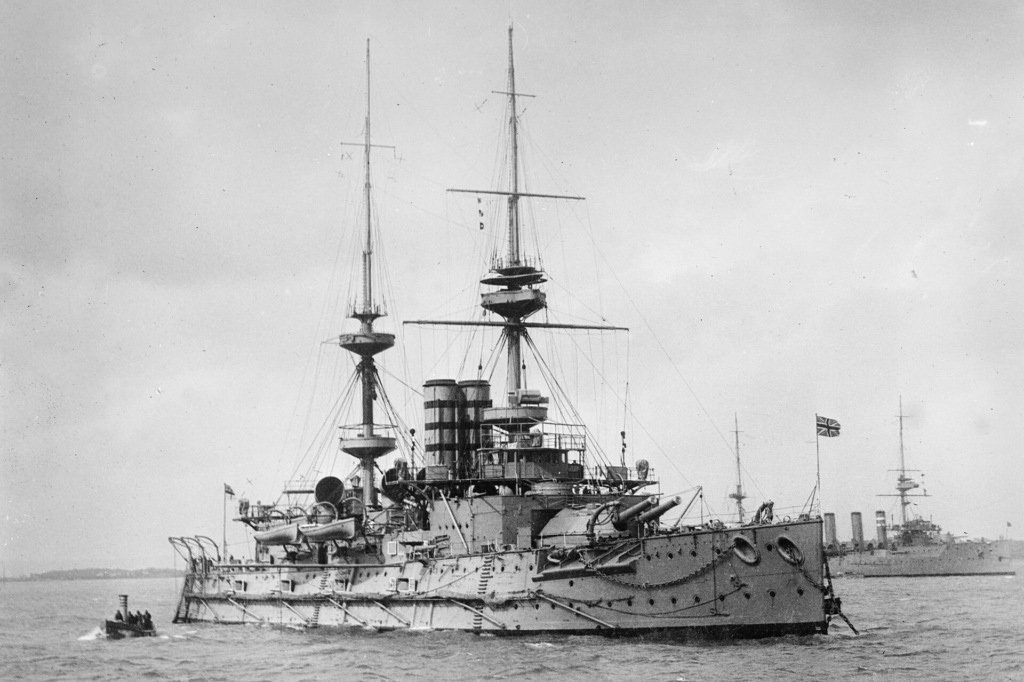
「navy-crowded」という記述から、世界最強の海軍を持っていたイギリス帝国を表していることがわかるぞ。
ただ19世紀後半のイギリスは、対植民地戦争こそあったものの列強とは戦争せず、おおむね平和な時代だった。「戦艦」や「シーパワー」という概念が徐々に出てきたが、まだ近代海軍は発展途上といったところだな。我々がイメージする海軍艦艇が出てくるのは、初めての本格的海戦の日清・日露戦争を経て、ドレッドノート(「ド級戦艦」の語源となったイギリス戦艦)が1905年に建造されてからだろう。
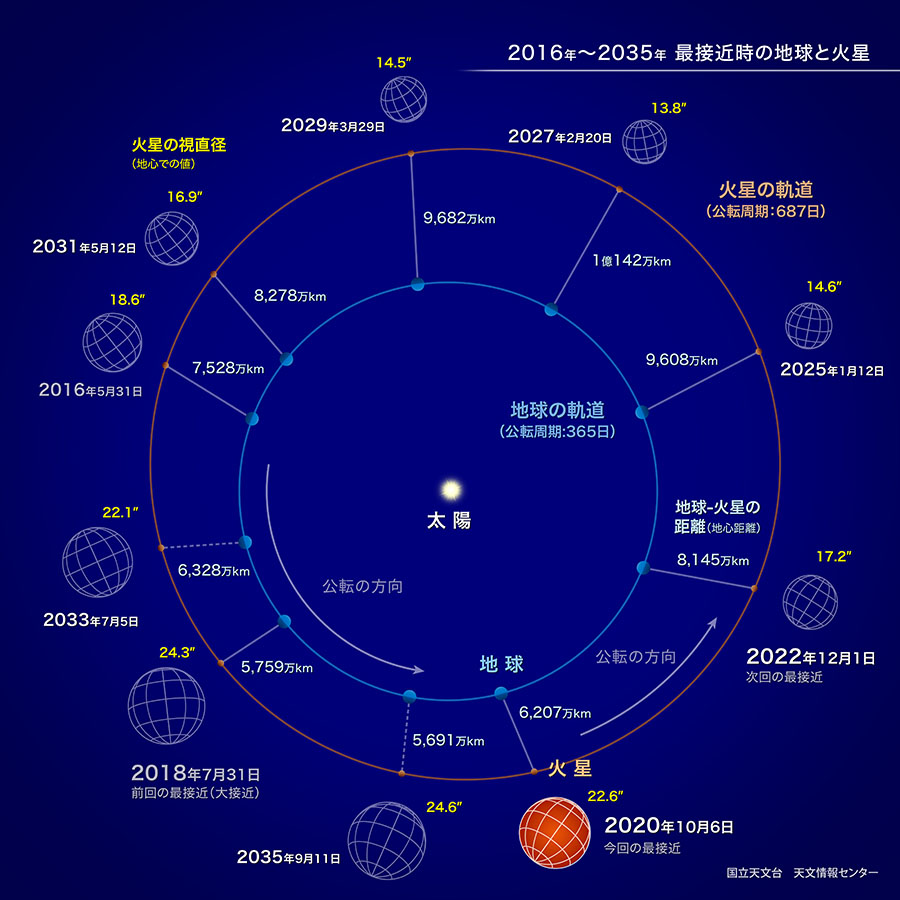
あと、地球ー火星が最接近するときの距離は6000万km~1億kmくらいが平均のようだ。
だからここで「only 35,000,000 of miles」(たった5600万km)となっているのだろう。
最接近の時でも5600万kmというのはとても近いのだぞっ。
(↓国立天文台のサイトより:https://www.nao.ac.jp/astro/basic/mars-approach.html)
解答編 後半
<英文解釈記号ルール>
〔〕→関係詞句・節
【】→接続詞句・節
《》→挿入句・節
[ ] →名詞句・節
()→副詞句・節
〈〉→形容詞句・節
The immediate pressure of necessity* has brightened* their intellects, enlarged* their powers, and hardened* their hearts. And (looking across space (with instruments, and intelligences 〔such as we have scarcely dreamed of〕)), they see, 《at its nearest distance only 35,000,000 of miles sunward* of them》, a morning star of hope, our own warmer planet, 〈green with vegetation*〉 and 〈grey with water〉, (with a cloudy atmosphere eloquent* of fertility*), (with glimpses* (through its drifting* cloud wisps*) of broad stretches* of populous* country and narrow, navy-crowded seas).
6. 茶色の「and」が繋いでいるものはinstrumentsとintelligences。andの前にカンマがついてるから、ちょっとイレギュラーかもですね。
7. 紫の「as」の品詞は関係詞。こういうタイプはよく「such A as S V」で使われますけど、「A such as S V」という形で使われている例ですね。たぶん、instrumentsとintelligencesが長かったから後ろに持ってきたんだと思います。
8. 最終文(青色アンダーライン)の文型表示は上の通り。骨格部分は「they see a morning star」。our own warmer planet以下しばらくは、a morning star of hopeを説明している言葉になります。with a cloudy atmosphere eloquent of fertilityは付帯状況「with O C」ととらえてもOK。with glimpses以下は、強いて言うならseeに係る副詞句でしょうか。
9. 灰色の「of」が修飾してるのは、glimpsesですね。with glimpses以下は名詞構文で訳すのが良いと思います。 glimpse≒seeです。「drifting cloud wisps」の間から、「populous country and narrow, navy-crowded seas」が「broad stretch」しているのを「glimpse」した、という訳がひとつあると思います。
全訳 後半
大至急問題を解決しなければならないという切迫感のために、火星人の知能は増し、軍事力は強大になり、その心は非情になった。わたしたちがほとんど夢にも見ないような機器と科学力で火星人が宇宙を見渡すと、太陽方向に最短距離がたった3500万マイル(≒5600万km)のところにある希望の明星を見つけたのだ。それはわたしたちの地球だった。地球は火星より暖かく、草木は青くて海は灰色だ。曇った空は肥沃さをよく表している。火星人はその漂う雲の切れ目から、人口の多い国土と海軍艦艇の密集する狭い海洋が広がっているのを見たのだろう。



コメント