『宇宙戦争』の全訳・英文法解説です。
第11章 第4段落
問題編
It seemed indeed as if the whole country in that direction was on fire—a broad hillside set with minute tongues of flame, swaying* and writhing* with the gusts* of the dying storm, and throwing a red reflection upon the cloud scud* above. Every now and then a haze* of smoke from some nearer conflagration* drove across the window and hid the Martian shapes. I could not see what they were doing, nor the clear form of them, nor recognise the black objects they were busied upon. (could, I, nearer, see, the, fire, neither), though the reflections of it danced on the wall and ceiling of the study. A sharp, resinous* tang* of burning was in the air.
sway揺れる writheのたうち回る gust風 scud風に吹かれている雲 hazeもや・薄煙 conflagration火災 resinous樹脂の tang強いにおい
1. オレンジのminuteの意味は?
2. 茶色のandが繋いでるものは?
3. 青アンダーラインの訳は?
4. 緑のevery now and thenの意味は?
5. 赤のandが繋いでるものは?
6. 青のnorが繋いでるものは?
7. 紫のnorが繋いでるものは?
8. 赤アンダーラインのカッコ内の語を正しく並び替えると?

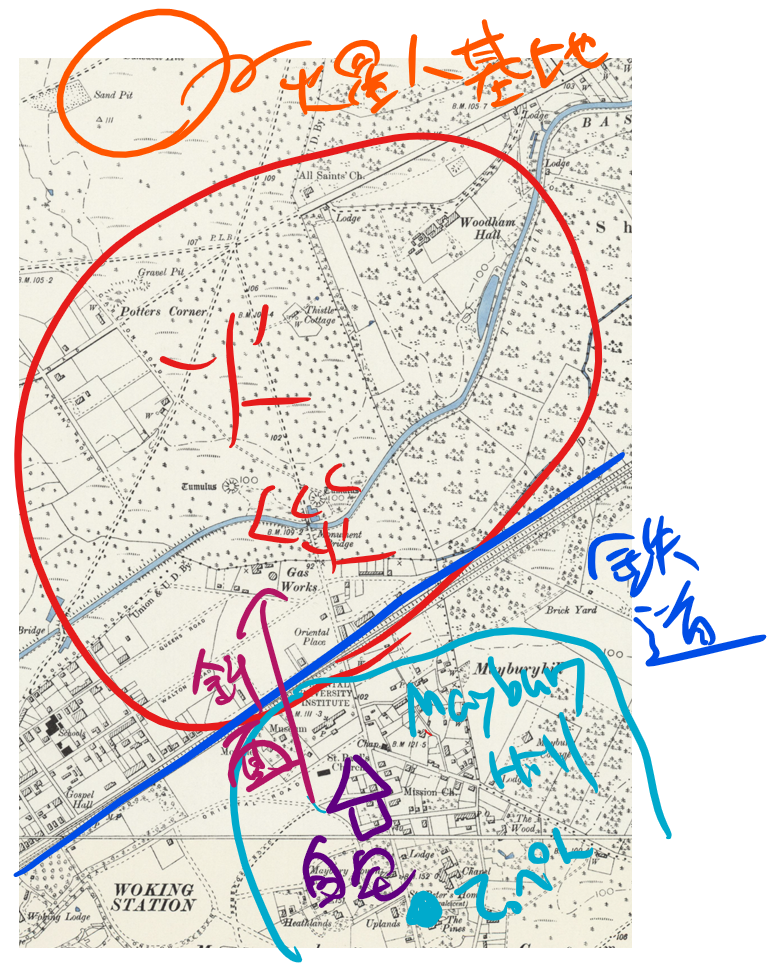
地図はこちらだっ。
Horsell Common一帯はだいたい火事なのだろうな。
「hillside」などとあるが、いまわたしの自宅はMaybury Hillという丘にあることは再三注意してくれ。
解答編
<英文解釈記号ルール>
〔〕→関係詞句・節
【】→接続詞句・節
《》→挿入句・節
[ ] →名詞句・節
()→副詞句・節
〈〉→形容詞句・節
It seemed (indeed) 【as if the whole country 〈in that direction〉 was on fire—a broad hillside set (with minute tongues of flame, (swaying* and writhing* (with the gusts* of the dying storm), and throwing a red reflection (upon the cloud scud* above))). (Every now and then) a haze* of smoke 〈from some nearer conflagration*〉 drove (across the window) and hid the Martian shapes. I could not see [what they were doing], nor the clear form of them, nor recognise the black objects 〔they were busied upon〕. Neither could I see the nearer fire, 【though the reflections of it danced (on the wall and ceiling of the study)】. A sharp, resinous* tang* of burning was (in the air).
1. オレンジのminuteの意味は「非常に小さな」。
2. 茶色のandが繋いでるものは、swaying, writhing, throwing。
3. 青アンダーラインについては、a broad hillside set のあとで、hillsideの様子が述べられています。「swaying, writhing, throwing」がflameを修飾しています。
4. 緑のevery now and thenの意味は「ときどき」。occasionally, sometimes, once in a while, on and offとかの仲間です。
5. 赤のandが繋いでるものは、droveとhid。
6. 青のnorが繋いでるものは、what they were doingとthe clear form of them。
7. 紫のnorが繋いでるものは、seeとrecognise。
8. 赤アンダーラインのカッコ内の語を正しく並び替えると上のようになります。「Neither[Nor] +助動詞+主語」で「…もまた~ない」ですね。
nearerの位置については「近くで炎を見る」のか「近くの炎を見る」のか文脈上から推定しましょう。ちなみに、原則として「near(距離が近い)」を形容詞として用いることはできませんが(かわりにnearbyを使う)、比較級にしたら使ってもOKです。
全訳
本当にその方面の土地がまるっきり炎に包まれてしまったようだった――幅の広い丘の斜面では、小さな炎の舌が揺れていてのたうち回っているようだった。止みかけてはいたが、嵐の風がまだ吹いていたのだ。空の流れる雲にはその炎が赤く映り返っていた。時折、いくらか近くの炎から出たもやもやした煙が窓を横切り、火星人の姿を隠した。火星人が何をしているか見えなかったし、そのはっきりとした姿も見えなかった。また、火星人は黒い物体の周りで忙しそうにしていたのだが、ここからはその物体を認識することもできなかった。そして、さらに近いところで燃えている炎も見えなかった。その照り返しは書斎の壁や天井でゆらめいていたんだけれど。ただ、燃えている樹脂の鋭く強烈なにおいが漂っていた。

第1文では「形容詞の副詞化」が役に立つな。
まず、「whole country」は「すべての土地」とするとぎこちないから、「土地すべて」としてあげるといいぜ。
そして、「with the gusts of the dying storm」は直訳すると「死にかけた嵐の風で」だが、「嵐は止みかけていたが、風はまだ吹いていた」という風にしてあげると日本語として自然だ。日本語では言語のコスパが多少悪くてもいいんだよな。






コメント