
『宇宙戦争』の和訳・英文法解説です。
<流れ>
①かっこを振っていない英文
②単語注(①でアスタリスクを振ったところ)
③設問
④かっこを振った英文
⑤設問の答え
⑥訳
第3章 第3段落

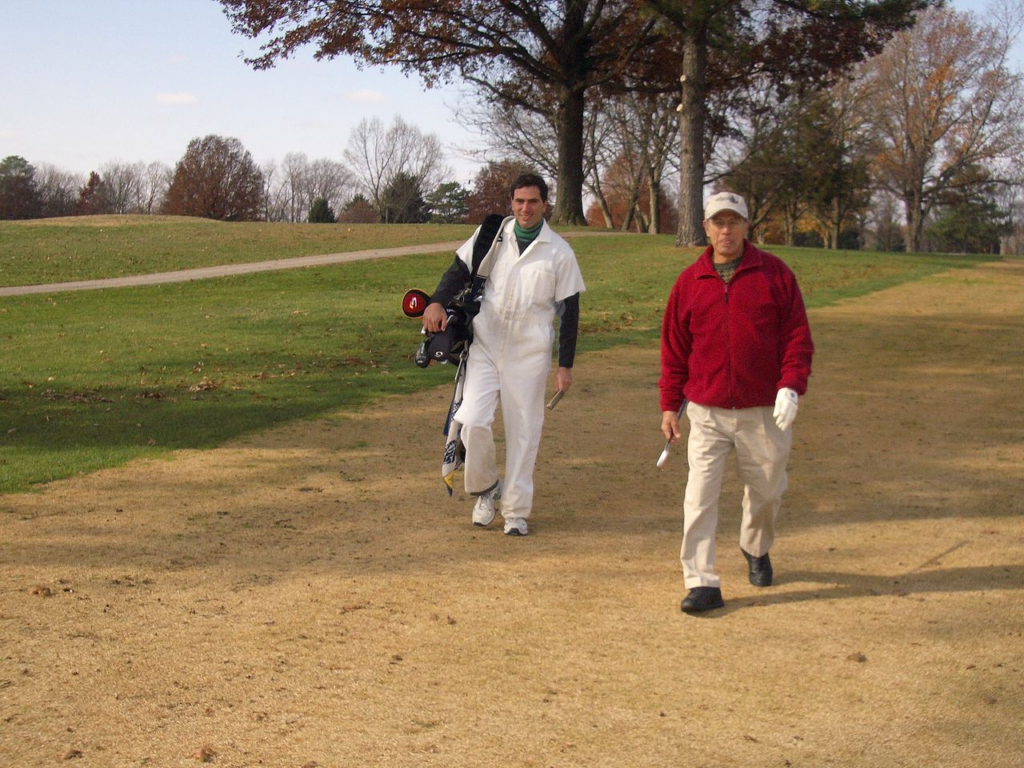
golf caddieは荷物を持ったりプレイヤーのサポートをする人ね。
17世紀からいたらしいわ。
問題編
Among these were a couple of cyclists, a jobbing* gardener* I employed sometimes, a girl carrying a baby, Gregg the butcher* and her little girl, and two or three loafers* and golf caddies who were accustomed to hang about* the railway station. There was very little talking. Few of the common people in England had anything but the vaguest* astronomical ideas in those days. Most of them were staring quietly at the big table like* end of the cylinder, which was still as Ogilvina and Hensley had left it. I fancy the popular* expectation of a heap of charred* corpses* was disappointed* at this inanimate* bulk. Some went away while I was there, and other people came. I clambered* into the pit and fancied I heard a faint movement under my feet. The top had certainly ceased* to rotate.
jobbing臨時雇いの gardener庭師 butcher肉屋 loafer浮浪者 hang about~のあたりをぶらぶらする vagueおぼろげな big table like:ここではbig-table-likeというひとかたまりの形容詞 popular人々の char黒焦げにする corpse死体 disappoint裏切る inanimate無生物の clamberよじ登る・伝い降りる cease止める
1. 赤アンダーラインの文型表示は?
2. 紫のwho句の先行詞は?
3. 青アンダーラインの訳は?
4. オレンジのasの意味は?
解答編

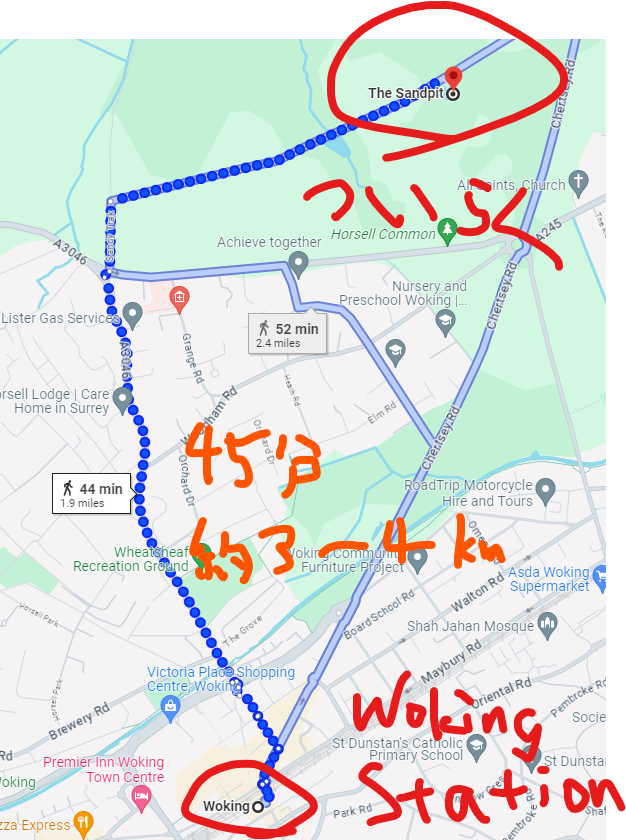
本文中の「the railway station」はWoking Station。そこから墜落地点のSandpitまでは徒歩で約45分。3~4㎞だ。

意外と遠い…
<英文解釈記号ルール>
〔〕→関係詞句・節
【】→接続詞句・節
《》→挿入句・節
[ ] →名詞句・節
()→副詞句・節
〈〉→形容詞句・節
(Among these) were a couple of cyclists, a jobbing* gardener* 〔I employed sometimes〕, a girl 〈carrying a baby〉, Gregg the butcher* and her little girl, and two or three loafers* and golf caddies 〔who were accustomed to hang about* the railway station〕. There was very little talking. Few of the common people 〈in England〉 had 〈anything but the vaguest* astronomical〉 ideas in those days. Most of them were staring quietly (at the big table like* end of the cylinder, 〔which was still as Ogilvina and Hensley had left it〕). I fancy [the popular* expectation 〈of a heap of charred* corpses*〉 was disappointed* (at this inanimate* bulk)]. Some went away 【while I was there】, and other people came. I clambered* into the pit and fancied [I heard a faint movement under my feet]. The top had certainly ceased* to rotate.
1. 赤アンダーラインの文型表示は上の通り。wereがVで、太字が主語。ちなみに、紫のwho句の中、were accustomed to hang…と、be accustomed to V(21世紀ではVingが正しい)になってますが、この文章が書かれたのは19世紀ですから、まだまだ曖昧ですね。
2. who句はloafersとgolf caddiesを修飾しています。だって、loafersのあとにカンマないじゃないですか(残りはあるのに)。それに、浮浪者なら駅の周りをうろうろしているでしょう。
3. 青アンダーラインですが、まずhadの目的語はideaで、anythingからastronomicalまでがideaを修飾してます。「few」が準否定語(~する人はほとんどいない)で、anything butは「決して~でない」「~にはほど遠い」という否定の意味です。否定が2つ重なってますが、ここでは文脈上、強い否定になっていると考えるのが妥当でしょう。
あと、vaguest(最上級)がanything butと呼応して、さらに強調してるわけです。
They don’t have the slightest idea about it.(全く考えを持っていなかった)などの例文を思い出しましょう。
4. オレンジのasの意味は「~のとき」。その前のstillは「変わってない」という意味ですね。
まわりには、サイクリストのカップル、わたしもときどき来てもらう臨時雇いの庭師、赤ちゃんを抱いた女の子、肉屋のグレッグと小さい女の子、そして、駅のあたりをぶらぶらすることが習慣になっている数人の浮浪者とゴルフキャディがいた。ほとんど会話はなかった。
当時、天文学についての意見を少しでも持ち合わせているイングランドの一般人はほとんどいなかった。大多数は大きなテーブルのような円筒の蓋を静かに見つめていた。円筒はオギルヴィーナちゃんとヘンスリーさんが去ったときのまま変わっていなかった。
この生命が感じられないかたまりを見て、黒焦げにされた死体の山があるという人々の期待はきっと裏切られたんだと思う。わたしがいる間に去っていった人もいるし、来た人もいた。
わたしは穴の中に降りた。足下でかすかに動くのが聞こえた気がした。
円筒上部は確実に回転を止めていた。









コメント