『宇宙戦争』の全訳・英文法解説です。
第5章 第16段落
問題編
The undulating* common seemed now dark almost to blackness, except where its roadways lay grey and pale under the deep blue sky of the early night. It was dark, and suddenly void* of men. Overhead the stars were mustering*, and in the west the sky was still a pale, bright, almost greenish blue. The tops of the pine trees* and the roofs of Horsell came out* sharp and black against the western afterglow*. The Martians and their appliances* were altogether* invisible, save for that thin mast* upon which their restless* mirror wobbled*. Patches* of bush* and isolated trees here and there smoked and glowed still, and the houses towards Woking station were sending up spires* of flame into the stillness of the evening air.
undulating起伏のある void欠如 muster集まる pine tree松の木 come out現れる afterglow夕焼け・残照 appliance装備 altogetherまったく mast柱 restless落ち着かない wobblesぐらぐらする patch(周囲とは異なる)部分・土地・区画 bush低木 spire尖塔
1. オレンジのitsが指しているものは?
2. 本段落中から、赤のsaveと意味上・文法上置き換えられる語を抜き出せ。

えーっと、情景描写がメインの段落だけど、絵にするとこんな感じかな?
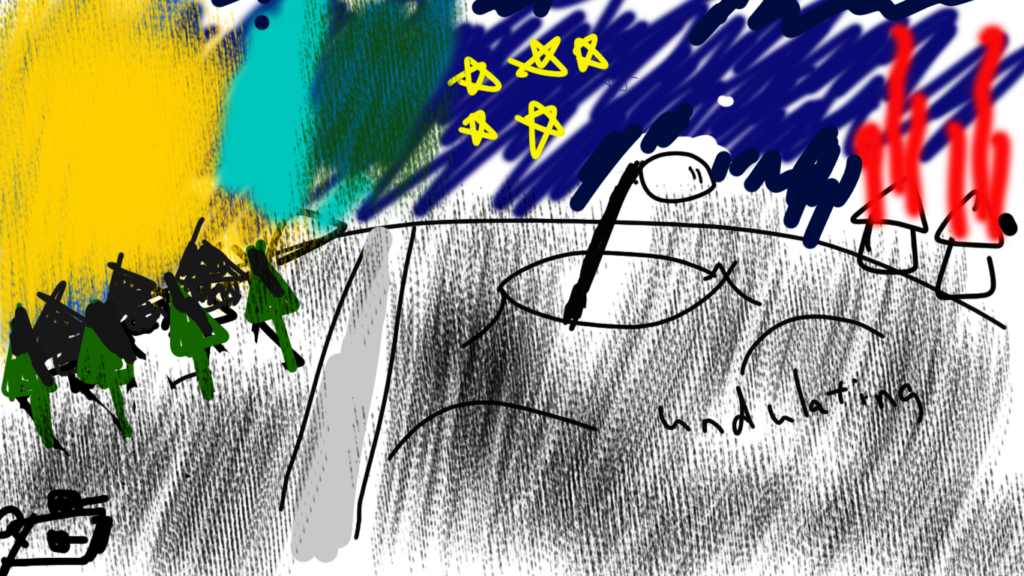

なんだこれはたまげたなぁ
この空ほんとか?

まあ、間違いって言うわけじゃ…。
「under the deep blue sky」と「against the western afterglow」、それに「the sky was still a pale, bright, almost greenish blue」(緑がかった青色)…。
群青・夕焼け色・緑色の並列が難しいわね。
それに「spires* of flame into the air.」(炎の塔が立ち上ってる)って言う風に、赤色要素も入ってるし。
たしかに。
ところで「that thin mast* upon which their restless* mirror wobbled*」(マストの上でミラーが動いてた)は上のような図にするとわかりやすいかもな。(mastは船のマスト以外にも、マストみたいにまっすぐ立った細い柱を指すこともあったりするし)
きっとこの鏡は、火星人が穴から外を見るための一種の潜望鏡ってとこだな。19世紀半ばには地球でも既に実用化されてたりするし。
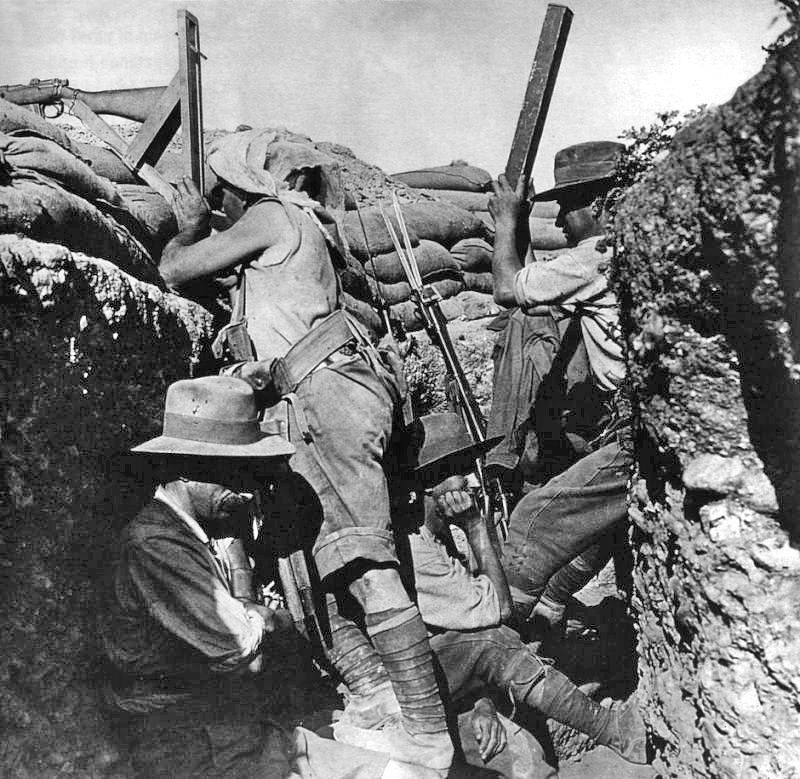
…潜望鏡(periscope)は潜水艦だけじゃなくて、上の写真(WWⅠ)のように塹壕戦で使われたり、戦車で使われたりすることもあったの。
ええ。塹壕で潜望鏡を使うのはわかりやすいと思うけど、戦車で使うのは、のぞき穴の部分が弱点になっちゃうのを防ぐためね。
…センチュリオン戦車(Mk2・A41A)あたりから、照準合わせのための望遠鏡が潜望鏡に変わったりしたのよ。
21世紀ではハイテク化・デジタル化してて様相も変わってきてるけどね。
そういえば言い忘れてたわ。
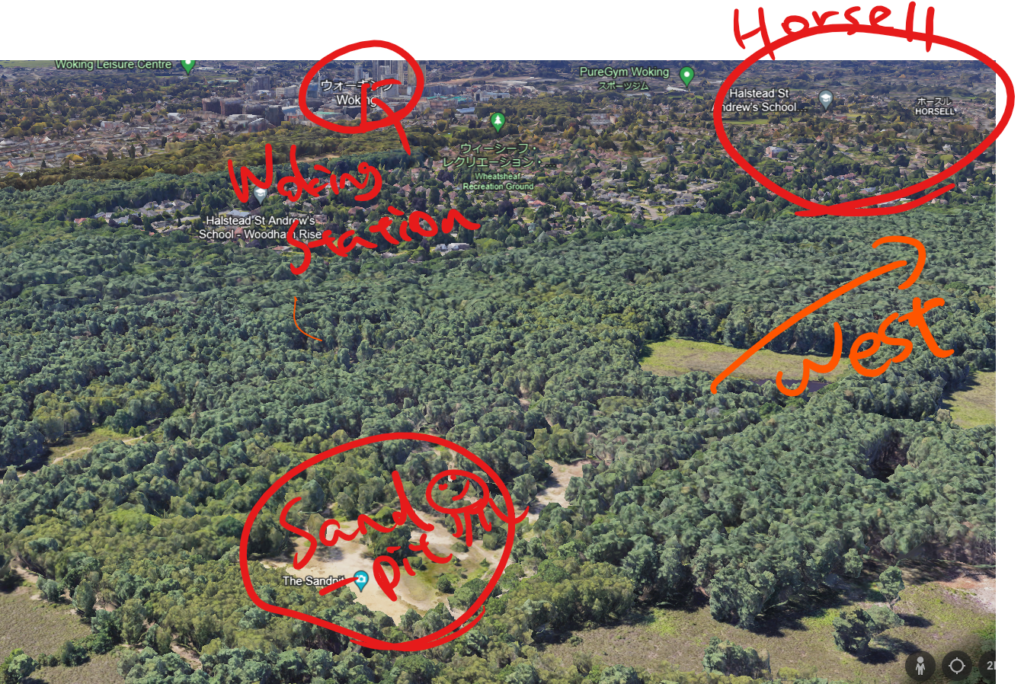
いま上の図では、Horsell方面(夕焼けを背景にてっぺんが黒くなってる松と家)が左側、Woking station方面の家(炎上中)が右側になってるけど、実際は位置関係が逆ね。
…あとツッコんでなかったけど、絵の左下のあれは菱形戦車なのかしら。スポンソンが見えるわ。
戦車が一輌くらいいないと華がないじゃない。
解答編
<英文解釈記号ルール>
〔〕→関係詞句・節
【】→接続詞句・節
《》→挿入句・節
[ ] →名詞句・節
()→副詞句・節
〈〉→形容詞句・節
The undulating* common seemed now dark (almost to blackness), (except where its roadways lay grey and pale (under the deep blue sky of the early night)). It was dark, and suddenly void* of men. (Overhead) the stars were mustering*, and (in the west) the sky was still a pale, bright, almost greenish blue. The tops of the pine trees* and the roofs of Horsell came out sharp and black against the western afterglow*. The Martians and their appliances* were altogether* invisible, (save for that thin mast* 〔upon which their restless* mirror wobbled*〕). Patches* of bush* and isolated trees here and there smoked and glowed still, and the houses towards Woking station were sending up spires* of flame into the stillness of the evening air.
1. オレンジのitsが指しているものは「the common」です。共有地は確かに広場・公園ですが、あまりにも広すぎますし、散策用などで通路が通ってるわけです。
2. 赤のsaveと意味上・文法上置きかえられるのはexcept(オレンジのitsの2つ前)です。except for≒save forで「~を除いて」です。except that S V≒save that S Vというパターンもあります。ただ、21世紀ではsaveはあまり使われません。というかexcept that という形もあんまり見ませんよね。
全訳
起伏に富んだ共有地は、いまやほとんど真っ暗闇なほど暗くなっていた。ただ、夜のはじめの紺青の空の下で、道路だけが薄い灰色だった。暗かった。突然人々はいなくなったのだ。頭上で星が集まっていて、西の空はまだ薄明るく、ほとんど緑がかった青色だった。松の木のてっぺんとホーセルの家の屋根は、西の残照を背景にして鮮明で黒く現れていた。
火星人とその装備は、細い柱を除いてまったく見えなかった。その柱の上では、絶えず動く鏡がぐらぐらしていた。低木地帯と孤立した木々はあちこちで煙を出し、まだ燃えていた。ウォーキング駅の方にある家は、炎の渦巻を静寂な夕方の空気に放出していた。



コメント