
『宇宙戦争』の全訳・英文法解説です。
第8章 第5段落

Woking Station(ウォーキング駅)について。
第43話も参照してね。

…まずWoking駅はLSWR(London and South Western Railway)社の駅。
1838年、ロンドン~ウォーキング間で開通したのがはじまり。
(以下の図の「waterloo」駅はロンドンにある駅)
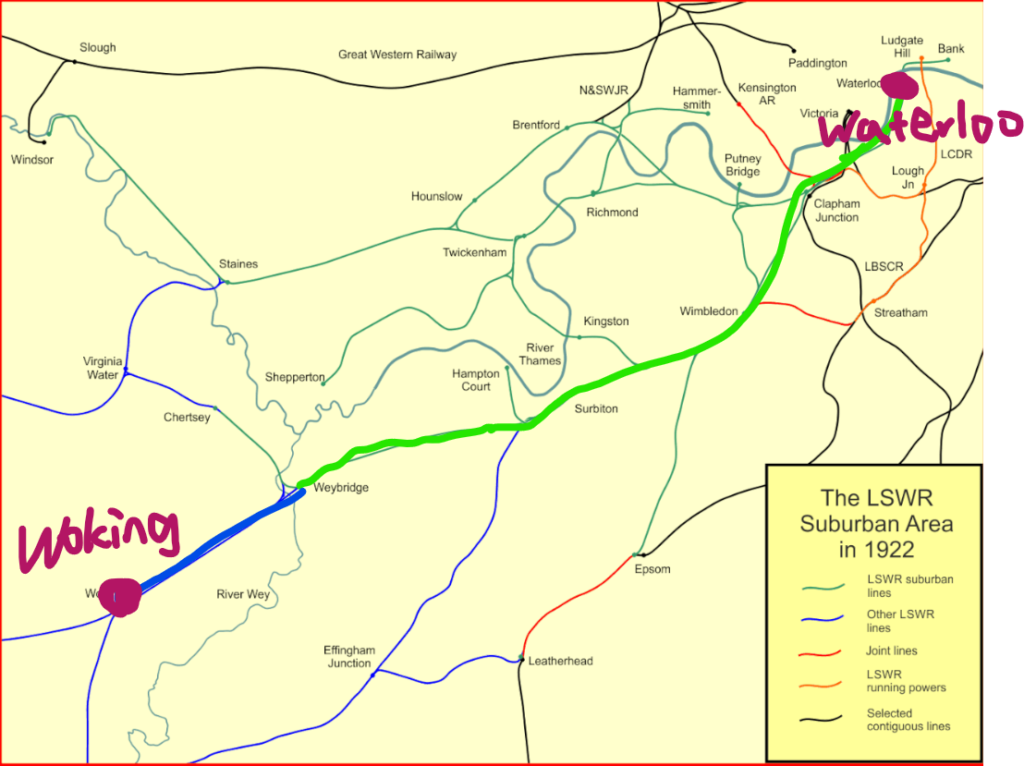
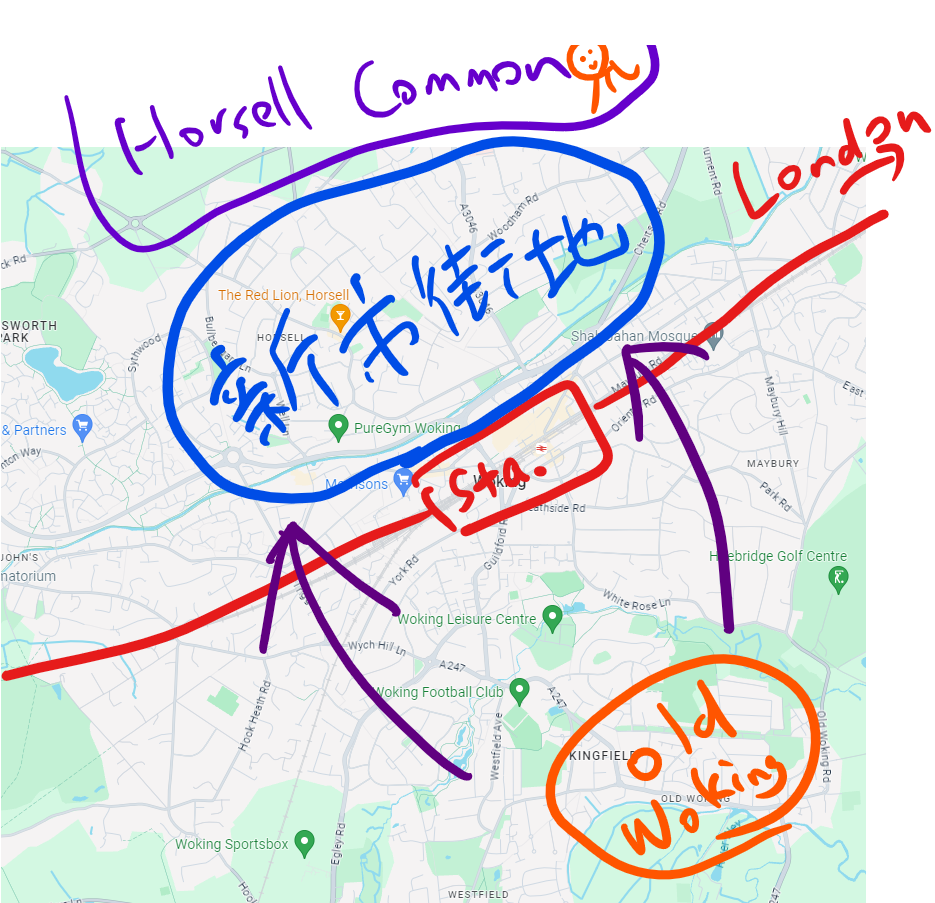
ウォーキング駅は、当時のウォーキング市街地(Old Woking)から少し離れたところに作られたんだけど、駅ができたおかげで、19世紀後半、駅付近の新市街地が発達することになったわ。
ロンドンのベッドタウンね。

ちなみに、ロンドンからの死体を運んできてここら辺に墓地ができたとさ。
死体を運ぶ専用列車もあったらしいぞ。
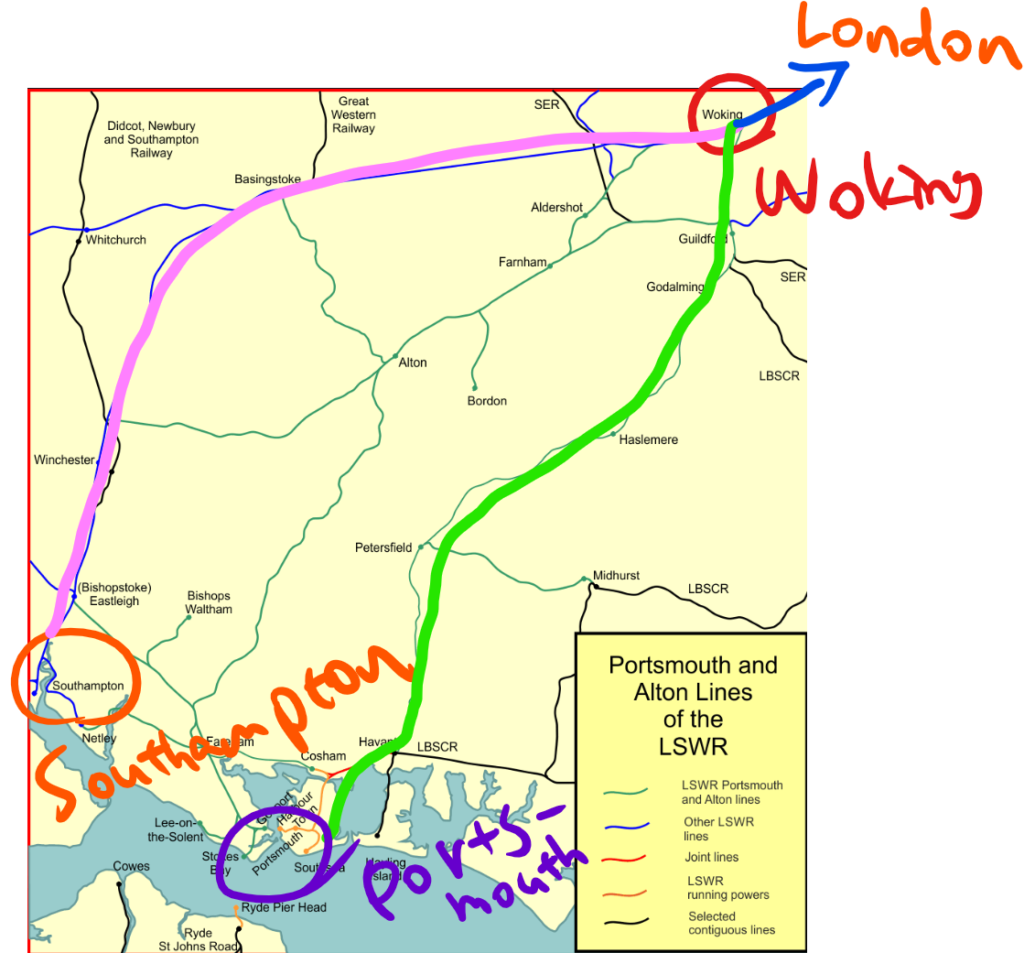
ともあれ、のちに鉄道網が張り巡らされていくようになると、Wokingは支線の分岐点にもなったの。サウサンプトン(Southampton)行きの路線と、ポーツマス(Portsmouth)行きの路線が分かれる駅ね。
こんなふうに、複数の路線の分岐点となる駅を「junction」って言うのよ。

サウサンプトンも港町だが、特にポーツマスは歴史ある軍港として有名だ。1900年ごろは世界最大の軍港ともいわれたり(21世紀ではデヴォンポート軍港がイギリス最大)したぞ。
ここから数年後、ドレッドノートを造船するのもポーツマス造船所なんだ。

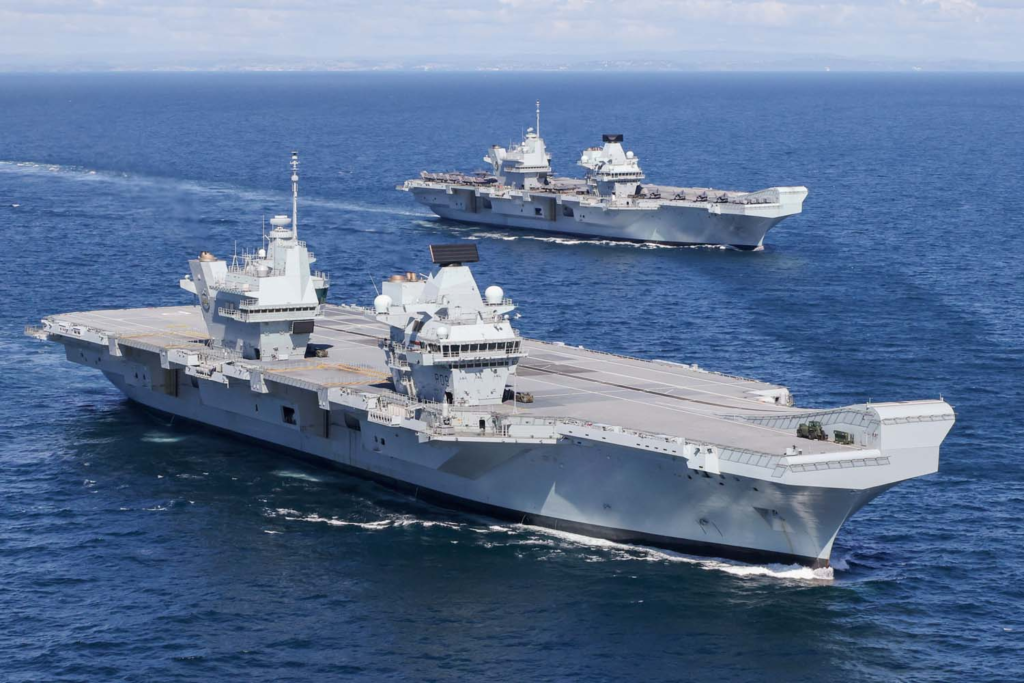
21世紀でも、英国海軍が誇る空母「クイーン・エリザベス」と「プリンス・オブ・ウェールズ」(姉妹艦)の母港となっているわよ。

このポーツマスは、日露戦争の講和条約のポーツマス条約が結ばれたポーツマス(アメリカ)とは違うから気を付けてね!!
問題編
In Woking junction*, until a late hour, trains were stopping and going on, others were shunting* on the sidings*, passengers were alighting* and waiting, and everything was proceeding* in the most ordinary way. A girl from the town, trenching* on Smith’s monopoly, was selling papers with the afternoon’s news. The ringing impact of trucks, the sharp whistle of the engines from the junction, mingled* with their shouts* of “Men from Mars!” Excited men came into the station about nine o’clock with incredible tidings*, and caused no more disturbance* than drunkards* might have done. People rattling* Londonwards peered* into the darkness outside the carriage windows, and saw only a rare, flickering*, vanishing spark* dance up from the direction of Horsell, a red glow and a thin veil* of smoke driving across the stars, and thought that nothing more serious than a heath* fire was happening. It was only round the edge of the common that any disturbance was perceptible*. There were half a dozen villas* burning on the Woking border*. There were lights in all the houses on the common side of the three villages, and the people there kept awake till dawn.
junction連絡駅 shunt on列車を~に入れる siding引き込み線 alight列車から降りる proceed進む trench on利益を侵害する mingleまじりあう shout叫び声 tiding報せ disturbance騒ぎ drunkard酔っ払い rattle(馬車などで)ガタガタ音を立てて走る peer見つめる carriage普通の四輪馬車(第35話参照) flicker明滅する spark火花 veilベール・覆い heathヒース(第22話参照) perceptible(<perceive+ible)感知できる villa大邸宅 Woking borderウォーキングの境界(上の方にある地図参照。ホーセル共有地とウォーキング新市街地の境界のこと)
1. オレンジのothersを2語で言い換えると?
2. 赤のandが繋いでるものは?
3. 青アンダーライン(trenching…)はどういうこと?
4. 赤アンダーライン(the sharp…)はどういうこと?
5. ピンクのandが繋いでるものは?
6. 青マーカー(caused…)の訳は?
7. 紫のandが繋いでるものは?
8. 青のandが繋いでるものは?
9. 赤マーカー(nothing…)の主語と動詞は?
10. 黄色マーカー(It was…)の訳は?

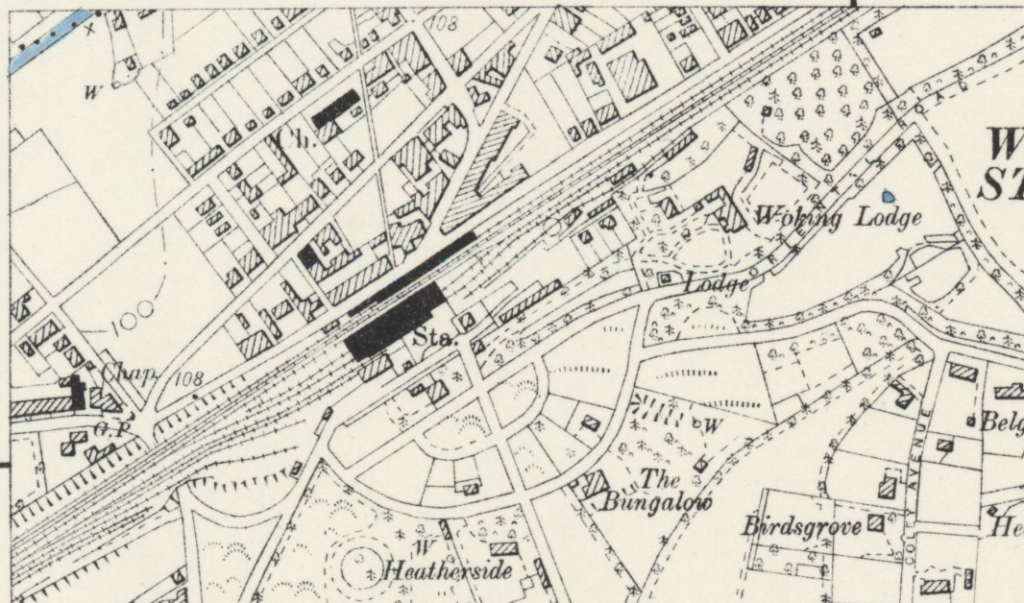
これが当時のWoking Stationです。
線路が何本も走ってて、引き込み線も何本か見えますね。
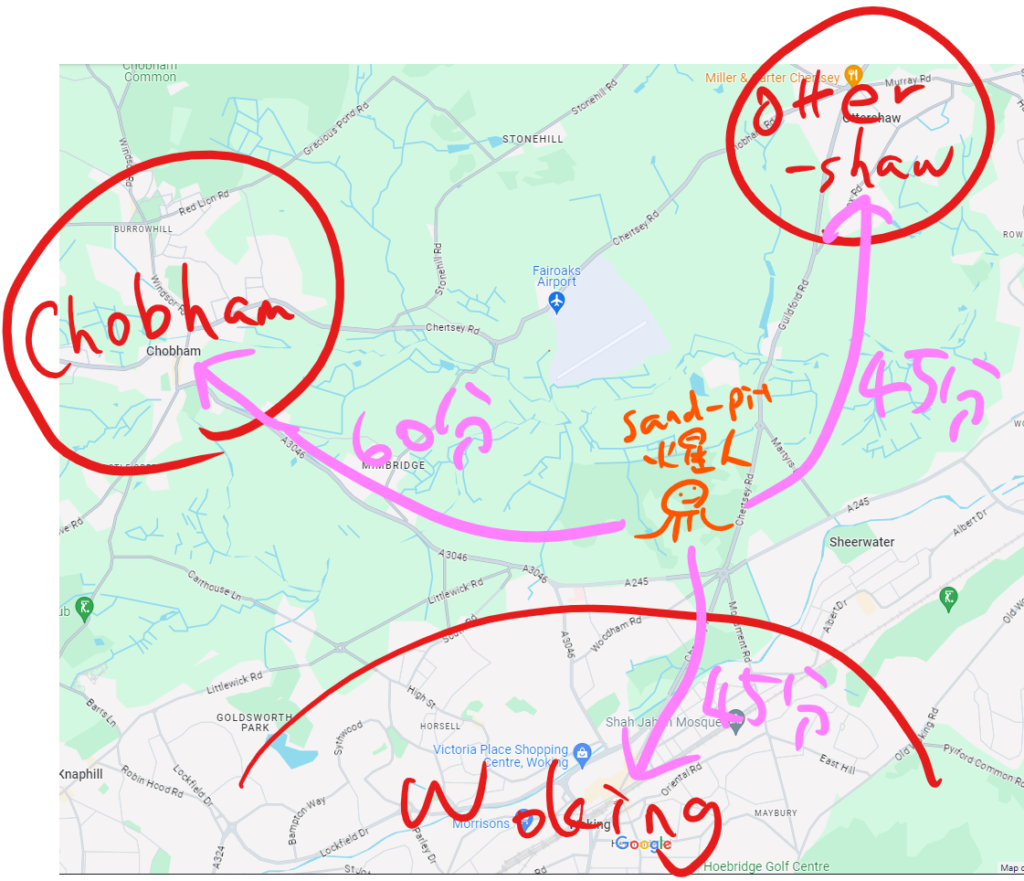
次に、最終文の「the common side of the three villages」の「three villages」だけど、(第78話参照)下図のように、Horsell Commonの近くのChobham・Ottershaw・Wokingのことかな。
ただ、Wokingは「village」じゃない(3つのうちWokingだけ規模がでかすぎる)から、Chobham・Ottershaw・Horsellか、右下の方のSheerwaterが入ってくるか…。
(※Sheerwater, HorsellはWokingの中のまち。WokingとHorsellの関係は、千代田区と秋葉原の関係とおなじ)
つづいて設問にもなってるけど、本段落最難関の「trenching on Smith’s monopoly」について。
まずは「Smith’s monopoly」を説明しましょうか。
「Smith」というのは会社名。正式には「WH Smith」社と言って、18世紀に創業し、21世紀も現存する老舗会社よ。
この会社は新聞販売業から始まって、鉄道の拡大に目をつけて鉄道会社と契約を結び、いわばキオスクのような小売店を多くの駅に設置。そこで新聞・雑誌・書籍を売っていたわ。
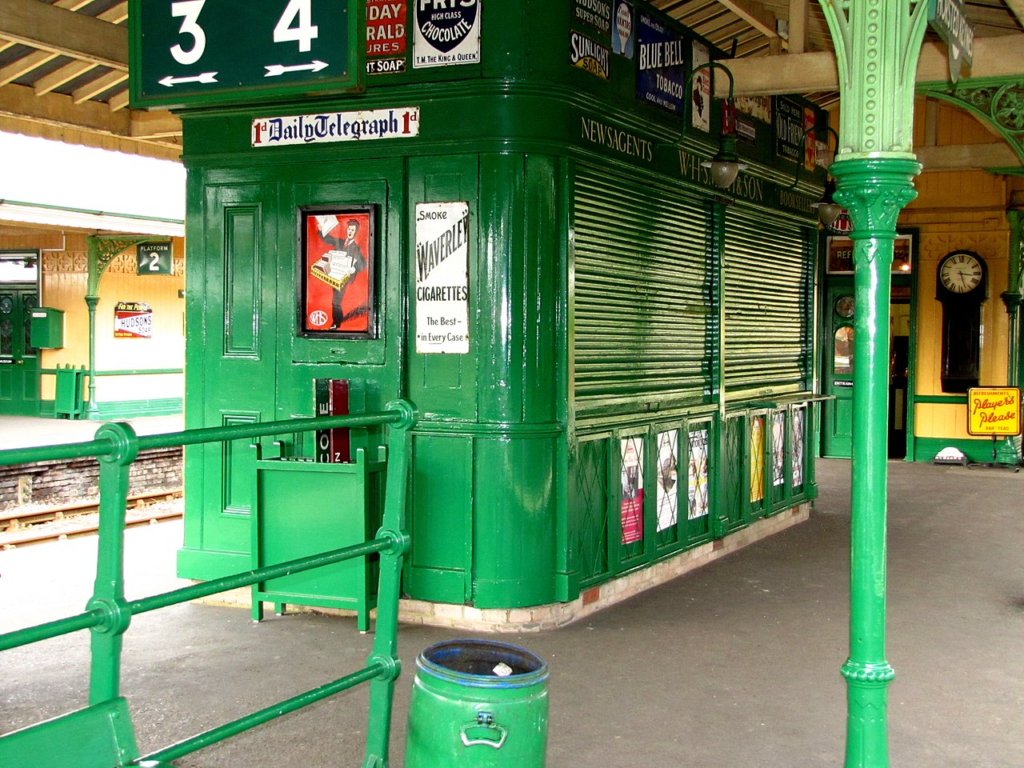
ほぼ独占的な業務形態だったから、「Smith’s monopoly」って言ってるのよ。
ちなみに21世紀のWHスミスは、こうした駅の書店やキオスクだけでなく、小売店業務(コンビニなど)にも重点を置いているわね。
…以上の内容を踏まえれば、「A girl from the town, trenching on Smith’s monopoly, was selling papers」(街からの女の子が、新聞を売って、スミス社の独占を侵害していた)という意味がわかるわ。
当時の駅で新聞を売ってるところはWHスミスのキオスクしかなかったの。それでその女の子は、新聞を別のところから仕入れてきて、(ひょっとしたらWHスミスのところより安く)人々に売りさばいてたってわけ。これはWHスミスから見れば「利益の侵害」よ。
21世紀風に言えば「転売ヤー」かしら。
解答編
<英文解釈記号ルール>
〔〕→関係詞句・節
【】→接続詞句・節
《》→挿入句・節
[ ] →名詞句・節
()→副詞句・節
〈〉→形容詞句・節
(In Woking junction*), (until a late hour), trains were stopping and going on, others were shunting* on the sidings*, passengers were alighting* and waiting, and everything was proceeding* (in the most ordinary way). A girl from the town, 《trenching* on Smith’s monopoly》, was selling papers 〈with the afternoon’s news〉. The ringing impact of trucks, the sharp whistle of the engines from the junction, mingled* (with their shouts* of “Men from Mars!”) Excited men came into the station (about nine o’clock) (with incredible tidings*), and caused no more disturbance* than drunkards* might have done. People 〈rattling* Londonwards〉 peered* (into the darkness 〈outside the carriage windows〉), and saw only a rare, flickering*, vanishing spark* dance up (from the direction of Horsell), a red glow and a thin veil* of smoke 〈driving across the stars〉, and thought [that nothing 〈more serious than a heath* fire〉 was happening. It was (only round the edge of the common) that any disturbance was perceptible*. There were half a dozen villas* burning (on the Woking border*). There were lights (in all the houses on the common side of the three villages), and the people (there) kept awake (till dawn).
1. オレンジのothersを2語で言い換えると、「other trains」ですね。
2. 赤のandが繋いでるものは、前後の計4文(trains…, others…, passengers…, everything…)ですね。
3. 青アンダーライン(trenching…)の解説は上記の通り。
4. 赤アンダーライン(the sharp whistle of the engines)で、日本語の「エンジン」を思い浮かべてはいけません。この「engine」は「蒸気機関」。まだこの時代は蒸気機関車だということに注意しましょう。そして「ホイッスル」じゃなくて「汽笛」ですよね。
5. ピンクのandが繋いでるものは、cameとcausedです。
6. 青マーカー(caused no more disturbance* than drunkards* might have done)について、no more~than…(…と同様~でない)の構文ですね。「酔っ払いと同じく騒動は起こさなかった」が直訳。「相手にされなかった」などとするといいかもしれません。
7. 8. 紫のandと青のandが繋いでるものは、peered・saw・thoughtですかね。sawの目的語が長いので、thoughtの前にもう一度andを置いているという理解でいいかも。
9. 赤マーカー(nothing…)の主語はnothing, 動詞はwas happeningです。more serious than a heath fireが長い句となって後置修飾しています。
10. 黄色マーカー(It was…)は、itーthatの強調構文ですね。
全訳
ウォーキング駅では、夜遅くまで列車が停発車していた。引込線に入っていく車輛もあった。乗客は降りたり待ったりしていた。すべての物事がまったくいつもと同じように進行していた。街から来た女の子は、WHスミス社の独占に割り込もうとして、午後のニュースがのった新聞を売っていた。鳴り響くトラックの衝撃音や、駅から聞こえる蒸気機関の鋭い汽笛は、「火星から人がきた!」という叫び声と混ざりあっていた。興奮した人が9時ごろ信じられないような知らせを持って駅に飛び込んできた。でも酔っ払いと同じく相手にされないだけだった。ロンドンへ向けガタガタと馬車を走らせる人々は、窓の外の暗闇を見つめても、ホーセルの方で稀に舞っている明滅しては消える火花のようなものや、夜空に立ち上る赤い光と薄い煙幕しか見えなかったのだ。その人たちは、せいぜいヒースの野原で火事が起きているのだとしか考えなかった。何かがおかしいということに気づいたのは、ホーセル共有地付近の人だけだった。ウォーキングと共有地の境にある6軒ほどの大邸宅が燃えていた。でも、3つの村のすべての家には明かりがついていて、そこの人々は夜明けまで眠ったままだった。
あまりよくないかもしれないが、明らかに文章が繋がらない場合は、逆接の接続詞を補ってあげるとまともな訳になることがあるぞ。






コメント