
<流れ>
①かっこを振っていない英文
②単語注(①でアスタリスクを振ったところ)
③設問
④かっこを振った英文
⑤設問の答え
⑥訳
X. IN THE STORM.
第10章 「大荒れです!」
第10章 第1段落 (第129話)
キャラ紹介

ということで、二桁章突入!
どうも、GuP西住まほ、小説本編では語り手&主人公の役だ。仕事は社会学者・ライターで、イギリス国民とはちょっと違った視点で物語を紡いでいくぞ。
ここ会話編ではドイツ担当だっ。ドイツ要素は中二病っぽさってことにされてるけどもう知らない。

そしてこんにちは。GuPダージリン、小説本編では語り手の奥さんよ。
物語中では典型的なイギリス国民の振る舞いをしているわ。数万人が殺戮されていくこの小説において、はたしてわたしは生き残れるのかしら?
ここ会話編ではイギリス担当。1900年ごろのイギリスは栄光あるヴィクトリア朝の末期ね。イングランドの黄金期がグロリアーナ(エリザベス1世)の時代(16C)なら、イギリスの黄金期はヴィクトリアの時代。文化が成熟し、21世紀とあまり変わらない部分もたくさん出てきているころよ。

やっほー!GuPケイ、「Henderson」の役だよ!
小説中ではジャーナリスト。火星人に関する速報を現場から電報で送ってたよ。
でも火星人に接近しようとしたらレーザー銃で群衆ともどもやられちゃったみたい。
ま、結局はfictionだから、会話編では気にせずにNever Mind で Go For it!
会話編ではアメリカ担当だよ! まだまだ1900年ごろのアメリカは発展途上。これから一緒にLet’s Go!

うぃ。わたしは小説中では天文学者のGuPアンチョビ。原作名は「Ogilvy」だ。
火星人の宇宙船発射の瞬間を観測したり、着陸した宇宙船を最初に見つけたりと、自分で言うのもなんだけどそれなりに功労者な気がする。なのにあんまり評価されていない気がして悲しいぞ。
挙句の果てには火星人に接近して殺されたことになっているし。
死体はまだ上がってないっつーの。
小説中ではもう出てこないけど、きっとどこかでは生きてるから。
会話編ではイタリア担当だ。ただイタリア要素が出てくることなんてほとんどないぜ。イタリアはまだ統一したばかりで不安定だしさ。

GuPマリーですにゃ。「Stent」という役でしたにゃ。
小説中では王室天文官というイギリス天文学会のトップ。グリニッジ天文台の所長も務めていたのにゃ。上の2人と同じく、火星人と交渉を試みようとして虐殺の憂き目に遭いましたのにゃ。
会話編ではフランス担当にゃ。

(マリー様の語尾だけ崩壊してるよね)
はい。GuPアリスです。小説本編では一度だけしか出番がありません。「隕石学の権威」で、原作では「Denning」という名前でした。
会話編でも特に担当国はありません。しいて言うならイギリスでしょうか。
St. Glorianaだし。

最後に、いちばん新しく登場したGuP西絹代です!小説では名前はなくて、Spotted Dogというパブを運営してます。そんなに活躍はないですが…。担当国は日本です! 頑張ります!
ちなみに、流れ的に隊長が会話編の登場人物として出てきてる感じだが、ソ連のちっちゃいやつとかあんたの妹さん、あとフィンランドの達観したやつはいつ出てくるんだ?
こないだMLRSのカチューシャが出てきたあたり(第115話)でも少し気になったんだがな。
ソ連の方は第13章、妹の方は第14章、フィンランドの方は第11章だ。
会話編で出てくる登場人物はあと5人くらいといったところだな。
いままでの『宇宙戦争』
この小説の舞台は1900~1910年のイギリスよ。いままでの各章ごとのあらすじをまとめるとこんな感じかしら。
第1章:火星人の宇宙船(cylinder)が発進する。地球人はまったく知らない。
第2章:ある金曜日の早朝、宇宙船1つ目が、わたしたちの家の近所のホーセル共有地に着陸。
第3章:同午前、宇宙船は故障のためなかなか開かない。その間に野次馬が数百人集まる。
第4章:同夕方、宇宙船が開く。火星人の見た目が気持ち悪すぎてパニック。
第5章:火星人は交渉に応じる気はなく、火星人は一方的にレーザー光線で野次馬を殺戮。
第6章:引き続き、火星人が市民や家をレーザー光線で攻撃していく。
第7章:ホーセル共有地に行っていた語り手が命からがら帰宅。
第8章:同夜、2つ目の宇宙船が、1つ目の宇宙船の付近に着陸。火星人が侵攻用意を整える。
第9章:翌日(土曜日)、英国陸軍がホーセル共有地を包囲。午後3時、攻撃開始。火星人は高さ30mのロボットに乗り、レーザー光線で反撃。火星人が市街地に侵攻し、家の周囲も危なくなってきたので、わたしたちは夕方に避難を開始。
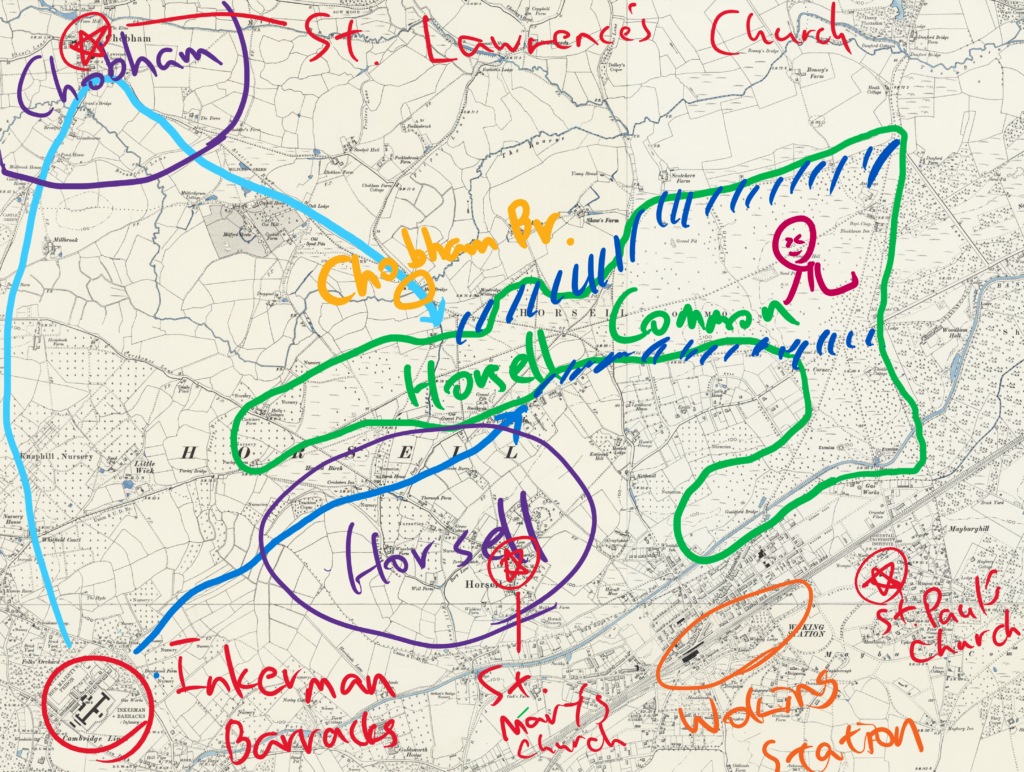
第10章は、Wokingから避難して、親戚がいるLeatherheadにつくところから始まるぞ。
問題編
Leatherhead is about twelve miles from Maybury Hill*. The scent* of hay* was in the air through the lush* meadows* beyond Pyrford, and the hedges* on either side were sweet and gay* with multitudes* of dog-roses*. The heavy firing that had broken ( ) while we were driving down Maybury Hill ceased* as abruptly* as it began, leaving the evening very peaceful and still. We got to Leatherhead without misadventure* about nine o’clock, and the horse had an hour’s rest while I took supper* with my cousins and commended* my wife to their care*.
Maybury Hillメイベリー・ヒル(語り手の自宅があるところ) scentにおい hay干し草 lush青々とした meadow牧草地 hedge生垣 gay with華やかな multitudes of多数の~ dog-roseイヌバラ cease止む abruptly不意に misadventure災難 supper(軽めの)夕食 commend託す care世話・保護
1. オレンジのandが繋いでるものは?
2. break( )で「起こる」「勃発する」という意味になるように青のカッコの中に一語を入れると?
3. 赤アンダーラインの主語と動詞は?
4. 緑のitが指しているものは?
5. 紫のandが繋いでるものは?
こちらが「hay」です。
干し草のかたまりで、家畜の飼料に使われます。
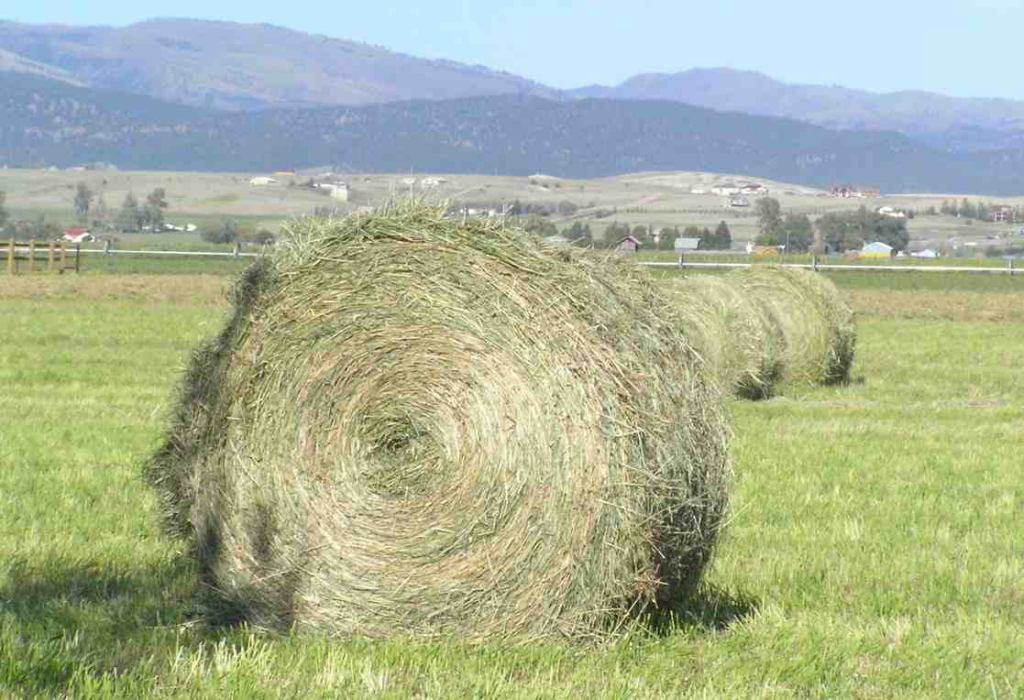
たしかに、Pyrfordの先には広々とした地帯ーおそらく牧草地?荒地?が広がってるね!

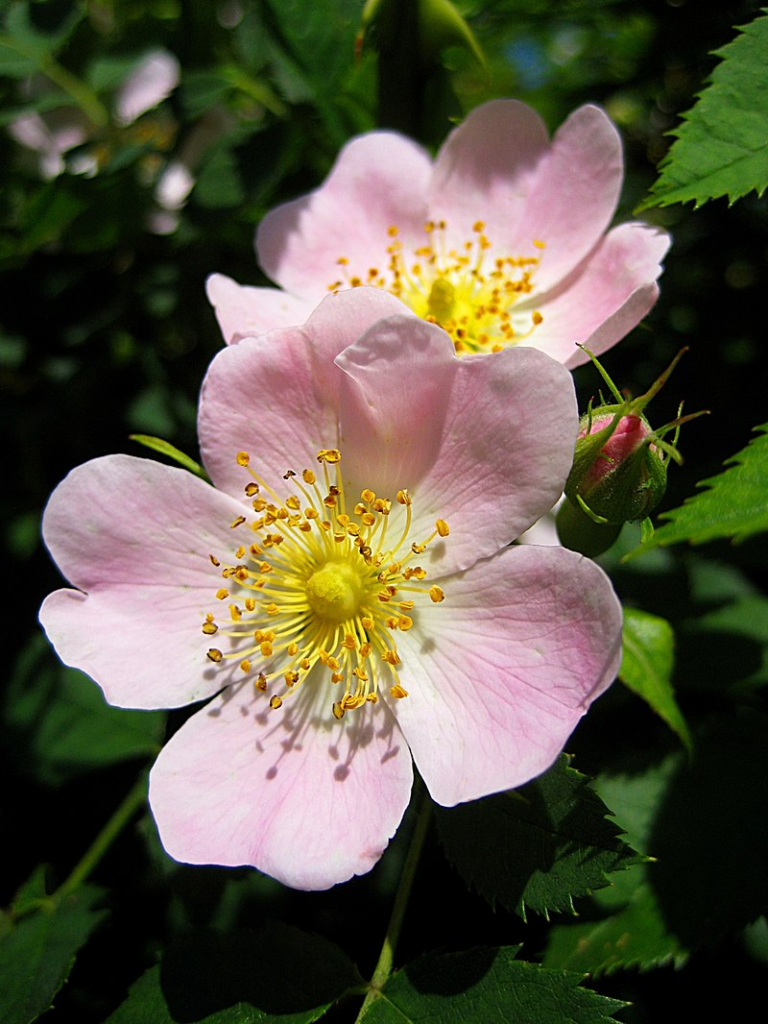
そして両側の生垣に咲いてた「dog-rose」(イヌバラ)は、以下のような淡い花を6~7月にかけてつけるにゃ。
この物語の季節がさらに絞り込めたにゃ。
花で季節絞り込むとか古典かよ
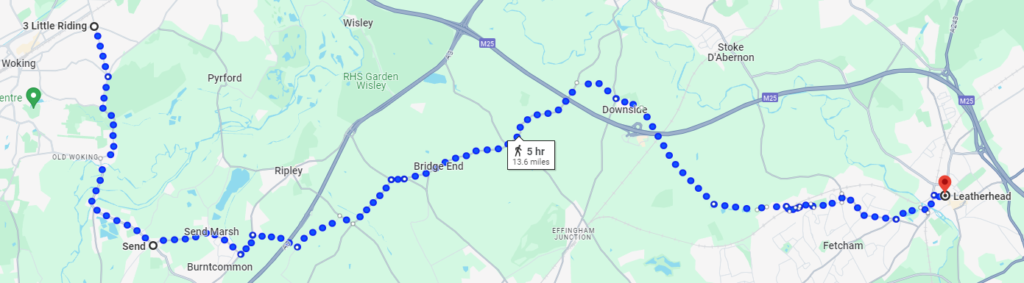
Maybury Hill~(Send)~Leatherhead をGoogle Mapで調べてみるとこんな感じ。
距離は13.6マイル(20㎞強)で、徒歩で5時間とのこと。
本文中には、「約12マイル」で、馬車で「午後9時ごろついた」(第121話の時点で午後6時だから、だいたい2時間くらいかかってる)とあるわ。
ここから、馬車の速度がだいたい時速10㎞くらいってことがわかるわね。
解答編
<英文解釈記号ルール>
〔〕→関係詞句・節
【】→接続詞句・節
《》→挿入句・節
[ ] →名詞句・節
()→副詞句・節
〈〉→形容詞句・節
Leatherhead is (about twelve miles from Maybury Hill*). The scent* of hay* was (in the air) (through the lush* meadows beyond Pyrford), and the hedges* 〈on either side〉 were sweet and gay* (with multitudes* of dog-roses*). The heavy firing 〔that had broken out 【while we were driving (down Maybury Hill)】〕 ceased* (as abruptly* as it began), (leaving the evening very peaceful and still). We got to Leatherhead (without misadventure*) (about nine o’clock), and the horse had an hour’s rest 【while I took supper* (with my cousins) and commended* my wife to their care*】.
1. オレンジのandが繋いでるものは、前後の2文(SV)。
2. 青カッコの中はout。break outで(戦争や感染症などが)「起こる」「勃発する」という意味です。
3. 赤アンダーラインの主語はthe heavy firing、動詞はceased。
4. 緑のitが指しているものは、the heavy firing。
5. 紫のandが繋いでるものは、tookとcommended。
全訳
メイベリー・ヒルからレザーヘッドまではだいたい12マイルくらいある。風に乗って、パーフォードの先の青々とした牧草地から干し草のにおいが漂ってきた。両側の生垣にはイヌバラがたくさん咲いていて、いいにおいで華やかだった。わたしたちがメイベリー・ヒルを下っているときに激しい砲撃戦が不意に始まったが、砲撃が止むのも突然だった。その後の夜はとても穏やかで静かだった。レザーヘッドには災難に遭うことなく9時ごろに着いた。馬に1時間の休憩を与えて、その間にわたしはいとこたちと夕食を食べ、ターちゃんをいとこにあずけた。
そうか、まほちゃん(語り手)はまたWokingに戻って、この馬車をあんたのとこに返さなきゃいけないのか。
ですよ。わたしの移動手段がないじゃないですか。
第10章 第2段落 (第130話)
問題編
My wife was curiously* silent throughout* the drive, and seemed oppressed* with forebodings* of evil. I talked to her reassuringly*, pointing out that the Martians were tied* to the pit by sheer* heaviness, and at the utmost* could but crawl* a little out of it; but she answered only in monosyllables*. Had it not been for my promise to the innkeeper*, she would, I think, have urged* me to stay in Leatherhead that night. Would that I had*! Her face, I remember, was very white as we parted.
curiously不思議なほどに・妙に throughout~の間ずっと oppressed気が滅入って foreboding胸騒ぎ reassuringly(<reassure+ing+ly)安心させるように tie縛る sheer~そのもの at the utmost≒at most crawl這う in monosyllables素っ気なく・短い言葉だけで innkeeper主人(シルカさんのこと) urge強く促す Would that I had≒If only I had≒I wish I had
1. 赤のandが繋いでるものは?
2. 青アンダーラインの訳は?
3. 赤アンダーラインの訳は?
ねぇねぇおもしろいものみつけたよ
「Google Ngram Viewer」っていうサイト。
https://books.google.com/ngrams/
過去600年の本を分析して、単語・熟語のトレンドを調べられる便利なサイトだよ。
おもしろそうだな。
さっそく、21世紀では使われなさそうな「at the utmost」と「Would that I had」を叩きこんでみるか。
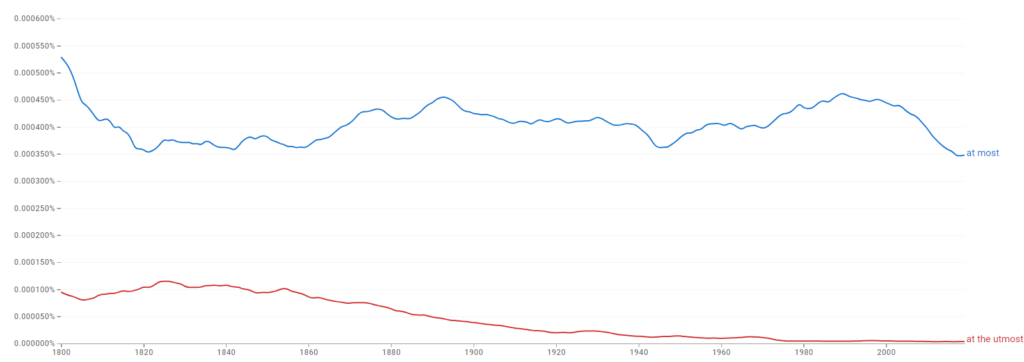
上のグラフで、青がat most, 赤が at the utmostの推移だな。
at the utmostは21世紀に入ってほとんど使われていないが、最盛期の1800年代前半は、at mostの1/5くらいとかなり健闘してたわけか。

…「at the utmost limit」みたいに、utmostのあとに名詞を置く用法があるから、条件的にフェアですらないんだけど。
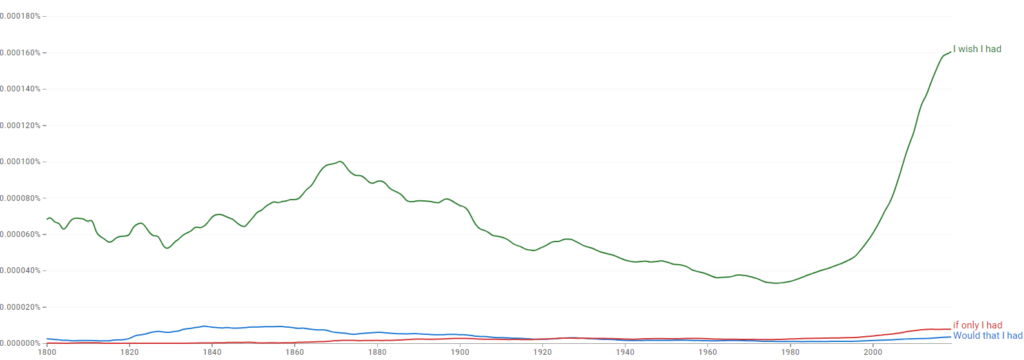
ま、まあいいさ。次は「I wish I had」と「If only I had」と「Would that I had」の比較だ。圧倒的に「I wish I had」が優勢だな。
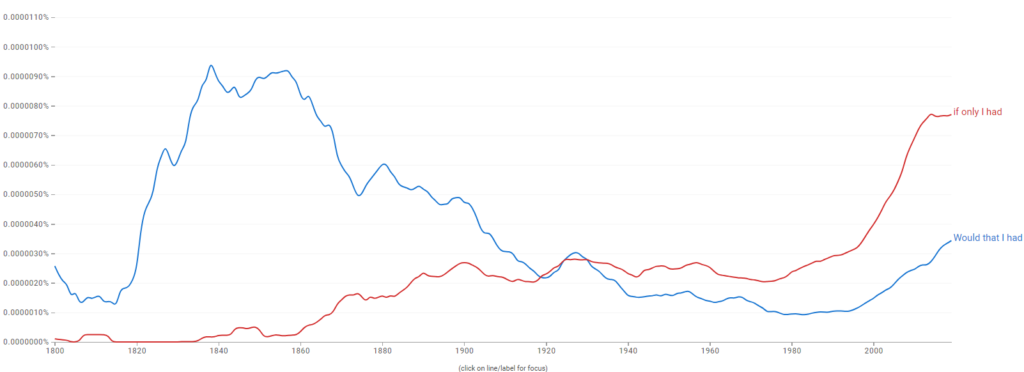
ただ、21世紀にはよく聞く「If only I had」が、19世紀を通じて「Would that I had」に敗北してたのは面白いな。
解答編
<英文解釈記号ルール>
〔〕→関係詞句・節
【】→接続詞句・節
《》→挿入句・節
[ ] →名詞句・節
()→副詞句・節
〈〉→形容詞句・節
My wife was curiously* silent (throughout* the drive), and seemed oppressed* with forebodings* of evil. I talked to her (reassuringly*), pointing out [that the Martians were tied* to the pit (by sheer* heaviness), and (at the utmost*) could but crawl* a little out of it; but she answered only (in monosyllables*)]. 【Had it not been for my promise to the innkeeper*】, she would, 《I think》, have urged* me to stay (in Leatherhead) (that night). Would that I had*! Her face, 《I remember》, was very white as we parted.
1. 赤のandが繋いでるものは、were tied と could crawl。
2. 青アンダーラインの部分について、butはonlyの意味です。cannot but V「Vせざるを得ない」と混同しないようにしましょう。itは the pitです。
3. 赤アンダーラインの部分は、if it had not been for~がなかったら(ここではif省略仮定法過去完了)が使われている部分です。「urge O to V」(OにVするよう強く促す)とかも大事。
全訳
ターちゃんは馬車での移動中、不思議なほど静かだった。ターちゃんは悪い予感に気が滅入っているようだった。わたしは安心させようとしてターちゃんに話しかけた。「火星人は穴から動けないって。体重そのものがおもすぎるからさ。まあ、せいぜいちょっと這い出るくらいだよ」と。でもターちゃんは一言二言みじかく答えただけだった。シルカさんと約束していなければ、その夜レザーヘッドにとどまるようにターちゃんは強くわたしを引き留めただろう。そうだったらよかったのに!今も覚えているが、別れたときのターちゃんの顔はとても蒼白だった。
第10章 第3段落 (第131話)
問題編
For my own part, I had been feverishly* excited all day. Something very like the war fever that occasionally* runs through a civilised* community had got into my blood, and in my heart I was not so very sorry that I had to return to Maybury that night. I was even afraid that that last fusillade* I had heard might mean the extermination* of our invaders from Mars. I can best express my state of mind by saying that I wanted to be in at the death.
feverishly熱狂して occasionallyときどき civilised文明的な(especially : to bring to a technically advanced and rationally ordered stage of cultural development) fusillade一斉砲撃 extermination絶滅
1. 赤アンダーライン(Something very…)の主語と動詞は?
2. 青アンダーラインの部分(I was afraidのthat節内)の主語と動詞は?
3. 赤マーカー(I can best…)の訳は?
さすが中二病!
うるさいっ
解答編
<英文解釈記号ルール>
〔〕→関係詞句・節
【】→接続詞句・節
《》→挿入句・節
[ ] →名詞句・節
()→副詞句・節
〈〉→形容詞句・節
(For my own part), I had been feverishly* excited (all day). Something 〈very like the war fever 〔that occasionally* runs (through a civilised* community)〕〉 had got into my blood, and (in my heart) I was not so very sorry that I had to return to Maybury (that night). I was even afraid [that that last fusillade* 〔I had heard might〕 mean the extermination* of our invaders from Mars]. I can (best) express my state of mind (by saying [that I wanted to be in (at the death)]).
1. 赤アンダーライン(Something very…)の主語はsomething、動詞はhad got。
2. 青アンダーラインの部分(I was afraidのthat節内)の主語はthat last fusillade、動詞はmean。
3. 赤マーカー(I can best…)の訳については、by sayingまででいったん切りましょうか。「state of mind」は「心理状態・精神状態」。be in at the deathは、be inで「居合わせる」あたり。at the deathは、「最期の現場」ですね。
全訳
わたしはというと、一日中熱狂的に興奮していた。現代社会も戦争の熱にときおり浮かされるものだが、そういう何かがわたしの中に流れていった。その夜メイベリーに戻らなくてはいけなかったことについては、心中あまり残念には思わなかった。むしろ、かすかに耳にした最後の一斉砲撃で、火星からの侵略者が死に絶えてしまったのではないかと恐れてすらいた。そのときの心理状態はこう言い表すのがもっともよいだろう。「火星人が殺される場に居合わせたかった」と。
「Something 〈very like the war fever 〔that occasionally* runs (through a civilised* community)〕〉 had got into my blood」だが、まずは「関係詞で切る」。
「The war fever occasionally runs…civilised community」と「Something very like that had got into my blood」。
「civilised community」を「文明化した社会」と字義どおりに訳してしまうと、言いたいことがぶれる。
思い出してほしいのが、1900年現在のイギリスはヴィクトリア朝末期。高潔で「ジェントルマン」たる態度が求められる時代であるとともに、たいへん平和な時代だ。
なのに、そういう時代であっても「戦争の熱はたまにやってくる」といいたいのだろう。
(戦争があった)古代や中世の時代だって「文明化」しているのには変わりないのだから、ここではcivilisedを思い切って「現代の」としてみようか。他の案があったら求む。
第10章 第4段落 (第132話)
問題編
It was nearly eleven when I started to return. The night was unexpectedly* dark; to me, walking out of the lighted passage* of my cousins’ house, it seemed indeed black, and it was as hot and close* as the day. Overhead the clouds were driving fast, albeit* not a breath stirred* the shrubs* about us. My cousins’ man lit* both lamps. Happily, I knew the road intimately*. My wife stood in the light of the doorway*, and watched me until I jumped up into the dog cart*. Then abruptly* she turned and went in, leaving my cousins side by side* wishing me good hap*.
unexpectedly思いがけないほど passage通路 close蒸し暑い albeit≒even though stir動く light(過去形lit)明かりをつける shrub低木 intimatelyくわしく doorway戸口 dog cart馬車 abruptly不意に side by side並んで hap運
1. オレンジのitの役割は?
2. 赤のdayの意味は?
3. 青のmanの意味は?
4. 緑のandが繋いでるものは?

午後11時で「空が意外なほど暗い」っていうのは妙な気もするけど、いまは6月くらいだから、日没後1時間半たった程度。まだかろうじてギリギリ薄明かりが残ってるかもしれないとき。
それに月や星があるはずだし…。
この描写と、「clouds were driving fast」(風雲急を告げる、みたいな感じ)とかが語り手に降りかかる悪兆を示してるね!
解答編
<英文解釈記号ルール>
〔〕→関係詞句・節
【】→接続詞句・節
《》→挿入句・節
[ ] →名詞句・節
()→副詞句・節
〈〉→形容詞句・節
It was nearly eleven 【when I started to return】. The night was unexpectedly* dark; (to me), (walking out of the lighted passage* of my cousins’ house), it seemed indeed black, and it was as hot and close* as the day. (Overhead) the clouds were driving fast, 【albeit* not a breath stirred* the shrubs* about us】. My cousins’ man lit* both lamps. (Happily), I knew the road intimately*. My wife stood (in the light of the doorway*), and watched me 【until I jumped up (into the dog cart*)】. (Then) (abruptly*) she turned and went in, (leaving my cousins (side by side*) wishing me good hap*).
1. オレンジのitの役割は、ただの状況のitですね。後ろのwhenと呼応して、itーwhenの強調構文的なやつかなって思うけど、そしたらat nearly elevenとしなければいけませんね。だから、when以下はただの接続詞とみます。
2. 赤のdayの意味は「日中」。midnight↔midday という対義語も思い出しましょう。
3. 青のmanの意味は「使用人」「下僕」「従者」。ここをwomanに変えようか迷いましたが、意味がぶれそうなのでやめました。
4. 緑のandが繋いでるものは、stoodとwatched。
全訳
unexpectedly、Happilyなどの副詞は動詞的に訳してもいいな。
午後11時ごろ、帰路に立った。夜は意外なほど暗かった。いとこの家の、明かりがついた通用路から出てみたが、わたしにとってはほんとうに真っ暗に見えた。日中のような蒸し暑さだった。周りで草木を揺らす風はまったく吹いていなかったのに、頭上では雲の流れが速かった。いとこの使用人は道の両側のランプをつけてくれた。(それでも暗かったが)道をくわしく知っていたのは幸運なことだった。ターちゃんは戸口の明かりのもとに立って、わたしが馬車に乗り込むまでは見送ってくれた。だが不意にターちゃんは家の中に入っていった。いとこたちは最後まで残り、ともに幸運を祈ってくれたというのに。
もう会えない(今生の別れかもしれない)のにあまりにも冷たすぎじゃない?
素直になれないことだってあるのよ…。
第10章 第5段落 (第133話)
問題編
I was a little depressed* at first with the contagion* of my wife’s fears, but very soon my thoughts reverted* to the Martians. At that time I was absolutely in the dark as to the course* of the evening’s fighting. I did not know even the circumstances that had precipitated* the conflict. As I came through Ockham (for that was the way I returned, and not through Send and Old Woking) I saw along the western horizon a blood-red glow, which as I drew nearer, crept slowly up the sky. The driving clouds of the gathering thunderstorm* mingled* there with masses of* black and red smoke.
depressed気が滅入る contagion伝染 revert(<re+vert)戻す course過程 precipitate引き起こす thunderstorm雷の嵐 mingle混ざる masses of多量の~
1. as toを1語で書き換えると?
2. 青のa blood-red glowは何の明かり?
3. 赤アンダーラインの文型表示は?
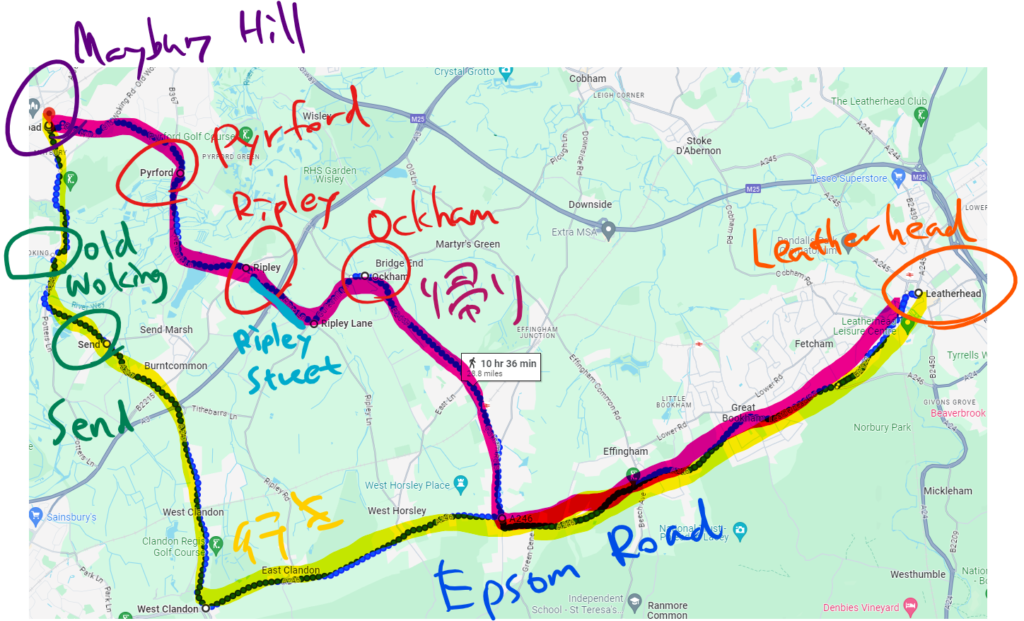
こちらが地図です!
Maybury Hillがわたしのパブがあるところ、Leatherheadが避難先です。
行きと帰りでちょっと道が違うのが分かるかと思います。
21世紀の地図を使っていますが、OS社の古地図でも同じ道ということは確認していますよ。
解答編
<英文解釈記号ルール>
〔〕→関係詞句・節
【】→接続詞句・節
《》→挿入句・節
[ ] →名詞句・節
()→副詞句・節
〈〉→形容詞句・節
真ん中あたりのAs I came…の文で、(for that was the way I returned, and not through Send and Old Woking) のカッコは原文からついてたにゃ。
I was a little depressed* (at first) (with the contagion* of my wife’s fears), but (very soon) my thoughts reverted* to the Martians. (At that time) I was absolutely (in the dark 〈as to the course* of the evening’s fighting〉). I did not know even the circumstances 〔that had precipitated* the conflict〕. 【As I came through Ockham (for that was the way I returned, and not through Send and Old Woking) 】I saw (along the western horizon) a blood-red glow, 《which 【as I drew nearer】, crept slowly up the sky》. The driving clouds of the gathering thunderstorm* mingled* there with masses of* black and red smoke.
1. as toを1語で書き換えると、aboutとか。
2. 青のa blood-red glowは、最後に「black and red smoke」とありますから、Woking方面で起きている火災の光でしょう。火星の光ではないでしょうね。
3. 赤アンダーラインの文型表示は、I saw…a blood-red glow…という第三文型。which以下は非制限用法の関係詞ですね。
全訳
最初は少し憂鬱な気分だった。ターちゃんの恐怖がわたしに移ったのだろう。でもすぐに火星人について考えるようになった。そのときは、夕方の戦闘がどんなふうだったのかまったくわからなかったのだ。戦闘がはじまった原因すら知らなかった。オッカムを通った(それが帰路だった。センドとオールド・ウォーキングは通っていない)ときに見えたが、西の地平線が血のように赤い光を放っていた。近づいていくにつれ、ゆっくりと空が赤く染まっていった。雲は風に強く吹かれながら成長し、雷嵐を呼ぼうとしていた。そこでその雲は大量の黒と赤の煙と混ざっていた。
I saw (along the western horizon) a blood-red glow, 《which 【as I drew nearer】, crept slowly up the sky》 のところ、whichでとりあえず分けるのはいいとして、「the glow crept slowly up the sky」がむずかしいな。とりあえず「空がゆっくりと赤く染まっていった」としてみたが、なにかいい案があったら教えてくれ。
第10章 第6段落 (第134話)
問題編
Ripley Street was deserted*, and except for a lighted window or so the village showed not a sign of life; but I narrowly* escaped an accident at the corner of the road to Pyrford, where a knot* of people stood with their backs to me. They said nothing to me as I passed. I do not know what they knew of the things happening beyond the hill, ( ) do I know if the silent houses* I passed on my way were sleeping securely, or deserted and empty, or harassed* and watching against the terror* of the night.
deserted人気がない・見放された narrowlyかろうじて knot一団 house家に住む人たち harassed不安な terror恐怖
1. or so の訳・意味は?
2. 文脈上、青のカッコ内に入る一語は?
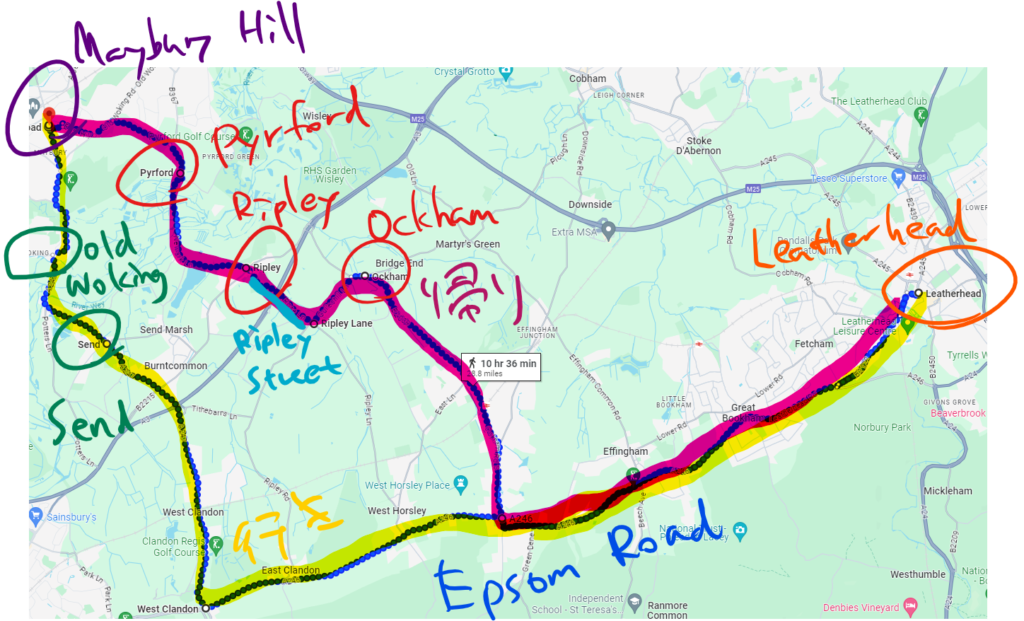
地図はこれだよ!
「Ripley Street」はOS社の地図を見ても「Ripley Lane」としか載ってなかったけどここしかないかなって。
あと「the village」はRipleyかな?
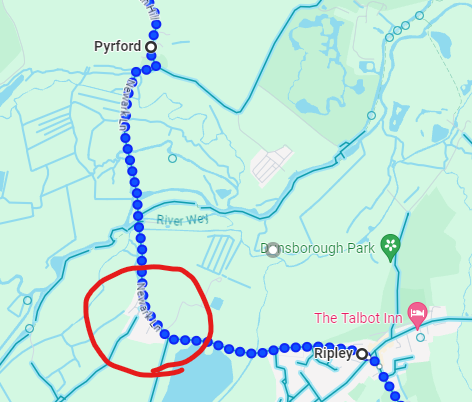
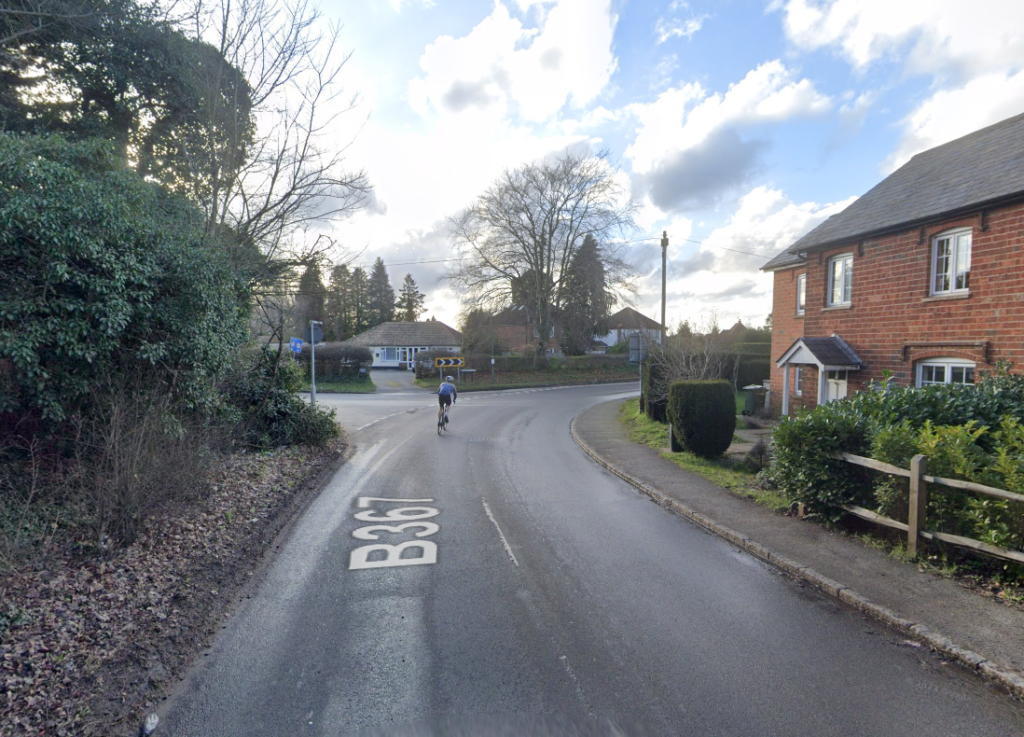
「at the corner of the road to Pyrford」のところはここだろうか。
Google Earthで見てもたしかに見通しがわるいな。
解答編
<英文解釈記号ルール>
〔〕→関係詞句・節
【】→接続詞句・節
《》→挿入句・節
[ ] →名詞句・節
()→副詞句・節
〈〉→形容詞句・節
Ripley Street was deserted*, and (except for a lighted window or so) the village showed not a sign of life; but I narrowly* escaped an accident (at the corner of the road to Pyrford), 〔where a knot* of people stood (with their backs to me)〕. They said nothing to me 【as I passed】. I do not know [what they knew of the things 〈happening beyond the hill〉], nor do I know [if the silent houses* 〔I passed on my way〕 were sleeping securely, or deserted and empty, or harassed* and watching (against the terror* of the night)].
1. or so は「そこら」「くらい」。「a lighted window」くらいしか(exceptは「~しか」と訳してもいいやつ)、村には人の兆候がなかったということですね。
2. 青のカッコ内に入る一語はnor。「nor 助動詞 S」で「~もまた~ない」です。
全訳
リプリー通りは人気がなかった。窓から光が漏れているところがあるくらいで、リプリーには人がいるしるしが全くなかった。でも、パーフォードに続く道に曲がるところで、危うく事故に遭いそうになった。そこで数人が背中を向けて立っていたのだ。わたしが通り過ぎるときに何も言われなかった。丘の向こうで起きていることをその人たちが知っていたかはわからないし、道中通り過ぎていった静かな家の住人たちがどうしていたのかもわからない。安心して眠っていたのか、家を捨てて避難したのか、それとも、その夜は恐怖を感じて不安になり、外を見ていたのか…。
第10章 第7段落 (第135話)
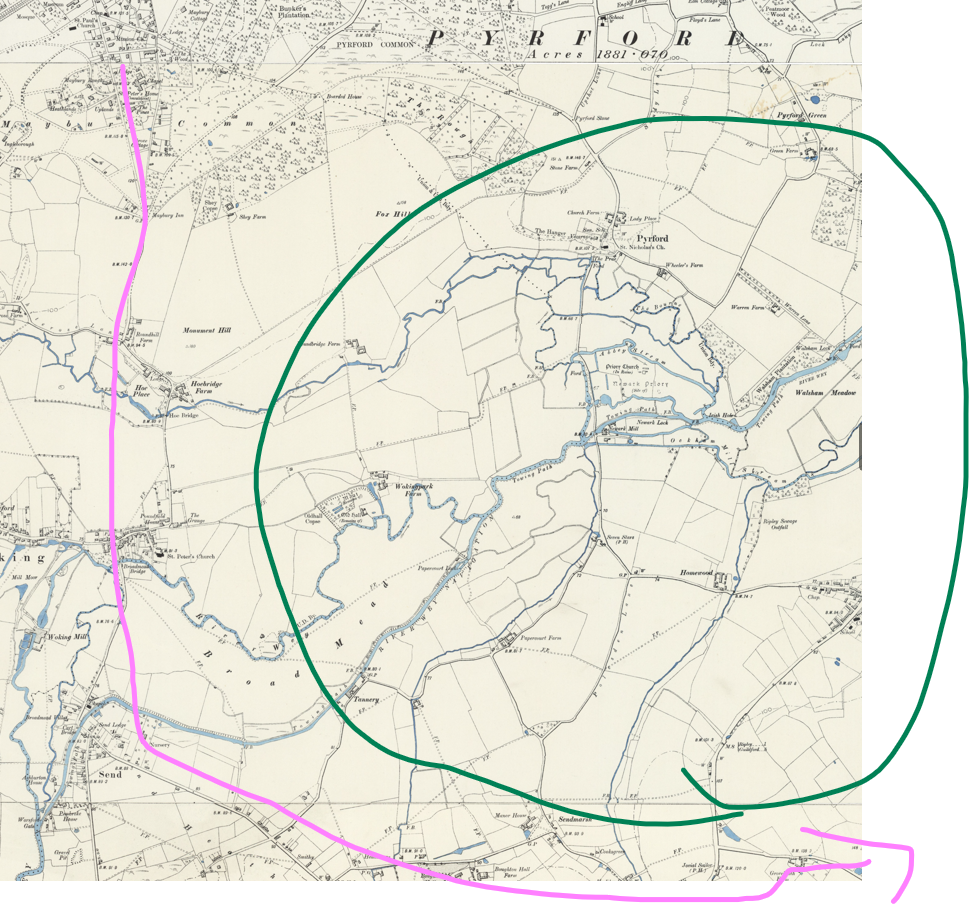
地図はこちら。

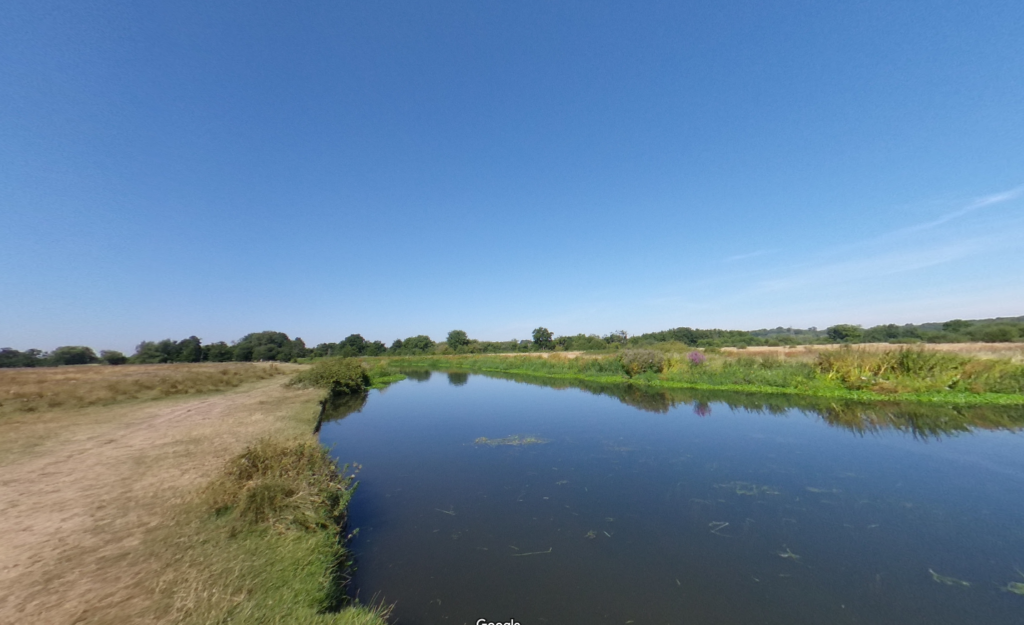
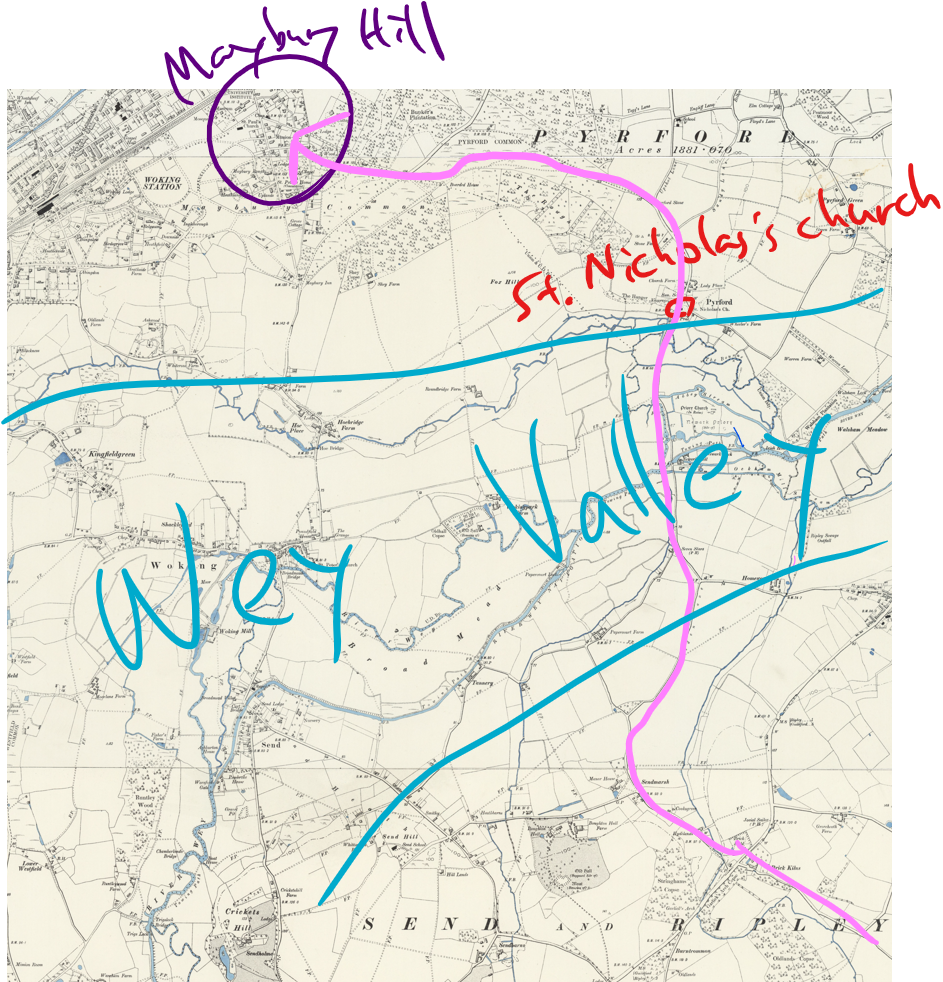
RipleyとPyrfordの間に、ウェイ川というテムズ川の支流が流れているわ。様々な運河も引かれてて、川というよりほとんど「水路」ね。
今回登場する「the valley of the Wey」は、ウェイ川流域のこと。valleyには「流域」という意味があるわね。TVA=Tennessee Valley Authority(テネシー川流域開発公社)、DVC=Damodar Valley Corporation(ダモダル川流域開発公社) とかは高校時代の地理で習った人も多いんじゃないかしら。
ウェイ川をGoogleストリートビューで見ると以下のような様子よ。ほんとに水路ね。
問題編
From Ripley until I came through Pyrford I was in the valley of the Wey, and the red glare was hidden from me. As I ascended* the little hill beyond Pyrford Church the glare came into view again, and the trees about me shivered* with the first intimation* of the storm that was upon me. Then I heard midnight pealing* out from Pyrford Church behind me, and then came the silhouette* of Maybury Hill, with its tree-tops and roofs black and sharp against the red.
ascend登る(↔descend) shiver震える intimation暗示 pealing鐘の音 silhouetteシルエット
1. 赤のthe red glareって何のこと?
2. 青のandが繋いでるものは?
「midnight pealing out from Pyrford Church」についてです!教会の鐘の音ですね。
この教会は「St. Nicholas’s Church」(聖ニコラス教会)でしょう。
「pealing」というのはこんな感じです。
「midnight」(深夜12時)にこんな大音量で鐘の音を鳴らすなんて騒音公害よ。眠れやしないわ。
…ほんとに真夜中に鐘鳴らしてるの?
実際一部の教会ではそうらしいですよ。21世紀でも迷惑に思ってる人がいるようですから。
https://www.mumsnet.com/talk/am_i_being_unreasonable/2385038-Church-Bells
それにしてもなぁ…。
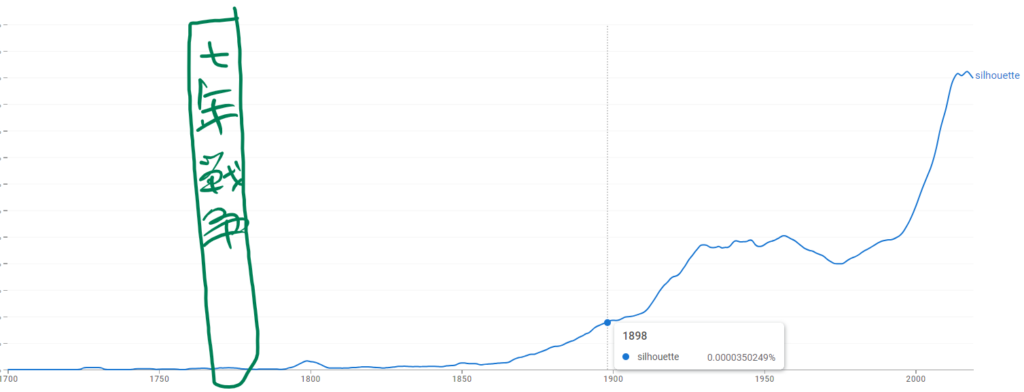
つづいて、シルエット(silhouette)はフランスの財務大臣(18C)が語源。
七年戦争にともなう緊縮財政を行い、ケチだったから、(絵の具を使わずに安く済む)影絵のことが「シルエット」と名付けられたらしいにゃ。
言葉のトレンド把握ができるNgram Viewerをまた使ってみるとこんな感じだな。
七年戦争(18世紀中期)のあと、1800年ごろに第一波がきて、19世紀後半から一気に広まり始めたってわけか。
この昔、言葉が一般名詞になるには100年くらいかかってたんだな。21世紀では一瞬だが…
解答編
<英文解釈記号ルール>
〔〕→関係詞句・節
【】→接続詞句・節
《》→挿入句・節
[ ] →名詞句・節
()→副詞句・節
〈〉→形容詞句・節
(From Ripley) (until I came through Pyrford) I was (in the valley of the Wey), and the red glare was hidden from me. 【As I ascended* the little hill (beyond Pyrford Church)】 the glare came into view again, and the trees about me shivered* (with the first intimation* of the storm 〔that was upon me〕). Then I heard midnight pealing* out (from Pyrford Church behind me), and then came the silhouette* of Maybury Hill, (with its tree-tops and roofs black and sharp against the red).
1. 赤のthe red glareは火災。火星人との戦闘で燃えてるやつね。
2. 青のandが繋いでるものは、前後の2文。後ろにcameがあるから動詞をつないでいるものだと思うかもしれませんが、後ろの方は第一文型の倒置があります。
全訳
リプリーからパーフォードに着くまで、ウェイ川流域を通った。赤い明かりは見えなくなった。パーフォードにある教会を過ぎて小さい丘を登ると、ふたたびその光が見えるようになった。わたしのまわりの木は揺れ動いていた。到来する嵐を暗示する最初のものだった。そして背後のパーフォードの教会から真夜中の鐘の音が響いた。やがてメイベリー・ヒルのシルエットが見えてきた。木の梢と屋根は、あの赤い光が背景となって黒く目立っていた。
第10章 第8・9段落 (第136話)
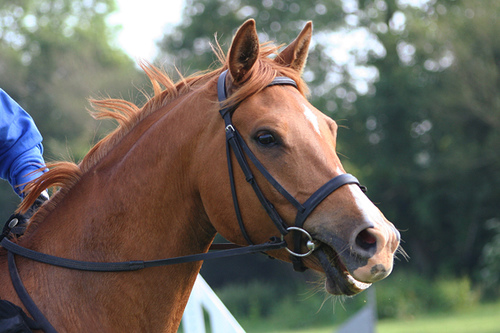
この段落で出てくる「bit」は、日本語では「はみ」「くつわ」と言われるもの。
馬に噛ませる金属の器具で、手綱とつなげることで、手綱の命令が馬に届くようにするのだ。
https://commons.wikimedia.org/w/index.php?curid=2940415
第1文目の「this」は前段落の「with its tree-tops and roofs black and sharp against the red.」を指してるよ!
問題編
Even as I beheld* this a lurid* green glare lit* the road about me and showed the distant woods towards Addlestone. I felt a tug* at the reins*. I saw that the driving clouds had been pierced* as it were by a thread of green fire, suddenly lighting their confusion and falling into the field to my left. It was the third falling star!
Close on* its apparition*, and blindingly* violet by contrast, danced out the first lightning of the gathering storm, and the thunder burst like a rocket overhead. The horse took the bit* between his teeth and bolted*.
behold見る luridけばけばしい light(過去形lit)明るくする tug強く引っ張られること rein手綱 pierce穴をあける(cf.ピアス) close on≒close to《イギリス》 apparition出現 blindingly(<blind+ing+ly)目がくらむような take the bitはみをかむ bolt馬などが恐怖で突然走り出す
1. 青のandが繋いでるものは?
2. オレンジのas it wereの意味は?
3. 茶色のtheirが指しているものは?
4. 青アンダーラインの主語と動詞は?
5. 緑のandが繋いでるものは?
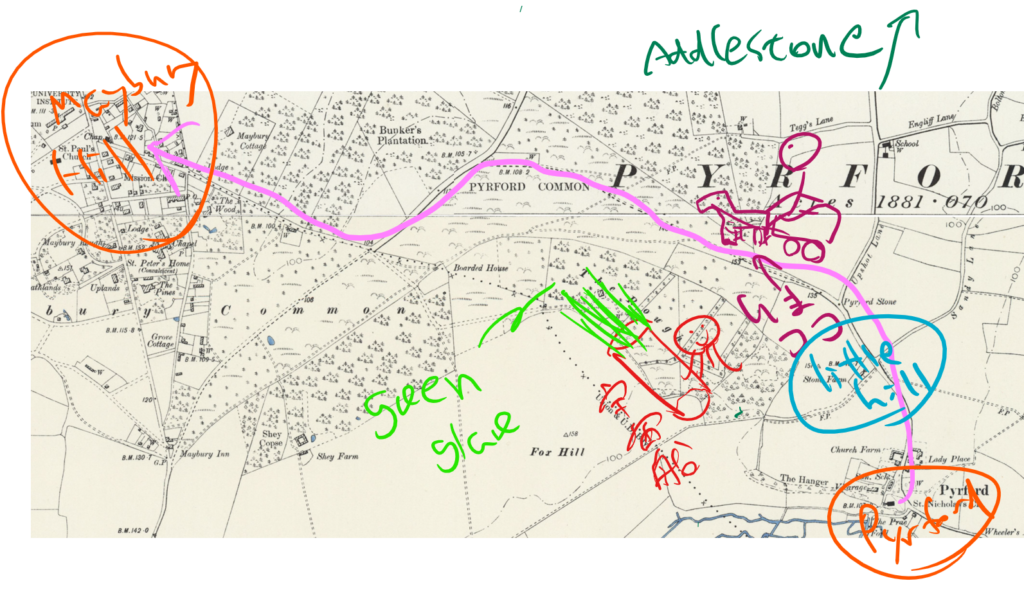
地図はこちら。
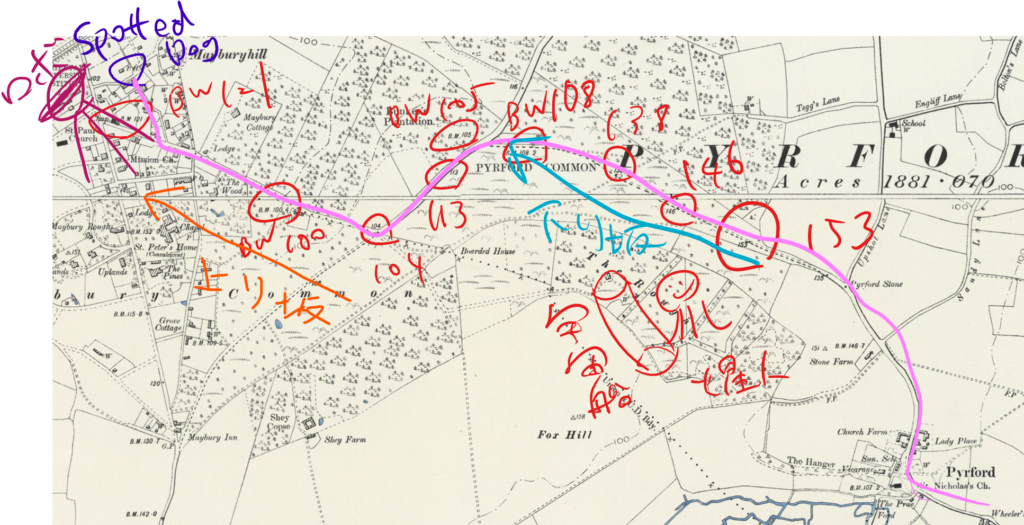
Pyrfordの先の「little hill」(三角点をもとに判断できる)を越えたということ(前段落)と、「distant woods towards Addlestone」を参考に、語り手がいるだいたいの位置がつかめるわ。
火星人の3番目の宇宙船が進行方向左手に着陸したとこね。
1番目と2番目の宇宙船はHorsell CommonとそのとなりのByfleet Golf Links(Maybury Hillの北側(上側))に着陸してたんだったよね。
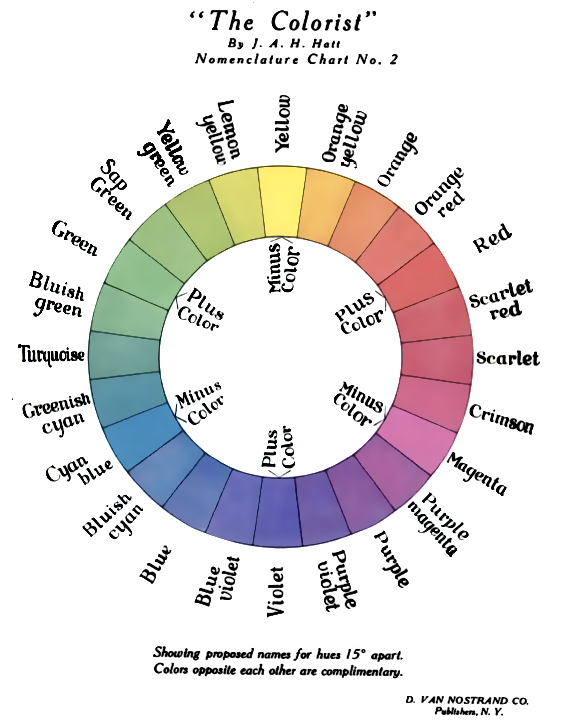
「violet by contrast」についてにゃ。
「contrast」されてるのは、violet(雷の紫)とlurid green(宇宙船のけばけばしい緑)。
色相環を見ると、紫と黄緑は補色。たしかに「コントラスト」にゃ。
解答編
<英文解釈記号ルール>
〔〕→関係詞句・節
【】→接続詞句・節
《》→挿入句・節
[ ] →名詞句・節
()→副詞句・節
〈〉→形容詞句・節
【Even as I beheld* this】 a lurid* green glare lit* the road (about me) and showed the distant woods towards Addlestone. I felt a tug* (at the reins*). I saw [that the driving clouds had been pierced* (as it were) (by a thread of green fire, (suddenly lighting their confusion) and (falling into the field to my left))]. It was the third falling star!
(Close on* its apparition*), and (blindingly* violet by contrast), danced out the first lightning of the gathering storm, and the thunder burst like a rocket overhead. The horse took the bit* between his teeth and bolted*.
1. 青のandが繋いでるものは、litとshowed。
2. オレンジのas it wereの意味は「いわば」。比喩的表現を持ち出すときに使いますね。
3. 茶色のtheirが指しているものは、the driving clouds。
4. 青アンダーラインの主語はthe first lightning、動詞はdanced out。第一文型倒置MVSです。
5. 緑のandが繋いでるものは、tookとbolted。
全訳
この様子を見ていたちょうどその時、けばけばしい緑の光がまわりの道を照らした。遠くアドレストンの林まで見える明るさだった。手綱がぐいと引っ張られる感覚がした。いわば「一筋の緑炎」が、流れている雲を貫通してきたのが見えた。その緑の炎は乱れる雲を突然照らし、左側の野原に落下した。3番目の宇宙船が着陸したのだ!
その落下地点近くで、対照的に目がくらむような紫色が光った。嵐の到来を告げる最初の雷が踊ったのだ。稲妻は頭上で打上花火のようにとどろいた。馬はハミをがっちりと噛み、急に走り出した。
わたしはソ連担当じゃないが、たしかにロケット砲にはロマンがあって大好きだ。
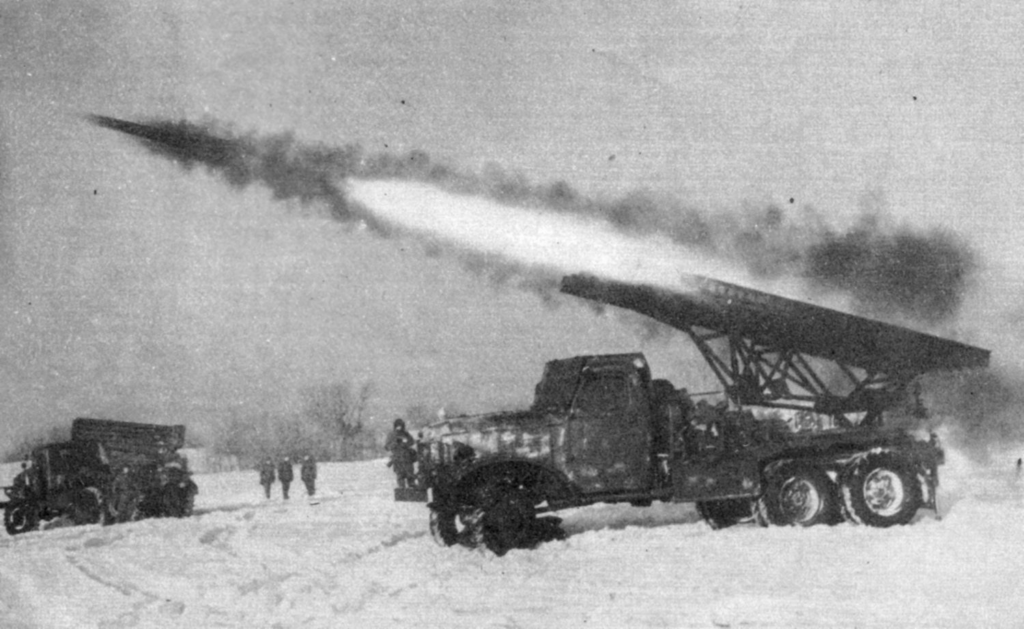
だが、ここでの「rocket」を「ロケット砲」と訳さないでくれ。ロケット砲の爆音を聞いたことのある社会学者なんていないはずだ(くりかえすが、1900年のイギリス本国はとても平和だ)。ここは泣く泣く「打上花火」と訳すしかないだろう。
…まさかとは思うが「ロケット」なんて訳さないよな…。
第10章 第10段落 (第137話)
ひどいストームの中を馬車で駆けてくよ!
ひとことも小説中では言及はないけど、雨も混じってたんじゃないかな。
問題編
A moderate incline* runs towards the foot of Maybury Hill, and down this we clattered*. Once the lightning had begun, it went on in (of, ever, flashes, succession*, have, as, a, I, as, rapid) seen. The thunderclaps*, treading* one on the heels of another and with a strange crackling* accompaniment*, sounded more like the working of a gigantic electric machine than the usual detonating* reverberations*. The flickering* light was blinding and confusing, and a thin* hail* smote* gustily* at my face as I drove down the slope.
incline傾斜 clatterガラガラと音を立てて行く a succession of~の連続 thunderclap雷鳴 tread続く crackleパチパチ音を立てる accompaniment付属物・伴奏 detonate爆発する・轟く reverberation残響・反響音 flicker明滅する thinまばらな hailあられ・ひょう smite(smite-smote-smitten)強く打つ gustily突発的に
1. オレンジのitが指しているものは?
2. 青アンダーラインの部分の単語を、as~asの原級比較に注意して並び替えると?
3. ピンクのon the heels ofの意味は?
4. 青のthe flickering lightは何の光?
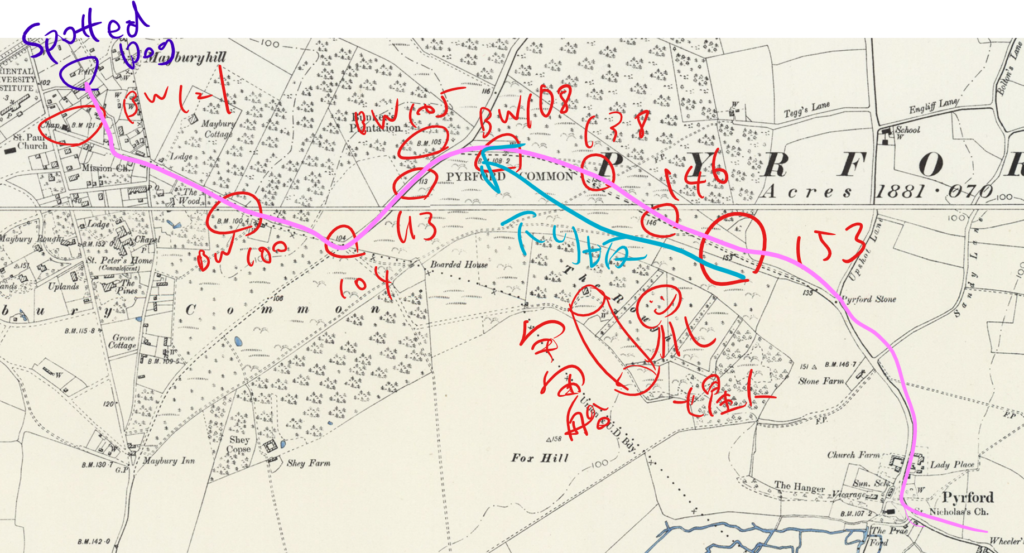
こちらがMapよ。
いつものように標高マークに印をつけると、下り坂(A moderate incline* runs towards the foot of Maybury Hill)の部分がわかるわね。
解答編
<英文解釈記号ルール>
〔〕→関係詞句・節
【】→接続詞句・節
《》→挿入句・節
[ ] →名詞句・節
()→副詞句・節
〈〉→形容詞句・節
A moderate incline* runs (towards the foot of Maybury Hill), and (down this) we clattered*. 【Once the lightning had begun】, it went on in as rapid a succession* of flashes as I have ever seen. The thunderclaps*, 《treading* one on the heels of another》 and 《with a strange crackling* accompaniment*》, sounded more like the working of a gigantic electric machine than the usual detonating* reverberations*. The flickering* light was blinding and confusing, and a thin hail smote* gustily* (at my face) 【as I drove down the slope】.
1. オレンジのitが指しているものは、the lightnng。
2. 青アンダーラインの部分の単語を、as~asの原級比較に注意して並び替えると上のようになります。「as+形容詞+a/an+名詞」の語順に注意しましょう。なお、as I have ever seenについては、as~as~anyの構文と同じく、今まで見て来た(どんな)ものと同じくrapidだった=今までに見たものの中で一番rapidだった、ということです。
3. ピンクのon the heels ofの意味は「~にすぐ続いて・すぐあとに」。
4. 青のthe flickering lightは稲妻の光ですね。明滅しますから。
全訳
メイベリー・ヒルのふもとまではそこそこの傾斜の坂だ。この坂をガタガタと下って行った。雷が鳴り始めると瞬く間に次々と閃光が走ったが、そんな速い光り方は見たこともなかった。雷鳴も次々に続き、パチパチという奇妙な音を伴って響いた。その音は、いつもの雷の爆発するような残響音というよりは、巨大な電気機械が動いている音のようだった。明滅する光のせいで目がくらみ、混乱しパニックになった。そのうえ、坂を下っている間に突然、まばらなあられまで顔に打ち付けてきた。
「区切って訳す」は大事だな。
特に比較の構文は、語順が英語と日本語でごっちゃごちゃするから、いっそう区切ることが大事になってくる。
しかも今回は名詞構文・無生物主語まで絡んでくるからややこしい。
第10章 第11段落 (第138話)
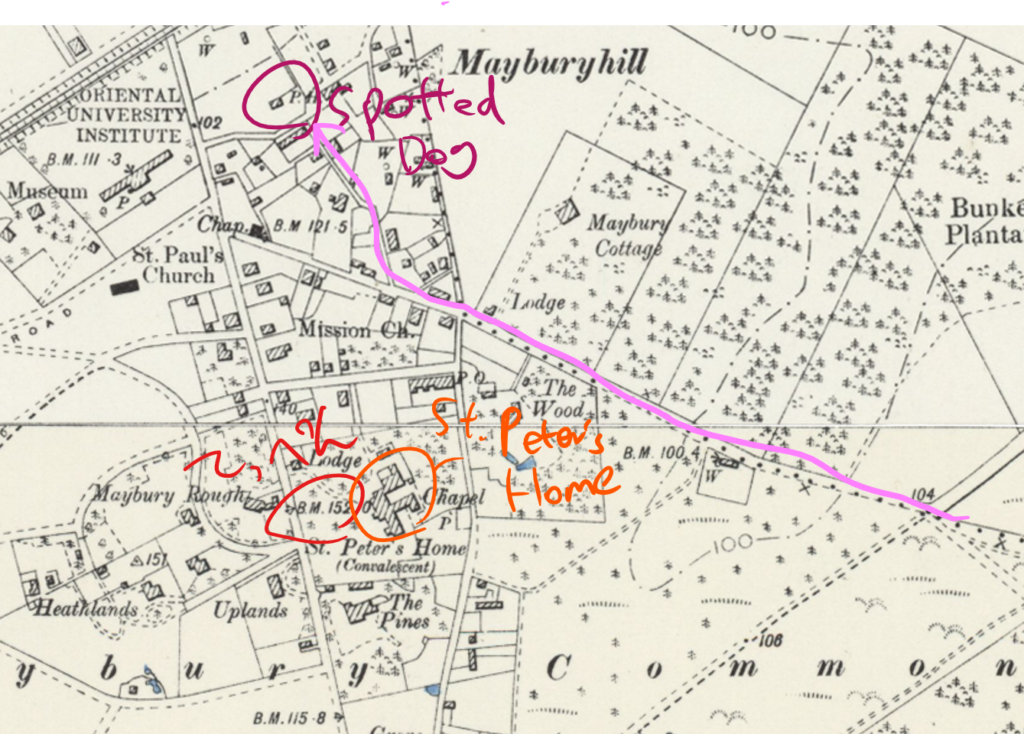
この段落で「Orphanage near the crest of the hill」(孤児院)という施設が出てきますが、現実ではこの建物は「St. Peter’s Home」という1883年に建てられたキリスト教系の医療系複合施設でした。病院・療養所・老人ホームなどが入っていたようです。
https://www.surreycc.gov.uk/culture-and-leisure/history-centre/researchers/guides/st-peters-memorial-home
https://wokinghistory.org/onewebmedia/150807.pdf
HPに患者名簿まであるのにゃ。
問題編
At first I regarded little but the road before me, and then abruptly* my attention was arrested by something that was moving rapidly down the opposite slope of Maybury Hill. At first I took it ( ) the wet roof of a house, but one flash following another showed it to be in swift rolling* movement. It was an elusive* vision—a moment of bewildering* darkness, and then, in a flash like daylight*, the red masses* of the Orphanage near the crest* of the hill, the tops of the pine trees, and this problematical* object came out clear and sharp and bright.
abruptly不意に roll滑るように進む elusive人目につかない・わかりにくい bewilder困惑させる daylight日光 mass大きなかたまり crest頂上 problematical問題を引き起こす
1. 赤アンダーラインの訳は?
2. 緑のitが指しているものは?
3. オレンジのカッコ内にtake A ( ) B 「AをBと間違える/思う」という意味になるように前置詞一語を入れると?
とうとう火星人の戦闘ロボが登場したな
盛り上がって来たぜ!
マップはこんな感じ!
このロボを操ってるのは、さっき着陸した3番目の宇宙船の火星人じゃなくて、ホーセル共有地とかにいた火星人だよ!
イギリス軍の防衛ラインを突破して街に侵攻を始めてるってことだね!
解答編
<英文解釈記号ルール>
〔〕→関係詞句・節
【】→接続詞句・節
《》→挿入句・節
[ ] →名詞句・節
()→副詞句・節
〈〉→形容詞句・節
(At first) I regarded little (but the road before me), and then abruptly* my attention was arrested by something 〔that was moving rapidly down the opposite slope of Maybury Hill〕. (At first) I took it for the wet roof of a house, but one flash following another showed it to be (in swift rolling* movement). It was an elusive* vision—a moment of bewildering* darkness, and then, 《in a flash like daylight*》, the red masses* of the Orphanage near the crest* of the hill, the tops of the pine trees, and this problematical* object came out clear and sharp and bright.
1. 赤アンダーラインの部分について、regardは「見る」。littleは準否定語(ほとんど~ない)。butはここではexceptの意味。before meは「目の前の」。簡単な言葉だけど意味に注意しなければならないものばかりですね。
2. 緑のitが指しているものは、一語で言うとsomething。
3. オレンジのカッコ内にはfor。take A for B 「AをBと間違える/思う」ですね。
全訳
はじめは目の前の道路以外ほとんど目を向けていなかったが、不意に、ある物体に気をとられた。その物体は素早くメイベリーヒルの向こうの丘を下っていた。最初は濡れた家の屋根だと思ったが、連続する閃光のおかげで、素早く滑るように動いていると気づいた。視界は不明瞭だったーそのときは困惑するほど暗かったのだ。そこに、日光のような稲光が走った。丘の頂上付近に立っている孤児院の大きな赤い建物や、松の木の梢、そしてこの厄介なものが照らされ、はっきりと鮮明に明るく見えた。
第10章 第12段落 (第139話)
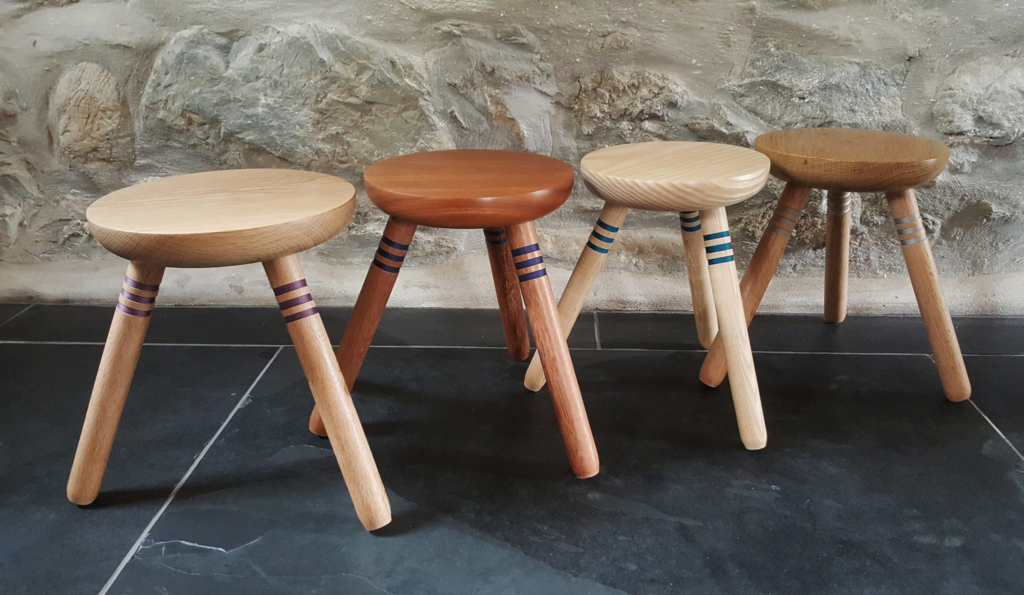
「milking stool」はこんなもの。三本足の台ね。
三脚型の火星人のロボを説明するためにこの段落で例示されているわ。
問題編
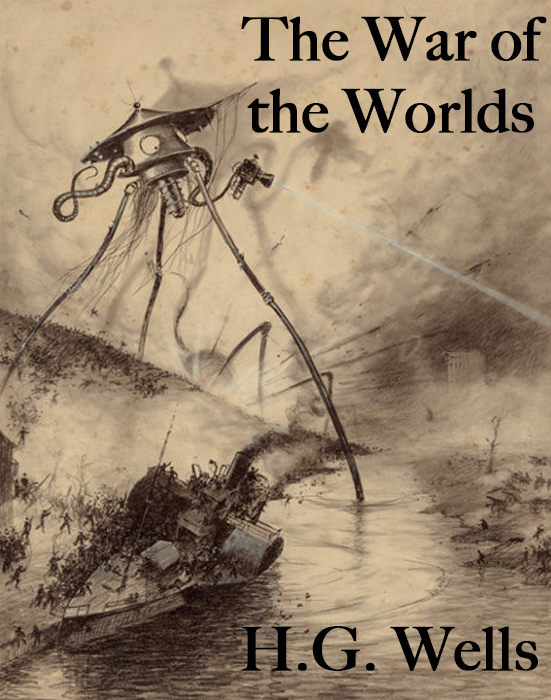
And this Thing I saw! How can I describe it? A monstrous* tripod*, higher than many houses, striding* over the young pine trees, and smashing* them aside in its career*; a walking engine of glittering* metal, striding now across the heather*; articulate* ropes of steel dangling* from it, and the clattering* tumult* of its passage mingling* with the riot* of the thunder. A flash, and it came out vividly, heeling* over one way with two feet in the air, to vanish and reappear almost instantly as it seemed, with the next flash, a hundred yards nearer. Can you imagine a milking stool tilted* and bowled* violently along the ground? That was the impression those instant flashes gave. But instead of a milking stool imagine it a great body of machinery* on a tripod stand.
monstrous怪物のような tripodトライポッド・三脚 stride大股で歩く smash砕く career疾走 glitterきらきら光る・きらめく heatherヘザー(の野原)(第22話参照) articulate関節のある dangleぶらさがる clatterガチャガチャいう tumult喧噪 mingle混ざる riot騒乱 heel傾く tilt傾く bowlすいすい進む machinery機械
1. 紫のandが繋いでるものは?
2. 緑のitsが指しているものは?
3. オレンジのitが指しているものは?
4. 青のto不定詞の用法は?
5. 茶色のasからはじまる節のはたらきは?
6. 青アンダーラインの文型表示は?
解答編
<英文解釈記号ルール>
〔〕→関係詞句・節
【】→接続詞句・節
《》→挿入句・節
[ ] →名詞句・節
()→副詞句・節
〈〉→形容詞句・節
And this Thing I saw! How can I describe it? (A monstrous* tripod*), (higher than many houses), (striding* over the young pine trees), and (smashing* them aside (in its career*)); (a walking engine of glittering* metal), (striding now across the heather*); (articulate* ropes of steel dangling* from it), and (the clattering* tumult* of its passage mingling* with the riot* of the thunder). A flash, and it came out vividly, (heeling* over one way (with two feet in the air)), (to vanish and reappear almost instantly 【as it seemed】, 《with the next flash》, a hundred yards nearer). Can you imagine a milking stool tilted* and bowled* violently along the ground? That was the impression those instant flashes gave. But (instead of a milking stool) imagine it a great body of machinery* on a tripod stand.
1. 紫のandが繋いでるものは、higher…, striding…, smashingです。ひたすらそのロボットを説明する言葉が続いていきます。
2. 緑のitsが指しているものは、this Thing(ロボット)です。passageはpass(通過する)の名詞形ね。
3. オレンジのitが指しているものも同じくthis Thing。a flashではないかな。
4. 青のto不定詞の用法は結果用法かな。といっても、came outのあとにvanish、そしてreappearという時間の流れがわかってればそれっぽく訳すだけですからあんまり用法は関係ないです。
5. 茶色のasのについては、特に用法の名前があるわけでもないですが、前に出て来た状況を補足説明するという働きです(いちおう品詞的には接続詞)。「reappear」したのが「a 100 yards nearerのように見えた」と、付け加えてるわけですね。だからなくてもOKです。Genius英和辞典には「as it seems:見たところ」「as it happens:折よく」といった例が載っておりました。
そういう意味では、as we know it(わたしたちが知っている~)と近いのかもしれないですね。
6. 青アンダーラインの部分は、命令文。imagine O to be Cのto beが略されたものと思っていいと思います。
全訳
そしてこいつを見たのだ!どう説明すればいいだろうか?家より大きく、怪物のように大きな三脚状のロボットだ。若い松の木を大またで歩きながらなぎ倒していた。光沢のある金属でできた歩く機械だった。ロボットはヘザーの野原を歩き出した。関節がある細い鋼鉄のアームがブラブラと揺れて、歩いているときにガチャガチャとやかましい音を立てていた。その音は雷の爆音と混ざって聞こえた。稲光が鮮やかにロボットを照らし出した。その瞬間は2本の足をうかせて、一方向に体を傾けるようにしていたが、すぐ見えなくなった。ほぼ瞬時に、次の稲光が走りふたたび現れた。見たところ100ヤードも進んでいた。三脚椅子が傾斜姿勢で、すごい速度で乱暴に地面を蹴っているのが想像できるだろうか?そうした瞬時の稲光で見えたロボットからは、そんな印象を受けた。でも、三脚椅子というよりは、三脚台に乗った巨大な機械をイメージしてくれるといいかもしれない。
第10章 第13段落 (第140話)
馬車で、馬と貨車をつなぐ木の棒を「shaft」というよ(以下の写真の黄色で囲んだ部分)。
日本語では一応「ながえ(轅)」っていう訳語があるにはあるわ。でも「ながえ」って言ったら、見当もつかない人が9割、の方を思い浮かべてしまう人が1割だと思うのよね。
英語のまま「シャフト」としてあげたほうが、まだ馬車の部品っぽさが伝わっていいんじゃないかな。
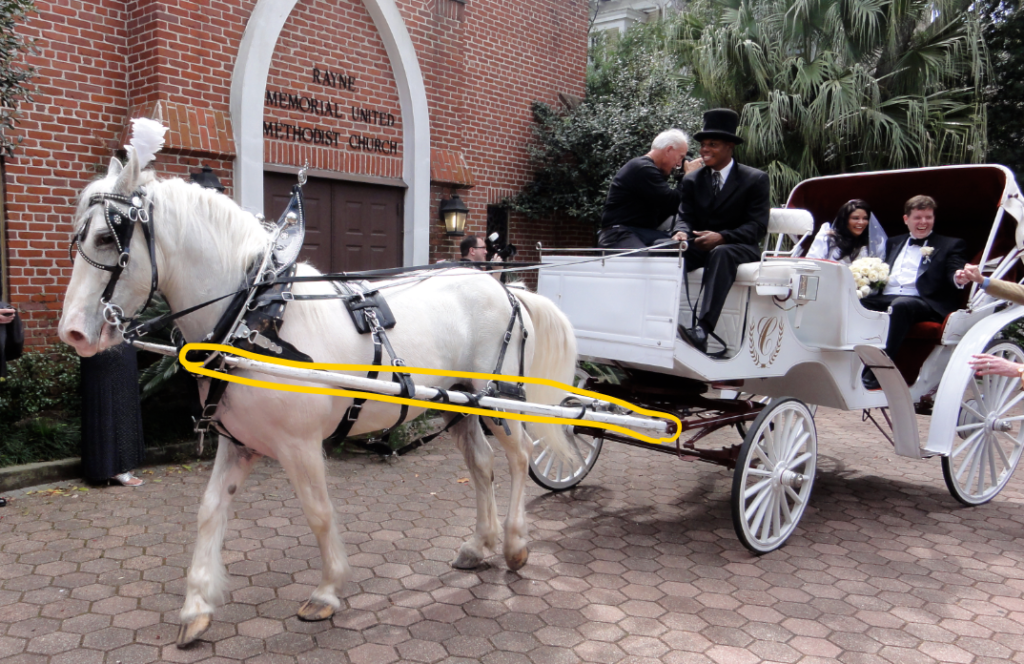
問題編
Then suddenly the trees in the pine wood ahead of me were parted*, as brittle* reeds* are parted by a man thrusting* through them; they were snapped* off and driven headlong*, and a second huge tripod appeared, rushing, as it seemed, headlong towards me. And I was galloping* hard to meet it! At the sight of the second monster my nerve went altogether. Not stopping to look again, I wrenched* the horse’s head hard round to the right and in another moment the dog cart had heeled* over upon the horse; the shafts* smashed* noisily, and I was flung* sideways and fell heavily into a shallow pool* of water.
part分かれる brittleかたくてもろい reedヨシ・アシ thrust押し込む snap off ポキンと折る headlong頭から・先っぽから gallopギャロップで走る・疾走する(第84話参照) wrench~roundひねる・曲げる heel over傾く shaftながえ・シャフト smash砕ける fling(fling-flung-flung)放りだす pool of water水たまり
1. 紫のasの意味・用法は?
2. 赤のthemが指しているものは?
3. オレンジのtheyが指しているものは?
4. 緑のitが指しているものは?
5. 赤アンダーラインの訳は?
途中の「as it seemed」については前段落でも書きましたが、「見たところ」という熟語的表現です!
…というか、この段落で壊された馬車、わたしのものなのですが。
返してもらわないとわたしも逃げられないじゃないですか。
すまん。過失だ。
謝ることはないさ。
だってこの段階で既に馬車はもう返さなくて大丈夫になってるからな。
また無責任な。
この言葉の意味はきっと数段落あとにわかるぜ。
解答編
<英文解釈記号ルール>
〔〕→関係詞句・節
【】→接続詞句・節
《》→挿入句・節
[ ] →名詞句・節
()→副詞句・節
〈〉→形容詞句・節
Then suddenly the trees 〈in the pine wood〉 〈ahead of me〉 were parted*, 【as brittle* reeds* are parted (by a man thrusting* through them)】; they were snapped* off and driven headlong*, and a second huge tripod appeared, (rushing, 《as it seemed》, headlong towards me). And I was galloping* hard to meet it! (At the sight of the second monster) my nerve went altogether. (Not stopping to look again), I wrenched* the horse’s head hard (round to the right) and (in another moment) the dog cart had heeled* over (upon the horse); the shafts* smashed* noisily, and I was flung* sideways and fell heavily (into a shallow pool* of water).
1. 紫のasは、「~ように」。ロボットが松林を押し分けながら進んでいく様子と、人がアシをかき分けながら進んでいく様子が同じだって言ってるわけですね。
2. 赤のthemが指しているものは、brittle reeds。
3. オレンジのtheyが指しているものは、the trees。
4. 緑のitが指しているものは、a second huge tripod。
5. 赤アンダーラインについて、at the sight of~は「~を見て」。定型表現ですね。my nerve went altogetherのほうは、直訳では「わたしの神経が完全に行ってしまった」ですが、文脈から考えて「正気を完全に失った」くらいでいいんじゃないでしょうか。
全訳
突然、前方の松林が2つに分かれた。まるで人がアシの野を進む際にかたいアシをかき分けているようだった。松の木はポッキリ折れ、先端から倒れてきた。さらに2番目の巨大なトライポッドロボが出現して、わたしにまっすぐ進撃してくるように見えた。疾走しているこの馬車とぶつかりそうになったのだ!この2つ目の怪物を見た瞬間、正気を完全に失った。もう一度そいつに目をやる暇もなく、馬の首を急に右に曲げた。次の瞬間、馬車は横倒しになり、馬は下敷きになった。シャフトは音を立てて折れ、わたしは横に投げ出され、浅い水たまりに激しく突っ込んだ。
第10章 第14段落 (第141話)
語り手が馬車の事故を起こして水たまりに投げ出されたところからスタートにゃ。
このparagraphの2文目「his neck was broken, poor brute」のカッコは原文からついてたよ!
問題編
I crawled* out almost immediately, and crouched*, my feet still in the water, under a clump* of furze*. The horse lay motionless (his neck was broken, poor brute*!) and by the lightning flashes I saw the black bulk* of the overturned* dog cart and the silhouette* of the wheel still spinning slowly. In another moment the colossal* mechanism* went striding by me, and passed uphill towards Pyrford.
crawlはう crouchedうずくまる clumpやぶ furzeハリエニシダ(低木の一種)(第53話) brute(大きめの)獣(親しみを込めた呼び方) bulkかたまり(a ponderous shapeless mass非常に大きく不定形のかたまり) overturnひっくり返す silhouetteシルエット colossal巨大な mechanism機械
1. 青アンダーラインの訳は?
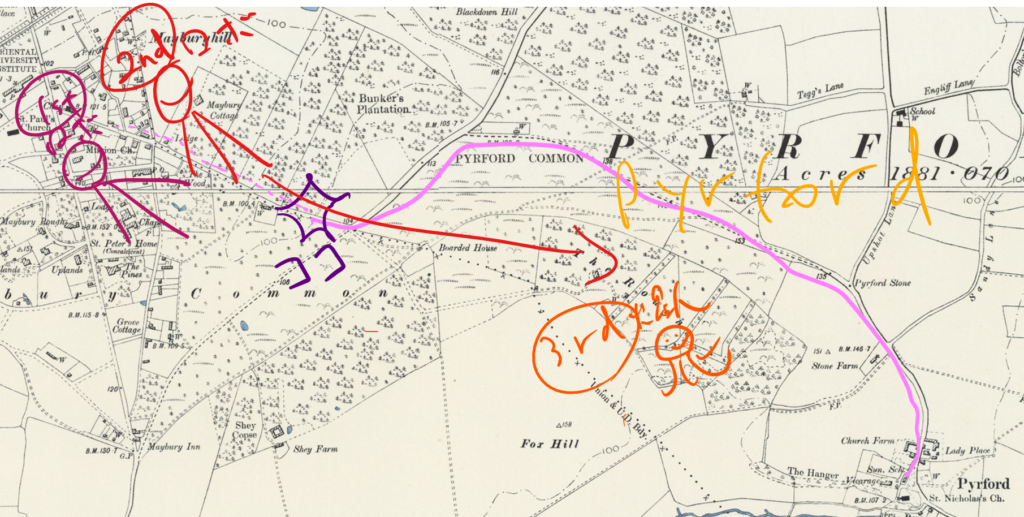
地図はこんな感じ。
火星人のロボ(2番目)はMaybury Hillの方から来て、語り手(まほちゃん)の事故現場付近を通って、Pyrford方面へ向かったのよ。
(のちの段落でも描写があるけど)ひょっとすると、3番目の宇宙船に乗っている火星人と合流しようとしたのかしらね。
空挺でも降下後に部隊を再集合させるのは基本だからな!
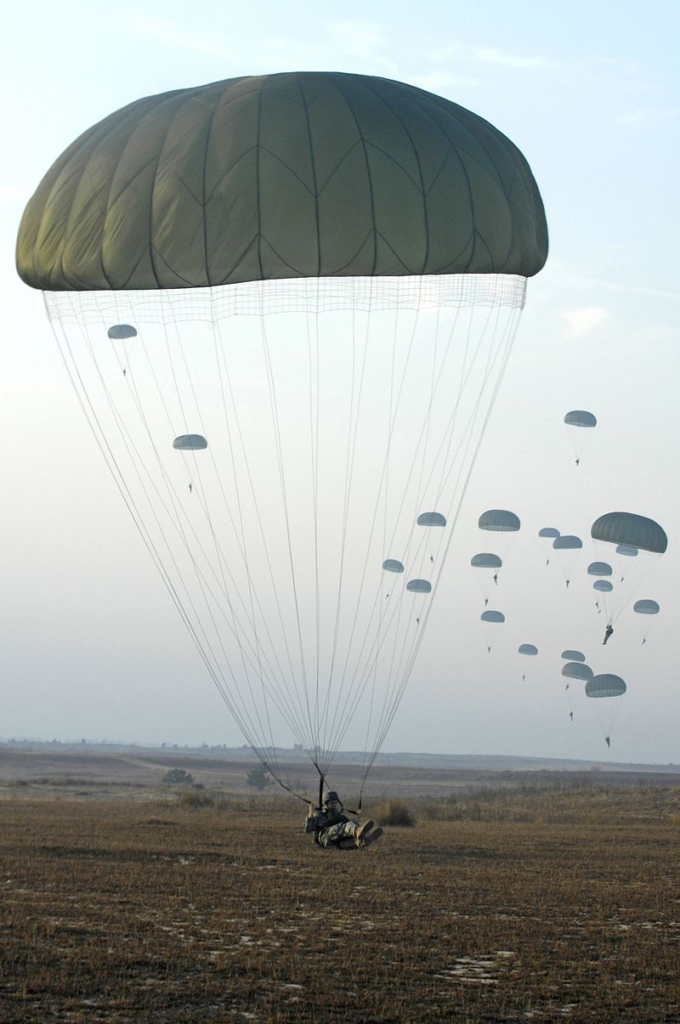
たしかに空挺みたいなものかな。でも技術レベルが違いすぎる…。
21世紀の実戦的空挺では、降下開始の高度は高くても地上10kmくらいで、部隊は数㎢に散らばるけど、火星人は5600万km先の火星から宇宙船空挺部隊を出撃させて、散らばる範囲を数㎢の誤差にとどめてるもんね。ほんとすごい。
しかも驚くべきことに、これらの宇宙船は同時発射じゃなくて、1日に1個ずつ発射(10個あるから10日間)されているんだ。忘れた人は第1章を見てくれ。
当然、着陸タイミングや状況も違ってくる。それなのにこんだけ至近距離に着陸させるなんて神業だぜ。
宇宙船の制御技術がすごい。
月の位置関係とかで引力も変化するでしょうに…。
というか、これが空挺部隊ってことは、あとで「本隊」が来るってことよね。
そうかもしれんが、どうだろうか。
第1章で見たように、火星の国力は寒冷化などでかなり衰退しているはずだ。そんななか、こうした巨大ロボを数百体も作れるだけの工業力があるか?
なるほどね。たしかに橋頭堡を確保するだけなら、世界最強のイギリスじゃなくて、サハラ砂漠やシベリアにでも着陸して、ゆっくり本隊の到着を待てばいいはず。
そうじゃないってことは、火星の環境悪化はよほど緊急の問題で、定石通りに戦争をする時間的余裕がないってことね。
ああ。火星人の狙いは、空挺でいきなり世界首都ロンドンを陥落させ、混乱に乗じて欧州中枢を制圧して、一刻でも早く火星人の移住民が入れるようにする環境を作ることだろうな。
それに、「新兵器は登場直後が最強」だから、火星の兵器を持っていっても、なるべく早く決着をつけないと対策を打たれるかもしれないという危惧もあるだろう。
ということで、ちょっと違うかもだけど、電撃戦・機略戦みたいなもんだな。火星人のロボットは確かにレーザー砲が脅威だが、じつは防御面が弱い(三脚状だから、1本でも足が折れたら行動不能)。どちらかというと機動力に特化しており、ある意味、軽戦車だ。
なるほどね。
史実では第1次世界大戦のときに生まれた「戦車」「空挺」、そして第2次世界大戦のときに生まれた「電撃戦」と、のちに有効だと証明される戦術を火星人は1900年時点で上手に実行してるわけね。
解答編
<英文解釈記号ルール>
〔〕→関係詞句・節
【】→接続詞句・節
《》→挿入句・節
[ ] →名詞句・節
()→副詞句・節
〈〉→形容詞句・節
I crawled* out almost immediately, and crouched*, 《my feet still in the water》, under a clump* of furze*. The horse lay motionless (his neck was broken, poor brute*!) and (by the lightning flashes) I saw the black bulk* of the overturned* dog cart and the silhouette* of the wheel still spinning slowly. In another moment the colossal* mechanism* went striding by me, and passed uphill towards Pyrford.
1. 青アンダーラインの訳については、my feet~waterが挿入で、crouchedがunder a clump of furzeに繋がってることが見えればいいかなってとこですね。
挿入部のところは「my feet was still in the water」と、wasを補ってやればいいかと。
全訳
すぐに倒れた馬車からはい出て、足が水たまりに浸かったまま、ハリエニシダの茂みの下でうずくまった。馬は動かなかった(首が折れたのだ。かわいそうな馬!)そして稲光の中で見えたのは、横倒しになった馬車の黒いかたまりと、まだゆっくりと空転している車輪のシルエットだった。次の瞬間、巨大な機械がわたしのそばを大またで歩いていって、パーフォードの方へ丘を上がって行った。
第10章 第15段落 (第142話)
問題編
2文目の途中「one of which gripped a young pine tree」のカッコは原文からついていたわ。
Seen nearer, the Thing was incredibly strange, for it was no mere* insensate* machine driving on its way. Machine it was, with a ringing metallic pace, and long, flexible*, glittering* tentacles (one of which gripped a young pine tree) swinging and rattling* about its strange body. It picked* its road as it went striding along, and the brazen* hood* that surmounted* it moved to and fro* with the inevitable suggestion of a head looking about. Behind the main body was a huge mass of white metal like a gigantic fisherman’s basket, and puffs* of green smoke squirted* out from the joints of the limbs* as the monster swept* by me. And in an instant it was gone.
mereほんの~だけの(強意) insensate(in+sense+ate)感覚がない・狂っている(≒insane) flexible柔軟な・しなやかな glitterキラキラ(テカテカ)光る rattleガタガタ鳴る(to make a series of short loud sounds when shaking or hitting against something hard) pick穴をあける・ひっかく brazenブロンズ色(暗めの茶色)の hoodフード・覆い surmount~の上に搭載する to and froあちこち puffひと吹き squirt噴出する limb足 sweep by通り過ぎる
1. 青色アンダーラインの文型表示は?
2. 赤のandが繋いでるものは?
3. オレンジのitが指しているものは?
4. 赤アンダーラインの訳は?
うげっ
火星人だけじゃなくて、ロボットも触手属性かよ。ロボの触手は金属だけど…。
なんかダサいぞ!
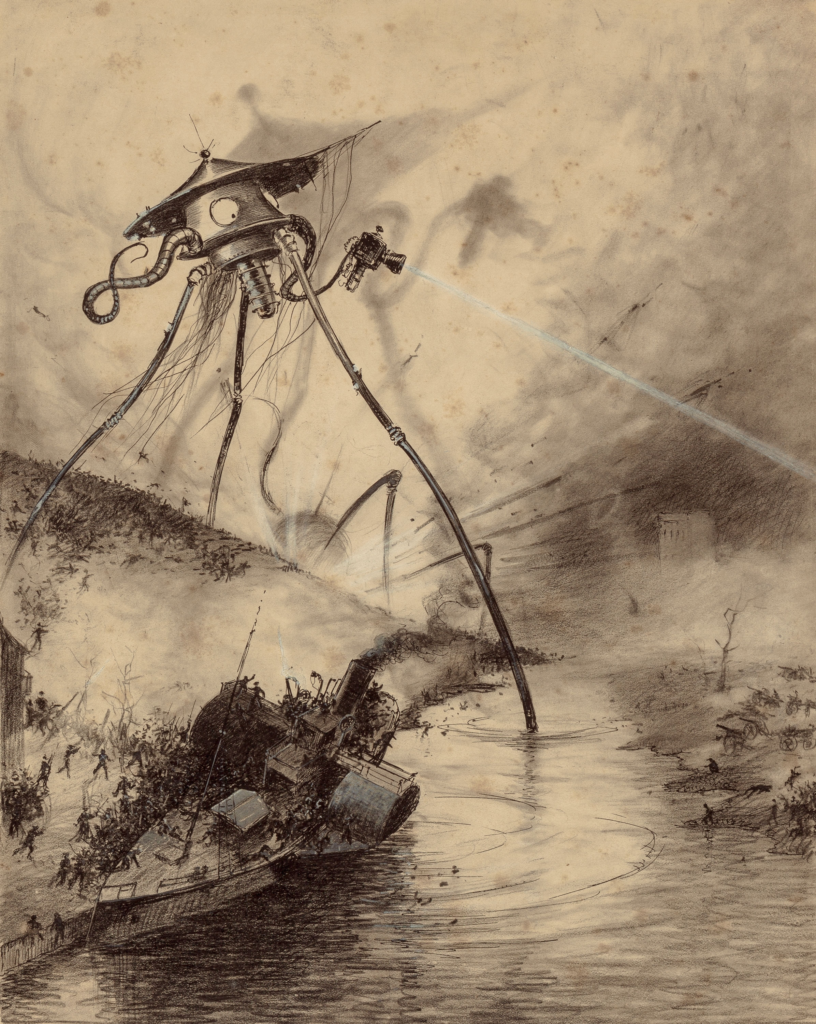
ちなみにこの段落の記述通りにイメージ図を描くとこんな風になるよ!
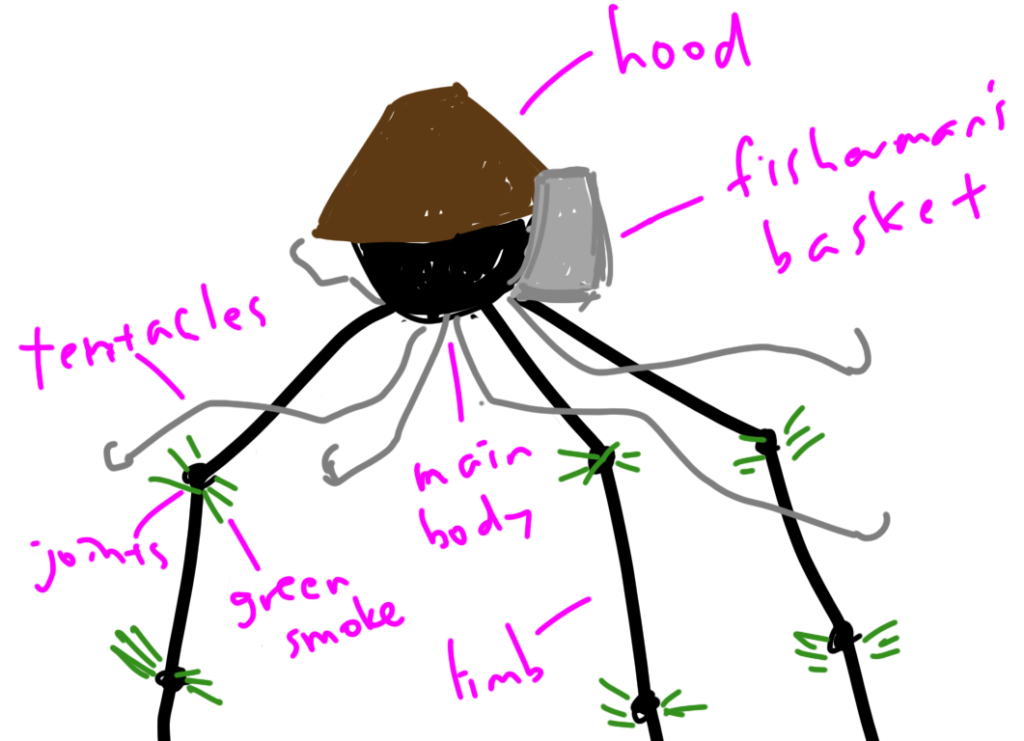
やっぱり見た目的には触手とかフードが邪魔だが、機能上はあった方が便利そうだな。
触手は今回の段落みたいに、「手」として使える。フードのところは火星人が乗り込むところだから、防御上覆いがあったほうがいいってことだろうな。
だね!
あと、fisherman’s basketというのはたぶんエンジン(発動機)かな。
ここで何かしらのエネルギーを生み出して、ロボの手足を動かしたり、レーザー砲を撃ったりしてるのかも!
たぶんガス動力で、「green smoke」っていうのは排気ガスみたいなものなんだろうな。
レーザー兵器も化学エネルギーを利用した化学レーザー砲とかだったり…。
解答編
<英文解釈記号ルール>
〔〕→関係詞句・節
【】→接続詞句・節
《》→挿入句・節
[ ] →名詞句・節
()→副詞句・節
〈〉→形容詞句・節
(Seen nearer), the Thing was incredibly strange, 【for it was no mere* insensate* machine driving on its way】. Machine it was, (with a ringing metallic pace, and long, flexible*, glittering* tentacles (one of which gripped a young pine tree) swinging and rattling* about its strange body). It picked* its road 【as it went striding along】, and the brazen* hood* 〔that surmounted* it〕 moved (to and fro*) (with the inevitable suggestion of a head looking about). (Behind the main body) was a huge mass of white metal like a gigantic fisherman’s basket, and puffs* of green smoke squirted* out (from the joints of the limbs*) 【as the monster swept* by me】. And (in an instant) it was gone.
1. 青色アンダーラインの文型表示は、MachineがC、itがS、wasがVの第2文型倒置CSV(代名詞が主語だからCVSじゃなくてCSV)。補語にはa, anがつかない(特に文頭)ことがあるので、A machineとなってなくてもOKです。
2. 赤のandが繋いでるものは、1語で言うとpaceとtentacles。Machine it was withより後はすべて機械の説明をしているわけです。
3. オレンジのitが指しているものは、Machineまたはthe Thing。
4. 赤アンダーラインの部分は、直訳だと「頭が見まわしているという避けられない示唆とともに」でおかしいので、inevitable suggestionを「間違いなく~の様子だ」といったふうに読み解いていいと思うのですがどうでしょうか。
全訳
近くで見ると、そのロボは信じられないほど奇妙だった。というのも、単にわけもなく走り続ける機械ではなかったのだ。その機械は金属音を鳴らしながら走っており、長くしなやかで光沢のある触手(そのうち一本は若い松の木をつかんでいた)は揺れ、奇妙な本体部分とぶつかりながらガチャガチャと音を立てていた。ロボは闊歩しながら道に穴をあけていた。ブロンズ色の頭巾状のもので上部は覆われており、その部分はくるくる動いていた。間違いなく、周りを見まわしている様子だった。本体の後ろには、大きな釣り籠のような巨大な白い金属物体がついていた。わたしのそばをその怪物が通ったとき、緑色の煙があちこちの足の関節から噴出していた。そしてすぐにいなくなった。
「ロボが道に穴をあけていた」という表現があるけど、雨のぬかるみの中、数トン(ひょっとすると10トン以上?)あるロボットが走ってるんだから、地面に穴が開くのも当然ね。
ただ計算してみると、穴はあくものの、ぬかるみに足を取られるってことはなさそうだ。
「兵器が地面に及ぼす圧力」について、ちょうどいいYouTubeの動画があるから紹介しておくぞ。「ワーテルローの戦いに現代戦車が現れたら?」っていう面白い動画だ。
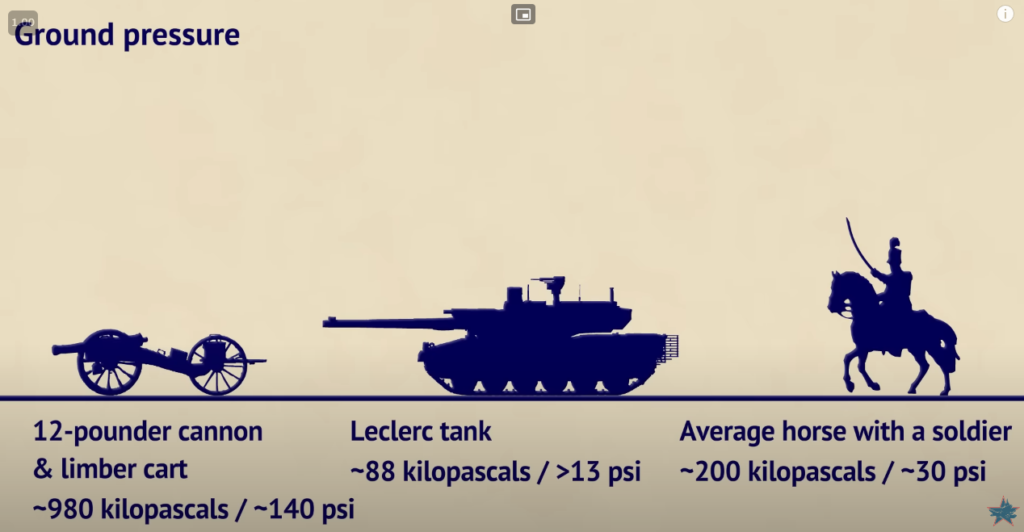
この動画では「地面がぬかるんでいたワーテルローの戦いで現代戦車は沈まないか?」っていう疑問に対して、こうした地面の圧力の話で「心配無用」と言ってるにゃ。
火星人ロボの重さが20トンで、足の太さが直径1m(3本の合計底面積は約2.4㎡)だとしても、
20×1000×9.8÷2.4÷1000≒80kPaとなって、だいたい現代戦車と同じくらいの対地圧力ってことになるわ。
ということで、戦車が動けるところなら、行動不能ってことではなさそうだな。
21世紀でも戦車がぬかるみにはまって動けない問題が、ウクライナの方で大変らしいわね…。
第10章 第16・17段落 (第143話)
問題編
So much I saw then, all vaguely* for the flickering of the lightning, in blinding highlights* and dense* black shadows.
As it passed it set up an exultant* deafening* howl* that drowned* the thunder—“Aloo! Aloo!”—and in another minute it was with its companion, half a mile away, stooping* over something in the field. I have no doubt this Thing in the field was the third of the ten cylinders they had fired at us from Mars.
vaguelyあいまいで highlight明るいところ dense見通せない exultant歓喜を込めた・勝利を表した deafening(<deaf+en+ing)耳をつんざくような howl遠吠え drown~をかき消す stoopかがむ
1. 赤アンダーラインの文型表示は?
2. 緑のandが繋いでるものは?
3. 青アンダーラインの部分の文型表示は?
「stooping」(かがんでる)ってことは、まだロボを組み立ててないってことかな。
結構でかいロボだから、パーツを宇宙船で持ってきて、地球で組み立ててるんだよね。
30mもありますからね。
それにしても火星人、鳴くんですね!
きっと単にほえてるだけだと思うんだけど、ひょっとするとコミュニケーションかも?
そこんとこ、火星人はどんな通信システムを使ってるのか気になるとこだな。無線だろうか?
この時代(19世紀後半)の地球では、電線を利用した電気通信(electric telegraph)が主流よね(※有線)。イギリス帝国の覇権時代よ。第79話を見てちょうだい。
無線技術は、イタリアのマルコーニらがちょうどいまごろに研究をはじめたんだ(イタリア人が出てきて嬉しい限りだ)。
20世紀では無線電信が主流になるぜ。第二次世界大戦では、送信機と受信機が一体化して、初期のトランシーバー(下画像:SCR-300)が軍用で使われるようになったよな。
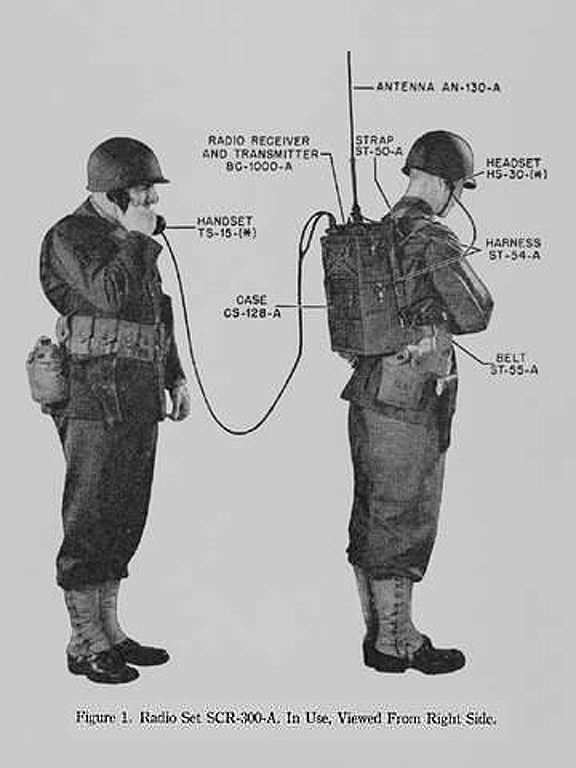
とゆーことで、火星人がこういうトランシーバーを使ってる可能性も大いにあるってわけだなっ。
解答編
<英文解釈記号ルール>
〔〕→関係詞句・節
【】→接続詞句・節
《》→挿入句・節
[ ] →名詞句・節
()→副詞句・節
〈〉→形容詞句・節
So much I saw (then), 《all vaguely* (for the flickering of the lightning》, (in blinding highlights* and dense* black shadows).
【As it passed】 it set up an exultant* deafening* howl* 〔that drowned* the thunder〕—“Aloo! Aloo!”—and (in another minute) it was with its companion, (half a mile away), (stooping* over something in the field). I have no doubt 【this Thing in the field was the third of the ten cylinders they had fired at us from Mars】.
1. 赤アンダーラインの文型表示は上の通り。OSVの第三文型前置としましたが、so muchは副詞としてもいいのかな? all~lightningは挿入部。
2. 緑のandが繋いでるものは、前後のSV。
3. 青アンダーラインの部分の文型表示は、SVOの第三文型。doubtのあとに同格のthatが省略されています。
全訳
その間、目がくらむような強い光と漆黒の闇の中で、とても多くのことを目にした。稲光が明滅を繰り返していたから、はっきりしない光景ではあったけれども。
ロボが通り過ぎる瞬間、その中の火星人が「アルー!アルー!」と、耳をつんざくような歓喜の叫び声を上げた。雷の音をかき消すほどだった。次の瞬間見ると、半マイルほど先で、野原の中で身をかがめている仲間と合流していた。間違いなく、畑の中にあるこの物体は火星から打ち出された10本の円筒宇宙船のうちの3番目のものだ。
やっぱりこのロボは、3番目の宇宙船に乗っていた小隊と合流したみたいにゃ(第141話)。
第10章 第18・19段落 (第144話)
今回は短いから2段落だぜっ
問題編
For some minutes I lay there in the rain and darkness watching, by the intermittent* light, these monstrous beings of metal moving about in the distance over the hedge* tops. A thin* hail* was now beginning, and as it came and went their figures grew misty* and then flashed into clearness again. Now and then came a gap in the lightning, and the night swallowed* them up.
I was soaked with hail above and puddle* water below. It was some time before my blank* astonishment would let me struggle* up the bank* to a drier position, or think at all of my imminent* peril*.
intermittent断続的な hedge生垣 thinまばらな hailひょう・あられ mistyかすんだ swallow飲み込む be soaked with~で濡れて puddle水たまり blankうつろな・ぼーっとした struggleもがく・なんとか進む bank岸・土手 imminent(<im+minent)差し迫った peril危険
1. オレンジのwatchingがかかっている語は? あと、watchingの目的語や補語が存在したら答えてね。
2. ピンクのitが指しているものは?
3. 赤のfigureの意味は?
4. 紫のandが繋いでるものは?
5. 茶色のnow and thenの意味は?
6. 緑のandが繋いでるものは?
7. 青のorが繋いでいるものは?
8. 赤アンダーラインの訳は?
解答編
<英文解釈記号ルール>
〔〕→関係詞句・節
【】→接続詞句・節
《》→挿入句・節
[ ] →名詞句・節
()→副詞句・節
〈〉→形容詞句・節
(For some minutes) I lay there (in the rain and darkness) (watching, 《by the intermittent* light》, these monstrous beings of metal moving about (in the distance) (over the hedge* tops)). A thin* hail* was now beginning, and 【as it came and went】 their figures grew misty* and (then) flashed into clearness again. (Now and then) came a gap in the lightning, and the night swallowed* them up.
I was soaked with hail (above) and puddle* water (below). It was some time 【before my blank* astonishment would let me struggle* (up the bank*) (to a drier position), or think 《at all》 of my imminent* peril*】.
1. オレンジのwatchingがかかっている語は、layです。I lay~watching…という形です。文型で言うとSVCのCに当たるといっていいのかな。そしてwatchingの目的語はthese monstrous beings of metal(火星人)。補語はmoving。watch O Vingの形ですね。
2. ピンクのitが指しているものは、a thin hail。
as it came(あられが来た時)→their figures grew misty(姿がぼんやりする)で、as it went(あられが去った時)→their figures flashed into clearness again という対応関係になっていますね。
3. 赤のfigureの意味は「姿」。「思う」「数字」とか様々な意味がある多義語ですね。
4. 紫のandが繋いでるものは、grewとflashed。
5. 茶色のnow and thenの意味は「ときおり」「ときどき」。sometimes, occasionally, every now and then, once in a while, from time to time, on and off など同義語がいっぱいあることでおなじみのシリーズです。
6. 緑のandが繋いでるものはhailとpaddle water。
7. 青のorが繋いでいるものは、struggleとthink。
8. 赤アンダーラインの訳については、「全訳」の下で説明してます。
全訳
数分間、雨夜の中で倒れていた。そのあいだ、これら金属製の怪物が生垣の向こうの遠い所で動き回っている姿を、断続する稲光の中で見ていた。まばらなあられが降り始めた。あられが吹いたり止んだりするたびに、ロボットの姿がかすんだり、再度はっきりと見えるようになったりした。ときどき雷光が止むときがあり、ロボットは闇にとけていった。
上半身はあられのせい、下半身は水たまりのせいで濡れていた。わたしは呆気にとられていたので、斜面を這いあがって濡れていないところへ移ったり、喫緊に差し迫った危険について頭を巡らせたりするには、しばらく時間が必要だった。
It was some time 【before my blank* astonishment would let me struggle* (up the bank) (to a drier position), or think 《at all》 of my imminent peril*】. についてだ。たぶんここ10段落くらいで一番訳しづらい文だな。
まず①「it was some time before~」は「~するまではしばらく時間が必要だった」。「it won’t be long before~」(まもなく~する)とかを思い出せれば大丈夫そう。
このフレーズが否定っぽいイメージだなって思っておくといいぞ。
②「my blank astonish would let me…」はどこからどう見たって名詞構文・無生物主語だ。動詞化して「I was blankly astonished」としてやるとよさそうだな。ここを「うつろな驚き」と訳しても日本語では通じにくいから、「茫然自失して」とか「呆気に取られて」くらいでいいんじゃないかと思うぜ。
③「struggle* (up the bank) (to a drier position)」は、「岸に這いあがって乾いた場所に移る」くらいかな。struggleは「もがく」というのが基本イメージだけど、状況に応じて訳しわけなければならない難しい動詞だ。
④「think 《at all》 of my imminent peril*」は普通に「差し迫った危険について考える」でいいと思うぞ。
以上のことを総合すると、全訳のところにあるみたいな訳になるな。
パーツごとに分解して、あとで足し合わせるという技は汎用的に役に立つんじゃないかと思う。
第10章 第20段落 (第145話)
問題編
Not far from me was a little one-roomed squatter’s* hut* of wood, surrounded by a patch* of potato garden. I struggled to my feet* at last, and, crouching* and ( ) use of every chance of cover, I made a run for this. I hammered* at the door, but I could not make the people hear (if there were any people inside), and after a time I desisted*, and, availing ( ) of a ditch* for the greater part of the way, succeeded in crawling, unobserved by these monstrous machines, into the pine woods towards Maybury.
squatter不法占拠者 hut小屋 patch区画 struggle to one’s feetなんとか立ち上がる crouchかがむ hammerガンガン叩く desist(<de+sist)やめる ditch明渠・用水路(第54話)
1. 赤のandが繋いでるものは?
2. 緑のカッコの中に入る一語(動詞のing形)は?
3. 茶色のandが繋いでるものは?
4. 青のカッコ内に入る代名詞一語は?
ずっと数段落ダラダラと同じような内容が続いてるにゃ。
登場人物も会話も何もない上に、すごく暗い雰囲気にゃ。
21世紀の超速展開ラノベとは違うのだよ。
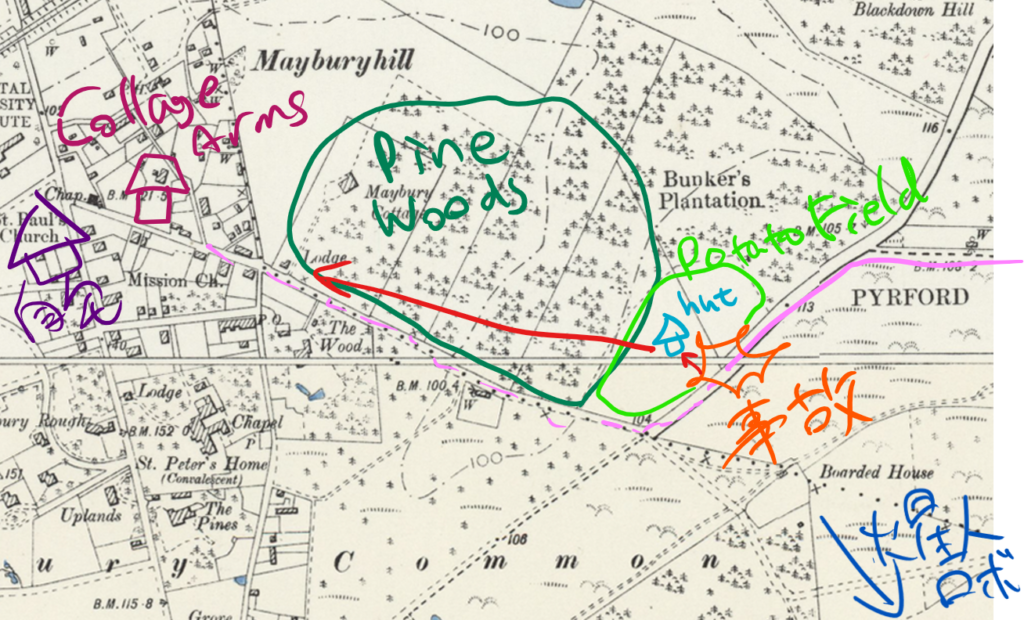
ともあれ、こちらが今後数段落のMapだよ!
ピンクで書いている線が本来のコース。でも途中で事故にあって、道を挟んで火星人と反対側のジャガイモ畑→小屋→松林 という風に赤線のコースを進んでるわけだね!
とりあえず自宅に向かってるってかんじだよ!
解答編
<英文解釈記号ルール>
〔〕→関係詞句・節
【】→接続詞句・節
《》→挿入句・節
[ ] →名詞句・節
()→副詞句・節
〈〉→形容詞句・節
(if there were any people inside)の部分のカッコは原文からついていたわ。
(Not far from me) was a little one-roomed squatter’s* hut* of wood, (surrounded by a patch* of potato garden). I struggled to my feet* (at last), and, 《crouching* and making use of every chance of cover》, I made a run for this. I hammered* at the door, but I could not make the people hear (if there were any people inside), and (after a time) I desisted*, and, 《availing myself of a ditch* (for the greater part of the way)》, succeeded in crawling, 《unobserved by these monstrous machines》, into the pine woods towards Maybury.
1. 赤のandが繋いでるものは前後の2文。
2. 緑のカッコの中に入る一語(動詞のing形)はmaking。make use of~を利用する ですね。
3. 茶色のandが繋いでるものはdesistedとsucceeded。
4. 青のカッコ内に入る代名詞一語はmyself。
avail oneself of~≒make use of~≒take advantage of≒put~to use≒utilize≒use ですね!
全訳
わたしからそう遠くないところで、不法占拠者が住み着いている1部屋の小さな木造小屋がジャガイモ畑の中に立っていた。ようやく立ち上がって、かがんでなるべく遮蔽物を利用しながら小屋に走って行った。ドアをガンガンと叩いたが、中にいる人は聞こえていなかったようだ(もしかすると誰も中にいなかったのかもしれないが)。そしてしばらく叩いたのちに諦めた。その後、大部分は明渠を利用しながらメイベリーの方向の松林へと這って行った。この怪物の機械に見つからずに無事松林へと入っていけた。
「making use of every chance of cover」の「cover」は「遮蔽物」だな。
「availing myself of a ditch」も似たようなことだ。
遮蔽物の利用は歩兵だけでなく戦車でも基本だぜ。さすがまほちゃん。
第10章 第21段落 (第146話)
問題編
Under cover of this I pushed on, wet and shivering* now, towards my own house. I walked among the trees trying to find the footpath*. It was very dark indeed in the wood, for the lightning was now becoming infrequent*, and the hail, which was pouring down in a torrent*, fell in columns* through the gaps in the heavy foliage*.
shiver震える footpath小道 infrequent(<in+frequent)頻度が下がって torrent激流 column柱 foliage葉(集合名詞)
1. オレンジのpour downの意味は?
イギリスってそんなにhail(ひょう/あられ)が降るのか?
たしかに今は初夏だが…。
日本では年に1~2回だよな。
「For the recent period from 1980 to 1999, Table 3 indicates that damaging hail (TORRO intensity of H1 or more) has been reported on 6 to 25 days each year with an average annual frequency of 14 days in Great Britain」(https://www.sciencedirect.com/science/article/abs/pii/S0169809500000818)
とのことだな。1年に平均14日程度。そこそこ降るぞ。
解答編
<英文解釈記号ルール>
〔〕→関係詞句・節
【】→接続詞句・節
《》→挿入句・節
[ ] →名詞句・節
()→副詞句・節
〈〉→形容詞句・節
(Under cover of this) I pushed on, 《wet and shivering* now》, towards my own house. I walked (among the trees) (trying to find the footpath*). It was very dark indeed (in the wood), 【for the lightning was now becoming infrequent*】, and the hail, 《which was pouring down (in a torrent*)》, fell (in columns*) (through the gaps in the heavy foliage*).
1. オレンジのpour downの意味は「激しく降る」。熟語的に覚えておくと良いのかもしれません。pourで「注ぐ」ですね。
全訳
びしょ濡れで身震いしながら、木のかげに隠れて自宅の方へ進んでいった。わたしは小道を探しながら木の中を歩いた。林の中は本当に暗かった。というのも雷がそのころには鳴りやみかけていたのだ。ひょうは滝のように大降りになっていたが、森の中では大きな葉の隙間から柱のように降り注いでいた。
第10章 第22段落 (第147話)
問題編
If I had fully realised the meaning of all the things I had seen I should have immediately worked my way* round through Byfleet to Street Cobham, and so gone back to rejoin my wife at Leatherhead. But that night the strangeness of things about me, and my physical wretchedness*, prevented me, for I was bruised*, weary*, wet to the skin*, deafened and blinded by the storm.
work one’s way困難ながらも移動する wretchedness(<wretch+ed+ness)みじめさ・悲惨さ be bruised打撲する weary疲れた wet to the skin肌まで濡れる(=ぐっしょり濡れる)
1. オレンジのandが繋いでるものは?
2. 青アンダーラインの主語と動詞は?
3. 紫のandが繋いでるものは?
4. 緑のandが繋いでるものは?
地図はこちら。この段落で言及されているのは、ByfleetとCobhamを経由してLeatherheadに至るルートね。
火星人が南側に侵攻している現在の状況では、たしかに一番安全なルートなの。
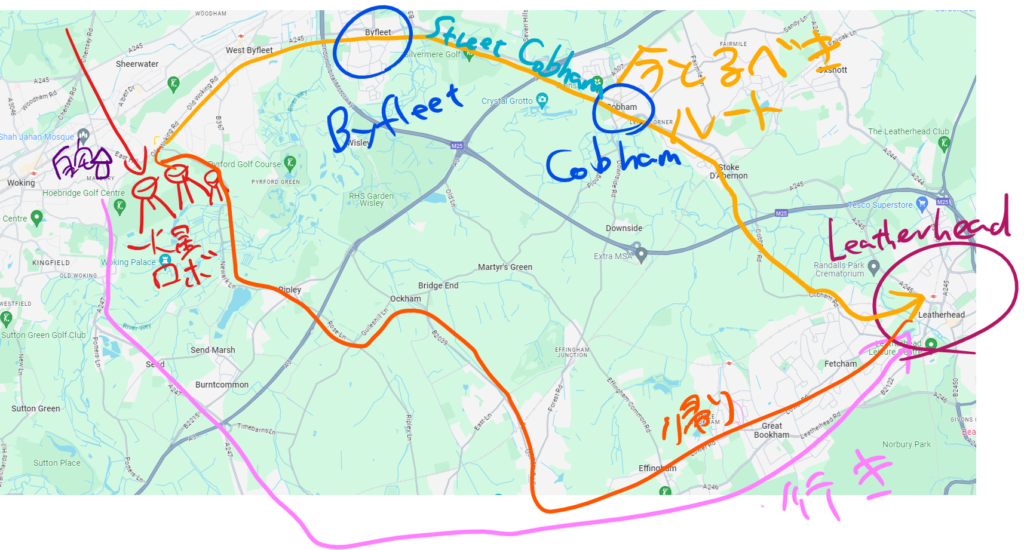
ちなみにStreet Cobhamは道路の名前というより、地名にゃ。
21世紀の地図には載っていないけど、OS社の地図をみるとCobhamの中にStreet Cobhamという地名が確認できるにゃ。
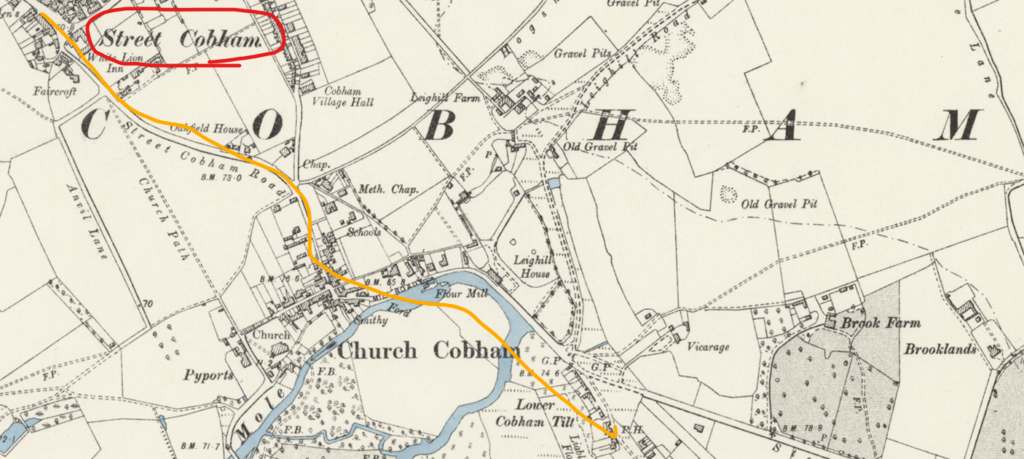
解答編
<英文解釈記号ルール>
〔〕→関係詞句・節
【】→接続詞句・節
《》→挿入句・節
[ ] →名詞句・節
()→副詞句・節
〈〉→形容詞句・節
【If I had (fully) realised the meaning of all the things 〔I had seen〕】 I should have (immediately) worked my way* (round through Byfleet) (to Street Cobham), and so gone back (to rejoin my wife at Leatherhead). But (that night) the strangeness of things about me, and my physical wretchedness*, prevented me, 【for I was bruised*, weary*, wet to the skin*, deafened and blinded (by the storm)】.
1. オレンジのandが繋いでるものはworkedとgone。
2. 青アンダーラインはI should have worked/goneが主節のSV。
3. 紫のandが繋いでるものはthe strengenessとmy physical wretchedness。
4. 緑のandが繋いでるものは?bruised, weary, wet, defened, blinded。
全訳
もし目にしたものを総合してその意味を完全に理解できていたなら、バイフリートを通ってストリート・コブハムの方へすぐにでもなんとか歩き出し、レザーヘッドにいるターちゃんに再び会うため戻っていたはずだ。だがその夜わたしは異様な状況に圧倒され、体力的にも苦しかったので戻れなかった。わたしは打撲し疲労し、ぐっしょり濡れて、雷で聴覚も視覚も麻痺していたのだ。
さいごの「deafened and blinded」は「耳が聞こえなかったり目が見えなかったりした」というのはさすがに言い過ぎだから、「聴覚と視覚が麻痺していた」くらいにとどめておこうか。
第10章 第23段落 (第148話)
問題編
I had a vague idea of going on to my own house, and that was as much motive* as I had. I staggered* through the trees, fell into a ditch and bruised* my knees against a plank*, and finally splashed* out into the lane that ran down from the College Arms. I say splashed, for the storm water was sweeping* the sand down the hill in a muddy torrent*. There in the darkness a man blundered* into me and sent me reeling* back.
motive動機 staggerふらふら歩く bruise~を打撲する plank板 splash水をバシャバシャさせて sweep押し流す blunderぶつかる reelよろめく muddy torrent濁流
1. 赤アンダーラインの訳は?
2. オレンジのandが繋いでるものは?
3. 緑のandが繋いでるものは?
現在のマップはこちら(再掲)。
赤い矢印がまほちゃん(語り手)がたどったルートよ。この段落で松林から道にようやく出られたってとこね。
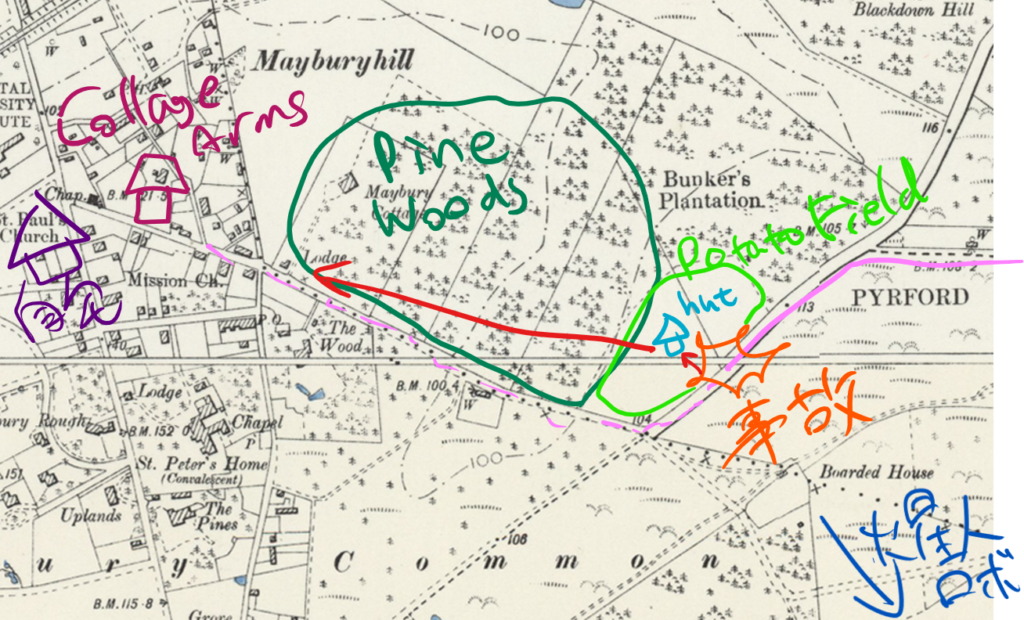
ちなみに、「Collage Arms」というのはパブだ。1881年ごろからあったらしい(参考)が、残念ながら2007年に潰れてしまったらしい。
21世紀のイギリスでは(特に近年)コロナの影響もあって、パブはどんどんなくなっているのよ。
解答編
<英文解釈記号ルール>
〔〕→関係詞句・節
【】→接続詞句・節
《》→挿入句・節
[ ] →名詞句・節
()→副詞句・節
〈〉→形容詞句・節
I had a vague idea of [going on to my own house], and that was as much motive* as I had. I staggered* (through the trees), fell (into a ditch) and bruised* my knees (against a plank), and (finally) splashed* out (into the lane 〔that ran down (from the College Arms)〕). I say splashed, 【for the storm water was sweeping* the sand (down the hill) (in a muddy torrent*)】. (There) (in the darkness) a man blundered* (into me) and sent me reeling* back.
1. 赤アンダーラインの訳は直訳だと「それ(家に帰る漠然とした考え)は、わたしが持っていたのと同じくらいのモチベーションだった」ということで「わたしはその程度しか動機がなかった」くらいですかね。
2. オレンジのandが繋いでるものはstaggered, fell, bruised, splashed。
3. 緑のandが繋いでるものは、blundered, sent。
全訳
自宅に向かうという漠然とした考えだけがあった。歩き続けるモチベーションなどその程度でしかなかった。林の中でよろめきながら歩き、水路に落下したり板に膝をぶつけたりしながら、とうとうカレッジ・アームズに繋がっている小道にバシャバシャと出た。いま「バシャバシャ」と書いたが、嵐の大雨が丘の方から砂を押し流してきており濁流となっていたのだ。その暗闇の中でわたしは誰かとぶつかり、押されてよろめいた。
第10章 第24段落 (第149話)
問題編
He gave a cry of terror, sprang* sideways, and rushed on before I could gather my wits* sufficiently to speak to him. So heavy was the stress of the storm just at this place that I had the hardest task to win my way* up the hill. I went close up to the fence on the left and worked my way along its palings*.
spring(spring-sprang-sprung)飛び跳ねる wit機転・頭の回転 win one’s wayゆっくりと頑張って進む(≒work one’s way) paling柵
1. 青のandが繋いでるものは?
2. 青アンダーラインの文型表示は?
語り手の家がある「Maybury Hill」地区はその名の通り丘の上にあるから、坂を上らないといけないんだよ!
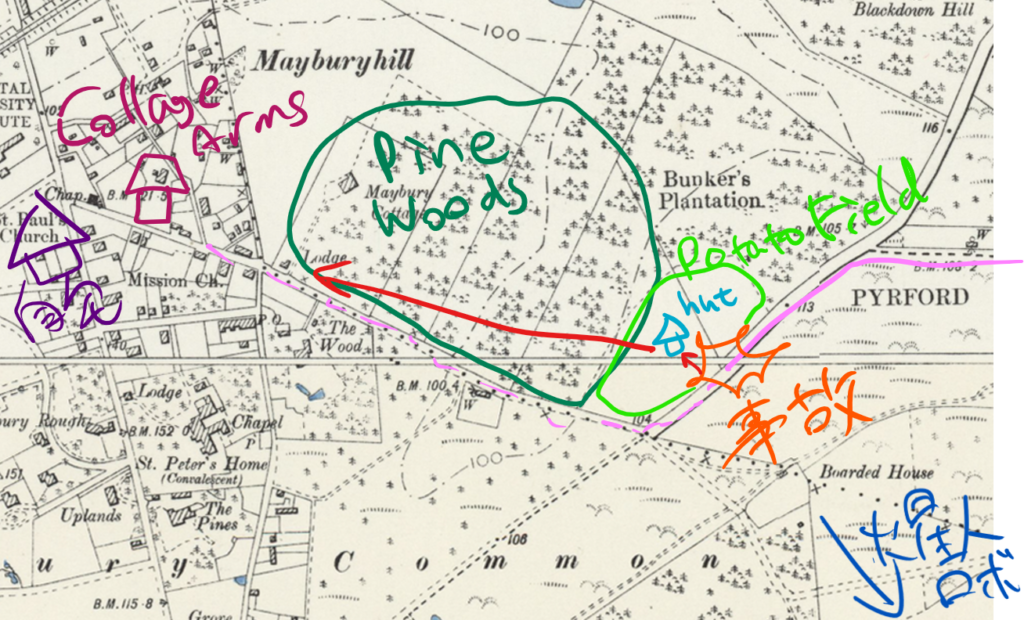
解答編
<英文解釈記号ルール>
〔〕→関係詞句・節
【】→接続詞句・節
《》→挿入句・節
[ ] →名詞句・節
()→副詞句・節
〈〉→形容詞句・節
He gave a cry of terror, sprang* sideways, and rushed on 【before I could gather my wits* sufficiently (to speak to him)】. So heavy was the stress of the storm (just at this place) 【that I had the hardest task to win my way* up the hill】. I went (close) up to the fence (on the left) and worked my way (along its palings*).
1. 青のandが繋いでるものはgave、sprang、rushed on。
2. 青アンダーラインの文型表示は、heavyがC、wasがV、the stressがS。以前どこかで言った通り、so~that構文で「So V S that~」の倒置はよく出てきますね。
全訳
彼は恐怖で悲鳴を上げ、道のわきに飛びのいた。わたしは声をかけようとしたが、頭の回転が追い付く前に彼は急いで走りだしてしまった。そのときには嵐のせいでひどく疲労がたまっていたので、丘を懸命に登るのはこの上なくしんどかった。道の左側に渡り、そこにあった柵を手すりにして進んでいった。
第10章 第25段落 (第150話)
ちょっと今回はR18Gだ。気を付けてくれ。
問題編
Near the top I stumbled* upon something soft, and, by a flash of lightning, saw between my feet a heap of black broadcloth* and a pair of boots. Before I could distinguish clearly how the man lay, the flicker of light had passed. I stood over him waiting for the next flash. When it came, I saw that he was a sturdy* man, cheaply but not shabbily* dressed; his head was bent under his body, and he lay crumpled* up close to the fence, as though he ( be ) flung* violently against it.
stumbleつまずく broadclothブロード sturdyたくましい・頑健な shabbily (<shabby+ly)みすぼらしく crumple倒れて・ぺちゃんこになって flung(fling-flung-flung) 激しく投げ飛ばす・激しく打ち付ける
1. 茶色のandが繋いでるものは?
2. 赤のitが指しているものは
3. 緑のseeの意味は?
4. 青のカッコの中にbeを適切に活用させて入れると?
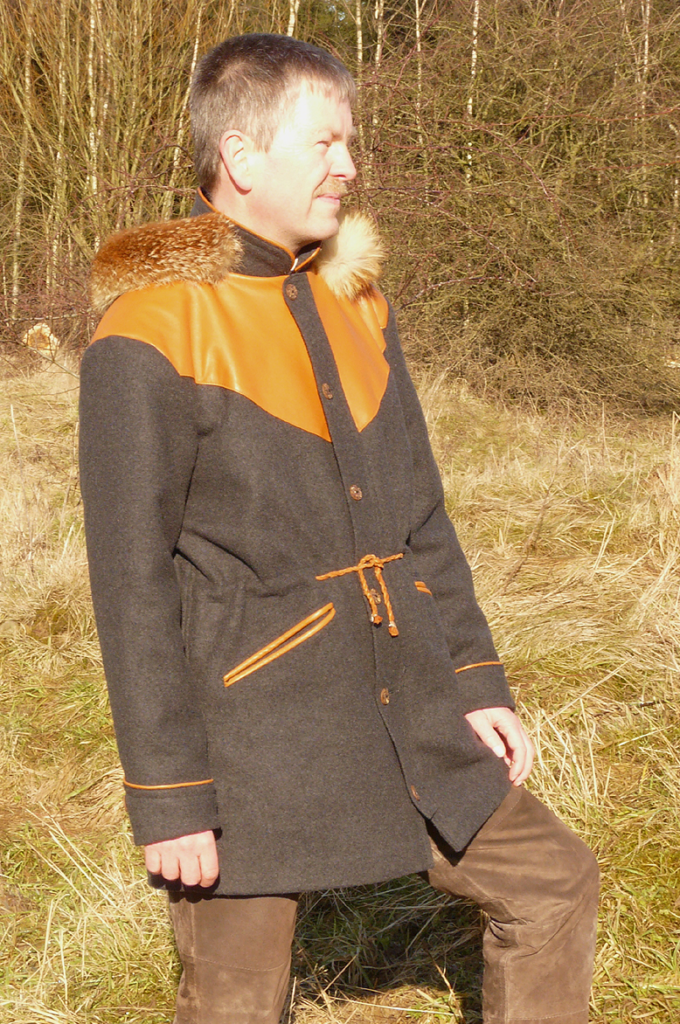
broadclothは日本語では「ブロード」 といったりする生地の名前です。目が細かくて丈夫らしいです。わたしは衣服にはまったく詳しくないので専門サイトを見てくださいね。

解答編
<英文解釈記号ルール>
〔〕→関係詞句・節
【】→接続詞句・節
《》→挿入句・節
[ ] →名詞句・節
()→副詞句・節
〈〉→形容詞句・節
(Near the top) I stumbled* (upon something soft), and, (by a flash of lightning), saw 《between my feet》 a heap of black broadcloth* and a pair of boots. 【Before I could distinguish clearly [how the man lay]】, the flicker of light had passed. I stood (over him) (waiting for the next flash). 【When it came】, I saw [that he was a sturdy* man, (cheaply but not shabbily* dressed)]; his head was bent (under his body), and he lay (crumpled* up close to the fence), 【as though he had been flung* violently against it】.
1. 茶色のandが繋いでるものはstumbled, saw。
2. 赤のitが指しているものはthe next flash。
3. 緑のseeの意味は「わかる」。see that~だと「わかる」「確実に~する」という2つの意味がありますね。
4. 青のカッコの中にbeを適切に活用させて入れると「had been」になります。as if[though]の中身の問題は何度も出ていますからそろそろ陳腐化しましたね。flung(叩きつけられた)のはlay crumpled(倒れて横たわっていた)より前ですから過去完了です。
全訳
頂上近くで、何か柔らかいものにつまずいた。稲光が一瞬走るうちに、黒いブロードの服と一足のブーツが足元にあるのが目に入った。その男が横たわっている様子がはっきりわかる前に、明滅していた稲光は消えてしまった。彼を見下ろしながら稲光が来るのを待った。次に稲光が来た時、彼はしっかりした体つきで、安そうだが着古してはいない格好なのがわかった。頭部は曲がって体の下敷きになっていた。その子は柵のすぐ近くで倒れていた。あたかも荒々しく柵に叩きつけられたようだった。
「sturdy man」(たくましい男)ってある。以下はGoogle Ngram Viewerでトレンドを追ってみたところだ。sturdyのあとにつづく名詞として、man:赤色、woman:青色、boy:オレンジ色、girl:緑色 でグラフ化しているぜ。
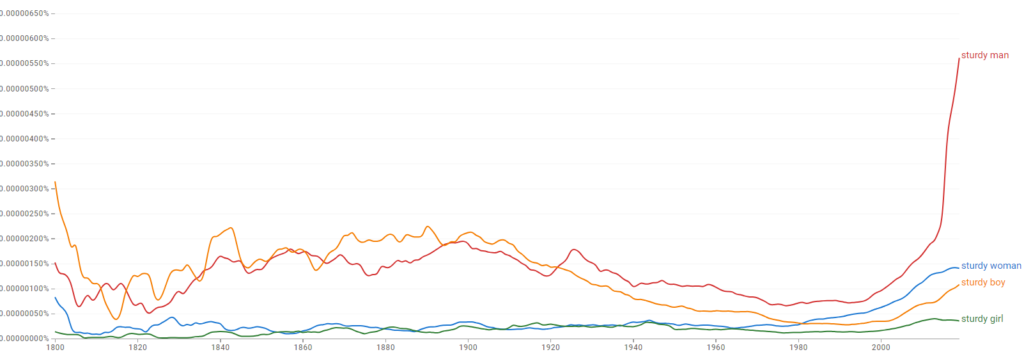
第二次世界大戦までは圧倒的にsturdy man/boyが多いね!
戦後はman/boyにはだんだん使われなくなってきたけど、woman/girlは着実に伸びていってる感じ。
そのあとまたsturdyブームが来ているのが謎だけど…。
第10章 第26段落 (第151話)
R18G注意にゃ。
問題編
Overcoming the repugnance* natural to one who had never before touched a dead body, I stooped* and turned* him over to feel for his heart. He was quite dead. Apparently his neck had been broken. The lightning flashed for a third time, and his face leaped upon me. I sprang to my feet*. It was the landlord of the Spotted Dog, whose conveyance* I had taken.
repugnance嫌悪感 stoopかがむ turn overひっくり返す spring to my feet跳び上がる conveyance(<convey+ance)乗り物
1. 赤のoneの意味は?
2. 青アンダーラインの主語と動詞は?
あれ「the landlord of the Spotted Dog」ってことはわたしですね。
…わたし、もしかしてお亡くなり?
もしかしなくても、確実に。
小説中でわたしの出番ほとんどなかったじゃないですかぁ
というか、わたしについて書かれてるところの半分くらいは遺体についてじゃないですか
ひどくないですか?
でも少なくともわたしよりは出番多かったからいいじゃない。
あと、ずっと「poor Ogilvy」(かわいそうなオギルヴィ)って書かれてるわたしより、そっちは「a sturdy man, cheaply but not shabbily dressed」って書かれてるからよっぽど好待遇だぜ。
まあ、会話編ではいつまでも生きてますし。
というかここの会話編メンバーのうち、小説中で生きてる人の方が少なくないか?
まず、交渉代表団メンバー(わたし・マリー様(ステント)・ケイ(ヘンダーソン))は最初にレーザー光線でやられてるだろ。そして絹代さん(主人)がこの段落で死亡確認。
語り手は絶対死なない(主人公補正)。ダー様(語り手の妻)はレザーヘッドに避難してて、そこにはまだ火星人は侵攻してないから「今のところは」生きてる。ありすちゃん(デニング)は一切描写がないけど、隕石学の家元ならきっとロンドン在住だから「今のところは」生きてそうだ。
ということで生存は7分の3だな。
語り手以外全員消えていきそうな雰囲気ね。
わたしはコナン君(死神)か。
わたしはもう小説に出てこないことがはっきりしてるからともかく、ダージリンさん、いつ消えるのかしら。
何を期待してるのよ。
ここは死亡合同誌じゃないわよ。
魂は不滅!
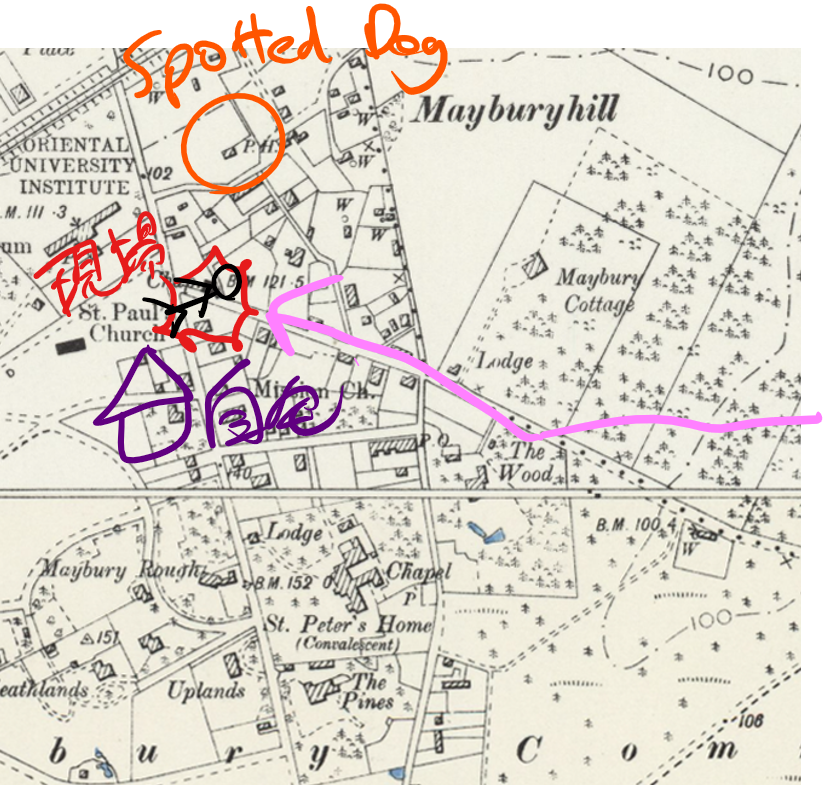
ともあれこれがここら辺のMapだよ!
解答編
<英文解釈記号ルール>
〔〕→関係詞句・節
【】→接続詞句・節
《》→挿入句・節
[ ] →名詞句・節
()→副詞句・節
〈〉→形容詞句・節
(Overcoming the repugnance* 〈natural to one 〔who had never (before) touched a dead body〕〉), I stooped* and turned him over (to feel for his heart). He was quite dead. (Apparently) his neck had been broken. The lightning flashed (for a third time), and his face leaped (upon me). I sprang to my feet*. It was the landlord of the Spotted Dog, 〔whose conveyance* I had taken〕.
1. 赤のoneの意味は、一般に「人」という意味(総称用法)。person/peopleと言い換えていいのかな。
2. 青アンダーラインの主語はI、動詞はstoopedとturned over。Overcoming~bodyまでは分詞構文ですね。natural to…bodyがrepugnanceを後置修飾しています。
全訳
人生で一度も死体を見たことがなかったら、死体を見たときに嫌悪感を催すのは自然なことだ。わたしはその嫌悪感に対処しようとして、かがんでその男をひっくり返し、鼓動を確かめようとした。しかし彼を完全に死んでいた。どうやら首が折れていたようだ。3回目となる雷が光って、その男の顔が目に飛び込んできた。跳び上がった。スポッテド・ドッグの主人だったのだ。乗り物を借りていた人だ。
第140話の「馬車を返さなくていい」っていうのはこういうことだ。
第10章 第27段落 (第152話)
問題編
I stepped over him gingerly* and pushed on up the hill. I made my way by the police station and the College Arms towards my own house. Nothing was burning on the hillside, though from the common there still came a red glare and a rolling* tumult* of ruddy* smoke beating up against the drenching* hail. So far as I could see by the flashes, the houses about me were mostly uninjured. By the College Arms a dark heap lay in the road.
gingerly慎重に rollかたまりとなって流れる tumult激しい発生(violent outburst) ruddy赤い drenchびしょ濡れにする
1. オレンジのandが繋いでるものは?
2. 青アンダーラインの意味するところは?
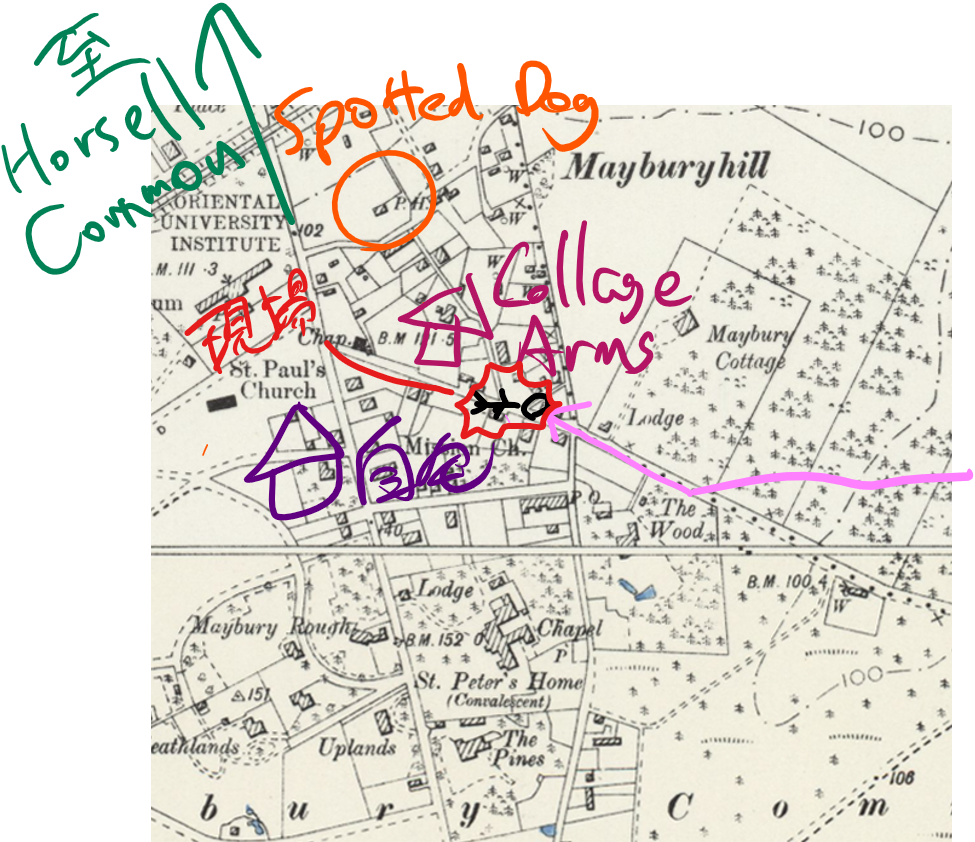
改めましてこちらがMap。
Collage Armsの位置関係から、主人が倒れてたのはもう少し丘の下かもしれないと思ってきたので前段落から修正してるよ。
解答編
<英文解釈記号ルール>
〔〕→関係詞句・節
【】→接続詞句・節
《》→挿入句・節
[ ] →名詞句・節
()→副詞句・節
〈〉→形容詞句・節
I stepped (over him) (gingerly*) and pushed on (up the hill). I made my way (by the police station and the College Arms) (towards my own house). Nothing was burning (on the hillside), 【though (from the common) there still came a red glare and a rolling* tumult* of ruddy* smoke beating up against the drenching* hail. 【So far as I could see (by the flashes)】, the houses about me were mostly uninjured. (By the College Arms) a dark heap lay in the road.
1. オレンジのandが繋いでるものは、steppedとpushed on。
2. 青アンダーラインのところですが、ひょうがたくさん降ってる嵐で普通の炎や煙はすぐに鎮火されてしまうはずなのに、まだぼうぼうと煙と炎が立ち上がってるということですね(beat against the hail)。
全訳
慎重に主人をまたいで、丘の上へとまた歩き出した。警察署とカレッジ・アームズのそばを通って自宅へと進んだ。共有地の方ではまだ赤い炎が見え、ひょうが濡らす勢いにも負けず紅煙が激しく立ち上っていたのに、丘の斜面では何も燃えていなかった。稲光で見える限りでは、周りの家にはほとんど損傷はなかった。カレッジアームのそばに黒いかたまりが道に横たわっていた。
ちょっ、わたしの死体は放置されたまま?
ごめん。このときはほとんど頭回ってなかったんだ。
第10章 第28・29段落 (第153話)
問題編
Down the road towards Maybury Bridge there were voices and the sound of feet, but I had not the courage to shout or to go to them. I let myself in with my latchkey*, closed, locked and bolted* the door, staggered* to the foot of the staircase*, and sat down. My imagination was full of those striding* metallic monsters, and of the dead body smashed against the fence.
I crouched* at the foot of the staircase with my back to the wall, shivering* violently.
latchkey鍵 bolt鍵を閉める staggerふらふら歩く staircase階段 stride大またで歩く crouchうずくまる shiver震える
1. オレンジのandが繋いでるものは?
2. 緑のandが繋いでるものは?
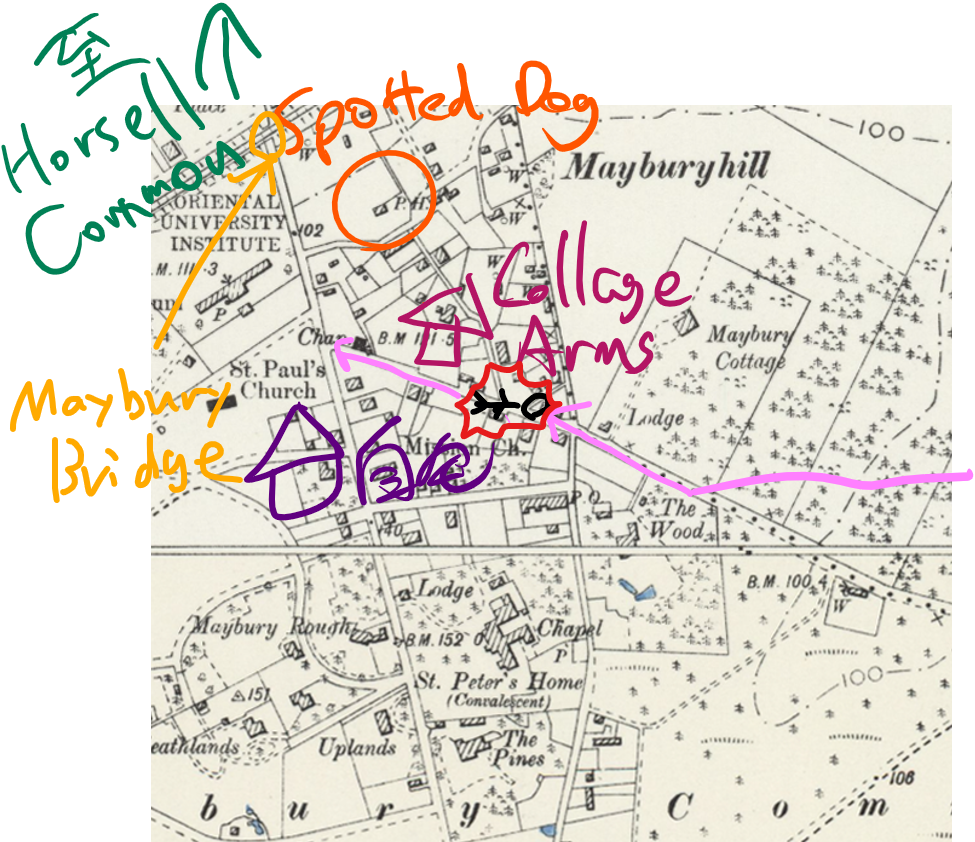
「Maybury Bridge」は第90話で「Maybury arch」として出て来たにゃ。
Horsell Commonから自宅までの道と、鉄道が交わるところにある鉄道橋にゃ。
解答編
<英文解釈記号ルール>
〔〕→関係詞句・節
【】→接続詞句・節
《》→挿入句・節
[ ] →名詞句・節
()→副詞句・節
〈〉→形容詞句・節
(Down the road towards Maybury Bridge) there were voices and the sound of feet, but I had not the courage to shout or to go to them. I let myself in (with my latchkey*), closed, locked and bolted* the door, staggered* to the foot of the staircase*, and sat down. My imagination was full of those striding* metallic monsters, and of the dead body 〈smashed against the fence〉.
I crouched* (at the foot of the staircase) (with my back to the wall), (shivering* violently).
1. オレンジのandが繋いでるものは、let, closed, locked, boltedかな。そのうしろもstaggered, satとあって、すべて「I」につながる動詞ですね。
2. 緑のandが繋いでるものは、of those~とof the dead~。fullにつながりますね。
全訳
メイベリー橋に向かう道の先で声と足音がしたが、声を上げたりそこに行ってみたりする元気はなかった。鍵を開けて自宅に入り、しっかりとドアを閉じて鍵をかけた。階段の下までふらふら歩き、腰を下ろした。あの大またで歩く金属の怪物のことや、柵に叩きつけられた死体のことで頭の中がいっぱいだった。
わたしは階段の下で壁を背にうずくまり、激しく震えていた。
はぁ…疲れた…
これで第10章は終わりだよ…。
この章、相当精神的につらかったよね。読者としても、そしてきっと小説中の語り手も。
ずっと嵐の夜中だし、登場人物との会話は一切ないし、知り合い(パブの主人)は死亡するし。
ここから、うん。頑張るぞ。
次の段落では新登場人物も出てくるし、少しは楽になるかもしれないわ。
ただ、この物語は絶望の物語じゃないといけないということは第101話で話した通りよ。
さすがにほんの少しだけ救いはあるけど、これからも人は亡くなるし、まともな食事もしばらくないわ。画面の前の皆さんも覚悟しておいてね。
イギリスにまともな食事がないのはいつものことでは。



コメント