
<流れ>
①かっこを振っていない英文
②単語注(①でアスタリスクを振ったところ)
③設問
④かっこを振った英文
⑤設問の答え
⑥訳
II. THE FALLING STAR.
第2章 「星が降ってきます!」
第2章 第1段落 (第20話)

…はじめまして。GuP愛里寿です。隕石学の権威or家元のDenningの役を務めますが、Denningさんの小説本編の登場はこの段落だけです。
問題編
Then came the night of the first falling star. It was seen early in the morning, rushing over Winchester eastward, a line of flame high in the atmosphere. Hundreds must have seen it, and taken it for an ordinary falling star. Albin described* it as leaving a greenish streak* behind it that glowed* for some seconds. Denning, our greatest authority* on meteorites, stated* that the height of its first appearance was about ninety or one hundred miles. It seemed to him that it fell to earth about one hundred miles east of him.
describe A as B:AがBだと述べる streak筋 glow光る authority権威 state述べる
1. 黄アンダーラインの部分の主語と動詞は?
2. 青アンダーラインの部分の意味は?
3. 緑の「Hundreds」の意味は?
4. 赤の「take」の意味は?
5. オレンジの「that」の先行詞は?
6. 紫の「it」が指してるものは?
解答編
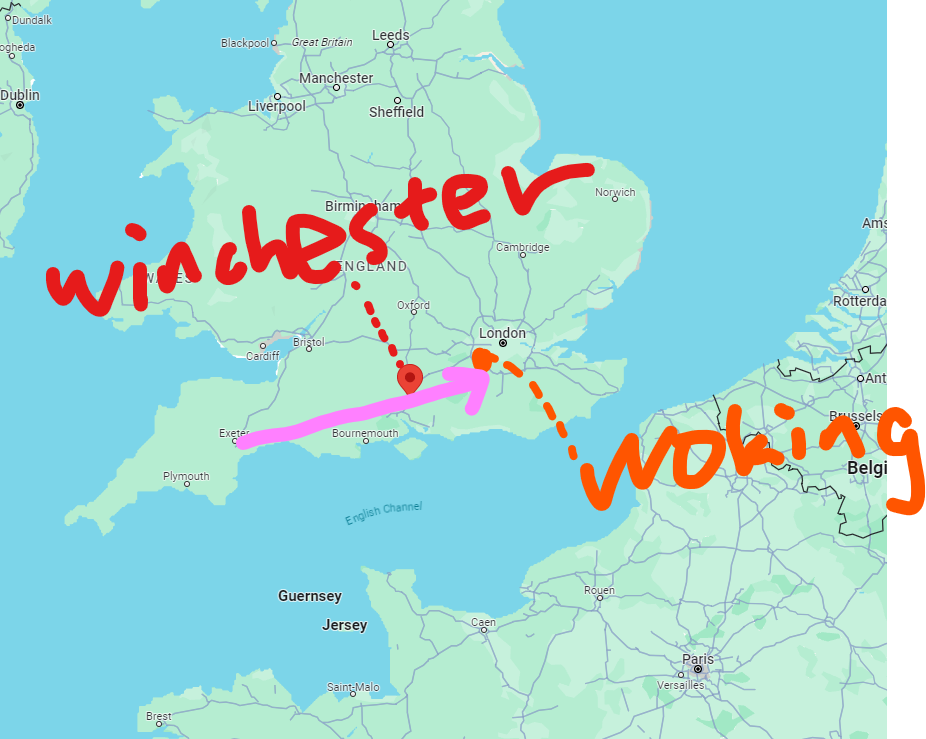

わたしたちの住んでるとこ(Woking)の近くにこいつは落下するんだが、この文章をもとに整理すると、ピンクの線のような軌道で落下してきたみたいだな。

残念だけどDenningさんがどこで観測したかわかんないから、
これ以上はわからないわね。
ああ。ただ、燃え尽きないようにかなり水平に侵入してきたんだろうな。公的文書は確認できなかったが、こういうときには5度くらいの角度で大気圏に突入するみたいだ。
ところで、高度90~100マイル=150~160kmで「隕石」が発光し始めたって書いてるな。21世紀の科学では、だいたい100km(=Kármán line)くらいまでが大気圏とされてる。大気圏に突入すると、空気が圧縮され、超高温になって光を放つんだ。
いちおう、200kmあたりから発光しはじめた記録もあるようだけど、100kmくらいから発光し始めるのが多いみたいだ。

わたしたちのころ(1900年ごろ)は大気圏突入っていう概念もないんだから、
そこにツッコむのは酷だろうな…
(Then) came the night of the first falling star. It was seen early in the morning, (rushing over Winchester eastward),( a line of flame high in the atmosphere). Hundreds must have seen it, and taken it for an ordinary falling star. Albin described it as leaving a greenish streak* (behind it) 〔that glowed* for some seconds〕. Denning, 《our greatest authority* on meteorites》, stated* [that the height of its first appearance was about ninety or one hundred miles]. It seemed to him [that it fell to earth about one hundred miles east of him].
1. 黄アンダーラインの部分の文型は上の通り。もう第1文型倒置は大丈夫でしょう。
2. 青アンダーラインの部分は、独立分詞構文として処理するのが妥当です(rushingも分詞構文だし)。「a line of flame was high in the atmosphere」がもともとですね。
3. 緑の「Hundreds」の意味は「何百人も」。of peopleが省略されてます。
4. 赤の「take」の意味は「みなす」「まちがえる」。take A for Bで「AをBとみなす(まちがえる)」ですね。
5. オレンジの「that」の先行詞は「a greenish streak」。itが先行詞になることなんて見たことないですよね。
6. 紫の「it」が指してるものは「the first falling star」ですね。この文章の他のit/itsもそれを指してます。
そして最初の「流星」の夜が来た。それは早朝に見られ、ウィンチェスターの東方へ流れて行った。炎の線が空高くにできていた。何百人もの人々がそれを見たが、普通の流星だと思い込んだに違いない。アルビンさんは、その流星が背後に数秒間光る緑がかった筋を残していったと言った。隕石界の最も偉大な権威であるデニングさんは、「初めに現れたときは、だいたい90~100 マイルの高度にあった」と述べた。彼にとってそれは100 マイルほど東の地面に落ちていくように見えた。
第2章 第2段落 (第21話)
「French windows」というのは以下のような窓で、明かりがたくさん入ってくるのが特徴だ。

問題編
I was at home at that hour and writing in my study*; and although my French windows face towards Ottershaw and the blind* was up (for I loved in those days to look up at the night sky), I saw nothing of it. Yet this strangest of all things that ever came to earth from outer* space must have fallen while I was sitting there, visible to me had I only looked up as it passed. Some of those who saw its flight say it travelled with a hissing* sound. I myself heard nothing of that. Many people in Berkshire, Surrey, and Middlesex must have seen the fall of it, and, at most, have thought that another meteorite had descended*. No one seems to have troubled to* look for the fallen mass* that night.
study書斎 blindブラインド outer外の hissing「シュー」という音 descend落下する trouble to V=わざわざVする(≒take the trouble to V) massかたまり
1. オレンジの「for」の意味は?(※forの前のかっこは原文からついていました)
2. 青アンダーラインの部分の文型表示は? また訳は?
3. ピンクの「visible」の前に省略されてる言葉は?
4. 赤アンダーラインの部分の主語と動詞は?
5. 赤の「and」が繋いでるものは?
6. 緑の「another」の意味は?
解答編
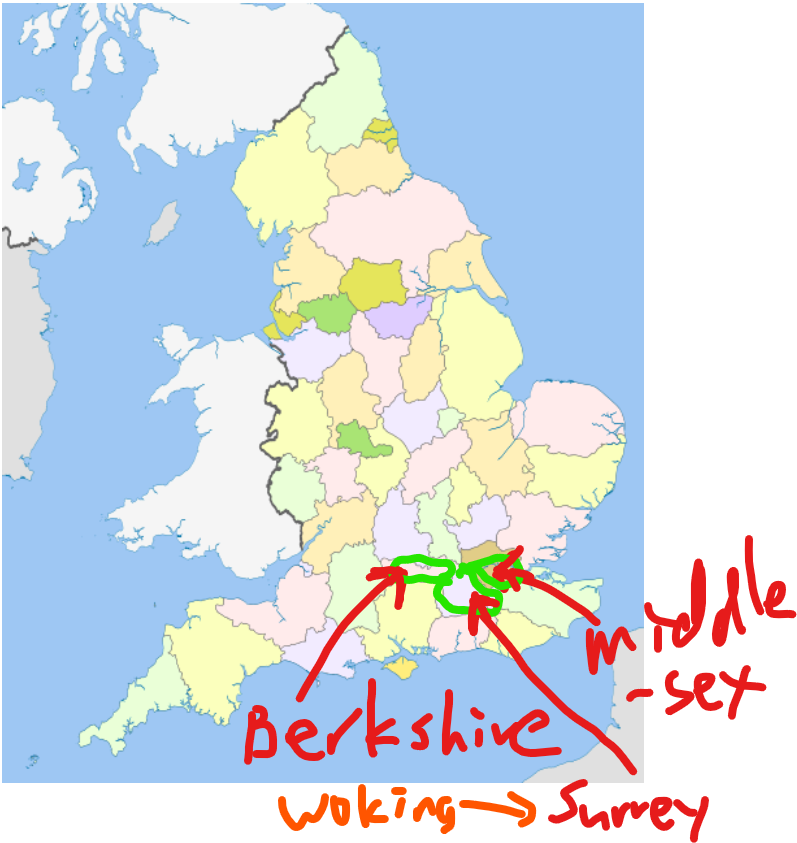
イングランドには、「カウンティ」と呼ばれる行政区分があるわ。「州」「県」とかと似たようなものね。本文に出てくる「Berkshire, Surrey, Middlesex」は、上の地図のようなかんじ。ロンドン~ロンドン西方のあたりよ。
わたしたちの住むWokingは、Surrey(サリー)カウンティだ。中流階級の人が住んでいて、ロンドンのベッドタウンとして19世紀後半から発展し始めた都市だぞ。
21世紀の日本で言うなら千葉とか滋賀とかよね。
<英文解釈記号ルール>
〔〕→関係詞句・節
【】→接続詞句・節
《》→挿入句・節
[ ] →名詞句・節
()→副詞句・節
〈〉→形容詞句・節
I was at home (at that hour) and writing (in my study*); and 【although my French windows face towards Ottershaw and the blind* was up (for I loved (in those days) to look up at the night sky)】, I saw nothing of it. Yet this strangest of all things 〔that ever came to earth from outer* space〕 must have fallen 【while I was sitting there】, (visible to me 【had I only looked up 【as it passed】). Some of those 〔who saw its flight〕 say [it travelled with a hissing* sound]. I myself heard nothing of that. Many people 〈in Berkshire, Surrey, and Middlesex〉 must have seen the fall of it, and, 《at most》, have thought [that another meteorite had descended*]. No one seems to have troubled to* look for the fallen mass* that night.
1. オレンジの「for」の意味は「というのも~だからだ」。接続詞ですね。
2. 青アンダーラインの部分の文型表示は上の通り。this strangestのあとに「thing」が省略されてますが、自明なときはたまに、最上級の形容詞の後の名詞は省略されますよね。
3. ピンクの「visible」の前に省略されてる言葉は、beingです。分詞構文。この問題はもう3度目ですが、had以下がif省略倒置仮定法過去完了となってて、徐々に進化してますね。
もともとはit(this strangest thing) would be visible to me if I had only looked up.です。
4. 赤アンダーラインの部分の文型は上の通り。そこまで難しくはないですね。
5. 赤の「and」が繋いでるものは「have seen」と「have thought」です。
6. 緑の「another」は、ここでは「普通と変わらない」という意味です。辞書には直接載ってないことも多いですが、「いつもの」という訳はわりと見る気がします。
ここで「別の」ってしてもいいですけど、「宇宙船以外にもう一つ隕石が降った」みたいな解釈になってそれはそれでまずいですから。
わたしはその時間家にいて、書斎で執筆していた。フランス窓がオターショウに面していてブラインドが上がっていた(わたしはそのころ夜空を見上げるのが好きだったからだ)のにもかかわらず、それは全く見えなかった。その地球外からやってきたものの中で最も奇妙なものは、わたしがそこに座っていたときに落下したに違いない。もし通り過ぎているときに見上げていさえすれば見えただろうに。落下しているのを見た人の中には、シューという音を立てていたと言う人もいる。わたし自身は何も聞こえなかった。バークシャー、サリー、ミドルセックスの多くの人々はその落下を見たに違いないが、せいぜい、普通と変わらない隕石が落下してきたんだと思ったくらいに違いない。その夜、落下した塊をわざわざ探そうとした人は誰もいなかったみたいだ。
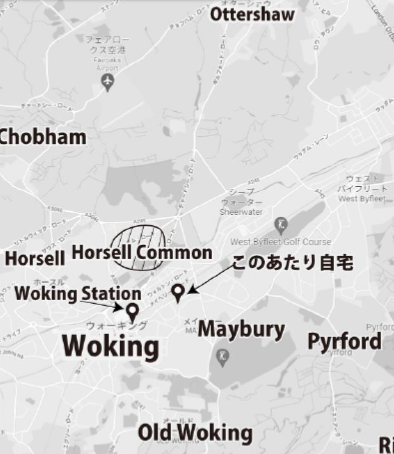
…付近の概略地図を示しておくわ。
WokingとOttershawの間のHorsell Commonというところに、宇宙船は着地(パラシュートがないからたぶん実際は激突)。Woking~Ottershawは徒歩90分ってとこね。
第2章 第3段落 (第22話)
イギリス常識って難しいな。
とりま、「common」ってなんだ?
訳語としては「共有地」かしら。イングランドにおいて、平民が共同で管理してた土地。大きな森林・公園みたいなものを想像すればいいかもね。もともと貴族の荘園だったし。
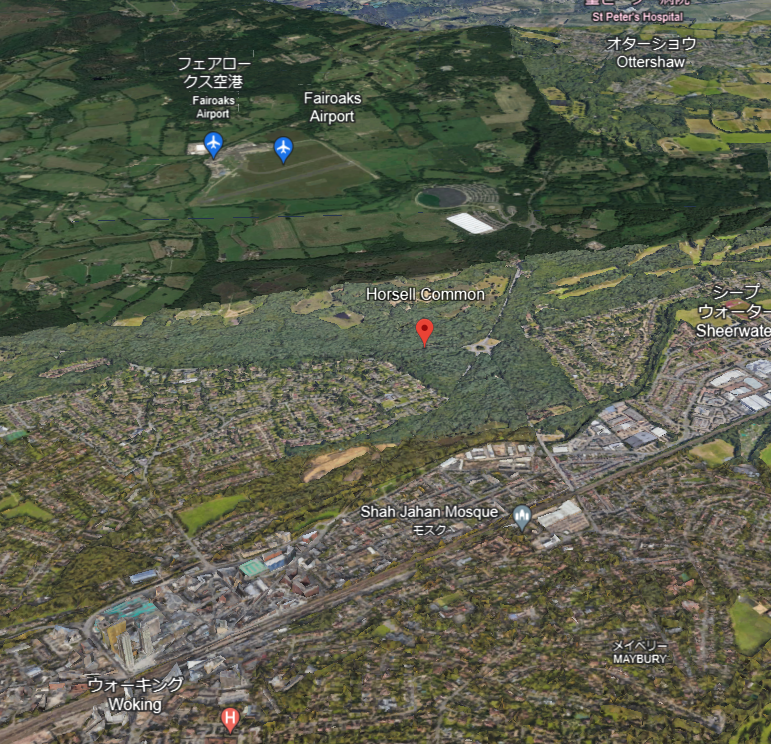
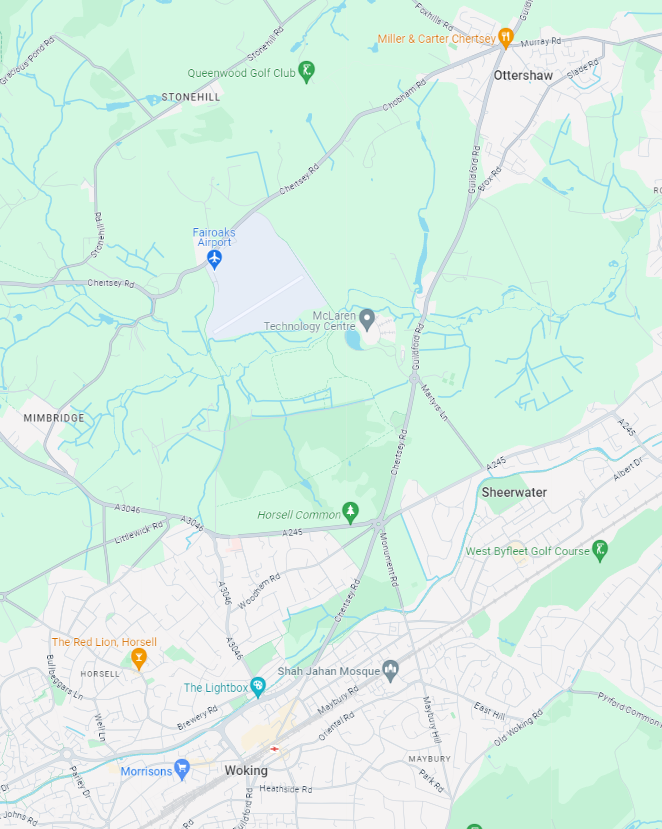
今回の舞台「Horsell Common」は、21世紀の技術を使うとこんな感じ。
左下がWoking、右上がOttershaw。
家のサイズとかと比較すると、Horsell Commonの広さが分かるかな。
さて、ようやく問題編に入るが、一つだけ注釈を。
以下の文で「Find it he did」とあるけど、普通の倒置じゃないな。ここは「He did find it」の変な倒置だと解釈しておこうか。
問題編
But very early in the morning poor Ogilvy, who had seen the shooting star and who was persuaded* that a meteorite lay somewhere on the common* between Horsell, Ottershaw, and Woking, rose early with the idea of finding it. Find it he did, soon after dawn, and not far from the sand-pits*. An enormous hole had been made by the impact of the projectile*, and the sand and gravel* had been flung* violently ( ) every direction over the heath*, forming heaps* visible ( mile / half / a / and ) away. The heather* was on fire eastward, and a thin blue smoke rose against* the dawn.
be persuaded that~を信じる common共有地(上の解説参照) sand-pit砂場 projectile発射体(≒missile) gravel砂利 flung(<fling過去分詞)投げつける heathヒース(が咲く野原) heap山 heatherヘザー(が咲く野原) against背景として
1. 青マーカーの文型表示は?
2. 赤のandが繋いでるものは?
3. 緑のandが繋いでるものは?
4. オレンジのandが繋いでるものは?
5. 紫のかっこの中に入ると思われる前置詞1語は?
6. 赤アンダーラインの部分が「1.5マイル」となるように、1語追加して、カッコ内の単語を並び替えよ。
解答編
本文中の「sand-pit」は共有地の中にある砂地だ。しっかりGoogle Earthにも載ってるな。
「sand-pit」のところに宇宙船が着陸して、できたクレーター的なやつが「pit」。
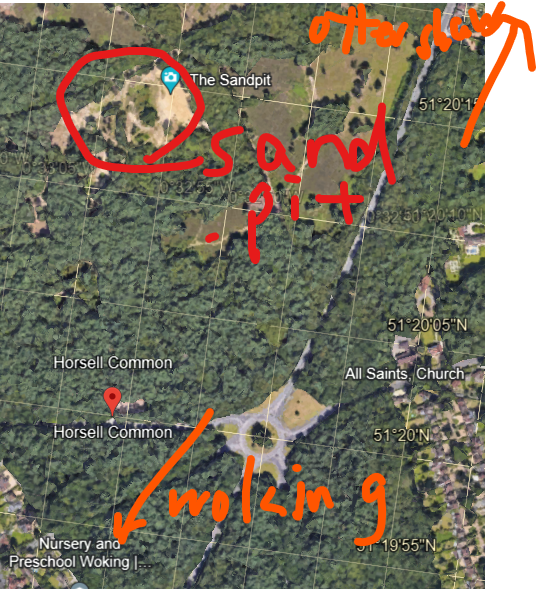
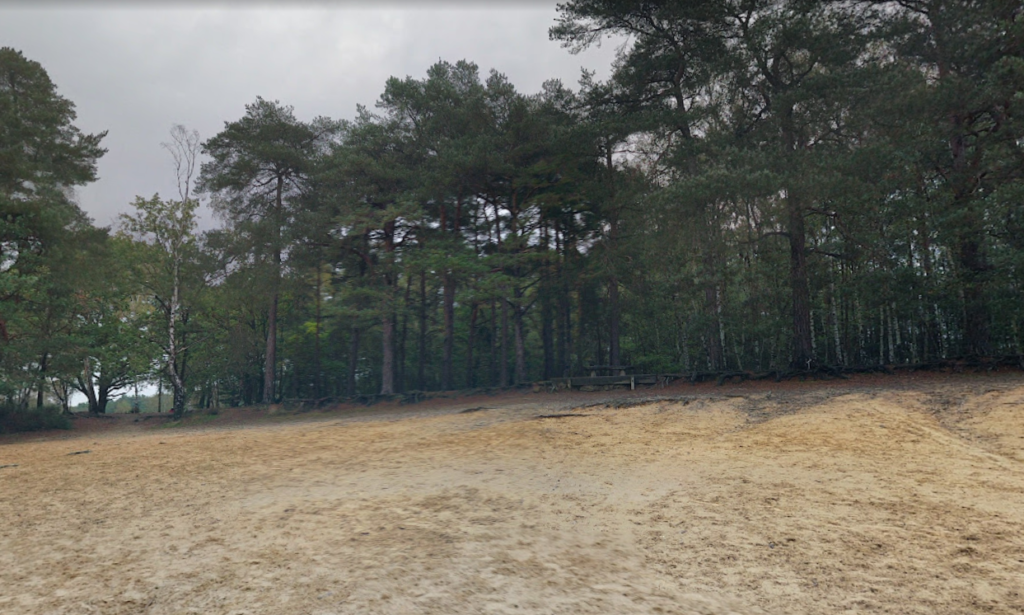
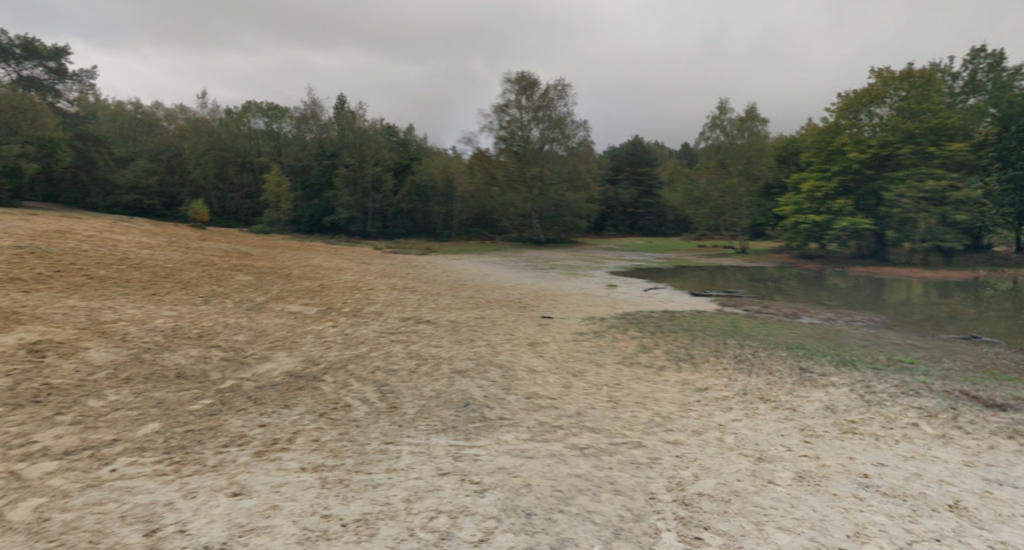
上の写真がsand-pitの様子。Horsell Commonは基本的には森林・低木地帯なんだけど、ここだけ少し開けた砂地ね。
あ、区別して覚えておいてほしいんだが、「sand-pit」は火星人が着陸したこの砂地地帯のこと。後々出てくる「pit」は宇宙船着陸の衝撃でできたクレーター・穴のこと(この段落では「An enormous hole by the impact」って書いてる)。今後しょっちゅう出てくるから、しっかり理解しておいてくれ。
ともあれこの周りに、低木のヒースやヘザーが咲く野原が広がってるのよ。
(下の写真はたぶんHorsell Commonとは関係ないけど)
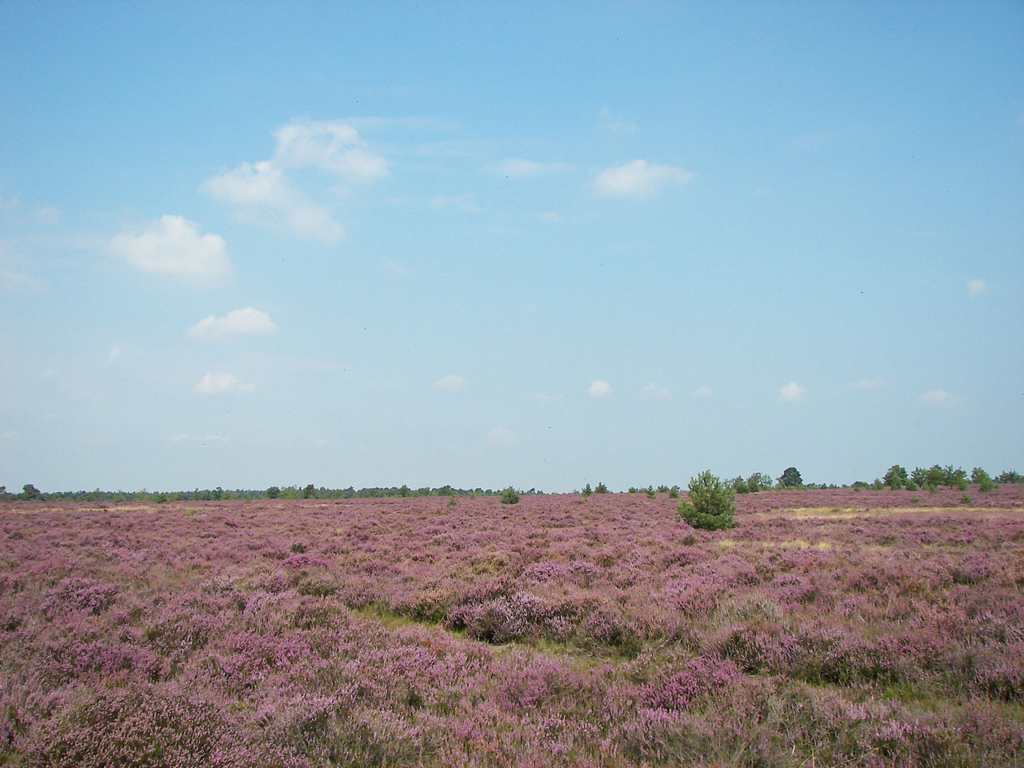
そうそう、heath(ヒース)とheather(ヘザー)ってerの部分しか変わんないのに、なんで発音違うんだ。
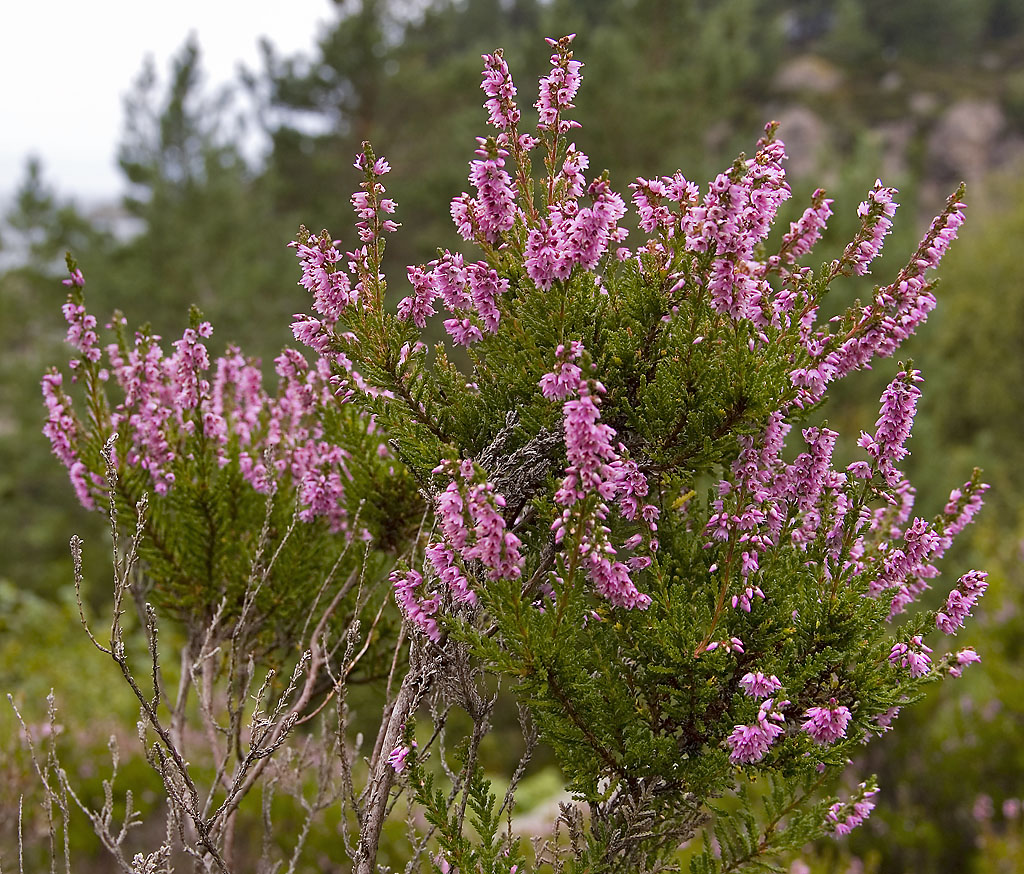
…heathとheatherはそもそもべつの種類の植物。heathはエリカ属、heatherはカルーナ属。
ほら、葉の形も違うでしょ? 左のheathは針状、右のheatherは平らな形。

ふっ、「エリカ」といえばドイツ軍歌(恋愛ソング)だな。
(あとわたしのとこの副隊長の名前だし。)
YouTubeのドイツ軍歌はすぐに抹消される運命にあるから、ニコニコから持って来ておいたぞ。
ドイツ語でエリカ(Erika)はエリカ属の花(heathなど)のことを指すと同時に女性名でもあるよな。軍歌ではこの2つの意味が掛けられてるんだ。
ちなみにドイツ語でheath(の咲く荒地)は「Heide」(ハイデ)と言う。高校地理で習った人もいるんじゃないか?「エリカ」の歌いだしにも「Auf der Heide…」(≒Above the heath)と歌われている。
ともあれ、イギリスやドイツの荒地の代名詞になるくらい、北ヨーロッパでは象徴的な植物ってことだ。
<英文解釈記号ルール>
〔〕→関係詞句・節
【】→接続詞句・節
《》→挿入句・節
[ ] →名詞句・節
()→副詞句・節
〈〉→形容詞句・節
But (very early in the morning) poor Ogilvy, 〔who had seen the shooting star〕 and 〔who was persuaded [that a meteorite lay somewhere (on the common*) (between Horsell, Ottershaw, and Woking)]〕, rose early (with the idea of finding it).
Find it he did, (soon after dawn), and (not far from the sand-pits*).
An enormous hole had been made (by the impact of the projectile*), and the sand and gravel* had been flung* violently in every direction over the heath*, (forming heaps* 〈visible a mile and a half away〉). The heather* was on fire eastward, and a thin blue smoke rose against* the dawn.
1. 青マーカーの文型表示は上の通り。カンマがあるから見えやすいかな。
2. 赤のandが繋いでるものは「soon…」と「not far…」の2つの副詞句。
3. 緑のandが繋いでるものは、前後の2つの文。
4. オレンジのandが繋いでるものはsandとgravel。
5. 紫のかっこの中に入ると思われる前置詞1語はin。方角につく前置詞は “in“
6. 赤アンダーラインの部分の追加並び替えは上の通り。mileの前はaでもoneでもOK。
「a mile and a half」=「one mile and a half」=「one and a half miles」。
1.5でも複数形になることに注意しましょう。
でもかわいそうなオギルヴィは流星を見て、ホーセル・オターシャウ・ウォーキングの間の共有地のどこかに隕石があると信じていた。だからオギルヴィは朝早くから隕石を見つけようと思って早起きした。そして夜明けのすぐ後、砂地から遠くはないところでそれを見つけたんだ。巨大な穴が宇宙船の激突によってつくられていた。ヒースが咲く野原のあたり一面に荒々しく砂利が散乱していて、1.5 マイル離れたところからも見える丘をつくっていた。ヘザーの丘は東方へ向かって燃えていて、細い青煙が夜明けの空を背景に立ち上っていた。
おい、なんだ「poor Ogilvy」って。
宇宙船見つけたわたしに失礼だぞ
・・・・・・
見つけなきゃ、あんなことにはならなかったのに。
第2章 第4段落 (第23話)
イギリスのヤードポンド法、メートル法から見るとわけわかんないんだけど。
1インチ≒2.5cm(1寸よりちょっと短い)
↓×12
1フィート≒30cm≒1尺
↓×3
1ヤード≒90㎝
↓×1760
1マイル(陸)≒1.6km
2.5cmの時点でもう無理だ
それになんだよ「1760倍」って
(…伝統なんだから仕方ないじゃない)
ちなみに、1マイル(海)=1海里≒1.8kmだ。
このころはイギリスでもまだヤードポンド法の全盛期ね。
ヤードポンド法も十分罪が重いが、砲の口径を砲弾の重さで表す文化はマジで大罪だと思う。
問題編
The Thing itself lay almost entirely buried* in sand, amidst* the scattered* splinters* of a fir tree* it had shivered* to fragments in its descent*. The uncovered part had the appearance of a huge cylinder*, caked* over and its outline* softened* by a thick scaly* dun-coloured* incrustation*. It had a diameter* of about thirty yards*. He approached the mass, surprised at the size and more so at the shape, since most meteorites are rounded* more or less completely. It was, however, still so hot from its flight through the air as to forbid* his near approach. A stirring* noise within its cylinder he ascribed* to the unequal cooling of its surface; for at that time it had not occurred to him that it might be hollow*.
buried(<bury過去形)埋める amidst真ん中 scatter散在する splinterかけら fir treeモミの木 shiver砕く descent降下 cylinder(円筒) cake(焦げが)こびりつく outline輪郭 soften柔らかな感じにする scalyうろこ状の dun-coloured焦げ茶色の incrustation外殻 diameter直径 yardヤード round丸くする forbid許さない stir動く ascribe A to B≒attribute A to B≒assign A to B AをBに帰する(ascribe<attribute<assignの順で確信度が高い) hollow中空の
1. 第1文、黄色マーカーの部分の文型表示は?
2. 赤アンダーラインの部分の訳は?
3. 紫の「so」が指すものは?
4. 黄色アンダーラインの訳は?
5. 青アンダーラインの文型表示は?
6. 青の「for」の意味は?
7. 赤マーカーの意味は?
解答編
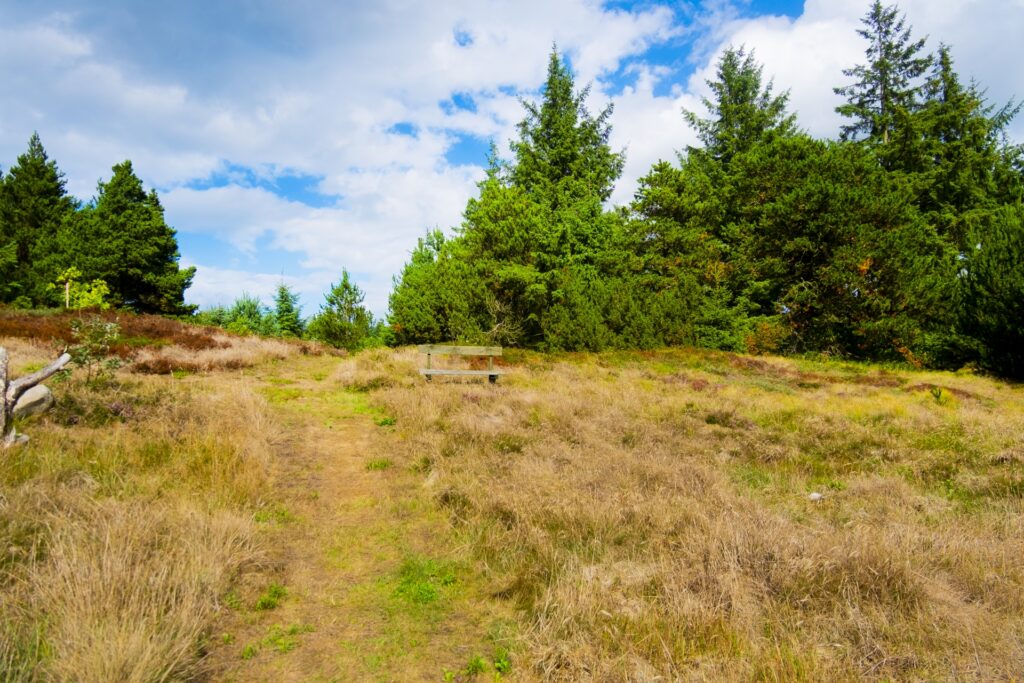
ヒースなどの低木(前段落参照)と、モミの木などの針葉樹は、どちらも北ヨーロッパを象徴するもの。こうやって共有地に一緒に生えてることもよくあるわ。
<英文解釈記号ルール>
〔〕→関係詞句・節
【】→接続詞句・節
《》→挿入句・節
[ ] →名詞句・節
()→副詞句・節
〈〉→形容詞句・節
The Thing itself lay almost entirely buried* (in sand), (amidst* the scattered* splinters* of a fir tree* 〔it had shivered* to fragments in its descent*〕). The uncovered part had the appearance of a huge cylinder*, (caked* over) and (its outline* softened* by a thick scaly* dun-coloured* incrustation*). It had a diameter* of about thirty yards*. He approached the mass, (surprised at the size and more so at the shape), 【since most meteorites are rounded* more or less completely】. It was, 《however》, still so hot (from its flight through the air) as to forbid* his near approach. A stirring* noise 〈within its cylinder〉 he ascribed* to the unequal cooling of its surface; 【for (at that time) it had not occurred to him that it might be hollow*】.
1. 第1文、黄色マーカーの部分の文型表示は上の通り。buriedは分詞として見る解釈もあるかもしれないけど、lie C(Cのままだ)っていう語法がありますから。
2. 赤アンダーラインのとこは、caked overが普通の分詞構文、its outline以下は独立分詞構文。
3. 紫の「so」が指すものは「surprised」。soは一応副詞だけど、前の語を代用する働きもありますね。
4. 黄色アンダーラインの部分は、so~as to V:とても~なのでVする が見えればOK。
≒ so ~ that S V ≒ ~ enough to V
5. 青アンダーラインの文型表示は上の通り。OSVの第3文型倒置(っぽいもの)ですね。なおhe(代名詞)がもしOgilvy(名詞)でも、第3文型はOVSにはなりません。絶対OSVです。
6. 青の「for」の意味は「というのも~だからだ」。
7. 赤マーカーの部分は、it occurs to 人 that ~という考えが思い浮かんだ という構文。≒人 hit on 考え ≒ 人 come up with 考え ≒ 人 think of 考え
その「物体」自体は、ほぼ完全に砂に埋まったままだった。墜落のせいで砕かれて破片になったモミの木のかけらが散在する真ん中にあった。埋まってない部分は巨大な円筒の外見をしていた。焦げがこびり付いていて、厚くうろこ状の焦げ茶色の外殻のために、輪郭が柔らかい感じになっていた。直径は30 ヤード(≒27m)ほどだった。オギルヴィはそのかたまりに近づき、その大きさにも驚いたが、その円筒状の形状にもっと驚いた。というのも、ほとんどの隕石は多かれ少なかれ完全に球状になっているからだ。しかし、摩擦を受けながら落下してきてまだとても熱かったから、オギルヴィは接近できなかった。円筒の中で何かが動いてる音がしたが、表面がむらのある冷却を受けたせいだとオギルヴィは思ってた。というのも、円筒が中空かもしれないっていう考えはそのときには持ってなかったのだ。
第2章 第5段落 (第24話)
今回は大したことないぞ。
問題編
He remained standing at the edge of the pit* that the Thing had made for itself, staring at its strange appearance, astonished chiefly* at its unusual shape and colour, and dimly* perceiving even then some evidence of design* in its arrival. The early morning was wonderfully still*, and the sun, just clearing the pine trees* towards Weybridge, was already warm. He did not remember ( hear ) any birds that morning, there was certainly no breeze* stirring*, and the only sounds were the faint movements* from within the cindery* cylinder. He was all alone on the common.
pit穴 chiefly主に dimlyほとんど~ない design意図 still静かな pine treeマツの木 breezeそよ風 stir動く movement動き cindery燃えがらでできている
1. オレンジの「and」がつないでるものは?
2. 緑のカッコ内のhearを適切に活用させて。
解答編
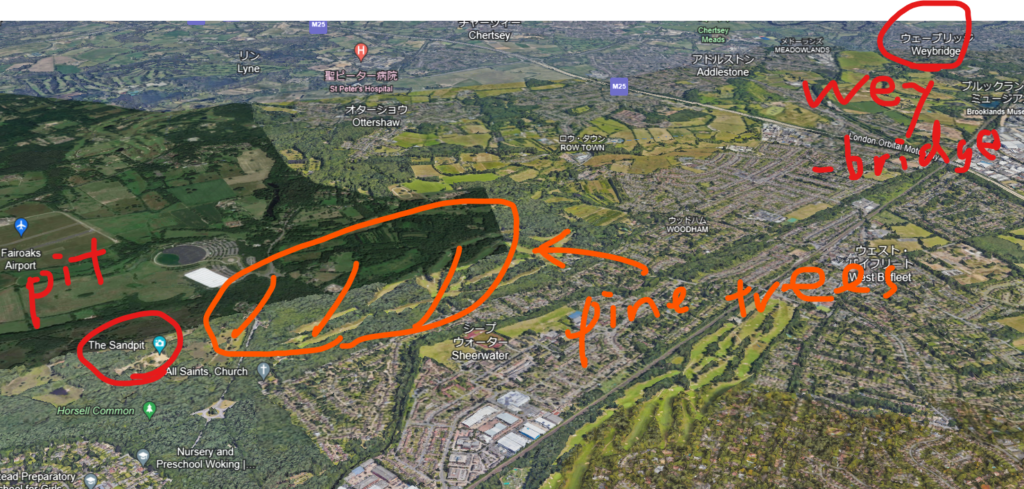
位置関係はこんな感じ。
cylinderはsandpitに着陸(墜落?)してpit(クレーター的なもの)を作ってる。
Weybridge方面(=東)に生えてるマツの木の向こうから、いま太陽が昇ってきた感じだ。
<英文解釈記号ルール>
〔〕→関係詞句・節
【】→接続詞句・節
《》→挿入句・節
[ ] →名詞句・節
()→副詞句・節
〈〉→形容詞句・節
He remained standing (at the edge of the pit* 〔that the Thing had made for itself〕), (staring at its strange appearance), (astonished chiefly* at its unusual shape and colour), and (dimly* perceiving even then some evidence of design* in its arrival). The early morning was wonderfully still*, and the sun, 《just clearing the pine trees* towards Weybridge》, was already warm. He did not remember hearing any birds that morning, there was certainly no breeze* stirring*, and the only sounds were the faint movements* from within the cindery* cylinder. He was all alone on the common.
1. オレンジの「and」がつないでるものは、staring, astonished, perceivingの3つの分詞構文です。
2. 緑のカッコ内はhearingです。remember Ving(Vしたことを覚えてる)とremember to V(忘れずVする)ですね。
オギルヴィはその「物体」が形成した穴の淵に立ったままで、その奇妙な外見をじっと見つめ、主にその奇妙な形状に驚いていたが、そのときでも到着意図の証拠にはほとんど気付いていなかった。
その早朝は信じられないほど平和で、太陽はちょうどウェイブリッジの方のマツの木を美しく照らしていて、もう暖かかった。
あの子は鳥の鳴き声をその朝聞いたのを覚えてなかった。全くそよ風は吹いておらず、唯一の音は灰にまみれた円筒の中からのかすかな動きだけだった。オギルヴィは共有地で完全に一人ぼっちだった。
なんだよ「dimly perceiving even then some evidence」とか「all alone」なんて
歴史は後からしか評価できないの…
第2章 第6段落 (第25話)
しばらくオギルヴィの話だ。
ことごとく煽られてるからわたしが主役でも全然うれしくないんだけど
問題編
Then suddenly he noticed with a start* that some of the grey clinker*, the ashy* incrustation* that covered the meteorite, was falling off the circular* edge of the end. It was dropping off in flakes* and raining down upon the sand. A large piece suddenly came off* and fell with a sharp noise that brought his heart into his mouth*.
with a startぎょっとして clinker燃焼後のかたまり ashy灰まみれの incrustation外殻 circular丸い flake片・フレーク come off剥がれる bring one’s heart into one’s mouthめっちゃビビる
1. オレンジの「off」の意味は?
2. 緑の「it」が指すものは?
解答編
<英文解釈記号ルール>
〔〕→関係詞句・節
【】→接続詞句・節
《》→挿入句・節
[ ] →名詞句・節
()→副詞句・節
〈〉→形容詞句・節
Then suddenly he noticed (with a start*) [that some of the grey clinker*, 《the ashy* incrustation*〔that covered the meteorite〕》, was falling off the circular* edge of the end]. It was dropping off in flakes* and raining down upon the sand. A large piece suddenly came off* and fell (with a sharp noise 〔that brought his heart into his mouth*〕).
1. オレンジの「off」の意味は「~から離れて」。普通の意味だけど意外と訳せないことが多いかも。offが前置詞っぽくて副詞っぽいから…。
2. 緑の「it」が指すものはsome of the grey clinker。
その時突然、ぎょっとすることに、灰色の燃えがら(隕石を覆っていた灰まみれの外殻)の一部が、丸い縁の端から落ちていくということにオギルヴィは気づいた。それはかけらとなって落ち、砂の上に降った。大きなかけらが突然はがれ、どきっとさせるような鋭い音を立てて落ちた。
びっくりしてばっかりね
うるさい
第2章 第7段落 (第26話)
一番最初の「what this meant」の「this」は、前段落参照。灰まみれの外殻が地面に落下してくるってことを指すぞ。
問題編
For a minute he scarcely realised what this meant, and, although the heat was excessive*, he clambered down* into the pit close to the bulk* to see the Thing more clearly. He fancied even then that the cooling of the body might account for this, but what disturbed* that idea was the fact that the ash was falling only from the end of the cylinder.
excessive過剰な clamber downはい降りる(よじ登るの反対) bulk巨大なかたまり disturb妨げる
1. 青の「account for」の意味は?
2. 赤アンダーラインの文型は?
解答編
<英文解釈記号ルール>
〔〕→関係詞句・節
【】→接続詞句・節
《》→挿入句・節
[ ] →名詞句・節
()→副詞句・節
〈〉→形容詞句・節
(For a minute) he scarcely realised [what this meant], and, 【although the heat was excessive*】, he clambered down* into the pit 〈close to the bulk*〉 (to see the Thing more clearly). He fancied (even then) [that the cooling of the body might account for this], but [what disturbed* that idea] was the fact 【that the ash was falling only from the end of the cylinder】.
1. 青の「account for」の意味は「原因となる」もしくは「~を説明する」(≒explain)。ほかにも「~を占める」(≒make up)とか「~の責任を取る」とかの意味も覚えておきましょう。
2. 赤アンダーラインの文型は上の通り。whatの節が見えれば大丈夫。
しばらくの間オギルヴィはこれがどういう意味なのかもわからなかった。熱が過剰だったのにもかかわらず、その巨大なかたまりのそばの穴の中に「物体」をもっとはっきり見るためにはい下りていった。その時になってもあの子は本体の冷却のせいで灰の欠片がはがれ落ちてるかもしれないって思ってたけど、灰が円筒の端から落ちていることに気づいて、そう考えるのをやめた。
しばらく退屈ね
悪かったな
第2章 第8段落 (第27話)
「the thing came upon him
in a flash」は、「突然ひらめいた」と訳してしまっていいな。the thingはそのあとの文の内容で、in a flashは「突然に」。そういうことが「来た」ってことは「ひらめいた」ってことだな。
問題編
And then he perceived that, very slowly, the circular* top of the cylinder was rotating on its body. It was such a gradual* movement that he discovered it only through noticing that a black mark that had been near him five minutes ago was now at the other side of the circumference*. Even then he scarcely understood what this indicated, until he heard a muffled* grating* sound and saw the black mark jerk* forward an inch or so. Then the thing came upon him in a flash. The cylinder was artificial—hollow—with an end that screwed* out! Something within the cylinder was unscrewing the top!
“Good heavens!” said Ogilvy. “There’s a man in it—men in it! Half roasted* to death! Trying to escape!”
At once, with a quick mental leap*, he linked the Thing with the flash upon Mars.
circular丸い gradualだんだんの circumference円周 muffledはっきり聞こえない grating耳障りな jerk(動詞)急に動く screw(ネジなどを)回して開く roast焼く leap飛躍
1. 赤アンダーラインの部分の訳は?
2. 青アンダーラインの部分の文型は?
3. オレンジのandが繋いでるものは?
解答編
「unscrewing the top」って、宇宙船のてっぺんのふたを回して開けてるってこと。
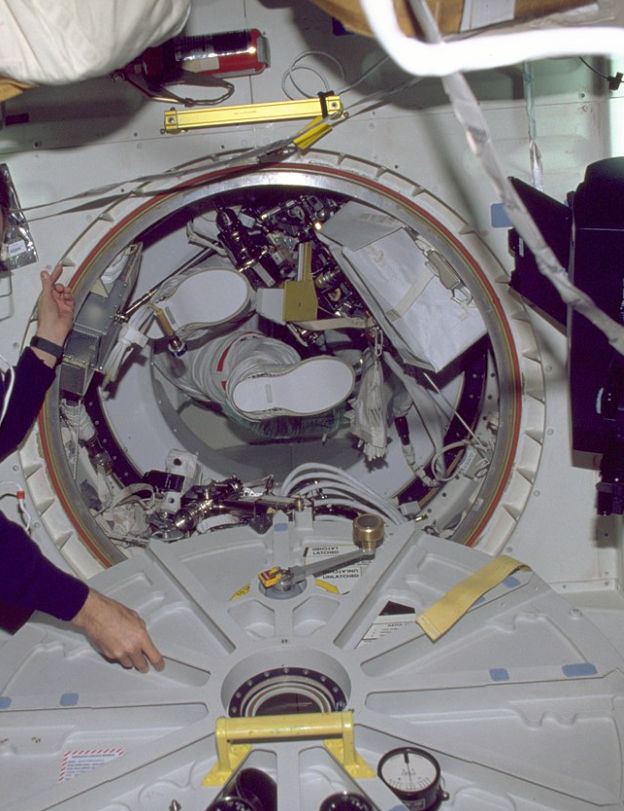
潜水艦のハッチを回す感覚かしら。
ちなみに、潜水艦はちょうどこのころ軍に配備されはじめた感じ(1900年ごろ)。
1897年、アメリカ軍が進水させた USS Holland が最初の近代潜水艦と言われてるな。
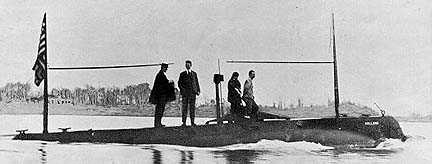
…戦車(第1次世界大戦中に開発;1916年ソンムの戦いでMarkⅠ投入)より潜水艦の方が年上なのはおかしい。
この小説本編に軍艦は出てくるけど、戦車は出てこないぞ。
<英文解釈記号ルール>
〔〕→関係詞句・節
【】→接続詞句・節
《》→挿入句・節
[ ] →名詞句・節
()→副詞句・節
〈〉→形容詞句・節
And then he perceived [that, 《very slowly》, the circular* top of the cylinder was rotating on its body]. It was such a gradual* movement [that he discovered it (only through noticing [that a black mark 〔that had been near (him five minutes ago)〕 was (now) at the other side of the circumference*]). (Even then) he scarcely understood [what this indicated], 【until he heard a muffled* grating* sound and saw the black mark jerk* forward an inch or so】. Then the thing came upon him in a flash. The cylinder was artificial《—hollow—》(with an end 〔that screwed* out〕)! Something 〈within the cylinder〉 was unscrewing the top!
“Good heavens!” said Ogilvy. “There’s a man in it—men in it! Half roasted* to death! Trying to escape!”
At once, (with a quick mental leap*), he linked the Thing with the flash upon Mars.
1. 赤アンダーラインの部分はsuch…that構文(とても…なので~する)。so…that構文の「…」に入る部分が名詞になったって覚えれば訳は同じ。
2. 青アンダーラインの部分の文型は上の通り。まあ、see O 原型 は第5文型というのを覚えておけば大丈夫ですね。
3. オレンジのandが繋いでるものはheardとsaw。動詞2つ。
そしてそのとき、本体の上で円筒のてっぺんがとてもゆっくりと回転しているのにオギルヴィは気づいた。とてもゆっくりとした動きだったので、5分前に近くにあった黒い模様が円筒の反対側にあることに気づいてようやくそれがわかった。その時でさえ、くもった耳ざわりな音が聞こえ、その黒い模様が1インチくらい急に動くのを見るまで、オギルヴィはこれが何を意味してるのかほとんどわかってなかった。でも、突然ひらめいた。
「円筒は人工で(空洞で)、てっぺんの部分は回せるんだ!」「円筒の中にいる誰かがてっぺんの蓋を回して開けてる!」って。
「まじかよ!」オギルヴィは言った。
「中に人がいるーいや何人かいる! 半分焼かれて死にかけてる! 脱出しようとしてるんだ!」
すぐに思考は素早く飛躍し、オギルヴィはこの「物体」と火星での閃光を結び付けた。
いったい何回「even then」って書かれればいいんだよ
わたし人命救助しようとしてるのに。
これ書いてるときのマホちゃんツンデレ気味なんじゃない
第2章 第9段落 (第28話)
「パブ」(public-house)は、居酒屋とかバーのように飲食を提供する店ではあるけど、それに加えて下級~中流階級の社交場として、イギリスで重要な役割を果たしてきたのよ。
あと「タップルーム」(taproom)もパブと似たような感じの大衆酒場ね。

あ、今回から新しく登場するヘンダーソンさん(CV. GuPケイさん)だ。

Nice to meet youだよ! 『宇宙戦争』のHenderson役の、GuPケイです!
ロンドンでジャーナリストしてるんだけど、ウォーキングに自宅があります(ロンドンまでは鉄道通勤できますからね)!
問題編
The thought of the confined creature was so dreadful to him that he forgot the heat and went forward to the cylinder to help turn. But luckily the dull radiation arrested him before he could burn his hands on the still-glowing metal. At that he stood irresolute for a moment, then turned, scrambled out of the pit, and set off running wildly into Woking. The time then must have been somewhere about six o’clock. He met a waggoner and tried to make him understand, but the tale he told and his appearance were so wild—his hat had fallen off in the pit—that the man simply drove on. He was equally unsuccessful with the potman who was just unlocking the doors of the public-house by Horsell Bridge. The fellow thought he was a lunatic at large and made an unsuccessful attempt to shut him into the taproom. That sobered him a little; and when he saw Henderson, the London journalist, in his garden, he called over the palings and made himself understood.
confined閉じ込められた dreadful恐ろしい dull鈍い radiation熱放射 at thatそしてすぐに irresoluteためらって scramble這いのぼる wildlyやみくもに waggoner荷馬車の御者 potman飲み屋の店員 public-houseパブ fellowやつ lunatic狂人 shut閉じ込める taproom酒場 sober冷静にする paling柵
1. 青アンダーラインの部分の訳は?
2. オレンジの「to help turn」で省略されてる言葉を補うと?
3. 紫の「and」が繋いでいるものは?
4. 赤の「set off」の意味は?
5. 赤アンダーラインの部分の訳は?
6. 青の「on」の意味は?
7. 茶色の「at large」の意味は?
8. 緑の「and」が繋いでるものは?
9. 黄アンダーラインの部分の訳は?
10. 灰色の「him」と「himself」が指している人物はそれぞれ誰?(この2つは指している人が違うよ)
解答編

現在(1900年ごろ)のイギリスでは、馬車は依然として主要な交通手段ね。自動車はまだまだ普及してないわよ。

馬車業界の圧力があったとからしいな。
そうなのよね。
ただイギリスではもうすぐロールスロイスが出てくるわよ。
アメリカのフォード・ゼネラルモーターズ・クライスラーの創業もだいたい20C初頭だね!
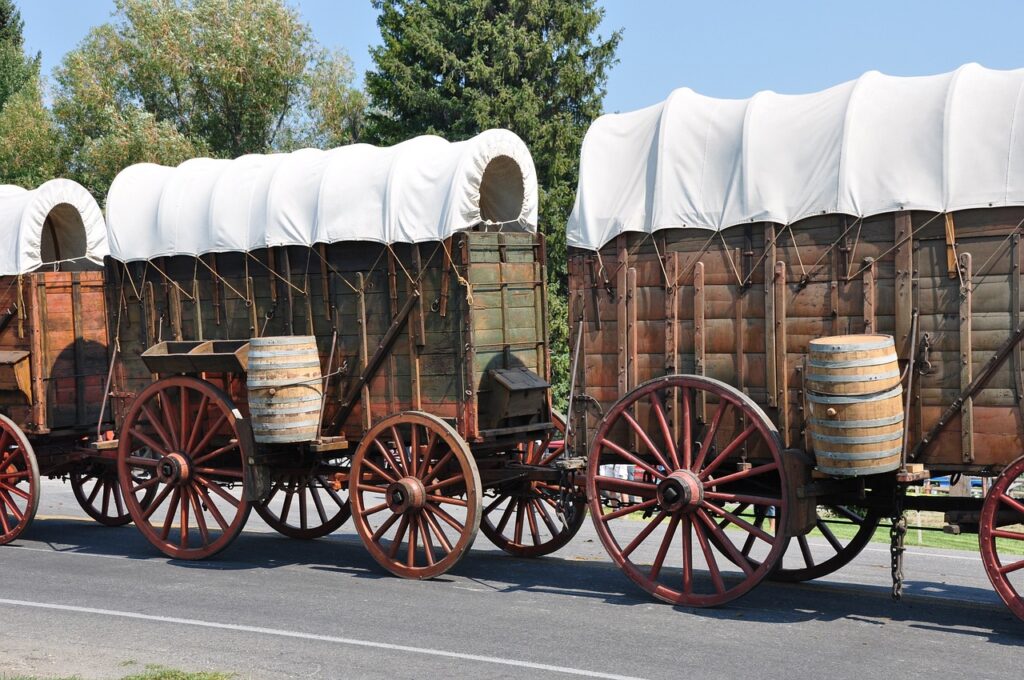
…「waggon」↑。荷馬車。
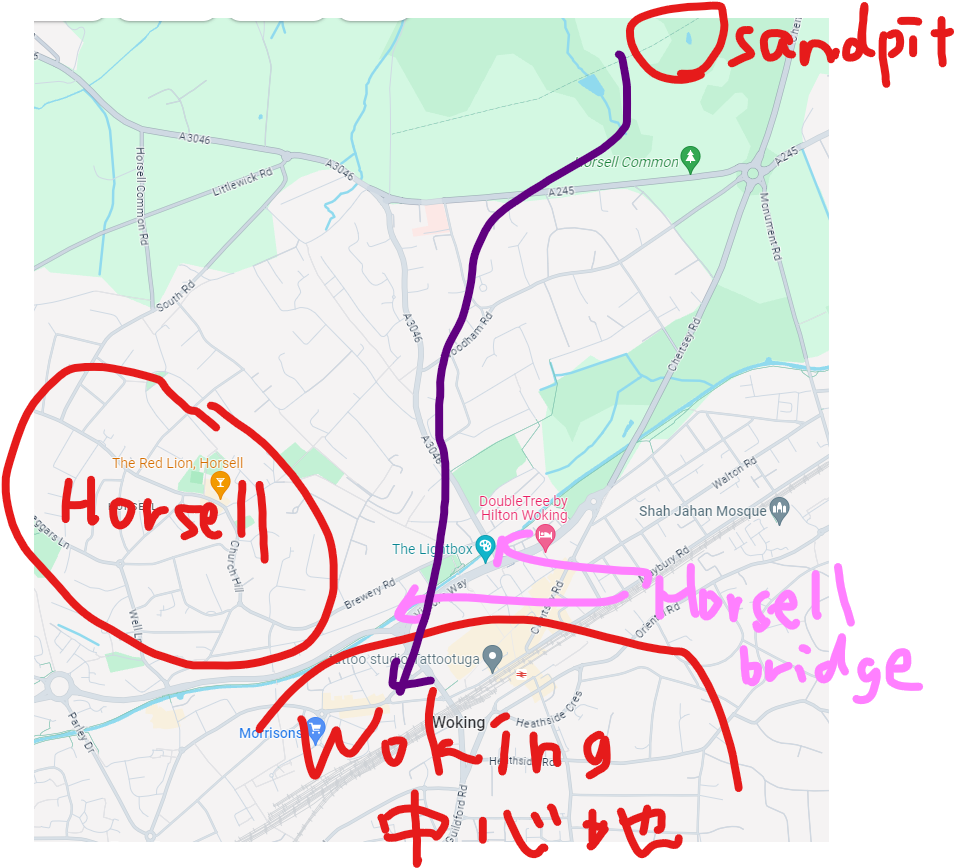
きっとオギルヴィーナちゃんのたどった経路は紫のルートかな。Horsell Bridgeは(未来の話になってしまうけど)第78話参照。WokingとHorsellの間の川にかかる橋ね。
<英文解釈記号ルール>
〔〕→関係詞句・節
【】→接続詞句・節
《》→挿入句・節
[ ] →名詞句・節
()→副詞句・節
〈〉→形容詞句・節
The thought of the confined creature was so dreadful to him that he forgot the heat and went forward to the cylinder to help turn. But luckily the dull radiation arrested him 【before he could burn his hands on the still-glowing metal】. (At that) he stood irresolute (for a moment), then turned, scrambled out of the pit, and set off running wildly into Woking. The time then must have been somewhere about six o’clock. He met a waggoner and tried to make him understand, but the tale 〔he told〕 and his appearance were so wild—his hat had fallen off in the pit—that the man simply drove on. He was equally unsuccessful with the potman 〔who was just unlocking the doors of the public-house by Horsell Bridge〕. The fellow thought he was a lunatic at large and made an unsuccessful attempt to shut him into the taproom. That sobered him a little; and 【when he saw Henderson, the London journalist, in his garden】, he called over the palings and made himself understood.
1. 青アンダーラインの部分は、soーthatが見えればだいじょぶ。
2. オレンジの「to help turn」はもともと「to help (them) to turn」。
「help (O) <to> V」で「(Oが)Vするのを助ける・Vする役に立つ」でしたね。toは省略可能です。
3. 紫の「and」が繋いでいるものは、stood, turned, scrambled, setの動詞4つです。
4. 赤の「set off」の意味は「出発する」(≒leave)。set in([季節]に入る、など)、set out(≒set off、など)、set up(≒establish、など)と一緒に覚えておきましょう。
5. 赤アンダーラインの部分も、soーthat。「ー」で囲まれたところは挿入。
6. 青の「on」の意味は「続けて」。go on、carry onなどのイメージと一緒に。
7. 茶色の「at large」の意味は「一般的な」(≒in general)。名詞の後に置かれる形容詞。the people at large=一般大衆 で覚えておきましょう。
ほかに「捕まってない」って意味もあります。
8. 緑の「and」が繋いでるものはthoughtとmade。酒場の店員がしたことです。
9. 黄アンダーラインの部分を「訳す」となったときには難しいかもしれません。「unsuccessful」という否定語があって、「成功しない試みをした」とぎこちなくなってしまうからです。こういうときには「~を試みたが成功しなかった」という風に、否定語を文末に送って訳すとすっきりします。「Few people~」を「~人はほとんどいない」とか、「in vain」を「~したが無駄だった」という風に訳すことを思い浮かべてみましょう。
10. 灰色の「him」と「himself」が指している人物について、前者が指しているのは「a waggoner」、後者が指しているのはOgilvyです。同じ主語でも、make O understandなのかunderstoodなのかで、Oが変わってきますね。
閉じ込められた生き物がいるという考えはとても恐ろしかったので、オギルヴィは熱を忘れ、ハッチを回すのを助けるために円筒の方へ進んだ。でも、幸運なことに、鈍い熱の放射のおかげで、まだ光っている金属の上で手をやけどをせずに済んだ。そのあと少しの間ためらっていたが、きびすを返し、穴からはい上がり、やみくもにウォーキングへ走り出した。そのときの時刻は6時くらいだったに違いない。
オギルヴィは荷馬車の御者に出くわした。彼にわかってもらおうとしたが、話と外見がとても荒っぽかったので(帽子は穴に落ちてしまっていた)、御者は単に車を走らせ続けた。
ホーセル橋のそばでパブのドアをちょうど開けようとしていた店員に対しても、同様にうまくいかなかった。店員は、彼をよくいる泥酔客だと思い、パブの中に閉じ込めようとしたが、うまくいかなかった。
そのことでオギルヴィは少し冷静になった。
ロンドンのジャーナリストであるヘンダーソンに庭で会った時、柵越えに呼びかけて、自分の考えを理解してもらおうとした。
パブ店員にとっての「a luncatic at large」(一般的な狂人)って、要するに「泥酔客」よね。
相変わらずわたしの扱いひどくないか?
第2章 第10段落 (第29話)
わたしの友人、ヘンダーソン(CV.ケイ)との会話シーンだ。
「Henderson was a minute or so taking it in」ってあるところ、「It takes a minute or so for Henderson to take it in.」っていう意味だと解釈してOKだ。
問題編
“Henderson,” he called, “you saw that shooting star last night?”
“Well?” said Henderson.
“It’s out on Horsell Common now.”
“Good Lord!” said Henderson. “Fallen meteorite! That’s good.”
“But it’s something more than a meteorite. It’s a cylinder—an artificial cylinder, man! And there’s something inside.”
Henderson stood up with his spade in his hand.
“What’s that?” he said. He was deaf in one ear.
Ogilvy told him all that he had seen. Henderson was a minute or so taking it in. Then he dropped his spade, snatched up his jacket, and came out into the road. The two men hurried back at once to the common, and found the cylinder still lying in the same position. But now the sounds inside had ceased, and a thin circle of bright metal showed between the top and the body of the cylinder. Air was either entering or escaping at the rim with a thin, sizzling sound.
out現れて Good Lordまじか? man(強調の言葉。状況に合わせて訳す) spadeスペード(シャベルみたいなもの。下解説参照) take in理解する snatch upひっつかむ cease止む rim縁 sizzlingシューシュー
1. 赤アンダーラインの文型表示は?
2. オレンジの「and」が繋いでるものは?
3. 青アンダーラインの文型表示は?
解答編
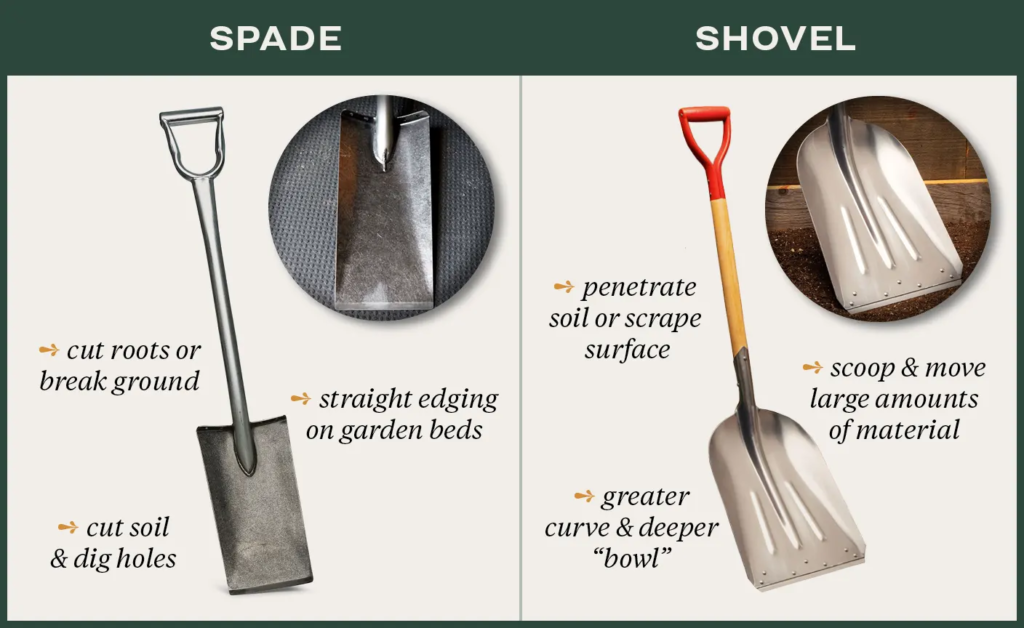
Spadeは細長くて、Shovelは広いんだ。Spadeは硬い土を掘ったりするのに適してて、Shovelはたくさんの土を運んだりするのに適しているらしいよ。
<英文解釈記号ルール>
〔〕→関係詞句・節
【】→接続詞句・節
《》→挿入句・節
[ ] →名詞句・節
()→副詞句・節
〈〉→形容詞句・節
“Henderson,” he called, “you saw that shooting star last night?”
“Well?” said Henderson.
“It’s out on Horsell Common now.”
“Good Lord!” said Henderson. “Fallen meteorite! That’s good.”
“But it’s something more than a meteorite. It’s a cylinder—an artificial cylinder, man! And there’s something inside.”
Henderson stood up with his spade in his hand.
“What’s that?” he said. He was deaf in one ear.
Ogilvy told him all 〔that he had seen〕. Henderson was (a minute or so) taking it in. Then he dropped his spade, snatched up his jacket, and came out into the road. The two men hurried back (at once) to the common, and found the cylinder still lying (in the same position). But now the sounds inside had ceased*, and a thin circle of bright metal showed (between the top and the body of the cylinder). Air was either entering or escaping at the rim* (with a thin, sizzling* sound).
1. 赤アンダーラインの文型表示は上の通り。find O C「OがCなのを見つける・わかる」。
2. オレンジの「and」が繋いでるものはhurriedとfound。2つの動詞ですね。
3. 青アンダーラインの文型表示は上の通り。showは「現れる」という自動詞の意味があります。
オギルヴィは「ヘンダーソン」と声をかけた。「きのうの夜、流れ星見た?」
「なんて?」とヘンダーソン。
「いまホーセル共有地で見つけたよ」
「オーマイガー!」とヘンダーソン。「落下してきた隕石? そりゃグッド!」
「でも隕石以上の何かなんだよ。円筒ー人工の円筒なんだ! それに、なにか中にいるんだ」
ヘンダーソンは手にスペードをとって立ち上がった。「何だって?」彼は片耳が聞こえない。
オギルヴィはヘンダーソンに、見たものすべてを話した。ヘンダーソンは1分かそこらで理解してた。シャベルを放り投げ、ジャケットをひっつかんで道に出た。すぐに2人は急いでホーセル共有地に戻り、円筒がまだ同じ位置に横たわっているのを見つけた。
だが、中からの音はやんでいて、明るい金属の薄い円が円筒の本体と上部の間に現れていた。細いシューシューという音を立てて、へりの部分に空気が入ったり出たりしていた。
「a thin circle of bright metal」って、内部から何かで切断して脱出しようとしてた跡なのかな。
第2章 第11段落 (第30話)
take down their shuttersって、早朝なのにシャッターを下げるのかしら。逆じゃない?
そういう夜の店か?
take downに「壊す」「外す」っていう意味もあるから、まあ普通にシャッターを上げてるって訳せばいいんじゃないかと。
問題編
They listened, rapped* on the scaly* burnt metal with a stick, and, meeting with no response, they both concluded the man or men inside must be insensible* or dead. Of course the two were quite unable to do anything. They shouted consolation* and promises, and went off back to the town again to get help. One can imagine them, covered with sand, excited and disordered*, running up the little street in the bright sunlight just as the shop folks* were taking down their shutters and people were opening their bedroom windows. Henderson went into the railway station at once, in order to telegraph* the news to London. The newspaper articles had prepared men’s* minds for the reception of the idea.
rapトントンとたたく scalyうろこのように剥がれ落ちている insensible意識がない consolationなぐさめ disordered混乱して shop folk店員 telegraph電信を打つ men’s人間の
1. 赤の「and」が繋いでるものは?
2. オレンジの「one」の意味は?
3. 青の「them」が指しているものは?
4. 赤アンダーラインの文型表示は?
5. the ideaを明らかにした青アンダーラインの訳は?
解答編
「telegraph」ってあるけど、19世紀中ごろにはモールス信号などを用いた電信がだいぶ広まってたわ。大西洋横断ケーブルだってもう敷設されてるのよ。ヘンダーソンさんが鉄道駅に入ってたけど、鉄道と電信には深い関係があったりするわ。
ちなみに、アメリカ人モールスによってモールス信号は1840年ごろに発明されたんだ!
商業電信はイギリス発祥だからいいもんね
はいはい。
それはそうと、以下にも出てくるけど、イギリス英語の「burnt」(米burned)とかやめない?
規則活用さんせーい
イギリスのことわざにこんなのがあるのよ。
When in Rome, do as the Romans do.
<英文解釈記号ルール>
〔〕→関係詞句・節
【】→接続詞句・節
《》→挿入句・節
[ ] →名詞句・節
()→副詞句・節
〈〉→形容詞句・節
They listened, (rapped* on the scaly* burnt metal with a stick), and, (meeting with no response), they both concluded [the man or men inside must be insensible* or dead]. (Of course) the two were quite unable to do anything. They shouted consolation* and promises, and went off back to the town again (to get help). One can imagine them, (covered with sand), (excited and disordered*), running up the little street (in the bright sunlight) just 【as the shop folks* were taking down their shutters and people were opening their bedroom windows】. Henderson went into the railway station at once, in order to telegraph the news to London. The newspaper articles had prepared men’s* minds for the reception of the idea.
1. 赤の「and」が繋いでるものは、they listenedの文と、they bothの文。rappedとmeetingはそれぞれに付く分詞構文。
2. オレンジの「one」は人全般をさす。youやweと同じだと思ってOK。
3. 青の「them」が指しているものは、Ogilvina・Hensley。
4. 赤アンダーラインの文型表示は上の通り。coveredとexcitedが挿入部。それを外せば、imagine them runningとなります(themはrunningの意味上の主語)。imagine O Cという文型は(学校文法上)ないので今回はthem runningでまとめてOと考えましたが、まあimagine O Cとしても意味は同じです。
なおこの部分を訳すときは「我々は彼らが~してたのを想像できる」としてもいいし、「たぶん彼らは~してただろう」と推量で訳してもいいと思います。
5. the ideaは「落下した円筒に誰か入っていた」ってこと。prepare A for Bで、「AにBに備えて準備させる」です。今回は名詞構文で訳してあげると気持ちいいですね。
なお、ここは過去完了です。the newspaper articleっていうのは、以前出ていた「火星から奇怪な光が見えたよ」っていう記事のことです(第1章参照)。
2人は焼けて剥がれた金属を棒でトントンとたたいて耳を澄ました。でも返答がなかったので、2人とも、中にいる人(々)は意識がないか死んでいるに違いないと結論付けた。
もちろん 2 人はまったく何もできなかった。戻ってくる約束と慰めとを叫び、助けを得るためにまた町に戻った。
きっと2人は砂まみれになり、興奮して混乱しながら、店員がシャッターを上げ市民が寝室の窓を開けている中、細い道を明るい日光の中走っていったのだろう。
ヘンダーソンはすぐに鉄道の駅にかけこんだ。ロンドンにそのニュースを電信で伝えるためだ。新聞記事によって、人々は落下した円筒に誰かが入ってるっていうことを受け入れられる思考回路は既にできていた。
第2章 第12段落 (第31話)
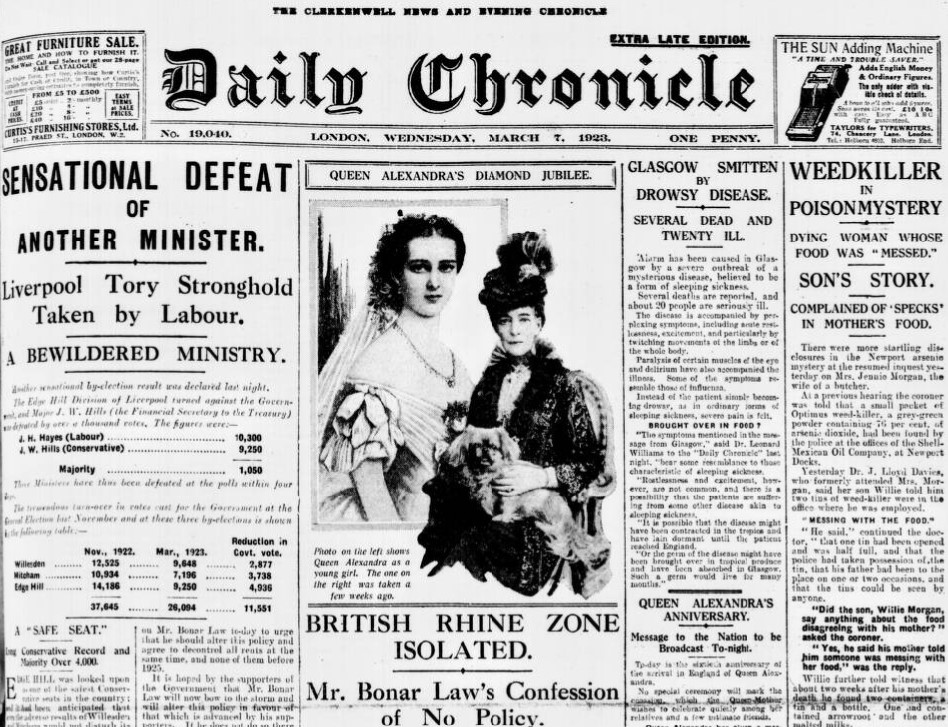
こちらが、わたしがそのとき取っていた「Daily Chronicle」。
1872~1930の間発行されてた地方紙だ。
新聞は何種類も取ってたぞ。
問題編
By eight o’clock a number of boys and unemployed men had already started for the common to see the “dead men from Mars.” That was the form* the story* took. I heard of it first from my newspaper boy about a quarter to nine when I went out to get my Daily Chronicle. I was naturally* startled*, and lost no time in going out and across the Ottershaw bridge to the sand-pits.
form表現形式 story記事 naturally当然 startleびっくりさせる
1. 赤の「a number of」の意味は?
2. オレンジの「for」の意味は?
3. 青の「a quarter to nine」の意味は?
解答編
Ottershaw bridgeは現実世界では「Monument Bridge」という橋だぜ。
未来の記事になるが第89話を参照してくれ。
<英文解釈記号ルール>
〔〕→関係詞句・節
【】→接続詞句・節
《》→挿入句・節
[ ] →名詞句・節
()→副詞句・節
〈〉→形容詞句・節
(By eight o’clock) a number of boys and unemployed men had already started (for the common) (to see the “dead men from Mars.”) That was the form* 〔the story* took〕. I heard of it first (from my newspaper boy) (about a quarter to nine) 【when I went out to get my Daily Chronicle】. I was naturally* startled*, and lost no time in going out and across the Ottershaw bridge to the sand-pits.
1. 赤の「a number of」の意味は「いくつかの(何人かの)」(≒several)。「more than a few, but not many」らしいです。ちなみに 「a large number of」となると「たくさんの」となります。a many number ofとは言わないので注意。
2. オレンジの「for」の意味は「~に向かって」。「~へ」という意味を表す前置詞to, toward, forにおいて、toは終点・towardははじめと終わりを結ぶ線・forは始点に注目している印象が強いのは気のせいかな。
3. 青の「a quarter to nine」の意味は「8時45分」。「あと1/4時間で9時」ですからね。なお9時15分は「a quarter past nine」。
8時までには、数名の男の子と無職の人がすでに共有地の方へ、「火星からの死んだ人間」を見に出発していた。それが、記事がとった表現だった。
わたしは新聞配達の男の子から最初にそれを聞いた。8 時 45 分ごろ、デイリー・クロニクル紙を取りに外に出たときだった。
当然わたしはびっくりし、即座に外に出て、オターショウの橋を渡ってホーセル共有地の砂地のところに行った。
…21世紀の日本の感覚からすると、9時前に新聞届くのってめっちゃ遅いよね。
あ、次回から第3章です。






コメント