<流れ>
①かっこを振っていない英文
②単語注(①でアスタリスクを振ったところ)
③設問
④かっこを振った英文
⑤設問の答え
⑥訳
Ⅲ. ON HORSELL COMMON
第3章 ホーセル共有地です!
第3章 第1段落 (第32話)

ここらへんで第2章までを整理しておこう。
ここは1900年ごろのイギリス。ロンドンのベッドタウンとなっているウォーキング(Woking)が序盤の舞台だ。
火星からの宇宙船とみられる円筒状の物体が、ウォーキング付近のHorsell Commonという森林地帯に着陸。人々は火星人を一目見ようと現場に押し寄せているところだな。
わたし(GuP西住まほ)は小説の中では語り手(地の文の主語)だ。
Woking在住の社会学者で、一連の騒動にかなり関心を持っている。
なんとなく察してくれてるかもしれないが、ここの会話編ではドイツ担当だ。

わたし(GuPダージリン)は小説の中では語り手の奥さん役よ。会話編での担当国はイギリスね。

天文学者のオギルヴィ(GuPアンチョビ)だ。同じくこのあたりに住んでるぞ。火星から宇宙船が発射されるのを観測したり、最初に墜落現場を発見したりした。小説中でもう少しわたしは褒められていいと思うんだが。
ここの会話編ではイタリア担当だ。

英国の天文学会・隕石学会で指導的立場にいるデニング(GuPアリス)です。
小説の中での登場は1回だけだけど、こっちの会話に混ざりたい…

ハロー、ヘンダーソン(GuPケイ)だよ。普段はロンドンで働くジャーナリスト。
いまはオギルヴィと一緒に行動中。
この会話編ではアメリカ担当です!
問題編
I found a little crowd of perhaps twenty people surrounding the huge hole in which the cylinder lay. I have already described the appearance of that colossal* bulk*, embedded* in the ground. The turf* and gravel about* it seemed charred* as if by a sudden explosion. No doubt* its impact had caused a flash of fire. Henderson and Ogilvy were not there. I think they perceived* that nothing was to be done for the present*, and had gone away to breakfast at Henderson’s house.
colossal巨大な bulkかたまり embed埋める turf芝生 about≒around char黒焦げにする No doubt間違いなく perceive悟る for the presentさしあたり(≒for the time being)
1. 赤アンダーラインの文型表示は?
2. 青アンダーラインの部分で省略されてる言葉は?
3. 紫の「be to」の用法は?
4. オレンジの「and」が繋いでるものは?
解答編
No doubt SVで「間違いなくSがVする」ね。No wonder SVの親戚よ。
it is no doubt that…というitーthat形式主語の部分が省略されたわけね。
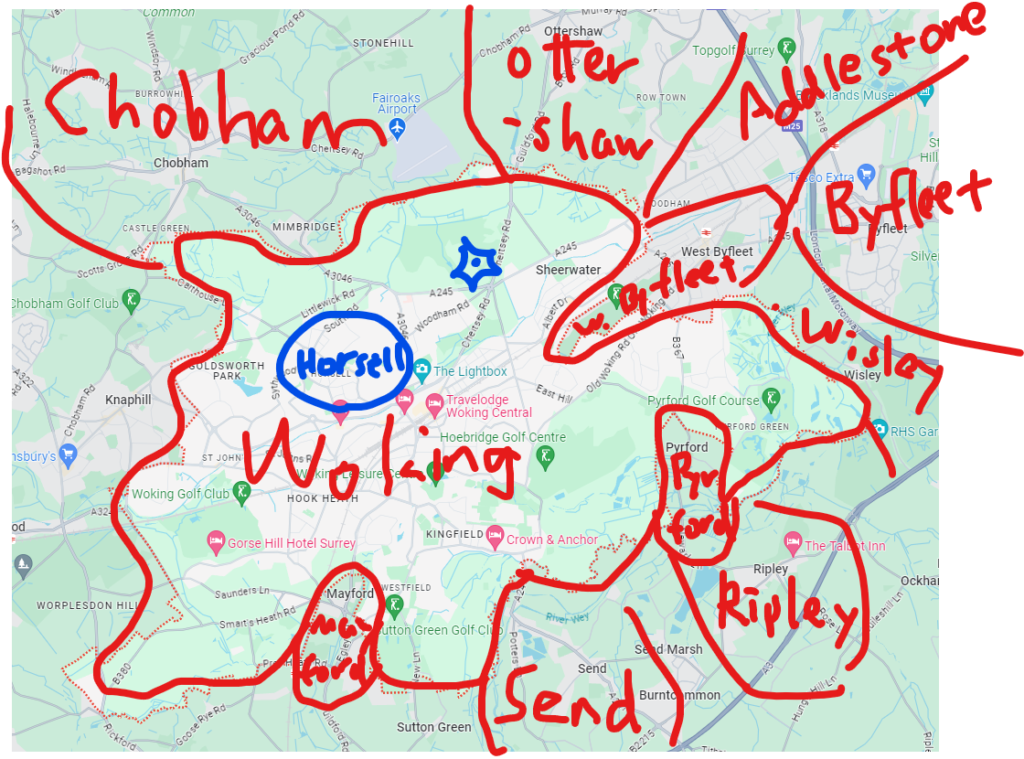
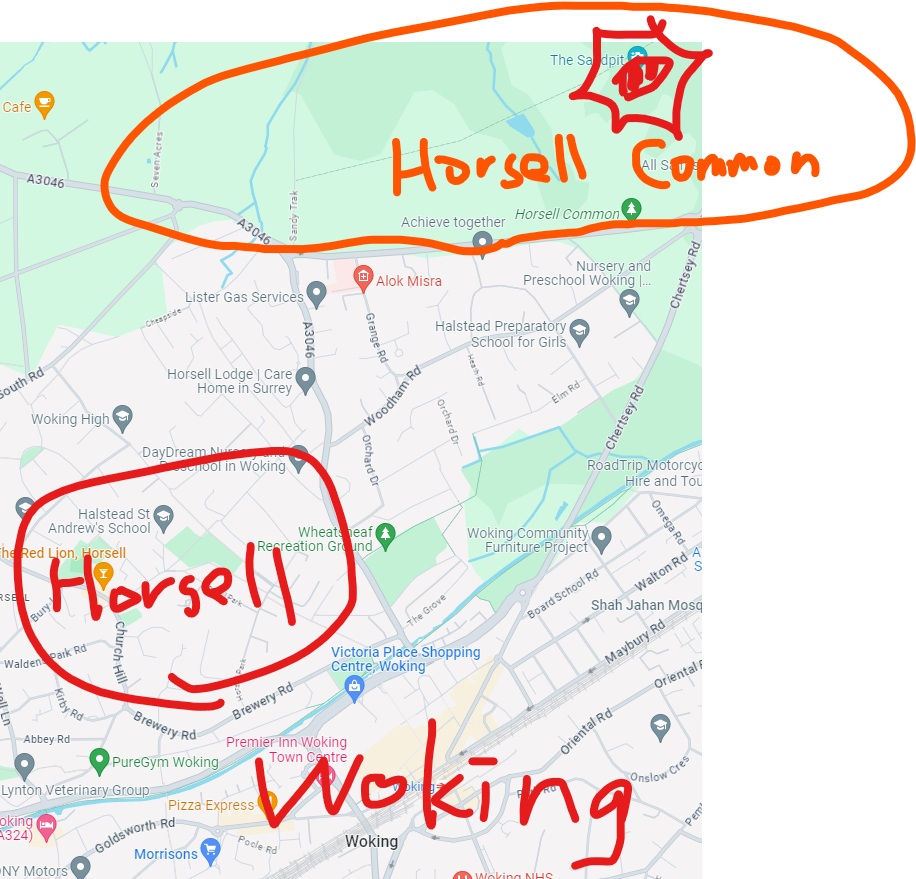
Wokingというのはこのあたり一帯すべてを含む地名で、HorsellはWokingの中の区画だ。「WokingのHorsell」は「千代田区秋葉原」みたいな感じ。
なお、よく出てきている「Ottershaw」はHorsell Commonの北東にある村で、Woking内にはないぞ。
<英文解釈記号ルール>
〔〕→関係詞句・節
【】→接続詞句・節
《》→挿入句・節
[ ] →名詞句・節
()→副詞句・節
〈〉→形容詞句・節
I found a little crowd 〈of perhaps twenty people〉 surrounding the huge hole 〔in which the cylinder lay〕. I have already described the appearance of that colossal* bulk*, embedded* in the ground. The turf* and gravel 〈about* it〉 seemed charred* (as if (by a sudden explosion)). No doubt* its impact had caused a flash of fire. Henderson and Ogilvy were not there. I think [they perceived* [that nothing was to be done for the present*], and had gone away to breakfast at Henderson’s house].
1. 赤アンダーラインの文型表示は上の通り。find O Cの形ですね。
2. 青アンダーラインの部分は、もともとは「as if they were charred by a sudden explosion」。they were charredが繰り返しになるから、省略しちゃったわけですね。
3. 紫の「be to」の用法は「可能」。趣深いことに、日本の古文で打消しを伴う「る」の用法が可能であることが多いように、英語でも打消しを伴うbe toは可能の用法となることが多いような気がします(気のせいかな?)。
4. オレンジの「and」が繋いでるものは、perceivedとhad gone。theyを主語にしています。
わたしは、だいたい 20 人くらいの小集団が、その円筒が横たわっている巨大な穴を囲んでいるのを見つけた。あの巨大な物体は地面に埋められてたが、その外見については既に説明した通りだ。周囲の芝生や砂利は、まるで突然の爆発によって黒焦げにされたように見えた。間違いなく、その墜落が炎の閃光を引き起こしたのだ。ヘンダーソンとオギルヴィはそこにはいなかった。さしあたり何もできることはないと悟り、ヘンダーソンの家に朝食を食べに行ったのだろう。
第3章 第2段落 (第33話)
playing at “touch”ってなんだよ
触って遊ぶんだから、鬼ごっこの仲間じゃない?
いまは「tag」って言うよね
昔のイギリスにはきっといっぱい呼び名があったのよ
問題編
There were four or five boys sitting on the edge of the Pit*, with their feet dangling*, and amusing ( they ) —until I stopped them—by throwing stones at the giant mass. After I had spoken to them about it, they began playing at “touch” in and out of the group of bystanders*.
the Pit=円筒の激突で作られた穴 dangleぶら下げる bystander見物人
1. オレンジのandが繋いでるものは?
2. 緑の「they」を適切に活用させると?
3. 赤アンダーラインの部分の行為をやってるのは誰?
解答編
「I had spoken to them about it」は「注意した」ぐらいでいいと思うぞ。
<英文解釈記号ルール>
〔〕→関係詞句・節
【】→接続詞句・節
《》→挿入句・節
[ ] →名詞句・節
()→副詞句・節
〈〉→形容詞句・節
There were four or five boys 〈sitting on the edge of the Pit*〉, 《with their feet dangling*》, and 〈amusing ( themselves) 《ーuntil I stopped them—》(by throwing stones at the giant mass)〉. 【After I had spoken to them about it】, they began playing at “touch” in and out of the group of bystanders*.
1. オレンジのandが繋いでるものは、sittingとamusingかな。重さ的に。with their feet danglingは説明部分。
2. 緑の「they」を適切に活用させると「themselves」。amuse oneselfで「楽しむ」「遊ぶ」。enjoy oneselfとかのパターン。
3. 赤アンダーラインの部分の行為をやってるのはfour or five girls。直前に「I stopped them」ってあって、つい「私が石を投げて止めた」という解釈に走りがちですが、挿入ってことを見落とさないように。
4、5人の男の子が、その穴のへりに足をぶらぶらさせながら座っていて、わたしが止めるまで、その巨大なかたまりに石を投げて遊んでいた。わたしがそれを注意したら、彼らは見物人の集団の中や外で鬼ごっこを始めた。
第3章 第3段落 (第34話)
golf caddieは荷物を持ったりプレイヤーのサポートをする人ね。
17世紀からいたらしいわ。
問題編
Among these were a couple of cyclists, a jobbing* gardener* I employed sometimes, a girl carrying a baby, Gregg the butcher* and his little boy, and two or three loafers* and golf caddies who were accustomed to hang about* the railway station. There was very little talking. Few of the common people in England had anything but the vaguest* astronomical ideas in those days. Most of them were staring quietly at the big table like* end of the cylinder, which was still as Ogilvy and Henderson had left it. I fancy the popular* expectation of a heap of charred* corpses* was disappointed* at this inanimate* bulk. Some went away while I was there, and other people came. I clambered* into the pit and fancied I heard a faint movement under my feet. The top had certainly ceased* to rotate.
jobbing臨時雇いの gardener庭師 butcher肉屋 loafer浮浪者 hang about~のあたりをぶらぶらする vagueおぼろげな big table like:ここではbig-table-likeというひとかたまりの形容詞 popular人々の char黒焦げにする corpse死体 disappoint裏切る inanimate無生物の clamberよじ登る・伝い降りる cease止める
1. 赤アンダーラインの文型表示は?
2. 紫のwho句の先行詞は?
3. 青アンダーラインの訳は?
4. オレンジのasの意味は?
解答編
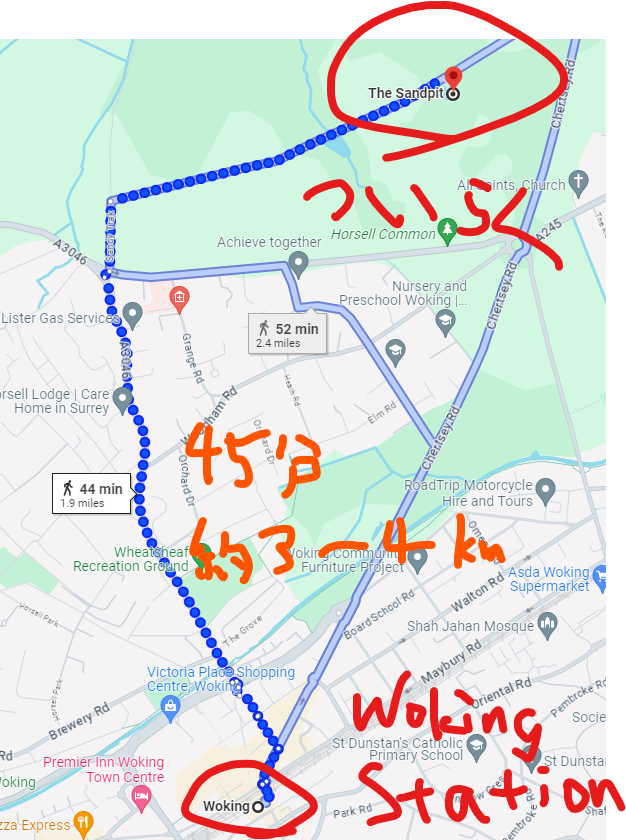
本文中の「the railway station」はWoking Station。そこから墜落地点のSandpitまでは徒歩で約45分。3~4㎞だ。
意外と遠い…
<英文解釈記号ルール>
〔〕→関係詞句・節
【】→接続詞句・節
《》→挿入句・節
[ ] →名詞句・節
()→副詞句・節
〈〉→形容詞句・節
(Among these) were a couple of cyclists, a jobbing* gardener* 〔I employed sometimes〕, a girl 〈carrying a baby〉, Gregg the butcher* and his little boy, and two or three loafers* and golf caddies 〔who were accustomed to hang about* the railway station〕. There was very little talking. Few of the common people 〈in England〉 had 〈anything but the vaguest* astronomical〉 ideas in those days. Most of them were staring quietly (at the big table like* end of the cylinder, 〔which was still as Ogilvy and Henderson had left it〕). I fancy [the popular* expectation 〈of a heap of charred* corpses*〉 was disappointed* (at this inanimate* bulk)]. Some went away 【while I was there】, and other people came. I clambered* into the pit and fancied [I heard a faint movement under my feet]. The top had certainly ceased* to rotate.
1. 赤アンダーラインの文型表示は上の通り。wereがVで、太字が主語。ちなみに、紫のwho句の中、were accustomed to hang…と、be accustomed to V(21世紀ではVingが正しい)になってますが、この文章が書かれたのは19世紀ですから、まだまだ曖昧ですね。
2. who句はloafersとgolf caddiesを修飾しています。だって、loafersのあとにカンマないじゃないですか(残りはあるのに)。それに、浮浪者なら駅の周りをうろうろしているでしょう。
3. 青アンダーラインですが、まずhadの目的語はideaで、anythingからastronomicalまでがideaを修飾してます。「few」が準否定語(~する人はほとんどいない)で、anything butは「決して~でない」「~にはほど遠い」という否定の意味です。否定が2つ重なってますが、ここでは文脈上、強い否定になっていると考えるのが妥当でしょう。
あと、vaguest(最上級)がanything butと呼応して、さらに強調してるわけです。
They don’t have the slightest idea about it.(全く考えを持っていなかった)などの例文を思い出しましょう。
4. オレンジのasの意味は「~のとき」。その前のstillは「変わってない」という意味ですね。
まわりには、サイクリストのカップル、わたしもときどき来てもらう臨時雇いの庭師、赤ちゃんを抱いた女の子、肉屋のグレッグと小さい男の子、そして、駅のあたりをぶらぶらすることが習慣になっている数人の浮浪者とゴルフキャディがいた。ほとんど会話はなかった。
当時、天文学についての意見を少しでも持ち合わせているイングランドの一般人はほとんどいなかった。大多数は大きなテーブルのような円筒の蓋を静かに見つめていた。円筒はオギルヴィとヘンダーソンが去ったときのまま変わっていなかった。
この生命が感じられないかたまりを見て、黒焦げにされた死体の山があるという人々の期待はきっと裏切られたんだと思う。わたしがいる間に去っていった人もいるし、来た人もいた。
わたしは穴の中に降りた。足下でかすかに動くのが聞こえた気がした。
円筒上部は確実に回転を止めていた。
第3章 第4段落 (第35話)
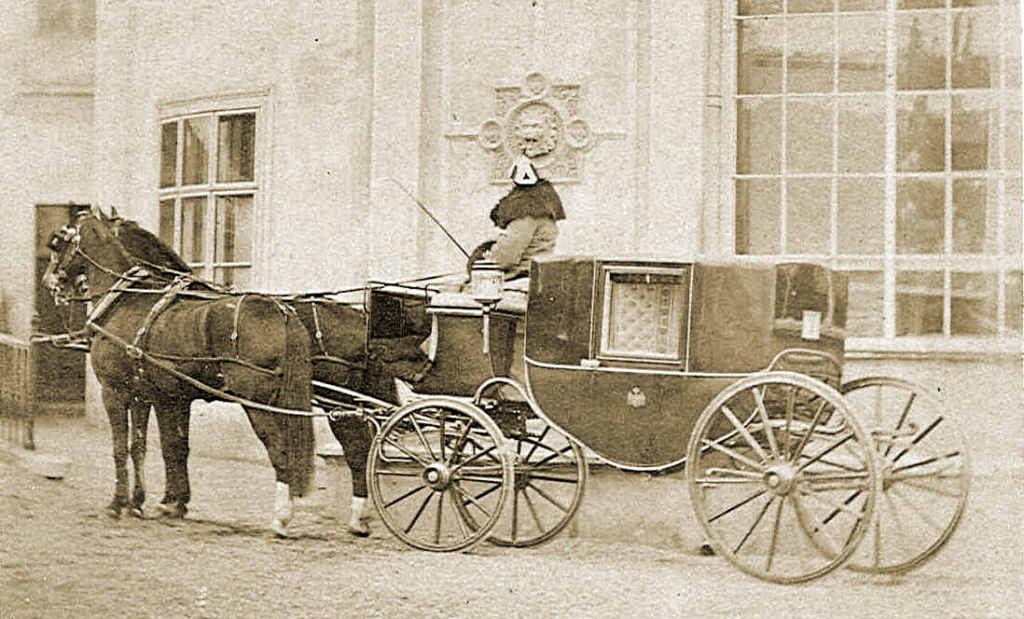
これが「carriage」というタイプの馬車。ごくごく一般的なもので、移動に使う四輪馬車ね。
自動車に「レクサス」「プリウス」とか車種がたくさんあったり、戦車に「歩兵戦車」「巡航戦車」とか呼び方がたくさんあったりするように、馬車にもいっぱい種類があるのよ。

問題編
It was only when I got thus* close to it that the strangeness of this object was at all evident to me. At the first glance it was really no more exciting than an overturned* carriage* or a tree blown* across the road. Not so much* so, indeed. It looked like a rusty* gas float*. It required a certain amount of scientific education to perceive* that the grey scale* of the Thing was no common oxide*, that the yellowish-white metal that gleamed* in the crack* between the lid* and the cylinder had an unfamiliar hue*. “Extra-terrestrial*” had no meaning for most of the onlookers*.
thusこのように overturnedひっくり返った carriage四輪馬車 blown(<blow)吹き飛ばされた not so much~ほどではない rustyさびた gas floatガスフロート perceive気づく scale薄片 oxide酸化物 gleam輝く crack割れ目 lidフタ hue色合い terrestrial地球の onlooker見物人
1. オレンジの「it」は何の役割?
2. 茶色の「only」の意味は?
3. 赤アンダーラインの訳は?
4. 緑のitが指すものは?
5. 青の「certain」の意味は?
6. ピンクのカンマ(andの代用)が繋いでいるものは?
解答編
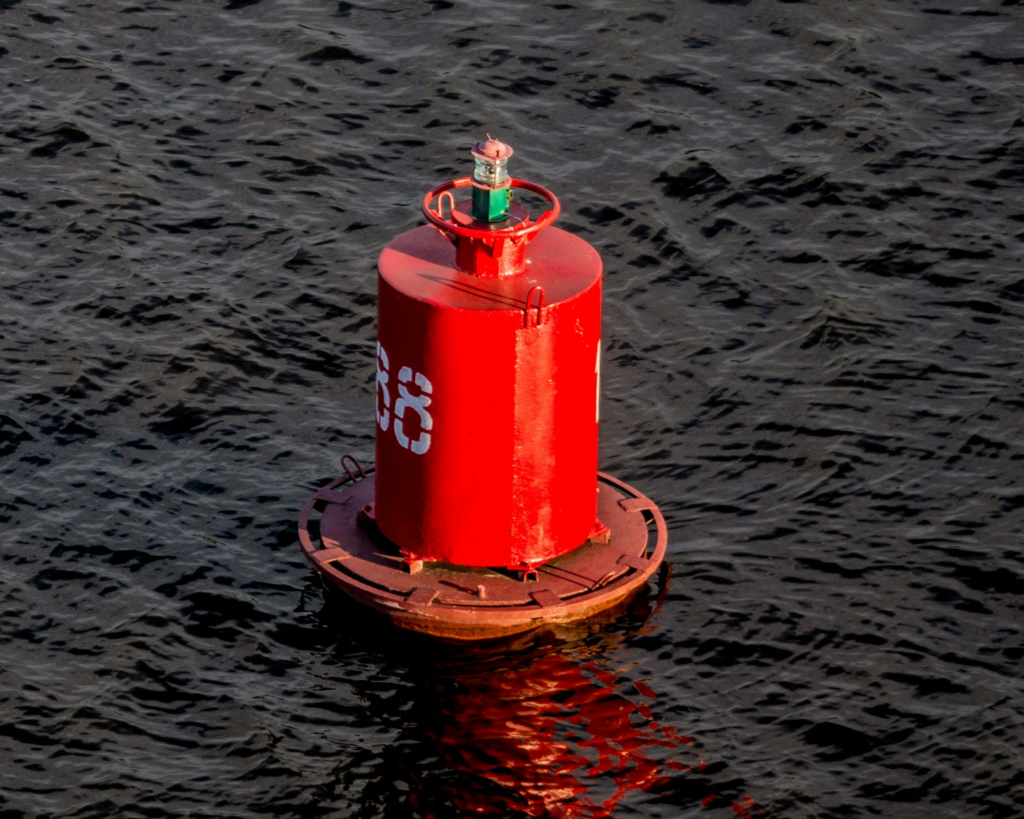
gas floatってたぶんこういうやつだな。
中に気体が入ってて浮く、でっかいやつ。
yellowish-white(黄色っぽい白の)oxide(酸化物)って何かしらの合金ってことだろうが、正体は何なんだろうな。
というかその前に、火星の大気のメイン成分のCO2って結構いろいろ邪魔じゃないかな?
どうやって合金を作るんだろう…。
たぶんそこ突き詰めたらどうしようもないんじゃないか
<英文解釈記号ルール>
〔〕→関係詞句・節
【】→接続詞句・節
《》→挿入句・節
[ ] →名詞句・節
()→副詞句・節
〈〉→形容詞句・節
It was only 【when I got (thus*) close to it】 that the strangeness of this object was at all evident to me.(At the first glance) it was really no more exciting than an overturned* carriage* or a tree blown* across the road. Not so much* so, indeed. It looked like a rusty* gas float*. It required a certain amount of scientific education [to perceive* [that the grey scale* of the Thing was no common oxide*], [that the yellowish-white metal 〔that gleamed* (in the crack* (between the lid* and the cylinder))〕 had an unfamiliar hue*]. “Extra-terrestrial*” had no meaning for most of the onlookers*.
1. オレンジの「it」は、後ろのthatと呼応して、強調構文ですね。itとthatの間に副詞があったら強調構文。まあ、itーthat形式主語と考えても、訳はそんなに変わんなかったりしますけどね。
2. onlyの後に時を表す言葉が来たら、「ようやく」という訳を疑ってみましょう。
3. 赤アンダーラインの部分は、no more A than B(Bと同様Aだ)が使われてますね。
よくno more A than Bの理屈を解説するサイトや参考書がありますが、もう覚えちゃっていいと思います。何回も触れてれば理屈抜きで覚えられます。そういうもんです。
4. 緑のitが指すものは後ろのto perceive以下。
5. 青の「certain」の意味は「ある」。叙述用法と制限用法で意味が変わる形容詞は、certain・right・late・presentあたりを覚えておきましょう。意味は自分で調べてね。
6. ピンクのカンマ(andの代用)が繋いでいるものは、2つのthat節です。
この物体が奇妙なものだというのがまったく明白になったのは、こんな風にそれに近づいてからのことだった。
最初に見たとき、ひっくり返った四輪馬車や風に吹かれて道に倒れた木と同じくらい、まったく面白いものではなかった。実際は、そういったものよりも面白くなかった。
それはさびた浮きに似ていた。その物体の灰色薄片がよく見かける酸化物でなく、ふたと円筒の間の割れ目で光っている黄色を帯びた白い金属が見慣れない色合いをしていることに気づくのには、ある程度の科学的知識が必要だった。
「地球外」ということはほとんどの見物人にとって無意味なことだった。
映画「E.T.」も「Extra-terrestrial」の頭文字を取ったものね。
第3章 第5段落 (第36話)
久しぶりに英文法問題が難しい回よ。
問題編
At that time it was quite clear in my own mind that the Thing had come from the planet Mars, but I judged it improbable that it contained any living creature. I thought the unscrewing* might be automatic*. In spite of Ogilvy, I still believed that there were men in Mars. My mind ran fancifully* on the possibilities of its containing manuscript*, on the difficulties in translation that might arise, whether we should find coins and models in it, and so forth*. Yet it was a little too large for assurance* on this idea. I felt an impatience* to see it opened. About eleven, as nothing seemed happening, I walked back, full of such thought, to my home in Maybury. But I found it difficult to get to work* upon my abstract* investigations*.
unscrew回してハッチを開ける automatic自動の funcifully空想的に manuscript手稿 (and) so forth~など assurance確信 impatienceじれったさ get to work仕事にとりかかる abstract抽象的な investigation研究
1. オレンジの「it」は何の役割?
2. 赤の「it」は何の役割?
3. 紫の「that」の先行詞は?
4. 青の「should」の用法(意味)は?【難問】
5. 緑の「and」が繋いでるものは?
6. 青アンダーラインの「see it opened」に文型表示すると?
7. 茶色の「as」の意味は?
8. 灰色の「it」が指しているものは?
解答編
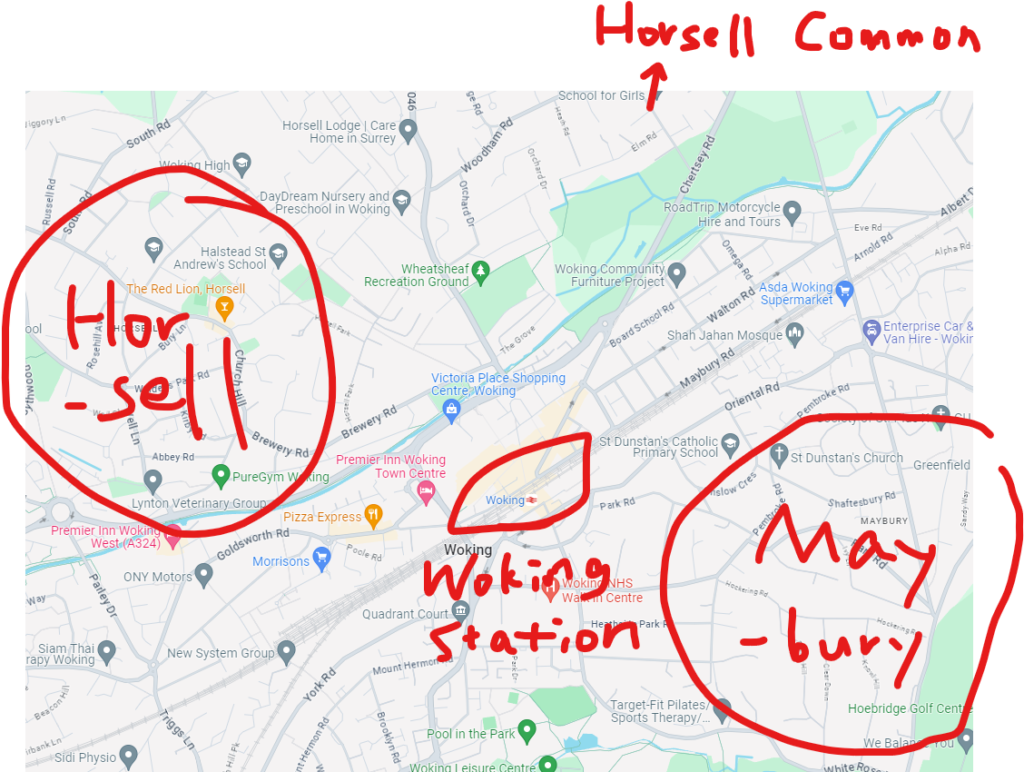
わたしたちのお家の場所がちょっと判明してきたわね。「Maybury」というところよ。
H・G・Wellsさんもこの小説の執筆時住んでた場所だ。
<英文解釈記号ルール>
〔〕→関係詞句・節
【】→接続詞句・節
《》→挿入句・節
[ ] →名詞句・節
()→副詞句・節
〈〉→形容詞句・節
(At that time) it was quite clear (in my own mind) [that the Thing had come from the planet Mars], but I judged it improbable [that it contained any living creature]. I thought [the unscrewing* might be automatic*]. (In spite of Ogilvy), I still believed [that there were men in Mars]. My mind ran (fancifully*) (on the possibilities of its containing manuscript*), (on the difficulties (in translation) 〔that might arise〕), (whether we should find coins and models in it), and so forth*. Yet it was a little too large for assurance* on this idea. I felt an impatience* 〈to see it opened〉. (About eleven), 【as nothing seemed happening】, I walked back, 《full of such thought》, to my home in Maybury. But I found it difficult [to get to work* upon my abstract* investigations*].
1. オレンジの「it」は形式主語ですね。後ろのthat以下が真の主語。
2. 赤の「it」は形式目的語。後ろのthat以下が真の目的語。
I found it impossible to eat them all.(全部食べるのが無理ってわかった)みたいな例文を参照。
3. 紫の「that」の先行詞はdifficulties。translationにはかかりませんよ(こういう問題なんだから直前の語はまあそりゃあ先行詞じゃないわな)。
4. 青の「should」は、時制の一致でshallが過去形になったものです。こんなんわかんなくていいと思います。だいたい、学校英語でshallなんてShall IとShall we以外使いませんからね。
じつはshallはwillと似た感じで、未来を表す用法があります。マッカーサーの 「I shall return」 を思い出してください。
ということで、ここのshouldはwouldと置き換えていいやつです。「コインやモデルがみつかることになるか」みたいな訳になります。
5. 緑の「and」が繋いでるものはon the possibilities, on the difficulties, whether, so forthです。on whetherになってないところだけ不思議に思いますが、まあon whetherってなんか重たい感じがしますし。
6. 青アンダーラインの「see it opened」に文型表示すると上のような第五文型になります。see that it openedではない(seeはthat節を取るとunderstandの意味になる)ので、openedは過去形ではなく過去分詞ですね。
7. 茶色の「as」の意味は「~ので」。
8. 灰色の「it」は形式目的語で、後ろのto以下を指しています。
そのときには、その「物体」が火星から来たということがわたしの中ではとてもはっきりしていたが、何か生きているものが入っているというのはありえないと断定した。
わたしは、円筒の蓋が回ったことは自動なんだろうと思った。
オギルヴィとは違って、わたしはまだ火星人がいると信じていた。
中に手稿が入っている可能性だったり、生じる翻訳上の難点だったり、硬貨や模型が中で見つかるだろうかということだったり、そういうことについて空想的に考えを巡らせはじめた。
でも、この考えは確信に至るにはちょっと大げさすぎた。
わたしは円筒が開かれるのを見たくてじれったかった。
11 時頃、何も起こっていないように見えたので、そういう考えで頭がいっぱいになりながら、メイベリーの自宅へと歩いて戻った。でも、抽象的な研究の仕事に取り掛かることは難しかった。
だから火星人なんていないって。
あとさ、「abstract investigation」(=抽象的な研究)っていったいなに?
あれか? 存在の意味がどうたらこうたらとかの中二病的な研究(笑)?
だからわたし社会学者だって。
第3章 第6段落 (第37話)
この段落で「rouse」という語が出てるけど、
「rise」
「raise」
「arise」
「rouse」
「arouse」
の区別つく?
答え↓
rise:自動詞「上がる」 rise-rose-risen
raise:他動詞「上げる」「育てる」
(この2つはセット)
arise:「(問題が)起こる」arose-arise-arisen
rouse:「(眠りから)起こす」「奮起させる」
arouse:「(疑念などを)起こさせる」「興奮させる(ちょっとR18)」
この3つは「起こす」関連で非常に紛らわしいな。
問題編
In the afternoon the appearance of the common had altered* very much. The early editions of the evening papers had startled* London with enormous* headlines*:
“A MESSAGE RECEIVED FROM MARS.”
“REMARKABLE STORY FROM WOKING,”
and so forth*. In addition, Ogilvy’s wire* to the Astronomical Exchange had roused* every observatory* in the three kingdoms.
alter変わる startleびっくりさせる enormous極端な headline見出し and so forth~など(≒and so on≒etc) wire電信 rouse鼓舞する observatory観測所
1. オレンジの「paper」の意味は?
2. 青の過去分詞receivedの意味(用法)は?
3. ピンクの「the three kingdoms」が指している3つの王国は? 【世界史】
解答編
「Astronomical Exchange」について「Astronomical」が「天文学の」なのはいいとして「Exchange」の訳が難しいぞ。
ネットの英英辞典を見ると「”Exchange” is used in the names of some places where people used to trade and do business with each other.」だって。
「天文学情報交換学会」とでも訳すことにしようかしら? わりとオフィシャルな会合っぽいけどね。というかデニングさん(=GuPアリスちゃん)たぶんそこに出席してるんじゃないの?(第20話参照。デニングさんは隕石学で家元みたいな偉い人。)
かも。
で、問題にもなってるけど、「in the three kingdoms」ってなに?
イギリスって4つの国(イングランド・スコットランド・ウェールズ・北アイルランド)から成ってるんじゃないの?
…なんかいろいろ違う
そうね。まず第一に細かいことだけど、1801~1922年の大英帝国(グレートブリテンおよびアイルランド連合王国)は、アイルランド全域も領土なのよ。だから、「北アイルランド」なんてものはないことに注意ね。
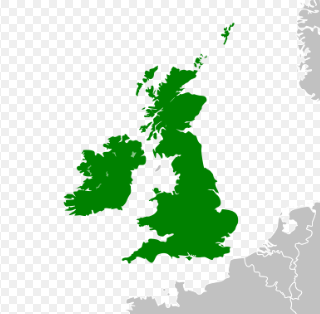
そして本題。「イングランド・スコットランド・ウェールズ・アイルランド」の中で、ウェールズだけはちょっと特別な国なの。
ウェールズは13世紀のころからずっと、イングランドに併合されてるのよ。
それに、ウェールズに安定した統一王国ができたことはなかったの(だから少なくとも「kingdom」と言えるものじゃない)。
ということで、ここで「the three kingdoms」って言っているのは、イングランド・スコットランド・アイルランドの3つね。
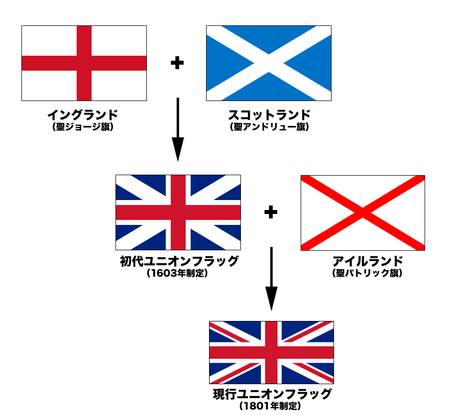
…ユニオンフラッグ(英国国旗)の成立を思い浮かべるとわかりやすい。
イングランドがウェールズを正式に取り込んだのは16世紀半ば。
そして、そのあと17世紀にイングランド&スコットランドが合体。
最後に19世紀初頭にアイルランドと合体して、20世紀前半にアイルランドが独立、現在のイギリスの姿になったの。
<英文解釈記号ルール>
〔〕→関係詞句・節
【】→接続詞句・節
《》→挿入句・節
[ ] →名詞句・節
()→副詞句・節
〈〉→形容詞句・節
(In the afternoon) the appearance of the common had altered* very much. The early editions of the evening papers had startled* London with enormous* headlines*:
“A MESSAGE RECEIVED FROM MARS.”
“REMARKABLE STORY FROM WOKING,”
and so forth*. In addition, Ogilvy’s wire* to the Astronomical Exchange had roused* every observatory* in the three kingdoms.
1. papers(可算名詞)はここでは「新聞」。可算・不可算に気をつけましょう。
2. この「received」は完了ですね。「火星から受け取られたメッセージ」と受動で訳すのは変です。また、messageは主語にはならなさそうですからね。
3. 上の解説通り。
午後には、ホーセル共有地の様子は大きく変わっていた。早刷りの夕刊は、大げさな見出しでロンドン中をびっくりさせた。「火星から受け取ったメッセージ」「ウォーキングからの注目すべき話」などなど。
さらに、オギルヴィが天文学情報交換学会に送った電信は、三王国の全観測所を鼓舞していた。
とはいってもウェールズはイングランドに併合された後も民族アイデンティティを保ちつづけていたわ。
たとえば、イングランド皇太子には21世紀になってもなお「プリンス・オブ・ウェールズ」の称号が与えられてるのよ。皇太子一家は「the Wales family」ね。
あ、プリンス・オブ・ウェールズって、太平洋戦争初期に日本軍に沈められてたやつだ

21世紀では最新鋭空母の艦名になってるんだからね!
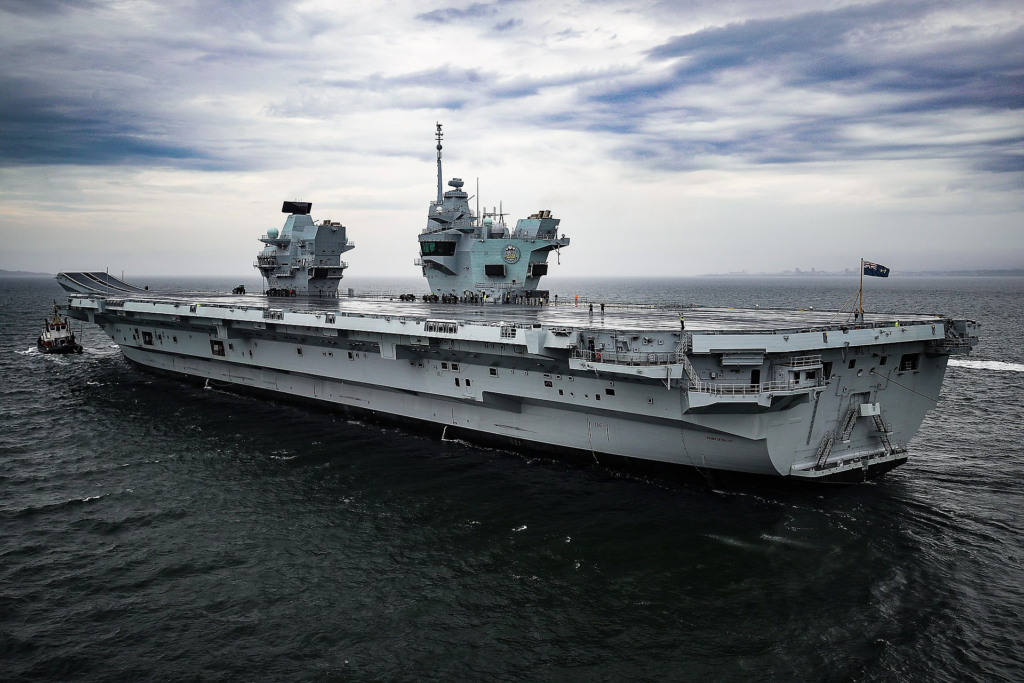
5000-Current%20News/Archive%20(MOD)/MOD/2019/September/MD190011015.jpg, OGL v1.0
どうしてこうも海軍の話ばっかりになるのか…。
第3章 第7段落 (第38話)
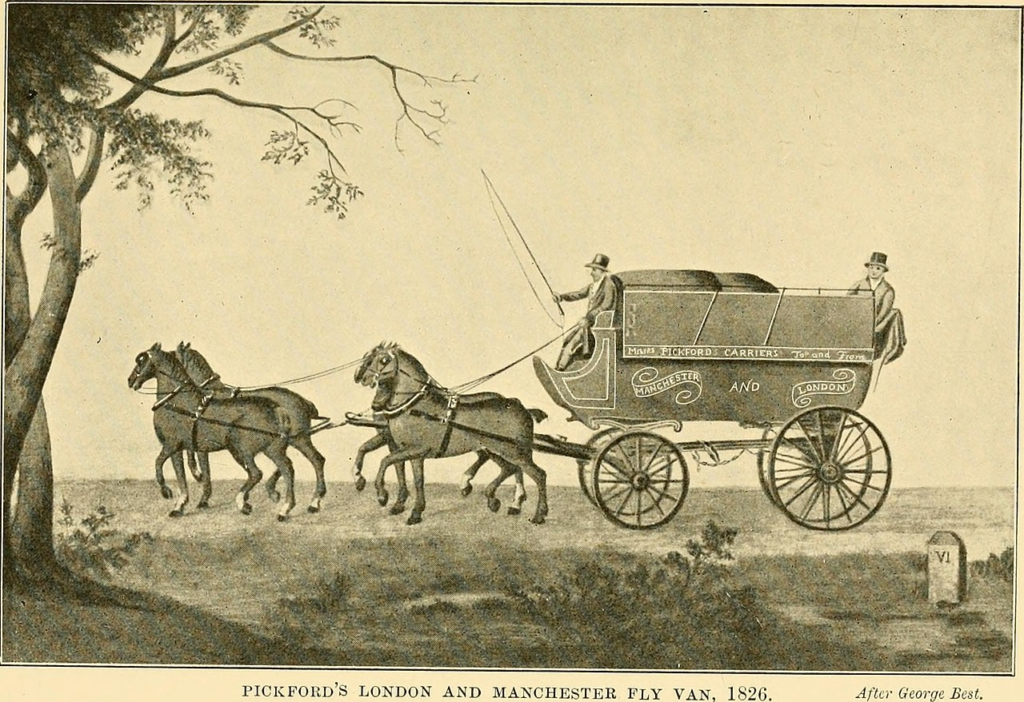
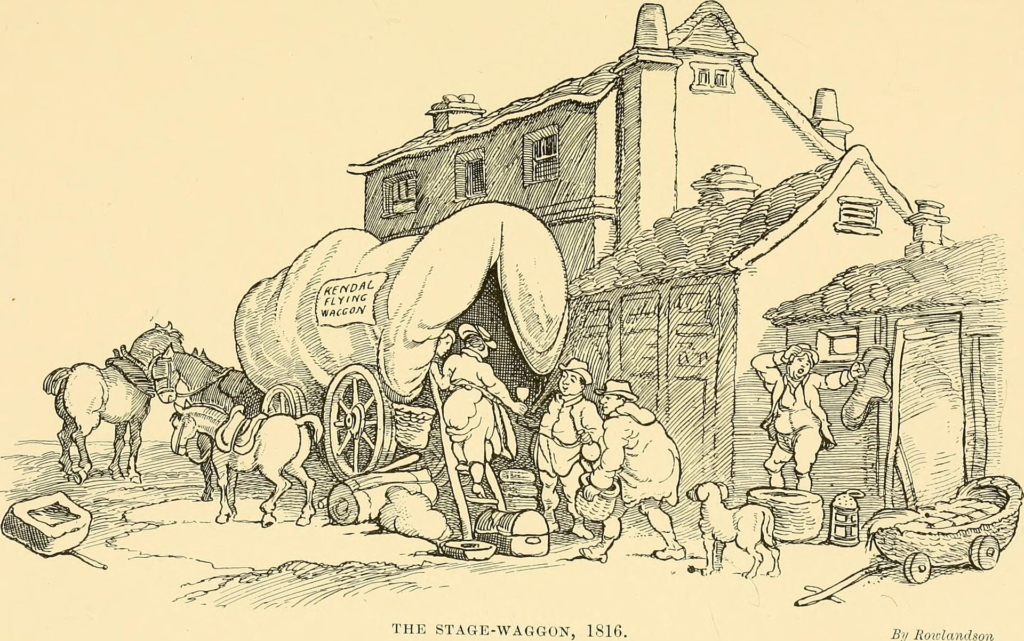
flyは上のような感じ。その名の通り「飛んで」行くような軽装・快速馬車ね。荷物や少数の人員を運ぶのよ。
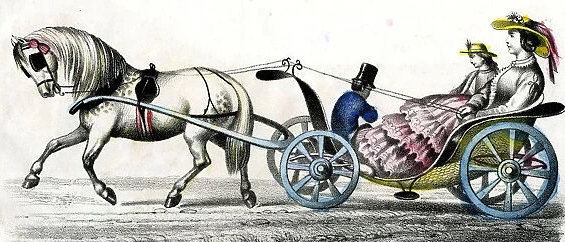
…basket-chaiseはこんな感じ。「chaise」は1人~2人乗りの馬車。
乗るところがbasket状になってるから「basket-chaise」って言うの。
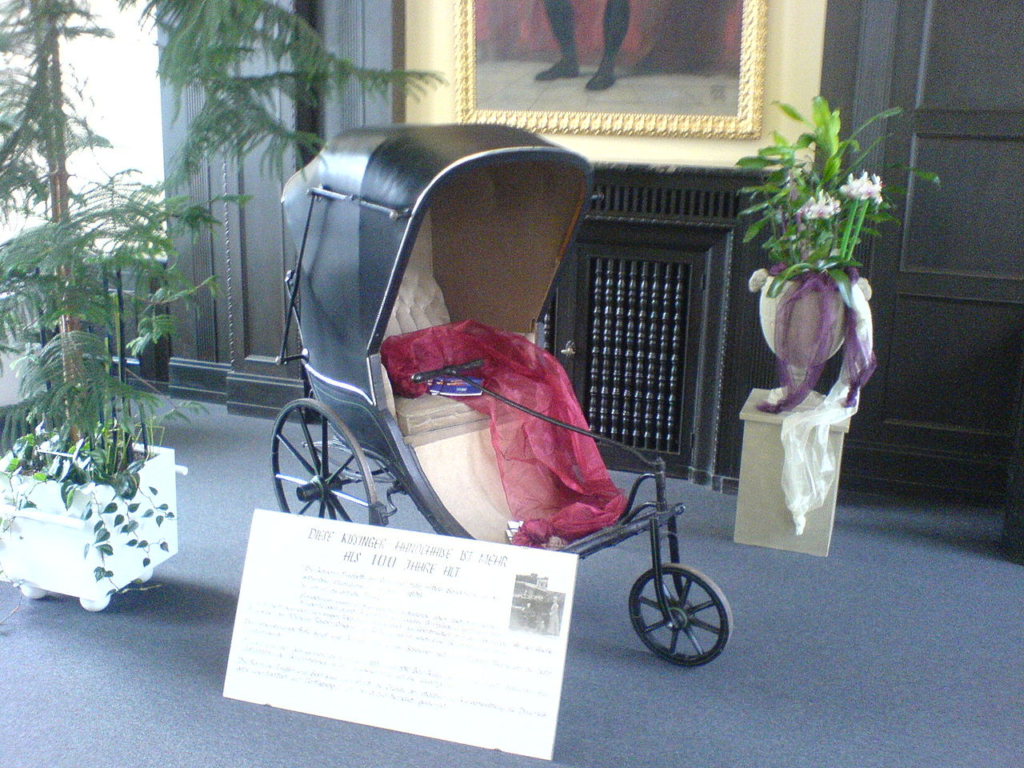
これが普通の「chaise」。chaiseはもともと「chair」(椅子)を意味する単語から来てることをイメージすれば、たしかに一人乗りの馬車だなってことが理解できるな。
かなしいことにchaiseの語源はフランス語なの…
まだ担当キャラがいない。
問題編
There were half a dozen flys* or more from the Woking station standing in the road by the sand-pits, a basket-chaise* from Chobham, and a rather lordly* carriage*. Besides that, there was quite a heap of* bicycles. In addition, a large number of people must have walked, in spite of the heat of the day, from Woking and Chertsey, so that there was altogether* quite a considerable crowd—one or two gaily* dressed ladies among the others.
fly軽装馬車 basket-chaiseバスケット状の少人数乗用馬車 lordly豪奢な carriage一般四輪馬車 a heap ofたくさんの altogether全く gaily華やかに
1. 紫の「standing」句が修飾している語は?
2. 灰色の「and」が繋いでるものは?
3. オレンジの「rather」の意味は?
4. 緑の「a large number of」の意味は?
5. 茶色の「so that」の意味(用法)は?
6. 青の「considerable」の意味は?
解答編
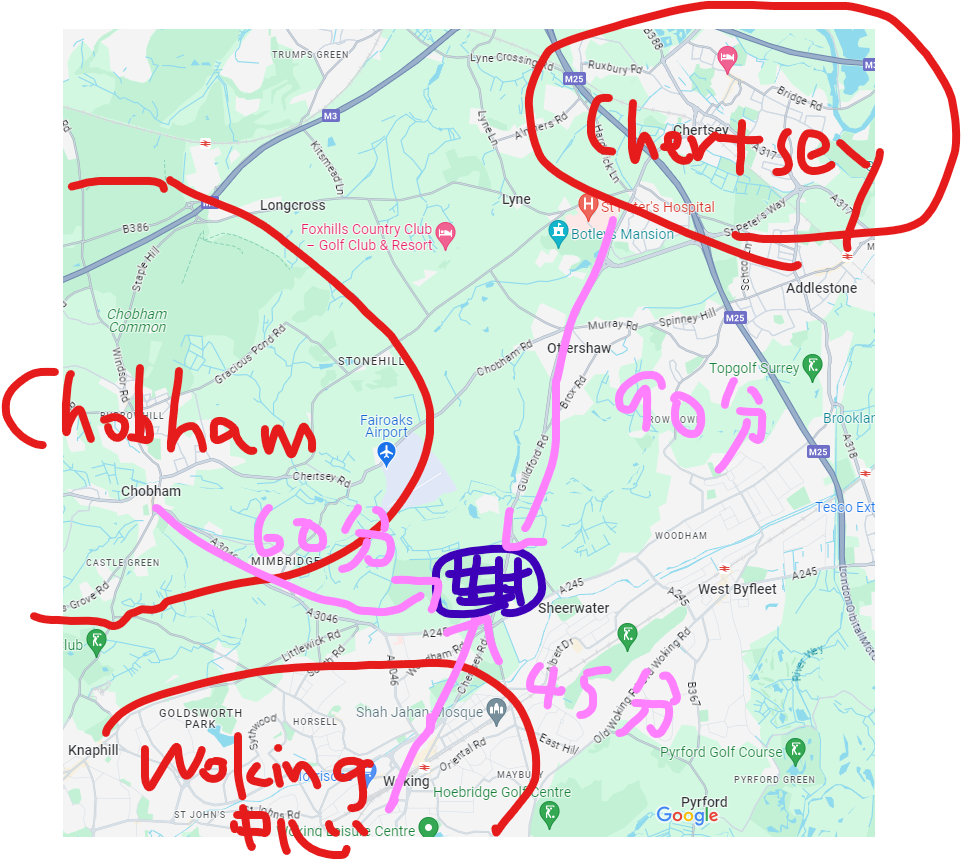
Woking、Chobham、Chertseyから着陸地点までの位置関係は以下の地図のような感じ。
Wokingから徒歩45分、Chobhamから徒歩60分、Chertseyから徒歩90分もかかるんだったら、当然みんな何かの乗り物で行くはずだ。
あと道中は森。道が混雑するのも、goes without saying!
<英文解釈記号ルール>
〔〕→関係詞句・節
【】→接続詞句・節
《》→挿入句・節
[ ] →名詞句・節
()→副詞句・節
〈〉→形容詞句・節
There were half a dozen flys* or more 〈from the Woking station〉 〈standing in the road by the sand-pits〉, a basket-chaise* 〈from Chobham〉, and a rather lordly* carriage*. (Besides that), there was quite a heap of* bicycles. (In addition), a large number of people must have walked, in spite of the heat of the day, 《from Woking and Chertsey》, so that there was altogether* quite a considerable crowd—one or two gaily* dressed ladies among the others.
1. 紫の「standing」句が修飾している語は「flys」。
2. 灰色の「and」が繋いでるものは、「flys」「basket-chaise」「carriage」。
2. オレンジの「rather」の意味は「かなり」「ちょっとばかり」「いくぶん」。好ましくないものを修飾するのに使われがち(逆はfairly)。ここでは「必要以上だなぁ」という非難が込められている。
3. 緑の「a large number of」の意味は「たくさん」。形容詞「large」に注意。
4. 茶色の「so that」の意味(用法)は「その結果」(結果用法)。so thatには「I’m studying now so that I can pass the test.」(テスト合格するために勉強してる)みたいに「目的用法」があることは知ってると思う。学校ではひょっとするとそっちばっかり出てくるかもしれない。でも、それと同じくらい英文には「結果用法」が出てくる。直前にカンマが打ってあるso thatは結果を疑ってみよう(カンマが打ってあるということは、そこで意味を切っていいということなので、流れが順接の結果用法が適することが多い)。
5. 青の「considerable」=「かなり(多く)の」。✖ considerate=思いやりがある。
「able, ible」で終わる形容詞は受動の意味を持つから、consider「する」(=思いやる)のはconsiderate、consider「される」ほど多いのは「considerate」と覚えよう。
※「-ate」語尾は「~の性質を持つ」という意味だから普通に能動だ。
※「-able,-ible」語尾はたしかに「can」の意味を持つが、be able toとは語源的には関係なかったりする(受験にはどうでもいいけど)。
砂地のそばの道に、ウォーキング駅から来た6台かそれより多い軽装馬車がとまっていたり、チョブハムからかご馬車が来ていたり、必要以上に豪奢な四輪馬車がいたりした。その上、非常に多くの自転車もあった。さらに、暑い日だったにもかかわらず、ウォーキングやチャーツィーから歩いてきた人も多かったに違いない。
というわけで、非常に多くの群衆だったー1人か2人、華やかな服をまとったレディもその中にいた。
あれっ「quite a heap of bicycles」って書いてるよ
みんな自転車乗ってるじゃないの。
こないだの発言(第18話)はどこに?
わ、わたしだってこのころにはもう乗れてるもんね。
第3章 第8段落 (第39話)
まだまだ続く車シリーズ。今回は「barrow」。手押し車だ。
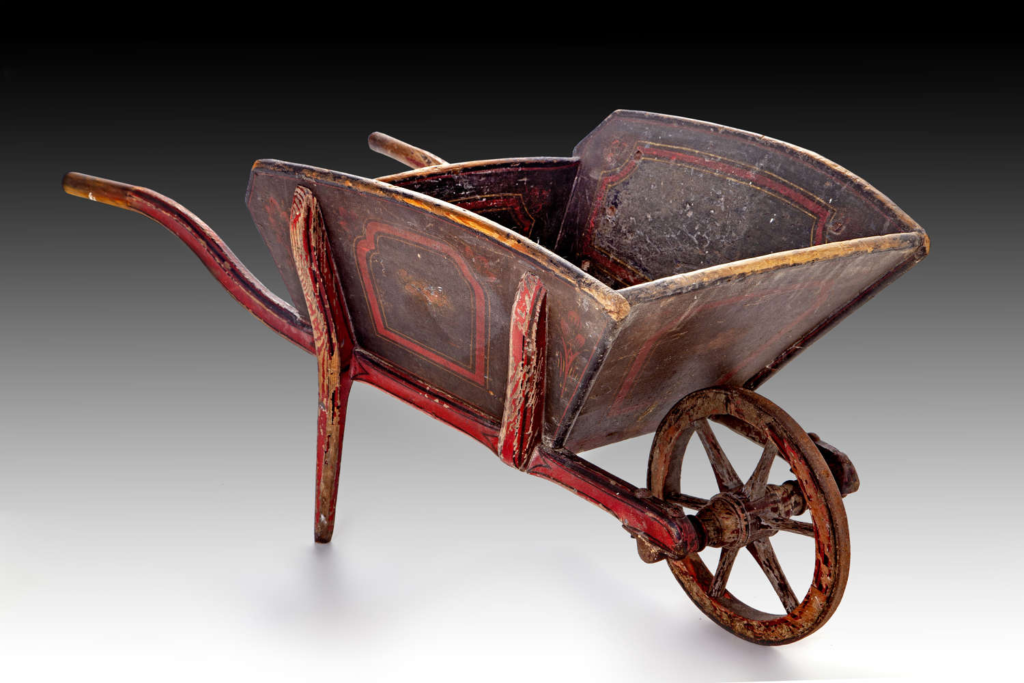
戦車は一台も出てこないのに荷車・馬車の種類は妙に豊富だな。
もういっそのこと、馬車とかに大砲のっけて戦車にしちゃおうぜ。
それ、tankっていうよりchariotになるんじゃないかしら。
…この小説の世界線(※現在1908年)で、火星人との戦闘中、人間がそんな風に史実より早く戦車を開発する可能性はあるんだろうか。期待。
問題編
It was glaringly* hot, not a cloud in the sky nor a breath of wind, and the only shadow was that of the few scattered pine trees. The burning heather* had been extinguished, but the level* ground towards Ottershaw was blackened as far as one* could see, and still giving off* vertical streamers* of smoke. An enterprising* sweet-stuff* dealer* in the Chobham Road had sent up his son with a barrow-load* of green apples and ginger beer.
glaringlyぎらぎらとした heatherヘザー(参照) level平らな one(世間一般を表す。≒we, you, they) give off発する streamer流れるもの enterprising商魂たくましい sweet-stuff甘いもの dealer商売人 barrow手押し車
1. オレンジの「nor」が繋いでるものは?
2. 赤アンダーラインの部分で省略されてる一語は?(in the skyじゃない)
3. 青の「that」を2語で言い換えると?
4. 緑の「and」が繋いでるものは?
これがginger beer(ジンジャービール)ね。
18世紀のイングランドで広まりはじめたものよ。
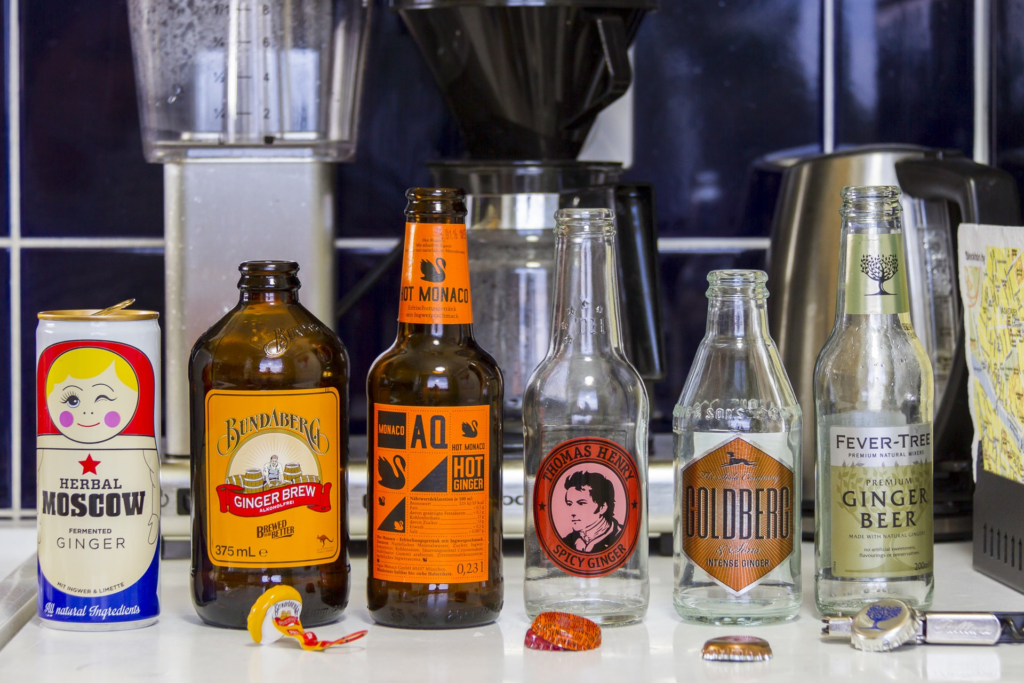
あれ、ビール?
ちょっとまって、わたしたちって何歳だっけ?
ジンジャービールは基本ノンアルよ。
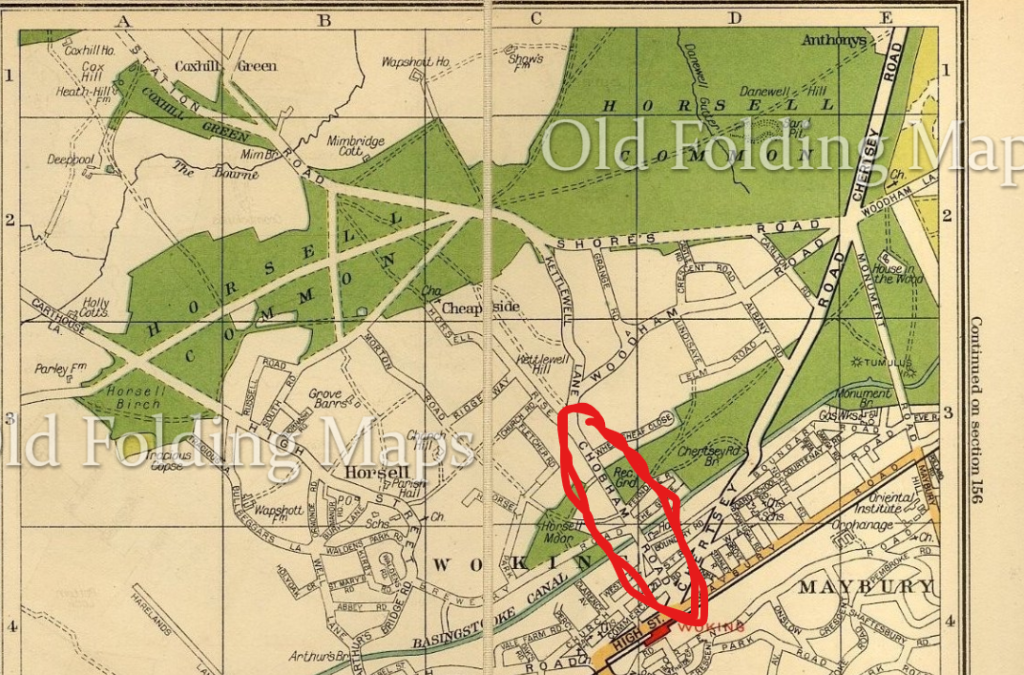
これが今から30年後くらい(1930年代)の地図。
21世紀のChobham Roadは別のところにあるが、1900年現在のChobham RoadはこのようにWoking駅(赤色)からHorsell Commonへ伸びる主要道路だな。
解答編
<英文解釈記号ルール>
〔〕→関係詞句・節
【】→接続詞句・節
《》→挿入句・節
[ ] →名詞句・節
()→副詞句・節
〈〉→形容詞句・節
It was glaringly* hot, (not a cloud in the sky nor a breath of wind), and the only shadow was that of the few scattered pine trees. The burning heather* had been extinguished, but the level* ground 〈towards Ottershaw〉 was blackened as far as one* could see, and still giving off* vertical streamers* of smoke. An enterprising* sweet-stuff* dealer* 〈in the Chobham Road〉 had sent up his son with a barrow-load* of green apples and ginger beer.
1. オレンジの「nor」が繋いでるものは、a cloudとa breath。
2. 赤アンダーラインの部分は、not being a cloud…でbeingが省略されてますね。分子構文です。
3. 青の「that」を2語で言い換えると「the shadow」。the+単数=that(+後置修飾)
4. 緑の「and」が繋いでるものは「blackened」と「giving」。分詞を繋いでます。
全訳
ぎらぎらと照り付ける暑さで、空には雲一つなく、風も吹いていなかった。そして唯一の日影は、散らばった何本かの松の木の日影だった。焼けたヘザーの野原はすでに鎮火していたが、オターショウへのびる平らな地面は見わたす限り真っ黒になっていて、まだ垂直に煙が流れ出ていた。チョブハム・ロードの商魂たくましい菓子売り商人は、子供に青りんごとジンジャービールを手押し車に積んで持たせ、派遣した。
第3章 第9段落 (第40話)
今回から新しく登場するStentさん。GuPマリーさんが役を務めます。

みなさんこんにちは。the Astronomer Royalのステントです。
ここ会話編ではフランス担当ですけど、しばらく忙しいので会話編には多くは出てこれないと思います。
…ステントさんの仕事「the Astronomer Royal」は「王室天文官」って訳され、17世紀から存在する、イギリス天文学会で最高に偉い役職。王室天文官はグリニッジ天文台の所長も務めてるの。
21世紀では名誉職になってるけどね。
問題編
Going to the edge* of the pit, I found it occupied by a group of about (dozen / a / half / men) —Henderson, Ogilvy, and a tall, fair-haired man that I afterwards* learned was Stent, the Astronomer Royal, with several workmen* wielding* spades* and pickaxes*. Stent was giving directions in a clear, high-pitched voice. He was standing on the cylinder, which was now evidently much cooler; his face was crimson* and streaming* with perspiration*, and something seemed to have irritated him.
edge縁 afterward(s)後で workman作業人 wield使う spadeスペード(参照) pickaxeつるはし crimson紅い stream流す perspiration汗
1. 青アンダーラインの4語を適切に並び替えると?
2. 赤アンダーラインの部分の意味は?
3. オレンジの「much」のように比較級をプラスの方に強調する言葉を他に挙げると?
ちなみに、1900年ごろのヨーロッパ地図はこんな感じだ。
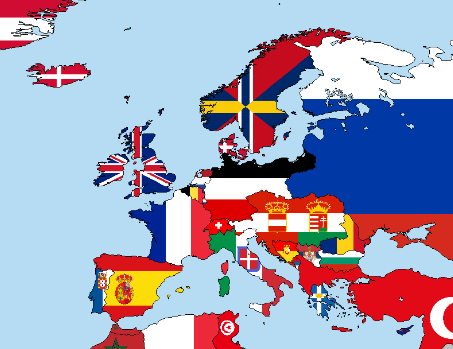
前にも述べたように、このころはアイルランド全域もイギリス領よ。
ドイツは21世紀よりちょっと広くて、ポーランドの一部まで領有していたぞ。
つい30年前くらいに統一したばかりだけどな。
イタリア統一も50年くらい前だ。
フランスは普仏戦争で敗北したものの、政治体制が変わりこのころ大いに繁栄中。
1900年にはパリ万博が行われました。
…パリ万博何度目よ。
パリ万博もたくさん。パリ条約もたくさん。国際都市ですよ。
ロンドン会議だってたくさんあるもん。
1900年では他にも、スウェーデン=ノルウェー連合王国があったり、
まだアイスランドがデンマーク領だったり。
解答編
<英文解釈記号ルール>
〔〕→関係詞句・節
【】→接続詞句・節
《》→挿入句・節
[ ] →名詞句・節
()→副詞句・節
〈〉→形容詞句・節
(Going to the edge* of the pit), I found it occupied (by a group of about half a dozen men) —Henderson, Ogilvy, and a tall, fair-haired man〔that 《I afterwards* learned》 was Stent, the Astronomer Royal〕, (with several workmen* 〈wielding* spades* and pickaxes*〉). Stent was giving directions (in a clear, high-pitched voice). He was standing on the cylinder, 〔which was now evidently much cooler〕; his face was crimson* and streaming* with perspiration*, and something seemed to have irritated him.
1. 青アンダーラインの4語を適切に並び替えると half a dozen girls。
もともとは 「half of a dozen girls」であったが、言葉の経済的理由でofが省略された。現代では「half of a/an ~」という言い方は不可能で「half a/an ~」が正しい。
なお 「a half-dozen ~」という言い方はできるが、ハイフンを抜かして 「a half dozen~」とするのはあまり見かけないようである。
2. 赤アンダーラインの部分は入試用語で言うところの「連鎖関係詞」。
とはいっても、実際はI afterwards learnedが挿入されていると考えればいいだけの話。
3. オレンジの「much」のように比較級を強調する言葉は、far, still, even, a lotなどがある。stillとevenは「いっそう」、muchやfarは「はるかに」ということで微妙に違ったり。
全訳
穴のふちに向かうと、そこを6人ほどのグループが占領しているのを見つけたーヘンダーソン、オギルヴィ、そして背の高く、薄い肌の色の男がいた。その男は王室天文官のステントだとあとで知った。スペードやつるはしを使っている作業人と一緒だった。
ステントはよく通るハイピッチな声で指示を出していた。円筒の上に立っていた。円筒はもう明らかにずっと冷たくなっていた。ステントさんの顔は紅潮し、汗が流れていた。
何かが彼をイライラさせているようだった。
「half a」なんてわかりにくい並び順なのは主にイギリス。
アメリカでは「a half」という使い方がよく見られるよ!
シンプルでグッド!
第3章 第10段落 (第41話)
以下に出てくる概念「lord of the manor」っていうのは、日本語訳すると「荘園領主」(主に中世イングランドの概念)。
いま宇宙船(=円筒)が墜落してるところは「Horsell Common」という「common」(共有地)ってことは大丈夫よね。
このあいだこちらの記事で述べたように、commonというのは荘園領主が管理しきれなくなったりした荘園の一部を、平民が共同で使うようになったものなの。
もちろん名目上の所有者は荘園領主だったけど、平民はそこでかなり強い権利を持って、共同で厳しく土地を管理していたわ。
「名目上の領主」と「実質的な支配者」という関係は、日本の寄進地系荘園とちょっと似ているし(もちろん成立過程は違うけど)、平民が資産を厳しく共同管理していたっていうのは、枝一本折ることすら罰せられた昔の日本の厳格な森林管理方法とそっくり。
日本もイギリスも意外と似てるな。
そうね。ともあれ、commonは権利上は荘園領主の私有地ってこと。
だから、Horsell Commonに墜落した宇宙船の処理をどうたらこうたらするときに、いちおうこの荘園領主に話をつけとく必要があるはず、っていうのが今回の段落の背景常識よ。
問題編
A large portion* of the cylinder had been uncovered*, though its lower end was still embedded*. As soon as Ogilvy saw me among the staring crowd on the edge of the pit she called to* me to come down, and asked me if I would mind going over to see Lord* Hilton, the lord of the manor.
portion部分 uncover掘り出す embed埋める call to叫ぶ Lord~卿
1. 青アンダーラインの部分を訳すと?
2. 赤アンダーラインの部分を直接話法に直すと?
解答編
<英文解釈記号ルール>
〔〕→関係詞句・節
【】→接続詞句・節
《》→挿入句・節
[ ] →名詞句・節
()→副詞句・節
〈〉→形容詞句・節
A large portion* of the cylinder had been uncovered*, 【though its lower end was still embedded*】. 【As soon as Ogilvy saw me (among the staring crowd on the edge of the pit)】 she called to* me to come down, and asked me [if I would mind going over to see Lord* Hilton, the lord of the manor].
1. 青アンダーラインの部分は、She told me to come down.と似たような感じ。SVOCチックな文型。「下りてこいって叫んだ」。
2. 赤アンダーラインの部分を直接話法に直すと「She said to me, “Would you mind going over to see Lord Hilton, the lord of the manor?”」。こういう風に直接話法で見てあげると、訳しやすいんじゃないかな(Would you mind…?のお願いだなってわかる)
全訳
下端はまだ埋もれていたが、その円筒の大部分は掘り出され、姿を見せていた。オギルヴィは、穴のふちで見物していた群衆の中にわたしを見つけるとすぐ、下りてきてよって叫んで、荘園領主のヒルトン卿に会いに行ってくれないかとわたしに頼んできた。
…経済学の話でよく「共有地の悲劇(コモンズの悲劇)」っていうのが出てくるけど、そもそも共有地についてのイメージってなかなか現代にはないよね。
第3章 第11段落 (第42話)
最初から3単語目の「he」はOgilvyちゃんのことだ。
問題編
The growing crowd, he said, was becoming a serious impediment* to their excavations*, especially the boys. They wanted a light railing* put up*, and help to keep the people back. He told me that a faint* stirring* was occasionally* still audible* within the case, but that the workmen* had failed to unscrew* the top, as it afforded* no grip to them. The case appeared to be enormously* thick, and it was possible that the faint sounds we heard represented a noisy tumult* in the interior.
impediment障害 excavation発掘 railing柵 put up(柵など)を設ける faintかすかな stirring動き occasionallyときどき audible聞こえる workman作業人 unscrew回して開ける affordここでは≒give enormously非常に tumult騒ぎ interior中の(↔exterior)
1. 青アンダーラインの文型表示は?
2. オレンジのandが繋いでるものは?
3. 青のbutが繋いでるものは?
4. 茶色のasの意味は?
5. 緑のitが指すものは?
6. 紫のthemが指すものは?
7. 赤のitの用法は?
じつは、この宇宙船(case=cylinder)って結構でっかいんだよな。
解答編
<英文解釈記号ルール>
〔〕→関係詞句・節
【】→接続詞句・節
《》→挿入句・節
[ ] →名詞句・節
()→副詞句・節
〈〉→形容詞句・節
The growing crowd, 《he said》, was becoming a serious impediment* to their excavations*, especially the boys. They wanted a light railing* put up*, and help 〈to keep the people back〉. He told me [that a faint* stirring* was occasionally* still audible* within the case], but [that the workmen* had failed to unscrew* the top, 【as it afforded* no grip to them】]. The case appeared to be enormously* thick, and it was possible [that the faint sounds 〔we heard〕 represented a noisy tumult* in the interior.
1. 青アンダーラインの文型表示は上の通りです。want O C で「OがCであってほしい」ですね。「I want my coffee black」(コーヒーをブラックでほしい)という例文はもしかしたら目にしたことがあるかもしれません。このCの位置にはもちろん分詞も来れるので、上のような第5文型になります。「軽い柵が設けられてほしい」で十分意味が通じます。
2. オレンジのandが繋いでるものは(悩ましいところですが)、「a light railing」と「help」(名詞で「助け」)が一番ありうる解釈だと思います。to keep the people backはhelpを説明してる言葉。
3. 青のbutが繋いでるものは2つのthat句ですね。わざわざbutのあとにthatがついてますから簡単。
4. 茶色のasの意味は「~ので」。
5. 緑のitが指すものは「the top」。
6. 紫のthemが指すものは「the workmen」。
7. 赤のitの用法は後ろのthat以下。
全訳
増え続けている群衆、特に男の子たちが、円筒を掘り出すうえで深刻な障害となっているとオギルヴィは言った。ステントたちは、軽い柵でも設けられることを望み、人々を下がらせるための助けを求めてた。
かすかな動きが時折依然として容器(=円筒=宇宙船)の中から聞こえたけれど、蓋(=ハッチ)をつかむことができなかったので、作業人らが蓋を回して開けることはできなかった、とオギルヴィはわたしに言った。
容器は非常に厚いように見えたので、わたしたちが聞いたかすかな音であっても、内部でのやかましい騒ぎを示しているのかもしれなかった。
第3章 第12段落 (第43話)
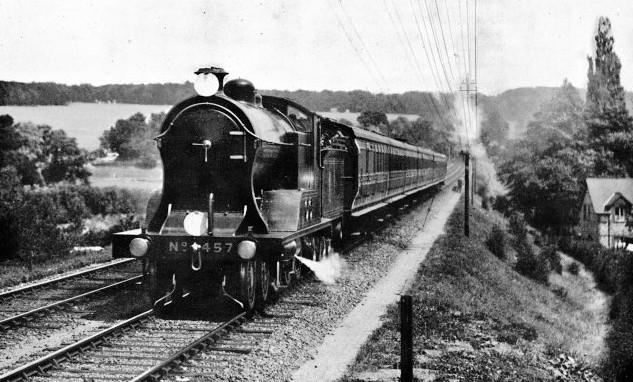
この当時はこんな感じの蒸気機関車が走っていたみたい。
問題編
I was very glad to do as he asked, and so become one of the privileged* spectators* within the contemplated* enclosure*. I failed to find Lord Hilton at his house, but I was told he was expected from London by the six o’clock train from Waterloo*; and as it was then about a quarter past five, I went home, had some tea, and walked up to the station to waylay* him.
privileged特権のある spectator見物人 contemplateじっと見つめる enclosure柵の囲み Waterlooウォータールー(ロンドンの駅) waylay~を待って、呼び止める
1. オレンジのasの品詞・意味は?
2. 青のsoが指すものは?
3. 茶色のexpectedのここでの意味は?
4. 紫のasの意味は?
5. 緑のandが繋いでるものは?
このころの鉄道路線図は下のような感じ。ヒルトン卿はロンドンで仕事があって、ロンドン中心部のWaterloo駅からWoking駅まで帰ってくるってところ。
ここを運営していた鉄道会社は「London and South Western Railway」っていう名前(略してLSWR。単にSouth Westernとも)。覚えといて損はないわ(あとの章でも出てくるから)。
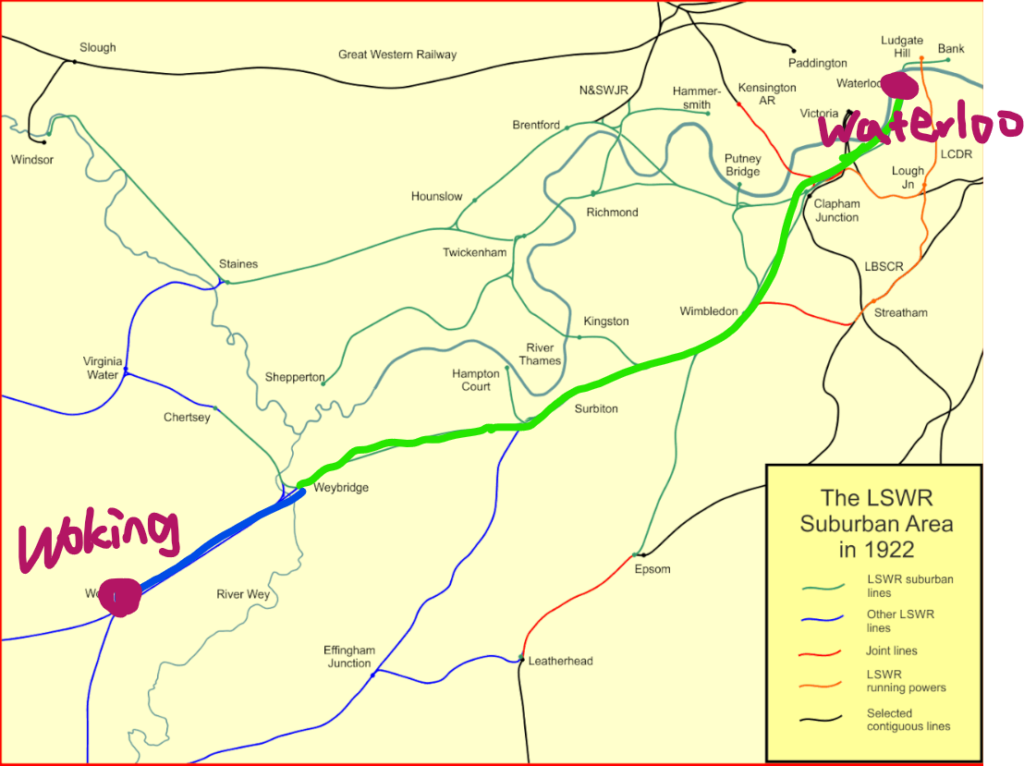
Woking~Nine Elms(ロンドン)間が1838年に開業したことを皮切りに、LSWRはロンドンと郊外都市を鉄道で結びつけていったの。だからこそ、Wokingなど郊外都市がベッドタウンとして発展することになったわけ。
ちなみにNine Elms駅は立地が不便だったから、10年後の1848年、Waterloo駅に取って代わられたわ。それ以降主にLSWRによって、Waterloo駅はロンドンの中心として発展していくことになるの。
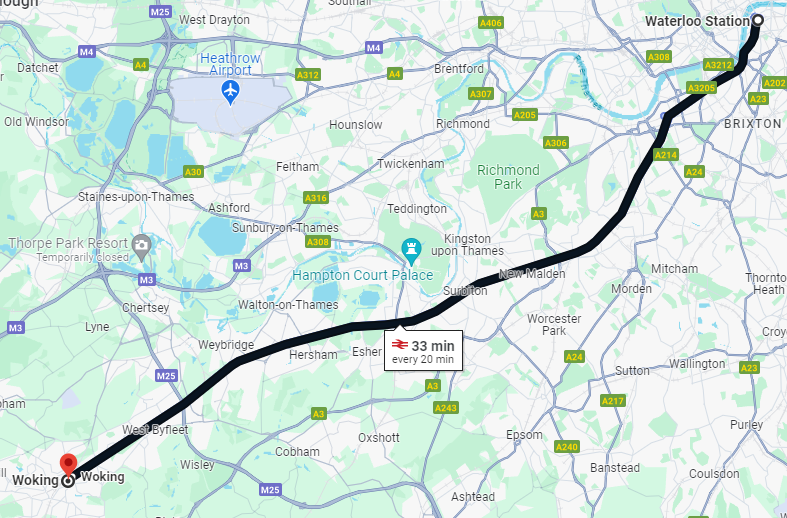
21世紀でも1900年ごろの線路とまったく同じところに鉄道が走っているぞ。
1900年ごろの鉄道は21世紀の鉄道の1/2~1/3の速度だから、現在で33分ってことはこのときは1時間から1時間半はかかると見ていいな。
解答編
<英文解釈記号ルール>
〔〕→関係詞句・節
【】→接続詞句・節
《》→挿入句・節
[ ] →名詞句・節
()→副詞句・節
〈〉→形容詞句・節
I was very glad to do 【as he asked】, and so become one of the privileged* spectators* (within the contemplated* enclosure*). I failed to find Lord Hilton at his house, but I was told [he was expected (from London) (by the six o’clock train from Waterloo*); and 【as it was then about a quarter past five】, I went home, had some tea, and walked up to the station to waylay* him.
1. オレンジのasは関係代名詞です。用法としてはたぶん様態になるんでしょうか。まあ、「~ように」と訳せばOK。ちなみにその前の「be glad to」は「~してよかった・幸せ」という場合が多いですが、英英辞典などでは「to be very willing and eager to do something」とも書いていますから、こっちの「be eager to」(喜んで~する)の方で取ってあげると意味が通ります。
2. 青のsoは「I was glad to」を指しています。こっちのbe glad toは「~でうれしい」でしょうね。「~になれて嬉しい」ということです。
3. 茶色のexpectedのここでの意味は、「(帰ってくると)予想されている」。expectは、何を予期するかということまで語意に含むことがあります。たとえばShe is expectingなら「彼女は妊娠している」です。
4. 紫のasの意味は「~ので」。
5. 緑のandが繋いでるものは、went, had, walked。
全訳
わたしはよろこんでオギルヴィの頼み通りにした。そして、注目の的となっている囲いの中に入るという特権を与えられた見物人の一人になれたことがうれしかった。
わたしはヒルトン卿の家では卿に会えなかったが、「卿はウォータールー発の 6 時の鉄道でロンドンから戻るはずだ」と言われた。そのときは5時 15 分ごろだったので、家に帰って、お茶を飲んで、そして卿を待って呼び止めるために駅へ歩いて向かった。
次回から第4章だよ!






コメント