<流れ>
①かっこを振っていない英文
②単語注(①でアスタリスクを振ったところ)
③設問
④かっこを振った英文
⑤設問の答え
⑥訳
IX. THE FIGHTING BEGINS.
第9章 パンツァー・フォー!
第9章 第1段落 (第110話)

そろそろ、時代情勢の振り返りとわたしたちの会話編での担当国紹介は不要かな。

そうね。忘れた人は今での各章の初話を見てちょうだい。
現在の状況だけど、ロボットに搭乗してレーザー砲を放つ火星人の2個中隊がHorsell Commonに着陸してて、イギリス陸軍が騎兵中隊・マキシム機関銃部隊を含む1000人くらいの規模でHorsell Commonを包囲してるってとこ。
いよいよ、イギリス陸軍による作戦がはじまるわ。

問題編
Saturday lives in my memory as a day of suspense*. It was a day of lassitude* too, hot and close, with, I am told, a rapidly fluctuating* barometer*. I had slept but little, though my wife had succeeded in sleeping, and I rose early. I went into my garden before breakfast and stood listening, but towards the common there was nothing stirring* but a lark*.
suspenseサスペンス・ドキドキすること lassitude倦怠感・だるさ fluctuate変動する barometer気圧計 stir動く larkヒバリ
1. 赤のasの意味は?
2. 紫のcloseの意味は?辞書で調べてね。
3. オレンジのlittleの前(後)に省略されてる言葉は(I had slept but littleの意味は)?
4. 青のandが繋いでるものは?
5. 緑のbutの意味は?
それにしてもよくぐっすり寝れるな。
うらやましいぜ
わたしたちイギリスは本土侵攻なんて夢物語よ。
しょっちゅう戦争してるドイツとは違うの。
解答編
<英文解釈記号ルール>
〔〕→関係詞句・節
【】→接続詞句・節
《》→挿入句・節
[ ] →名詞句・節
()→副詞句・節
〈〉→形容詞句・節
Saturday lives (in my memory) (as a day of suspense*). It was a day of lassitude* too, (hot and close), (with, 《I am told》, a rapidly fluctuating* barometer*). I had slept but little, 【though my wife had succeeded in sleeping】, and I rose early. I went into my garden (before breakfast) and stood listening, but (towards the common) there was nothing stirring* but a lark*.
1. 赤のasの意味は「~として」。
2. 紫のcloseの意味は、ここでは「蒸し暑い」「うっとうしい」とかです。
3. オレンジのlittleについて、「I had slept but I had slept little」の略ですね。littleは「ほとんど~ない」(準否定)です。
4. 青のandが繋いでるものは、wentとstoodです。
5. 緑のbutの意味は、「~を除いて」。nothing~butの形で覚えてもいいですが、ふつうにbutにはexceptやonlyの意味があることも覚えておきましょう。
全訳
あの土曜日はドキドキした日として記憶に残っている。暑くて蒸し暑く、けだるい日でもあった。のちに聞いたが、気圧計の針が素早く変動していたそうだ。わたしは一応寝れたがほとんど寝れなかった。妻は寝れてたけど。わたしは早く起き、朝食前に庭に出て耳を澄ませたが、ホーセル共有地の方はヒバリ以外何も動くものはなかった。

「I am told」の挿入部は、人づてに聞いた話っぽく訳してあげると良いのかな。
第9章 第2段落 (第111話)
問題編
The milkman* came as usual. I heard the rattle* of his chariot* and I went round to the side gate to ask the latest news. He told me that during the night the Martians had been surrounded by troops*, and that guns were expected*. Then—a familiar, reassuring* note*—I heard a train running towards Woking.
“They aren’t to be killed,” said the milkman, “if that can possibly be avoided.”
milkman牛乳配達員 rattleガタガタ鳴る音 chariot四輪軽馬車 troops軍 expected(ここでは)発射することが予想される reassure安心させる note音
1. 赤のandが繋いでるものは?
2. 青のbe toの用法は?
3. 赤アンダーラインの部分で、このセリフを言っている牛乳配達員(milkman)は「避けられる」と思っているのか、「避けられない」と思ってるのかどっち?
chariotって古代の戦車じゃないか。
なわけないでしょ。
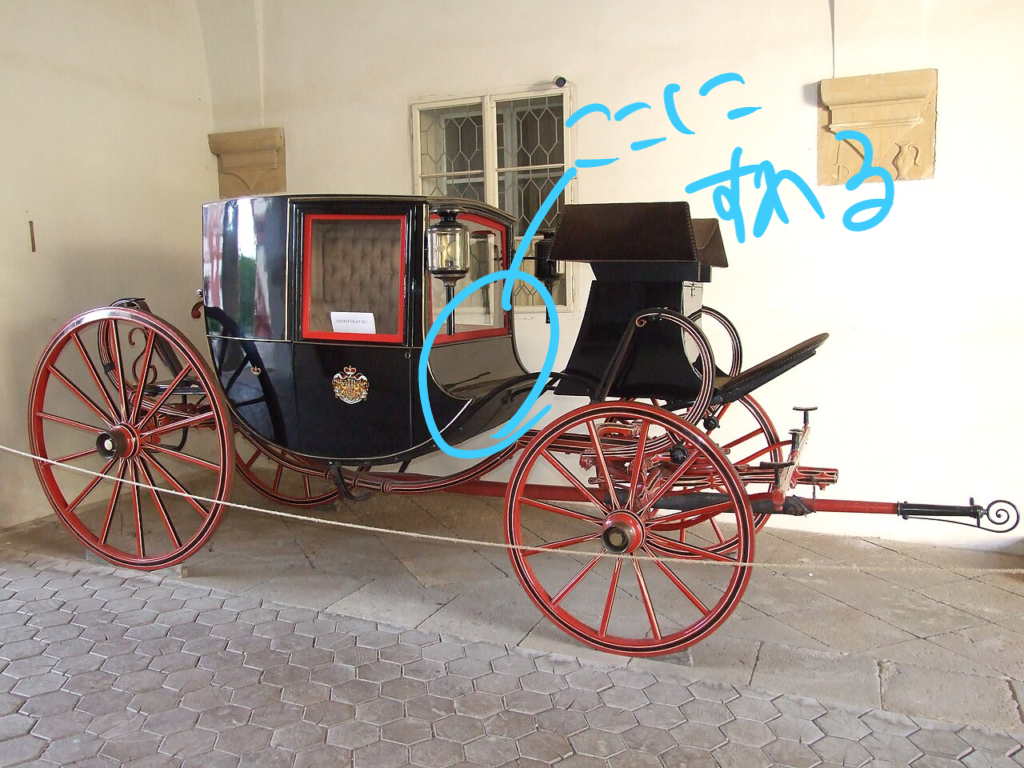
四輪馬車の一種で、荷台(後部座席)の車体の前方が曲がってて、そこに運転手が座る(運転手は屋外)っていう馬車。19世紀初めに流行したのよ。
解答編
<英文解釈記号ルール>
〔〕→関係詞句・節
【】→接続詞句・節
《》→挿入句・節
[ ] →名詞句・節
()→副詞句・節
〈〉→形容詞句・節
The milkman* came (as usual). I heard the rattle* of his chariot* and I went round to the side gate to ask the latest news. He told me that during the night the Martians had been surrounded by troops*, and that guns were expected*. Then—a familiar, reassuring* note*—I heard a train running towards Woking.
“They aren’t to be killed,” said the milkman, “if that can possibly be avoided.”
1. 赤のandが繋いでるものは、that during…とthat guns…の2つのthat節。She told meの内容ですね。
2. 青のbe toの用法は、未来or運命ですね。「~することになってる」っていう訳自体は一緒なのであんまり気にしなくてもOK。
3. 赤アンダーラインの部分で、このセリフを言っている牛乳配達員(milkman)は「避けられる」と思っているのか、「避けられない」と思ってるのかどっち? → 「possibly」に注目すると、「なんとか」「かろうじて」というように確率が低いことを表すことばですから、牛乳配達員は「きっと殺されないことは避けられない」つまり「きっと殺される」って思ってるわけですね。まあ、そりゃあね。
全訳
牛乳配達員さんはいつも通りやってきた。その馬車のガタガタという音が聞こえたので、通用門に回って行って、最新のニュースをたずねた。彼は、夜の間に火星人は軍に包囲されて、大砲が発射用意に入っているということを教えてくれた。そのとき、ウォーキングの方から列車が走る音が聞こえた。耳慣れた安心する音だ。
「火星人は殺されはしないでしょう。なんとかそうできるなら。」と牛乳配達員さんは言った。
「I went round to the side gate to ask the latest news」のto askは目的用法でもいいが、流れ的に結果用法でもOKだぞ。
第9章 第3段落 (第112話)
問題編
I saw my neighbour gardening*, chatted with him for a time, and then strolled* in to breakfast. It was a most unexceptional* morning. My neighbour was ( ) opinion that the troops* would be able to capture* or to destroy the Martians during the day.
garden庭仕事をする strollぶらぶら歩く unexceptional例外的でない troops軍 captureとらえる
1. オレンジのandが繋いでるものは?
2. 赤のmostの意味は?
3. 青のカッコ内に、前後の部分が「わたしの近所の人は~という意見を持っていた」という意味になるように単語一語を入れると?
解答編
<英文解釈記号ルール>
〔〕→関係詞句・節
【】→接続詞句・節
《》→挿入句・節
[ ] →名詞句・節
()→副詞句・節
〈〉→形容詞句・節
I saw my neighbour gardening*, chatted (with him) (for a time), and (then) strolled* in to breakfast. It was a most unexceptional* morning. My neighbour was of opinion [that the troops* would be able to capture* or to destroy the Martians (during the day)].
1. オレンジのandが繋いでるものは、saw, chatted, strolled。
2. 赤のmostは冠詞がtheではなくてaです。このときのmostの意味は、「非常に」「とても」。文法用語では「絶対最上級」っていうやけに豪華な名前がついていますが、ただのveryと同じ意味です。
3. 青のカッコ内に、前後の部分が「わたしの近所の人は~という意見を持っていた」という意味になるように単語一語を入れると、「of」。「be of opinion that~」で「~という意見を持っている」ですね。thatは同格のthat。
全訳
近所の人が庭仕事をしているのが見えた。その人としばらく話して、そのあと朝食を食べにぶらぶら歩いて家に戻った。本当になんてことのない朝だった。近所の人が言うには、その日のうちに軍隊が火星人を捕らえるか殺すかできるだろうってことだった。
戦争はいつはじまるんだよ!

あと5段落くらいかしら。無論、ほとんど描写がないほどすぐに終わっちゃうんだけど。
…そういえば、穴(窪地)(pit)に籠ってる敵に無謀な突撃して損害を出した上に、穴から脱出されるっていう全く同じ展開、どっかの劇場版の最初の方でも見たわね。
歴史は繰り返すのよ。
あの展開よりこっちの小説は損害ひどいけどね…。
第9章 第4段落 (第113話)
最初のセリフを言っている「she」は、前段落のご近所さんですね。
問題編
“It’s a pity they make themselves so unapproachable*,” he said. “It would be curious to know how they live on another planet; we might learn a thing or two.”
He came up to the fence and extended a handful* of strawberries, for his gardening was as generous* as it was enthusiastic*. At the same time he told me ( ) the burning of the pine woods about the Byfleet Golf Links.
unapproachable非友好的な・近づきにくい a handful of~手いっぱいの generous気前がいい enthusiastic熱狂した
1. 赤アンダーラインの訳は?
2. 紫のitが指しているものは?
3. オレンジのforの意味は?
4. 青アンダーラインでは、何と何を比べてる?
5. 青のカッコ内に入る前置詞は、of, at, to, forのどれ?
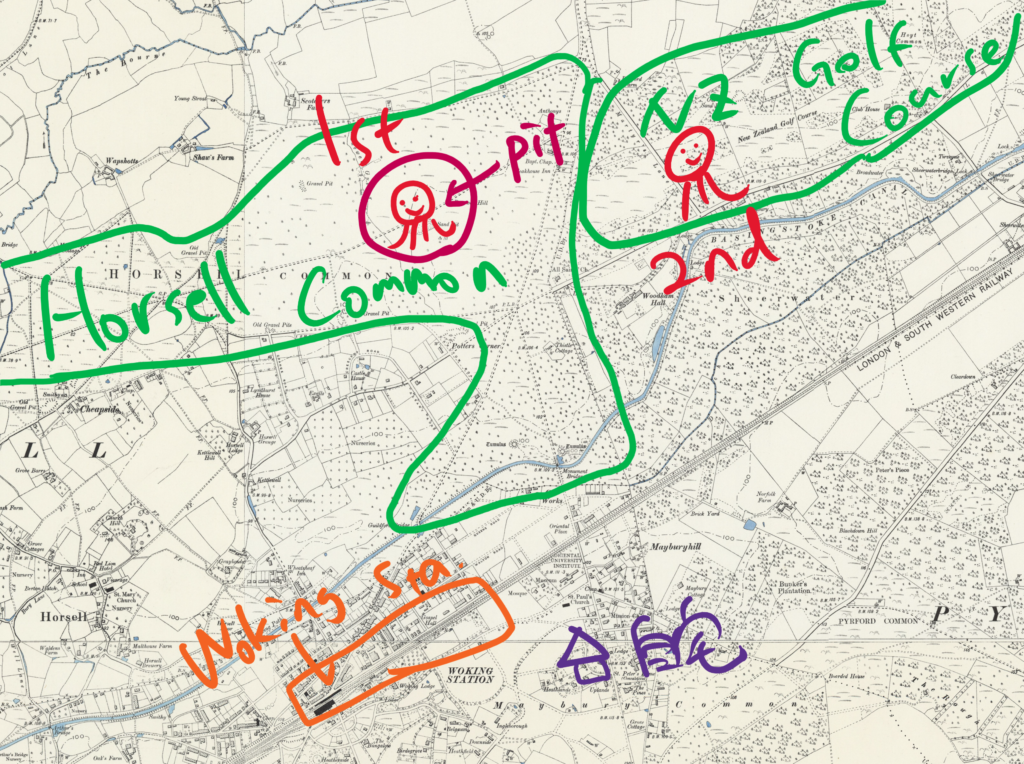
火星人の第2部隊が到着して爆風で燃えてる「Byfleet Golf Links」の位置についてだけど、識者の間でも議論になっているようね(参考)。
OS社の古地図を見る限り、「Golf Links」は、Horsell Commonの東側の「New Zealand Golf Course」のみ。その後の展開的にもここでほぼほぼ問題ないと思うわ。
でも、第109話に「the crowd in the Chertsey road, Woking, saw star fall from heaven into the pine woods to the northwest(北西)」とあって、方位が逆なのよ。
とりあえず、ここの世界線では第2部隊がNew Zealand Golf Courseに落下したことにしておくわ。
解答編
<英文解釈記号ルール>
〔〕→関係詞句・節
【】→接続詞句・節
《》→挿入句・節
[ ] →名詞句・節
()→副詞句・節
〈〉→形容詞句・節
“It’s a pity [they make themselves so unapproachable]*,” he said. “It would be curious [to know [how they live on another planet]]; we might learn a thing or two.”
He came up to the fence and extended a handful* of strawberries, 【for his gardening was as generous* as it was enthusiastic*】. (At the same time) he told me of the burning of the pine woods 〈about the Byfleet Golf Links〉.
1. 赤アンダーラインの部分は、it’s a pity[shame] that…(…とは残念だ) が使われてますね。theyは火星人で、「火星人が自分自身を近寄りがたくしているのは残念だ」というのが直訳。火星人がいきなりレーザー砲を発砲して人々を殺戮したことについて、「もっと仲良くしようよ」と言及しています。
2. 紫のitが指しているものは、to以下。
3. オレンジのforの意味は、というのは~だからだ
4. 青アンダーラインでは、単語で言うと「generous」と「enthusiastic」を比較しています。比較しているというよりは並立させているので、「her gardening was generous and enthusiastic」と解釈してOK。
5. 青のカッコ内に入る前置詞は、選択肢の中からだとofです。「tell 人 about~」のaboutのかわりにofをつかうこともあります(現代では稀かも)。think ofとthink aboutが似たような意味になることを思い浮かべましょう。
全訳
「火星人に仲良くするつもりがあまりないのは残念だよ」とご近所さんは言った。「他の星でどんなふうに暮らしてるかわかったら面白かったのにさ。ひとつふたつ学ぶことがあるかもしれないし」
彼は柵のところまで来て、手一杯のイチゴを差し出した。というのも彼は園芸を熱心にしていたうえに、気前がよかったのだ。それと同時に、バイフリート・ゴルフ・リンクのあたりの松の木が燃えてることについても話してくれた。
大丈夫だと思うが、「fence」を「フェンス」って訳すなよ。日本語のフェンスは金網のことだが、英語のfenceは木の柵も含むからな(↓写真)。

第9章 第5段落 (第114話)
引き続き、イチゴをくれたご近所さんとの会話だ。
問題編
“They say,” said he, “that there’s another of those blessed* things (fall) there—number two. But one’s enough, surely. This lot’ll* cost the insurance* people a pretty penny* before everything’s settled*.” He laughed with an air* of the greatest good humour* as he said this. The woods, he said, were still burning, and pointed out* a haze* of smoke to me. “They will be hot under foot* for days, ( ) account of the thick soil of pine needles and turf*,” he said, and then grew serious over “poor Ogilvy.”
blessedいまいましい lotやつ insurance保険 a pretty penny大金 be settled落ち着く air様子 humour(米humor)機嫌(cf. be in good humor:機嫌がいい) point out指し示す haze薄煙 under foot≒on the ground turf芝生
1. 赤アンダーラインのthose blessed thingsってなに?
2. 紫のfallを適切に活用させると?
3. 青の「one」のあとに省略されてる言葉は?
4. 青アンダーラインの文型表示は?
5. ピンクのasの意味は?
6. オレンジのandが繋いでるものは?
7. 緑のカッコ内に入る前置詞一語は?
8. 茶色のandが繋いでるものは?

ちなみにおもしろいじじつがありましてにゃ。
Woking~London間(35~40km)は、東京~千葉間(35㎞)や、東京~横浜(30km)とほとんど同じ距離で、Woking~Aldershot間は、横浜~横須賀間とほとんど同じ(15~20㎞)なのにゃ。だから、ゴジラが鎌倉から上陸するイメージとほとんど同じだにゃ。
解答編
<英文解釈記号ルール>
〔〕→関係詞句・節
【】→接続詞句・節
《》→挿入句・節
[ ] →名詞句・節
()→副詞句・節
〈〉→形容詞句・節
“They say,” said he, “[that there’s another of those blessed* things fallen there—number two]. But one’s enough, (surely). This lot’ll* cost the insurance* people a pretty penny* 【before everything’s settled*】.” He laughed (with an air* of the greatest good humour*) 【as he said this】. The woods, 《he said》, were still burning, and pointed out* a haze* of smoke to me. “They will be hot under foot* (for days), on account of the thick soil of pine needles and turf*,” he said, and then grew serious over “poor Ogilvy.”
1. 赤アンダーラインのthose blessed thingsは、火星人の宇宙船(cylinder)ですね。
2. 紫のfallを適切に活用させると、fallenです。自動詞の過去分詞は完了を表しますね。あと、There be S Ving[P.P.]≒S be Ving[P.P.]をおさえておきましょう。
3. 青の「one」は、another of those blessed thingsと対比されてます。one of those blessed thingsの略ですね。
4. 青アンダーラインの文型表示は上の通りの第四文型。costが 「cost O1 O2」の第四文型を取るってことは忘れがちです。
5. ピンクのasの意味は、「とき」。
6. オレンジのandが繋いでるものは、saidとpointed。sheにつながる動詞ですね。
7. 緑のカッコ内に入る前置詞一語は、on。on account of≒because of≒due to≒owing toですね。
8. 茶色のandが繋いでるものは、saidとgrew。
全訳
「あのいやなのがもう1つそこに落下したらしい。No.2だな。でも1つで十分だ、ほんとに。すべて落ち着く前に、保険会社は大金を払うことになるだろうけどさ。」とご近所さんが言った。彼はこう言って、たいそう機嫌がよさそうな様子でわらった。「林がまだ燃えてるわ」と言って、薄い煙を指し示した。「やつらは何日も足元が熱いでしょうな。だって松の針のような葉と芝生の土壌が分厚いから」といって、「かわいそうなオギルヴィ」との声とともに真面目になった。
だいぶわたしも有名みたいだな。
…わたしが死んでるなんて厳密には確定してないんだけどなぁ。
第9章 第6段落 (第115話)
そーいえばあなたの仕事、社会学者だったわね。
なんらかの記事を書いて雑誌に売ってお金を稼いでた感じかしら。
まあ、そんな感じだっ。
ともあれ、今回ちょっと長いから、前後半にわけるぞ。
問題編 前半
After breakfast, instead of working, I decided to walk down towards the common. Under the railway bridge I found a group of soldiers—sappers*, I think, men in small round caps, dirty red jackets unbuttoned*, and showing their blue shirts, dark trousers, and boots coming to the calf*. They told me no one was allowed over the canal, and, looking along the road towards the bridge, I saw one of the Cardigan men standing sentinel* there. I talked with these soldiers for a time; I told them of my sight of the Martians on the previous evening.
sapper工兵 unbuttonedボタンが外れた calfふくらはぎ stand sentinel歩哨に立つ・警戒任務にあたる
1. オレンジのandが繋いでるものは?
2. 紫のandが繋いでるものは?
3. 青のtheyが指しているものは?
4. 緑のandが繋いでるものは?

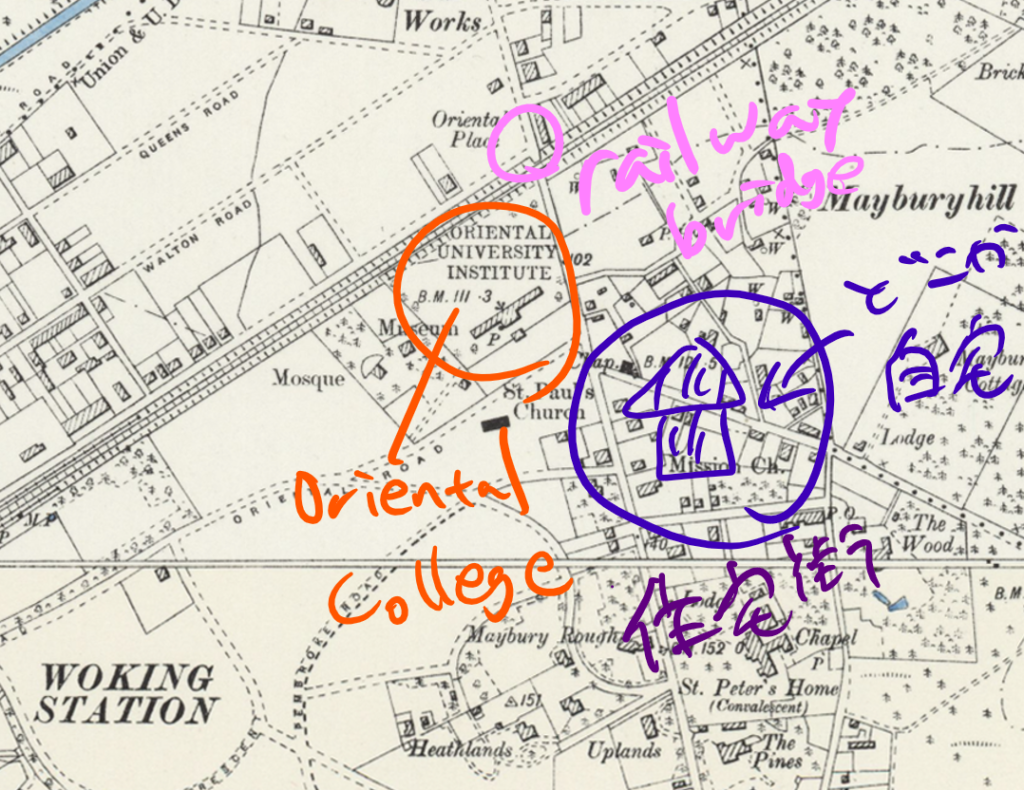
今回の話の場面の「the railway bridge」のとこだけど、地図はこちら!
まほちゃん(語り手)の自宅から火星人のいるHorsell Commonに伸びる道路(赤紫色のペン)は、途中で鉄道(オレンジのペン)、運河(青のペン)と交差するんだよ!
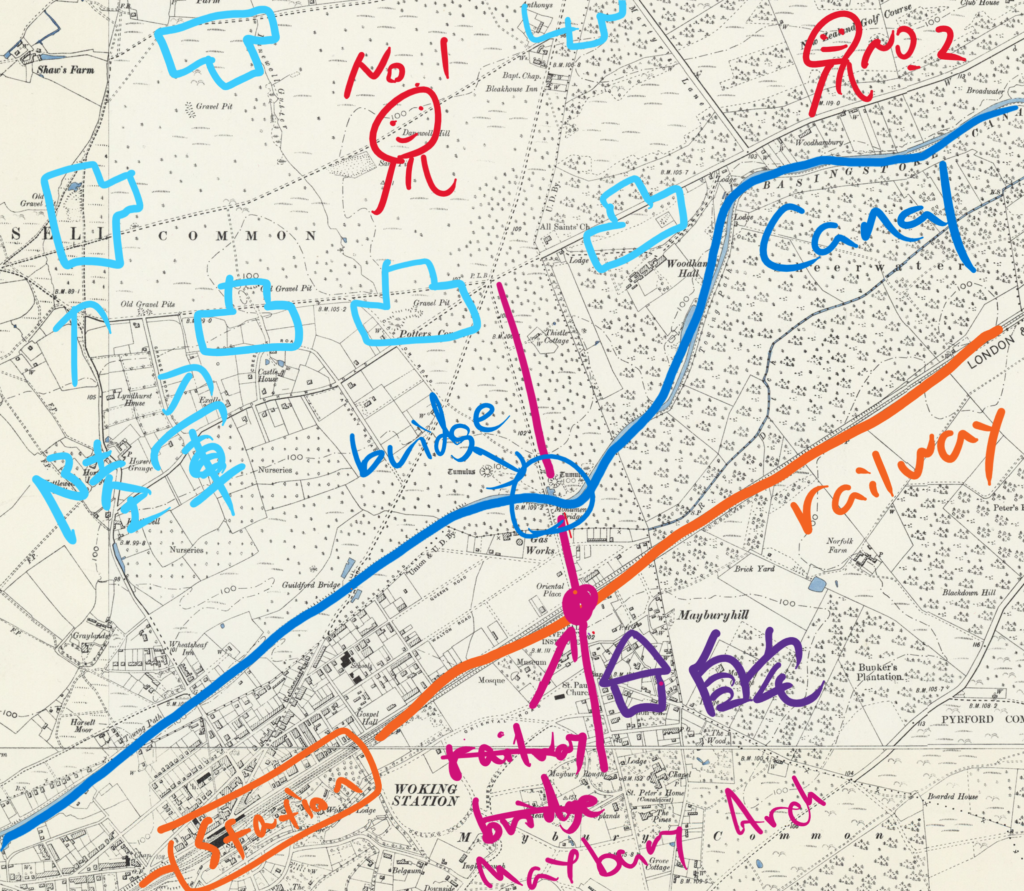
鉄道と交差するところが「railway bridge」(またはMaybury arch)だね。第90話も参照してほしいんだけど、線路と道路が立体交差してるの。だから「bridge」って言われてるんだよ!
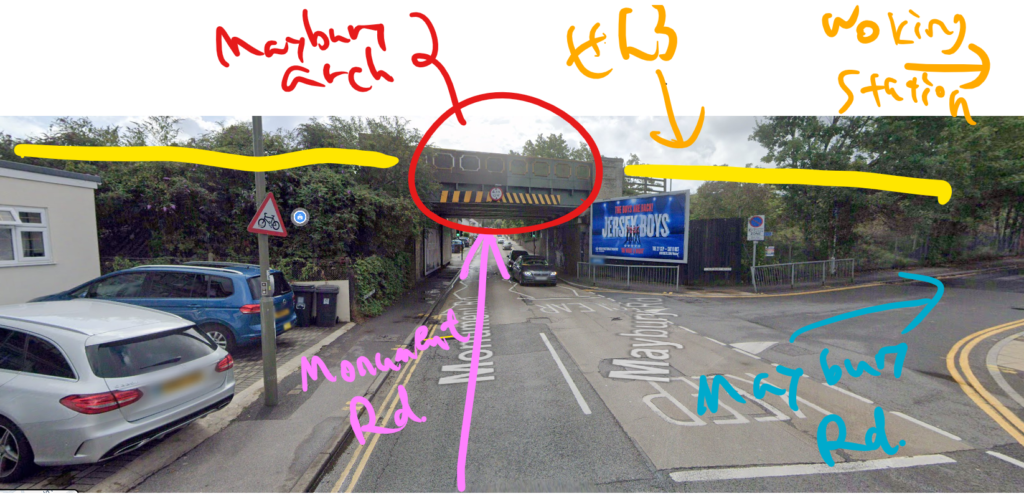
いまは「no one was allowed over the canal」だから、ちょうど運河のところで規制線が張られて、軍がHorsell Commonを包囲していることがわかるわね。
つぎに、「sappers」(工兵隊)の話について。
「夕食」の「supper」とは違うから気を付けるんだ。
「sappers」っていうのは、「Royal Engineers」(王立工兵)とも呼ばれる。
橋をかけたり道を作ったりする土木工事を中心に、測量、電信などを担当していたな。トンネルや塹壕を築くのも含まれるぞ。防衛線でも大活躍。裏方の鑑だな。
例によって正確な情報はイギリス国立軍事博物館のサイトを見てくれ。
https://www.nam.ac.uk/explore/corps-royal-engineers
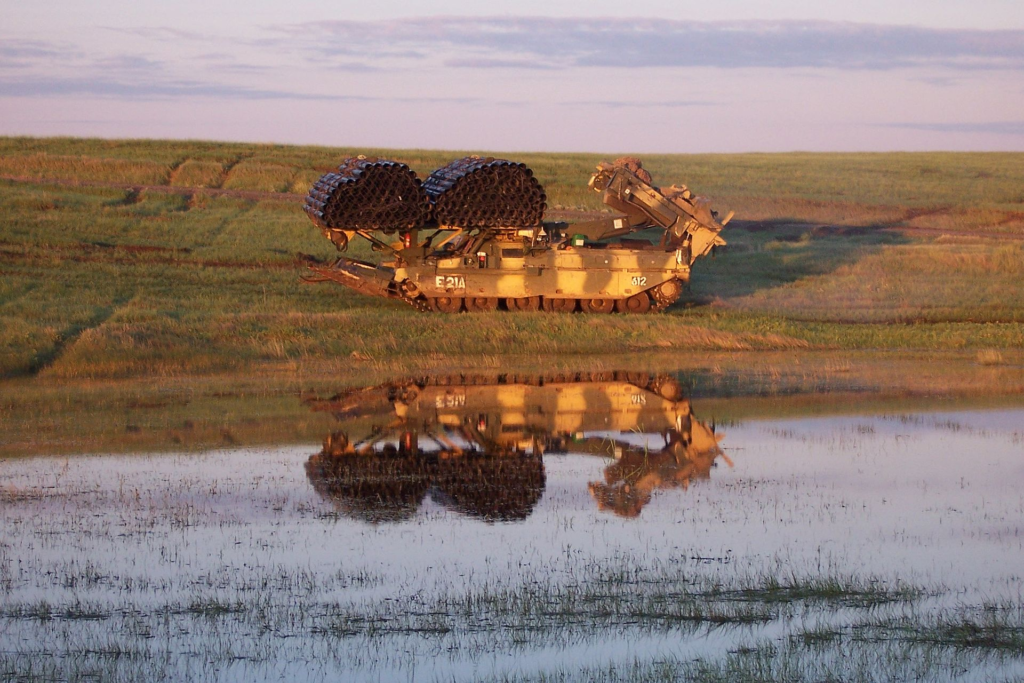
↑上の写真は戦車じゃないぞ。工兵隊が使う重機だ。
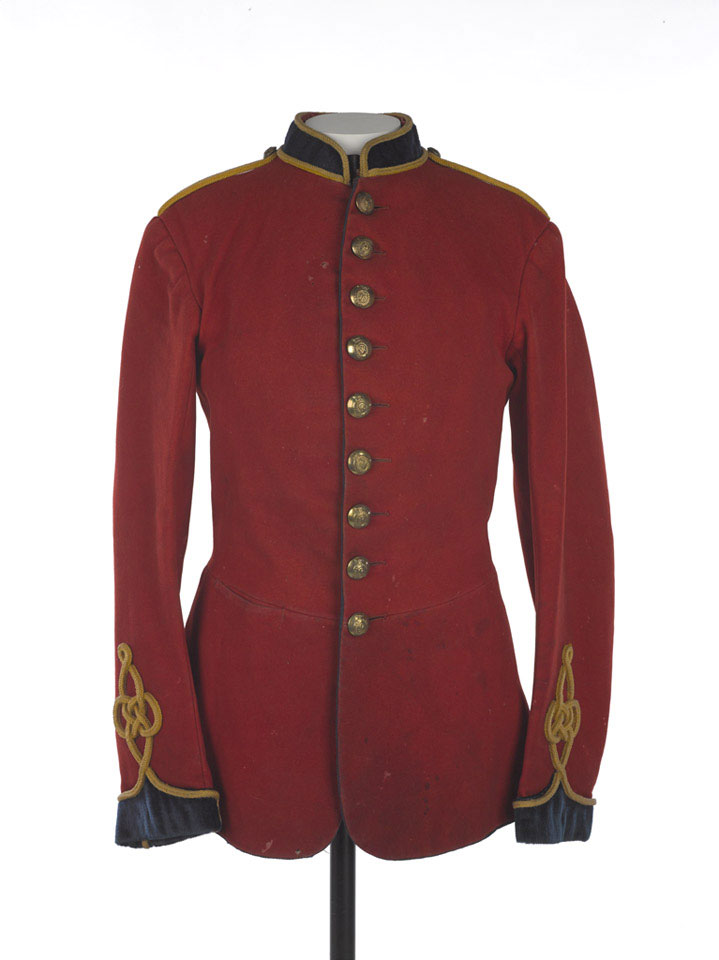
https://collection.nam.ac.uk/detail.php?acc=1979-06-12-1
Royal Engineersの制服は上のような濃い色の赤色。やっぱりイギリスはこの色よね。St. Glorianaだってそうだし。
Royal Engineers(王立工兵)とRoyal Artillery(王立砲兵)は同じ1716年結成の兄弟部署。結成300年を記念したイギリス議会の答弁で、面白いのが見つかったわよ。イギリスの誇りある伝統を感じさせる一節ね。
https://hansard.parliament.uk/commons/2016-07-04/debates/16070443000002/RoyalRegimentOfArtilleryCorpsOfRoyalEngineers
上の記事の途中で面白い所がいくつかあったので雑談ついでに。
① 「Napoleon had the great advantage in life of being a gunner but the great disadvantage of ultimately losing the Napoleonic wars—and of being French.
(ナポレオンは砲手としては素晴らしかったけど、結局ナポレオン戦争に負けちゃったし、何よりフランス人だったっていう欠点があるよね)
②アメリカ国歌の「“And the rocket’s red glare, the bombs bursting in air, gave proof through the night that our flag was still there”.」っていう部分について、「The rockets that provided the “red glare” immortalised in the American national anthem were the Congreve rockets fired by the Rocket Troop of the Royal Horse Artillery, and I think that is pretty cool.」
(アメリカ国歌の「red glare」はアメリカ軍の大砲の火じゃなくて、イギリス軍のロケット部隊が発射したロケットの炎なんだよね)
って述べてるあたり、ほんとに今でも「イギリス最高!」感があってかっこいい。(それでもライヒが正義に決まってるじゃない)
ナポレオンを馬鹿にするのは許さにゃいにゃ。
語尾どうなってるんだ
というかさ、アメリカ独立戦争のときからロケット砲あるのかよ!
うん。あるわよ。
19世紀前半はロケット砲の研究が急速に進んだ時代。
その議事録にも書いてる通り、当時、イギリス産の「Congreve rockets」(コングリーブ・ロケット)っていうロケット砲がベストセラーになったわ。
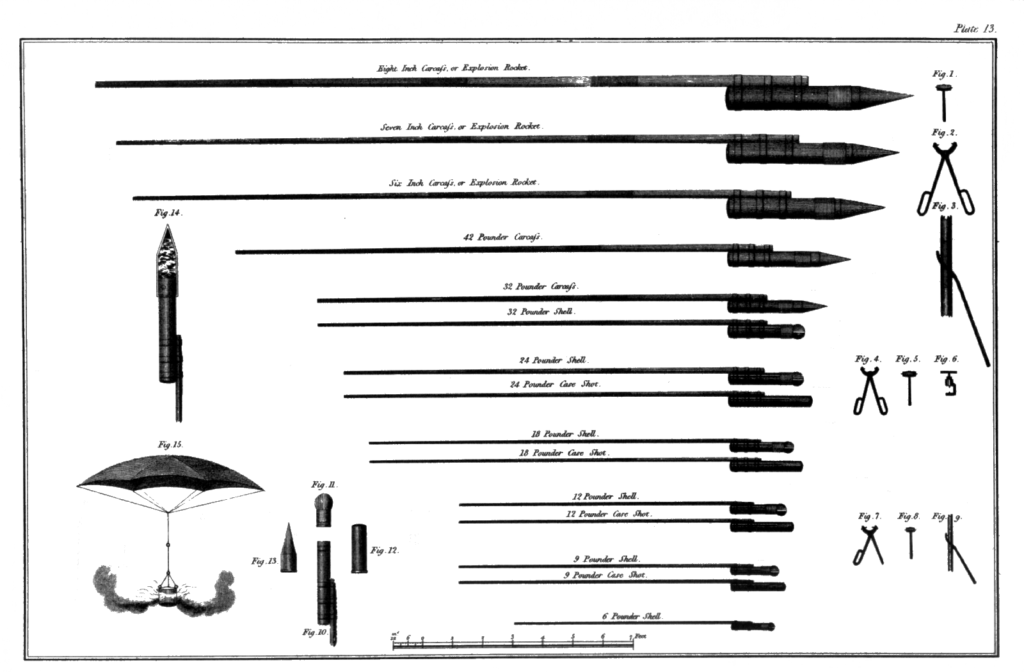
無論、19世紀前半のロケット砲は単発。第二次世界大戦のソ連のベストセラー自走多連装ロケット砲「カチューシャ」(下写真)みたいに、多連装砲ではないのよ。
ということで、19世紀後半になると、いったんロケット砲の時代は終わりを告げることになるわ。

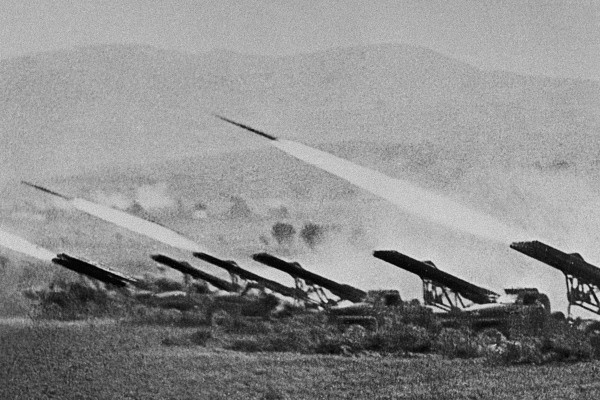
ん?カチューシャ?
まだあの人の出番は先ですよ
あ、そうなんだ。
というか、馬車に乗せるんだったら機関銃じゃなくてロケットだな。
ロケットなら反動ないし。
まだ無誘導ロケット弾だから精度もよくないし、ほんとに「ヒット&アウェー」戦法になりそうだね!
でも、野戦砲と違って展開速度が違うから、こっちの方がまだ可能性あるかも!
(火星人ロボットは高さ30m、時速50kmくらいで、時速10㎞くらいの馬車を余裕で超えてるんだけど言った方がいいかしら)
ほんとにまとまりのない会話ねぇ
だいじょうぶかしら
解答編 前半
<英文解釈記号ルール>
〔〕→関係詞句・節
【】→接続詞句・節
《》→挿入句・節
[ ] →名詞句・節
()→副詞句・節
〈〉→形容詞句・節
(After breakfast), (instead of working), I decided to walk down (towards the common). (Under the railway bridge) I found a group of soldiers—sappers*, 《I think》, (men (in small round caps, dirty red jackets unbuttoned*), and showing their blue shirts, dark trousers), and (boots coming to the calf*). They told me [no one was allowed (over the canal)], and, (looking along the road towards the bridge), I saw one of the Cardigan men standing sentinel* there. I talked (with these soldiers) (for a time); I told them (of my sight of the Martians (on the previous evening)).
1. オレンジのandが繋いでるものは、in small~unbuttonedとshowing~trousersでしょうか。独立分詞構文で、I thinkのあと、sappers men were (in small~unbuttone) and showed…となっていると解釈しましょう。in は服の着用を表す前置詞ですからね。inのかっこはunbuttonedで閉じます。
2. 紫のandが繋いでるものは、men以下の独立分詞構文と、boots以下の独立分詞構文です。「前後のSV」の変形版。
3. 青のtheyが指しているものは、a group of soldiers(sappers men)です。
4. 緑のandが繋いでるものは?、前後の2文です。looking along…は分詞構文だということに気をつけましょう。
全訳 前半
朝食後、仕事をするかわりにホーセル共有地の方へ歩くことにした。鉄道橋の下で、兵士の集団を見つけた。工兵のようだった。小さな丸い帽子をかぶり、よごれたジャケットをボタンをはずして着ていて、青のシャツと黒いズボンの見た目だった。ブーツはふくらはぎのところまで長さがあった。彼女たちは「運河を越えることは許されてないわ」と言った。橋の方に伸びている道に目をやると、第11騎兵大隊からの兵士のひとりがそこで警戒任務にあたっているのが見えた。わたしはしばらくこの兵士らと話した。昨晩わたしが見た火星人のことを伝えた。
「the Cardigan men」っていうのは、Aldershotからやってきた第11騎兵大隊の兵士の一人だね。第108.5話で詳しく説明したわ。
最後の「of my sight of the Martians on the previous evening」はいかにも名詞構文ですよっていう感じだな。
問題編 後半
「Horse Guards」は知ってるにゃ。陸軍の司令部があったとこにゃ。
21世紀の日本でも「永田町で論争が巻き起こってる」とかって言われるけどそのイメージにゃ。
21世紀の日本に置き換えられることが多すぎてちょっと怖いわね。
さて久しぶりに出てくるけど、「Heat-Ray」は火星人の兵器のレーザー光線のことだよ。
1900年現在はまだ「熱線」というイメージだったけど、21世紀で「熱線」と訳すとかえってイメージが違ってきちゃうわ。「レーザー砲(光線)」が正確ね。
None of them had seen the Martians, and they had but the vaguest* ideas of them, so that they plied* me with questions. They said that they did not know who had authorised* the movements of the troops*; their idea was that a dispute had arisen* at the Horse Guards. The ordinary sapper is (soldier, great, than, deal, a, educated, common, better, the), and they discussed the peculiar* conditions of the possible fight ( ) some acuteness*. I described about the Heat-Ray to them, and they began to argue among themselves.
vague漠然とした ply~with questions~を質問攻めにする authorise権限を与える・許可する troop軍隊 arise起こる peculiar特有の acuteness鋭さ
1. 赤のbutの意味は?
2. 紫のso thatの用法は?
3. 赤アンダーラインの部分の単語を「普通の兵士よりもずっといい教育を受けていた」という意味になるように並び替えると?
4. 緑の4つの動詞のうち、語法が間違っているもの(例:目的語にVingしかとらないのにto Vをとっているものとか)は?
5. 茶色のカッコの中に適切な前置詞一語を入れると?
解答編 後半
<英文解釈記号ルール>
〔〕→関係詞句・節
【】→接続詞句・節
《》→挿入句・節
[ ] →名詞句・節
()→副詞句・節
〈〉→形容詞句・節
None of them had seen the Martians, and they had but the vaguest* ideas of them, so that they plied* me with questions. They said [that they did not know [who had authorised* the movements of the troops*]]; their idea was [that a dispute had arisen* (at the Horse Guards)]. The ordinary sapper is (a great deal) better educated (than the common soldier), and they discussed the peculiar* conditions of the possible fight (with some acuteness*). I described about the Heat-Ray to them, and they began to argue among themselves.
1. 赤のbutの意味は、onlyほんの~しかない。have the slightest[faintest] idea (まったくわからない)を思い出しましょう。それと似た感じで訳してあげるとOKです。
2. 紫のso thatの用法は結果用法。「それで、その結果」ですね。このときは原則として、カンマ+so thatになります。
3. 赤アンダーラインの部分の単語を「普通の兵士よりもずっといい教育を受けていた」という意味になるように並び替えると、上のようになります。「a great deal」で、比較級を強調するっていうのが難しかったですかね。
4. 緑の4つの動詞のうち、語法が間違っているもの(例:目的語にVingしかとらないのにto Vをとっているものとか)は、discribedです。describe aboutという形はありません。describeとdiscussはどちらも目的語を取る他動詞です。beginはVingもto VもどっちもOK。argueは自動詞も他動詞もあります。
5. 茶色のカッコの中に適切な前置詞一語を入れるとwithです。「with+名詞=副詞」みたいなパターンがありますよね。with ease=easily とか。
全訳 後半
彼女たちの誰も火星人を見たことがなかった上に、ほとんど何も知らなかったので、わたしに質問を浴びせてきた。誰が軍の出動を指令したのかもわからないとのことだったが、陸軍司令部ホース・ガーズで論争が巻き起こっているのだろうと彼女たちは考えていた。その普通の工兵の子は一般的な兵士よりもはるかによく教育を受けていた。彼女たちは起こりうる特有の戦闘状態について鋭く議論していた。わたしはレーザー光線について述べ、彼女たちは自分たちで議論を始めた。
第9章 第7段落 (第116話)
問題編
鉄道橋の下で、数名の王立工兵(sappers)さんたちが会話してる場面だ。会話文だから難しいが、何が省略されているかを考えながら読み進めていこう。
実際に声に出してみると、何が省略されてるのかわかりやすいな。「ha’ been」なら「はびーん」って感じだから「have been」だなってわかったり、「rush ‘em」や「calls ‘em」とか「s系の音+’em」は「them」だってわかったり。
それと、ain’tはhaven’t, isn’tとか万能だったね!
“Crawl* up under cover* and rush* ’em, say I,” said one.
“Get aht!” said another. “What’s cover against this ’ere ’eat? Sticks* to cook yer! What we got to do is to go as near as the ground’ll let us, and then drive* a trench*.”
“Blow yer trenches! You always want trenches; you ought to ha’ been born a rabbit Snippy*.”
“Ain’t they got any necks, then?” said a third, abruptly*—a little, contemplative*, dark* man, smoking a pipe.
I repeated my description.
“Octopuses*,” said he, “that’s what I calls ’em. Talk about fishers of men—fighters of fish it is this time!”
“It ain’t no murder killing beasts like that,” said the first speaker.
“Why not shell* the darned* things strite* off and finish ’em?” said the little dark man. “You carn tell what they might do.”
“Where’s your shells?” said the first speaker. “There ain’t no time. Do it in a rush, that’s my tip*, and do it at once.”
So they discussed it. After a while I left them, and went on to the railway station to get as many morning papers as I could.
crawlはう under cover隠れて rush突撃・急襲する stickくっつく drive掘る trench塹壕 Snippyスニッピー(この兵士の人名か?) abruptly不意に contemplative瞑想にふける dark黒っぽい髪の octopusタコ shell砲弾を撃ち込む darnedここではdamned(いまいましい) strite:ここではstrikeだと思いましょう。 tip助言
1. オレンジのahtを文語体に直すと? ※ドイツ語のアハト(acht)(8)ではない
2. 赤アンダーラインの部分の訳は?
3. 緑のyerを文語体に直すと?
4. 紫のlet usの後に省略されてる語句は?
5. 灰色のandが繋いでるものは?
6. 青マーカーの訳は
7. 青アンダーラインの訳は? 【ヒント①:fishers of menって何?】【ヒント②:「ー」以降の文型表示は?】
8. 赤のitが指しているものは?
9. ピンクのthatが指しているものは?
10. 茶色のandが繋いでいるものは?
11. 黄色のcarnを文語体に直すと?
最初の方、「heat」って書いてるけど、火星人のまわりの林は衝突の爆風で炎上して、地面からまだ煙がくすぶっているという状況。そりゃあ地面は熱いはずね。森だから地面にも燃えるものがたくさんあるだろうし…
そうだね!「Sticks to cook yer.」(The ground sticks and cook youあたりの省略)のとこかな。はいつくばって前進したら、熱い地面とずっと体がくっついているから、あたかもフライパンの上みたいに調理されちゃうってこと!
「Blow yer trenches」は、その前の「drive a trench」とほぼ同じ内容を反復してると見ていいかな?
いいんじゃないか。
さて次に、設問にもなってるけど、「Talk about fishers of men—fighters of fish it is this time!」の部分について。
ダッシュ以降の文型が、fighters of fish=C、it=S、is=Vの、CSV第2文型前置ってことを把握するのがファーストステップ。
それがわかったら、「fishers of men」と「fighters of fish」の対比が見えるから、あとは普通に「人間の釣り人の話じゃなくて、今回は魚の戦士だな!」っていう訳じゃないのか?
そうそうそこが対比。でもその訳だけでは意味わかんなくないか?
たしかに、釣り人の話はいままでにどこにも出てきてないな。
英文学には、聖書が常にバックグラウンドにあるんだ。
聖書の知識が何の前触れもなくポーンと出てくるから、非キリスト教民にとってはわけのわからない文章が書かれる。ちょっと微妙だけど、第6話にも「apostles of mercy」(慈悲の使徒→主唱者)というフレーズが登場してきたな。
それじゃ、fishers of menについてはターちゃんにバトンタッチ。
かしこまっ☆
まずは、「fishers of men」が出てくる聖書の一節を見てみましょ。
いくつかの福音書に載ってるけど、今回は一番要約されてる「マタイによる福音書」で。
18 While walking by the Sea of Galilee, he saw two brothers, Simon (who is called Peter) and Andrew his brother, casting a net into the sea, for they were fishermen. 19 And he said to them, “Follow me, and I will make you fishers of men.” 20 Immediately they left their nets and followed him. 21 And going on from there he saw two other brothers, James the son of Zebedee and John his brother, in the boat with Zebedee their father, mending their nets, and he called them. 22 Immediately they left the boat and their father and followed him.
「マタイによる福音書(Matthew)」第4章 English Standard Version
引用元:https://www.christianity.com/bible/esv/matthew/4
18 さて、イエスがガリラヤの海べを歩いておられると、ふたりの兄弟、すなわち、ペテロと呼ばれたシモンとその兄弟アンデレとが、海に網を打っているのをごらんになった。彼らは漁師であった。19 イエスは彼らに言われた、「わたしについてきなさい。あなたがたを、人間をとる漁師にしてあげよう」。20 すると、彼らはすぐに網を捨てて、イエスに従った。21 そこから進んで行かれると、ほかのふたりの兄弟、すなわち、ゼベダイの子ヤコブとその兄弟ヨハネとが、父ゼベダイと一緒に、舟の中で網を繕っているのをごらんになった。そこで彼らをお招きになると、22 すぐ舟と父とをおいて、イエスに従って行った。
「マタイによる福音書(Matthew)」第4章 日本語訳
ここでの「fishers of men」ってのは日本語では「人間を捕る漁師」と訳されて、簡単にいえば、人々にキリスト教を布教する「宣教師」「伝道師」のことね。
ちなみに、「fishers of men」の「of」を「捕る」と訳していいのかという問題だけど、他の福音書で同じことを言っているところを探すと、「you will be catching men」(ルカによる福音書5章,ESV)とあるから、「fishers of men」は「人間の漁師」じゃなくて「人間を捕る漁師」で間違いないわ。
ともあれ、「Talk about fishers of men—fighters of fish it is this time!」のところは、こういう聖書の一節を踏まえて、fishersとfightersで韻を踏んだパロディを作ってるわけね。
以上のことを考えると、「fishers of men」が「人間を捕る漁師」だから、対比されている「fighters of fish」は「魚の戦士」ではなくて「魚を捕る戦士」とすべきね。
そうすれば、タコ=魚を捕る戦士 ということで意味が通るんじゃないかしら。
ありがと。
ということで、英文は聖書を参考にしないと誤読しうるよっていう話だ。
ひょっとすると今までのわたしたちの解説でも見落としてたところがあったかもだが…。
解答編
<英文解釈記号ルール>
〔〕→関係詞句・節
【】→接続詞句・節
《》→挿入句・節
[ ] →名詞句・節
()→副詞句・節
〈〉→形容詞句・節
“Crawl* up (under cover*) and rush* ’em, 《say I》,” said one.
“Get aht!” said another. “What’s cover (against this ’ere ’eat)? Sticks* to cook yer! [What we got to do] is [to go (as near as the ground’ll let us), and then drive* a trench*].”
“Blow yer trenches! You always want trenches; you ought to ha’ been born a rabbit Snippy*.”
“Ain’t they got any necks, then?” said a third, abruptly*—a little, contemplative*, dark* man, (smoking a pipe).
I repeated my description.
“Octopuses*,” said he, “that’s [what I calls ’em]. Talk about fishers of men—fighters of fish it is (this time)!”
“It ain’t no murder [killing beasts like that],” said the first speaker.
“Why not shell* the darned* things strite* off and finish ’em?” said the little dark man. “You carn tell [what they might do].”
“Where’s your shells?” said the first speaker. “There ain’t no time. Do it (in a rush), that’s my tip*, and do it (at once).”
So they discussed it. (After a while) I left them, and went on to the railway station (to get as many morning papers as I could).
1. オレンジのahtを文語体に直すと、「out」ですかね。「get out」で「ばかな」という俗語表現があるようです。
2. 赤アンダーラインの部分について、this ‘ere ‘eatは以下のフォーラムによれば「this here heat」とのこと。https://forum.wordreference.com/threads/whats-cover-against-this-ere-eat.175293/
this here≒thisだから、ここは「What’s cover against this heat?」として意味をとりなさい、といっています。たしかに発音してみると「h」は消えそうな気がしますね。
ほかにも「this severe heat」くらいでもよいのではないかと思ったり。
3. 緑のyerを文語体に直すと、youまたはyourです。
4. 紫のlet usの後に省略されてる語句は、go (near)ですね。ground will let us…は無生物主語で、「地形上わたしたちが…」という風に訳してあげるといいところ。
5. 灰色のandが繋いでるものは、goとdrive。
6. 青アンダーラインの訳については、上の会話編で述べた通り。
7. 赤のitが指しているものは、killing。itーVingの形式主語です。
8. ピンクのthatが指しているものは、抜き出すならoctpuses, fighters of fishあたり。タコ。
9. 茶色のandが繋いでるものは、shell, strite(strike),finishですかね。「Why not 原形…」なので、 shellは動詞ですよ。
10. 黄色のcarnを文語体に直すと、can’t です。canではなくnotまで入ります。You can tell what they might do. なら文脈上不自然ですし、なによりわざわざ「can」を「carn」と伸ばす必要性がありません(言葉の経済学的?)。
ということで、本来はcan’tで、後ろのtellに引っ張られてtが消えて、言葉が連続してるから「carn」と少し伸びたのだと思います。
全訳
「隠れて這っていって急襲しようぜ」と一人が言った。
「んなばかな!」ともう一人が言った。「この高温のなか隠れていくって? 地面にはりついて自分を料理するようなもんじゃない! やらなきゃいけないのは、地形的に可能な限り近づいて、そして塹壕を掘ることだ。」
「塹壕なんて! いっつも塹壕ばっかり。ウサギの子なんだね。スニッピー。」
「ところで、首はあるのかい?」と不意に3人目の男が言った。小さく、瞑想にふけってそうな黒髪の男で、パイプをぷかぷかしていた。
わたしは説明を繰り返した。
「タコじゃん」と彼は言った。「俺はそう呼ぶことにするよ。人を捕る漁師って言うけど、これは魚を捕る戦士だな!」
「そんな獣を殺しても殺人にはならないよな」と最初の人が言った。
「あの忌々しいやつに砲弾を撃ち込んで、打ちのめして滅ぼしてやろうぜ。火星人何するかわかんないし。」と小さな黒髪の男が言った。
「砲弾はどこ?」と最初の子。「時間がないぞ。急いでやらないと。今すぐにしないと。忘れないでくれ」。
そして彼らは話し合った。しばらくしてわたしは彼らのもとを去り、ウォーキング駅に向かって、集められる限りの新聞を手に入れた。
新聞はWHスミス社が鉄道を利用して効果的に配送したんだったにゃ。
何回も言ってるけど、この文章は基本的に回想で書かれてるから、目的にも結果にもとれるto Vは、目的用法で訳すより結果用法で訳した方がいいときが多いな。目的というのは未来のことだからさ。
第9章 第8段落 (第117話)
soldierが兵。officerが士官。対比される概念よ。
問題編
But I will not weary* the reader with a description of that long morning and of the longer afternoon. I did not succeed in getting a glimpse* of the common, for even Horsell and Chobham church towers were in the hands of the military authorities*. The soldiers I addressed didn’t know anything; the officers were mysterious as well as busy. I found people in the town quite secure again in the presence of the military, and I heard for the first time from Marshall, the tobacconist*, that his son was among the dead on the common. The soldiers had made the people ( ) the outskirts* of Horsell lock up* and leave their houses.
wearyうんざりさせる get a glimpse of~をちらっと見る authority当局 tobacconistタバコ屋の店主 outskirts町はずれ・郊外 lock up施錠する
1. オレンジのandが繋いでるものは?
2. 赤のaddressの意味は?
3. 青のアンダーラインの文型表示は?
4. 茶色のカッコ内に、( ) the outskirts ofが「~のはずれに・外縁に」となるように前置詞一語を入れると?
5. 緑のandが繋いでるものは?
6. 赤アンダーラインの文型表示は?
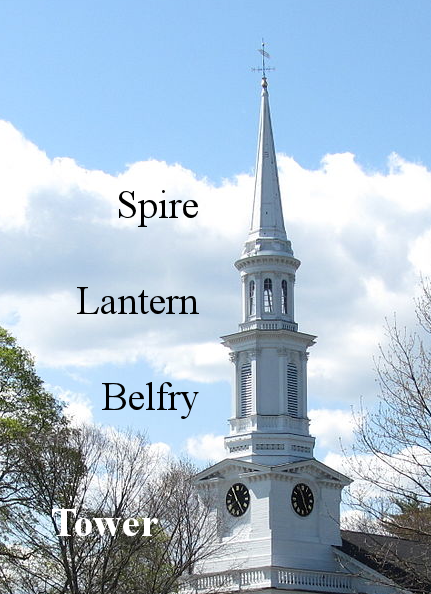
軍が教会の塔を接収してたってことだけど、平地が広がり高層建築もない1900年ごろのイギリスでは、教会の塔は相対的に結構高かったと想定される。
見張り台にぴったりだ。
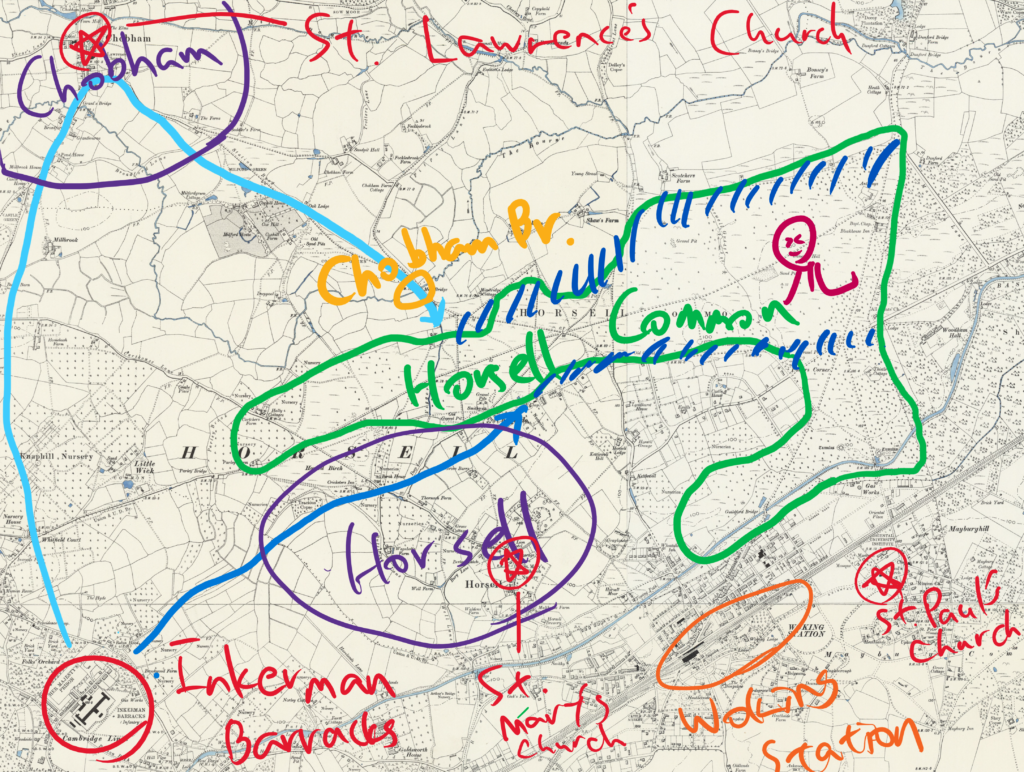
上の地図で赤い☆マークを付けた場所に教会があって、Chobhamには「St. Lawrence’s Church」、Horsellには「St. Mary’s Church」、Woking駅近くには「St. Paul’s Church」があるわ。
そこそこ距離があるけど、十分見えるんじゃないかしら。
解答編
<英文解釈記号ルール>
〔〕→関係詞句・節
【】→接続詞句・節
《》→挿入句・節
[ ] →名詞句・節
()→副詞句・節
〈〉→形容詞句・節
But I will not weary* the reader (with a description 〈of that long morning〉 and 〈of the longer afternoon〉). I did not succeed in getting a glimpse* of the common, 【for even Horsell and Chobham church towers were (in the hands of the military authorities*)】. The soldiers 〔I addressed〕 didn’t know anything; the officers were mysterious as well as busy. I found people〈in the town〉 quite secure again (in the presence of the military), and I heard (for the first time) (from Marshall, the tobacconist*), [that his son was among the dead on the common]. The soldiers had made the people 〈on the outskirts* of Horsell〉 lock up* and leave their houses.
1. オレンジのandが繋いでるものは、of that long morningとof the longer afternoon。descriptionに両方かかりますね。
2. 赤のaddressの意味は「話しかける」。他にも「取り組む・扱う」「宛てる」を覚えておきましょう。
3. 青のアンダーラインの文型表示は、IがS、foundがV、peopleがO、secureがCの第五文型。このときのfindの意味は「OがCだとわかった」とかのやつ。ここら辺は名詞構文だからそれっぽく訳しましょう。in the presence of the militaryは「軍の存在」つまり「軍がいること」です。
4. 茶色のカッコ内に、( ) the outskirts ofが「~のはずれに」となるように前置詞一語を入れると、on the outskirts of です。in the suburbs of (郊外に)とセットで覚えましょう。outskirtsというのは周縁だから「ふち」のイメージ(→だからon)、suburbsは郊外という「区域」のイメージ(だからin)。
ここでは、ホーセルの周縁、つまりホーセル共有地と隣接している地域のあたりを指しているわけですね。攻撃が始まるから巻き込まれないように退避させているわけです。
5. 緑のandが繋いでるものは、lock upとleave。どちらもtheir housesが目的語です。
6. 赤アンダーラインの文型表示は、The soldiersがS、had madeがV、the peopleがO、lock upとleaveがCですね。使役です。
全訳
でも、長い午前中ともっと長い午後のことを書いて読者のみんなを退屈させるつもりはない。わたしはホーセル共有地をまったく見られなかった。というのもホーセルとチョブハムの教会の塔でさえ軍が接収していたからだ。わたしが話しかけた兵士たちは何も知らなかったし、士官らは忙しいうえに秘密主義だった。町の人は軍が来てくれて再度とてもほっとしたようだった。タバコ屋のマーシャルさんから、息子さんが共有地の死者のうちの一人だということをはじめて聞いた。兵士らはホーセルの外縁にいる人々に、家に施錠させ避難させていた。
第9章 第9段落 (第118話)
まほちゃんお風呂回。
↑大本営発表
問題編
I got back to lunch about two, very tired for, as I have said, the day was extremely hot and dull*; and in order to refresh myself I took a cold bath in the afternoon. About half past four I went up to the railway station to get an evening paper, for the morning papers had contained only a very inaccurate* description of the killing of Stent, Henderson, Ogilvy, and the others. But (I, there, not, was, know, did, little). The Martians did not show an inch of themselves. They seemed busy in their pit, and there was a sound of hammering* and an almost continuous* streamer* of smoke. Apparently* (for, were, ready, struggle*, a, getting, they, busy). “Fresh* attempts have been made to signal*, but without success,” was the stereotyped formula* of the papers. A sapper* told me it was done by a man in a ditch with a flag on a long pole. The Martians took as much notice of such advances* as we should of the lowing* of a cow.
dullどんよりした inaccurate不正確な hammerハンマーを打つ continuous絶え間ない streamer流れ apparentlyどうやら struggle闘争・戦争【ここでは名詞】 fresh新たな signal信号を送る(第62話で解説したウィグワグ) stereotyped formula定型表現 sapper工兵(第115話) ditch溝(第54話) advance(軍の)進出・展開 lowing牛の「モー」という鳴き声
1. 赤のforの意味は?
2. オレンジのasの品詞は?(意味は?)
3. 赤アンダーラインの単語を「ほとんど知ってることしか書いてなかった」という意味になるように並び替えると?
4. 青アンダーラインの単語を並び替えると?
5. 紫のitが指しているものは?
6. 緑のところの「Martians」(火星人)の心情を次の選択肢のなかから選ぶと? ①人間との交渉なんて重要ではない ②交渉能力がある人間は動物と違うから警戒しておこう ③交渉してくるような能天気で傲慢な人間は滅ぼしてやる
7. 赤マーカーの部分の内で省略されてる箇所を元に戻すと?
解答編
<英文解釈記号ルール>
〔〕→関係詞句・節
【】→接続詞句・節
《》→挿入句・節
[ ] →名詞句・節
()→副詞句・節
〈〉→形容詞句・節
I got back to lunch about two, (very tired) 【for, 《as I have said》, the day was extremely hot and dull*】; and (in order to refresh myself) I took a cold bath (in the afternoon). (About half past four) I went up to the railway station (to get an evening paper), 【for the morning papers had contained only a very inaccurate* description of the killing of Stent, Henderson, Ogilvy, and the others】. But there was little 〔I did not know〕. The Martians did not show an inch of themselves. They seemed busy in their pit, and there was a sound of hammering* and an almost continuous* streamer* of smoke. Apparently* they were busy getting ready for a struggle*. “Fresh* attempts have been made to signal*, but without success,” was the stereotyped formula* of the papers. A sapper* told me [it was done (by a man in a ditch) (with a flag on a long pole)]. The Martians took as much notice of such advances as we should of the lowing* of a cow.
1. 赤のforの意味は、接続詞なので「というのは~だからだ」。ちょっと古い文章だからこの用法がいっぱい出てきますけどもう慣れましたよね。
2. オレンジのasの品詞は関係代名詞ですね。「as S say」(Sが言うように)で定型表現ですけど、品詞で言うと関係代名詞です。
3. 赤アンダーラインの単語を「ほとんど知ってることしか書いてなかった」という意味になるように並び替えると上の通り。とくに言うことはありません。(※原文ではI did notではなくI didn’t と省略形でした)
4. 青アンダーラインの単語を並び替えると上の通り。busy Vingとかready forとかの組み合わせをもとに推理していきましょう。
5. 紫のitが指しているものは、a fresh attemptですね。
6.7. 緑のところの「Martians」(火星人)の心情を次の選択肢のなかから選ぶと ①人間との交渉なんて重要ではない ですね。赤マーカーの部分の内で省略されてる箇所を元に戻すと、「we should take notice of the lowing of a cow」です。そしてas-asで原級比較していますので、火星人が軍の動きに注意を払う度合いと、人間がウシの鳴き声に注意を払う度合いが一緒だ、というわけです。1900年ごろの人間にとってウシの鳴き声は日常ですので、どうでもいいってことですね。
全訳
2時ごろに昼食を食べに家に戻った。とても疲れていた。前に書いた通り、その日は極端に暑くどんよりした日だったからだ。すっきりしようと思って午後に水風呂に入った。4時半ごろ、夕刊を手に入れるためにウォーキング駅に向かった。朝刊にはステント・ヘンダーソン・オギルヴィらが死んだことについて、とても不正確な記事しか載っていなかったからだ。でも夕刊にもわたしが知らない情報はほとんどなかった。火星人は姿を1センチも見せなかった。彼らは穴の中で忙しそうだった。ハンマーを打つ音が聞こえた。煙がほぼ途切れることなく立ち上っていた。どうやら彼らは戦争の用意に忙しいようだった。「交信しようとまた試みたが、失敗に終わった」というのが新聞のステレオタイプ的な言い回しだった。ある工兵が、長い棒の先に旗をつけて溝の中から交信の試みが行われたのだと教えてくれた。人間がウシの鳴き声にほとんど注意を払わないのと同じように、火星人はそんな軍の動きを全く気にかけていなかった。
こいつらずっとロボ作ってるな
かれこれ2日くらい組み立ててるんじゃないか
そりゃあ、高さ30mもあるんですもの。
それが入る「pit」(着陸の衝撃でできたクレーター)って結構深いんだな…(今更)
第9章 第10段落 (第119話)
まほちゃん中二病説が完全に裏付けられる段落です。
問題編
I must confess* the sight of all this armament*, all this preparation, greatly excited me. My imagination became belligerent*, and defeated the invaders* in a dozen striking* ways; something of my schoolboy dreams of battle and heroism* came back. It hardly seemed a fair fight to me at that time. They seemed very helpless* in that pit of theirs.
confess白状する armament軍の用意・軍備 belligerent攻撃的な・好戦的な invader侵略者(<invade) striking目立つ・派手な heroismヒロイズム・英雄主義 helpless無力な
1. 赤アンダーラインの部分だけ(confessの目的語that節の中)での、主語と動詞は?
2. 赤のandが繋いでるものは?
3. オレンジで「(hardly~) fair」(ほとんど公平でない)とあるけど、有利な方はどっち?(火星人?イギリス軍?)
解答編
<英文解釈記号ルール>
〔〕→関係詞句・節
【】→接続詞句・節
《》→挿入句・節
[ ] →名詞句・節
()→副詞句・節
〈〉→形容詞句・節
I must confess* [the sight of all this armament*, all this preparation, greatly excited me]. My imagination became belligerent*, and defeated the invaders* (in a dozen striking* ways); something 〈of my schoolboy dreams of battle and heroism*〉 came back. It hardly seemed a fair fight to me at that time. They seemed very helpless* (in that pit of theirs).
1. 赤アンダーラインの部分だけ(confessの目的語that節の中)での、主語はthe sight、動詞はexcited。
2. 赤のandが繋いでるものは、becameとdefeated。直訳だと「想像が好戦的になり(想像が)侵略者を倒した」となりますけど、日本語訳するときには「想像の中で」とかという風にごまかしてあげましょうかね。
3. オレンジで「(hardly~) fair」(ほとんど公平でない)とあるけど、有利な方はイギリス軍。いままでの話の流れでも推測できますし、そのあとの「they seemed very helpless in the pit」からはっきりわかります。
全訳
こんな風に軍備が整えられる様子や、準備の様子を見て、たいそう興奮したことは白状しなければならない。想像の中でわたしはとても好戦的になり、あらゆる派手な方法で侵略者を倒した。わたしが学生だったころ思い描いていた、戦争とヒロイズムの夢のようなものが戻ってきた。そのときわたしにはほとんどフェアな戦いのようには思えなかった。火星人は穴の中でとても無力に見えた。
学校に侵入したテロリストを一人で全滅させてヒーローになる妄想、小中学校のころにやったりしなかった?
…そうね。わたしもそういうことを夢見た日もあったわよ。
第9章 第11段落 (第120話)
問題編
About three o’clock there began the thud* of a gun at measured intervals* from Chertsey or Addlestone. I learned that the smouldering* pine wood into which the second cylinder had fallen was being shelled*, in the hope of destroying that object before it opened. It was only about five, however, that a field gun* reached Chobham for use against the first body of Martians.
thudドンという音 at measured intervals一定間隔で smoulder(米smolder)くすぶる(火を出さずに燃えるようす) shell砲弾を撃ち込む field gun野砲(第98話)
1. 赤アンダーラインの部分だけ(learnedのthat節の内)の主語と動詞は?
2. 緑のitの働きは?
3. 青のonlyの意味は?
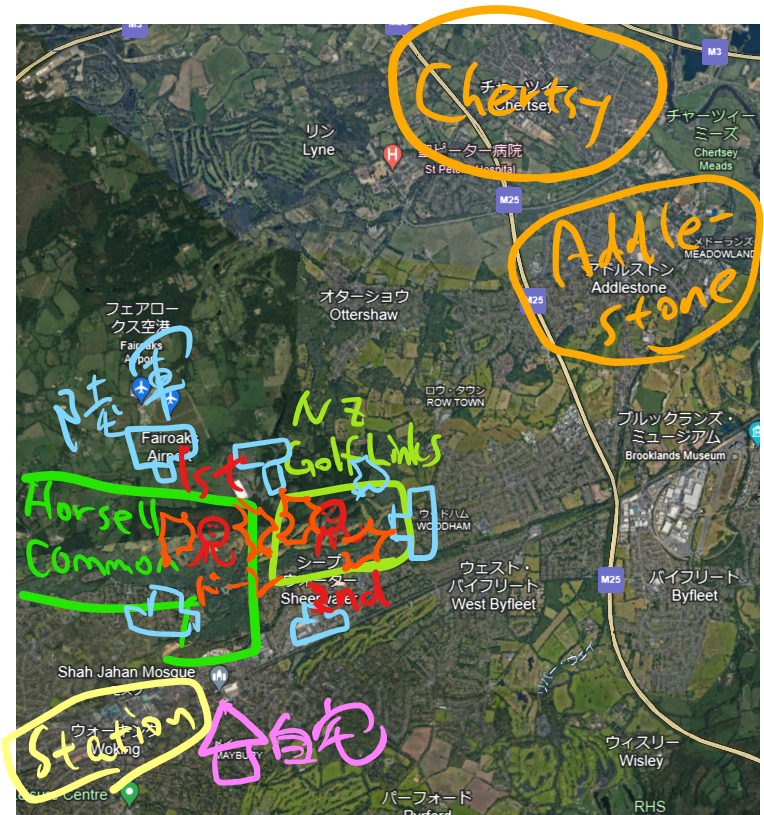
「ChertseyやAddlestoneから砲撃音が聞こえた」ってあるけど、実際にそこの地で砲撃が行われたわけじゃなくて、その方角から音が聞こえたということ。
いまマホちゃん(語り手)がいる自宅付近とChertsey・Addlestoneを結ぶと、たしかにその上に火星人の着陸地点があるわ。
解答編
<英文解釈記号ルール>
〔〕→関係詞句・節
【】→接続詞句・節
《》→挿入句・節
[ ] →名詞句・節
()→副詞句・節
〈〉→形容詞句・節
(About three o’clock) there began the thud* of a gun (at measured intervals*) (from Chertsey or Addlestone). I learned [that the smouldering* pine wood〔into which the second cylinder had fallen〕 was being shelled*, (in the hope of destroying that object before it opened)]. It was only about five, 《however》, that a field gun* reached Chobham (for use against the first body of Martians).
1. 赤アンダーラインの部分だけ(learnedのthat節の内)の主語はthe smouldering pine woodで、動詞はwas being shelled(学校英文法ではまとめて動詞のかたまりとみなしましょう)。
2. 緑のitは、後ろのthatと強調構文を成しています。itとthatの間に副詞句(only about five)が入ったら強調構文ですよね。
3. 青のonlyの意味は「ようやく」。onlyのあとに時間を表す語句が来るとこの意味になります。
全訳
3時ごろに、チャーツィーやアドレストンの方角から、一定間隔で大砲のドーンという音が響き始めた。2番目の宇宙船が落下して煙がくすぶる松林に、それが開く前に破壊できる望みにかけて、砲弾が撃ち込まれていたと知った。しかし、最初の一体に使うために野砲がチョブハムに到着したのは、遅くも5時になってからのことだった。
「there began the thud*…」は there is の変形版だ。
文法的に見れば第一文型倒置MVSだな。
第9章 第12段落 (第121話)
地図を先に示しておくにゃ。
前段落で砲撃を開始したイギリス軍に、火星人が反撃を開始するにゃ。
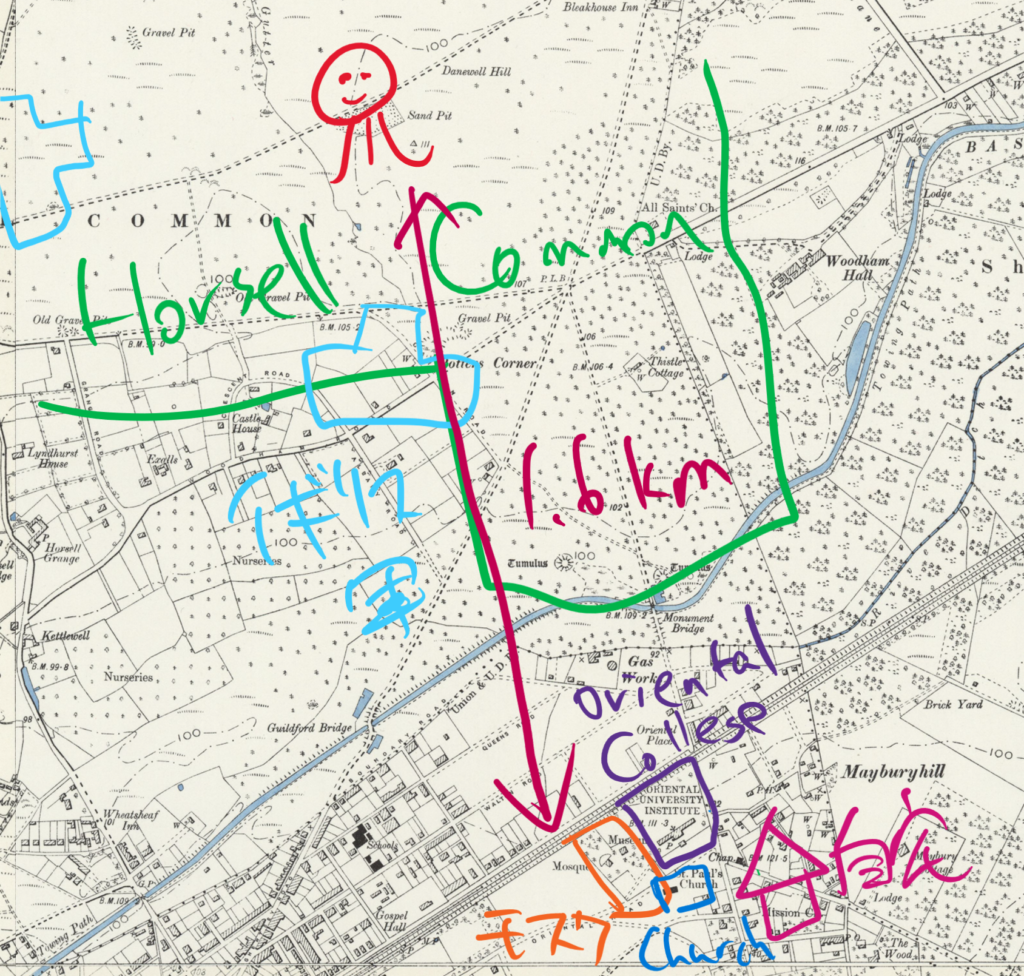
問題編
About six in the evening, as I sat at tea with my wife in the summerhouse* talking vigorously* about the battle that was lowering* upon us, I heard a muffled* detonation* from the common, and immediately after a gust* of firing*. Close on the heels of* that came a violent rattling* crash*, quite close to us, that shook the ground; and, starting out* upon the lawn*, I saw the tops of the trees about the Oriental College burst ( ) smoky red flame*, and the tower of the little church beside it slide down into ruin*. The pinnacle* of the mosque* had vanished, and the roof line of the college itself looked as if a hundred-ton gun (be) at work upon it. One of our chimneys* cracked* as if a shot had hit it, flew, and a piece of it came clattering* down the tiles* and made a heap* of broken red fragments* upon the flower bed* by my study* window.
summerhouseガーデンハウス vigorously活発に lowering迫る muffledこもった detonation爆発音(ここでは大砲の着弾音) gust突発的に起こるもの・噴出 firing発砲 on the heels of~のすぐあとに rattleガラガラ鳴る crash(破壊の)激しい音 start out外に出る lawn芝地 flame炎 ruinがれき・廃墟 pinnacleピナクル・尖塔 mosqueモスク chimney煙突 crackひびが入る・砕ける clatterガチャガチャ音を立てる tile屋根瓦 heap山 fragment破片 flower bed花壇 study書斎
1. オレンジのandが繋いでるものは?
2. 赤アンダーラインの主語と動詞は?
3. 青のカッコ内に「~になる」という意味になるように適当な前置詞を入れると?
4. 緑のbeを適切な時制に活用させると?
5. 紫のitが指しているものは?
6. 茶色のandが繋いでいるものは?
まず「summer house」について。庭にある小屋のことよ。イギリスではメジャーだわ。
日本語では「ガーデンハウス」といわれることが多いわね。
参考:https://www.cranegardenbuildings.co.uk/articles/the-many-uses-of-summerhouses

今更だけど、庭もあってこんな建物もあって、お金持ちだよね。
てっきり貧乏な社会学者だと思ってたけど…。
中産階級なのだ。
夕方6時に優雅にティータイムを取ってるし。
ヴィクトリア朝も末期になると少しずつみんな生活が豊かになっていくからな。
つづいて、「pinnacle of the mosque」。pinnacleは宗教関係なく教会にある尖塔のことだが、とくにモスクにある尖塔のことは「minaret」(ミナレット)と呼ばれるぞ。ここから、礼拝の呼びかけをするんだ。学校で習った覚えがある人もいるんじゃないかな。
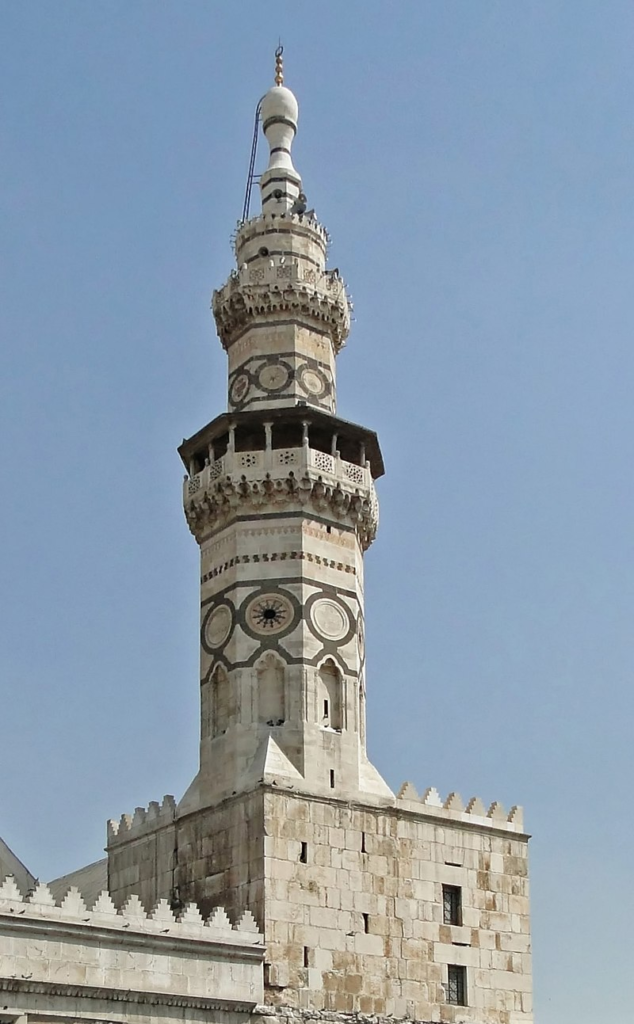
https://commons.wikimedia.org/w/index.php?curid=10313581
上写真はダマスカスにあるモスクだから参考程度ね。
こちらの小説に出てきているのは「Shah Jahan Mosque」といって、1889年にイギリスで最初に建造されたモスクよ。
公式サイト(以下の画像も)はこちら:https://shahjahanmosque.org.uk
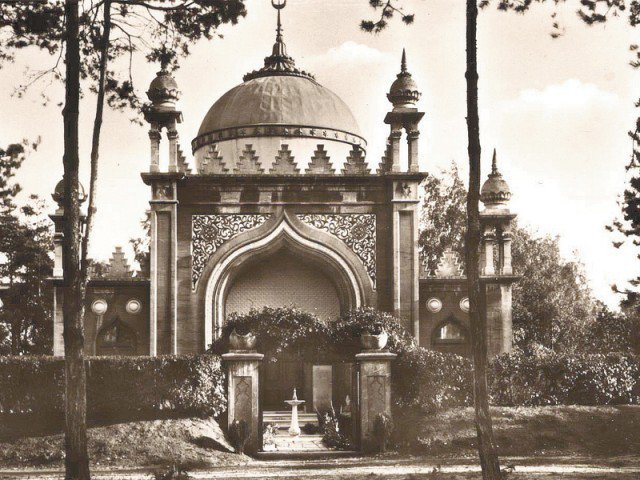
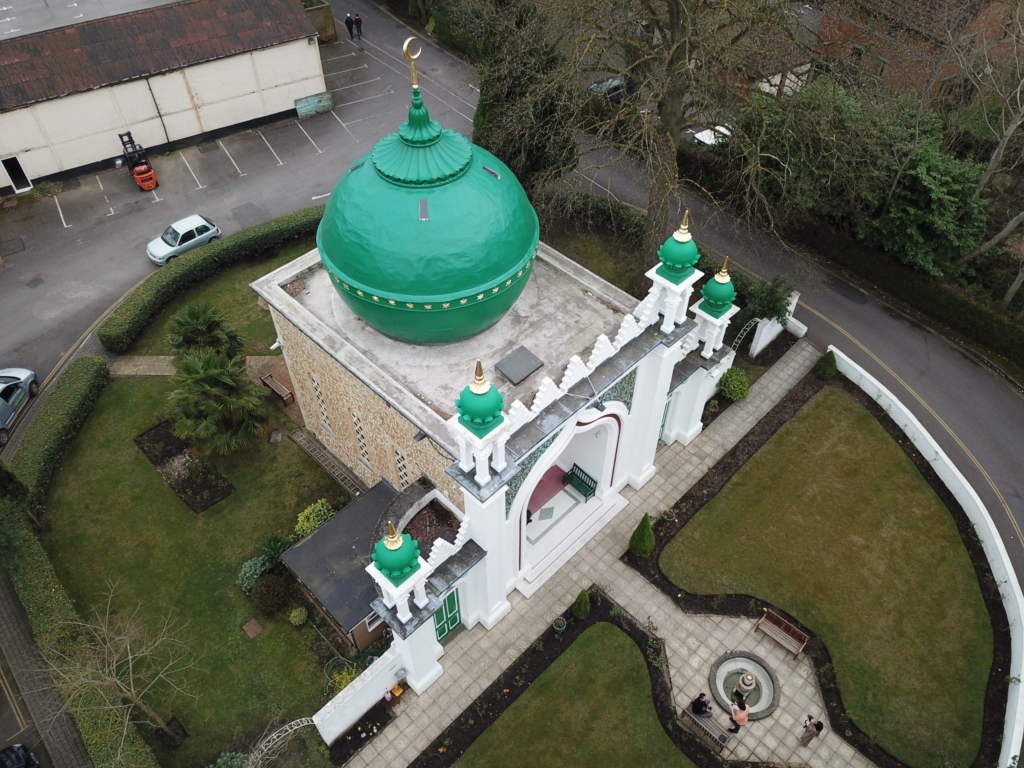
たしかにちょっとこじんまりした感じだけど、ここの尖塔を一撃で崩すのは「a hundred-ton gun」(=レーザー砲)(※この当時の大砲は砲弾の重さで規格を表す)の威力だね!
そして「Oriental College」。「Oriental University Institute」と地図には書いてるな。
その名の通り、東洋(主に中東)を研究する大学で、さっきの「Shah Jahan Mosque」も、この大学の影響でできたらしい。
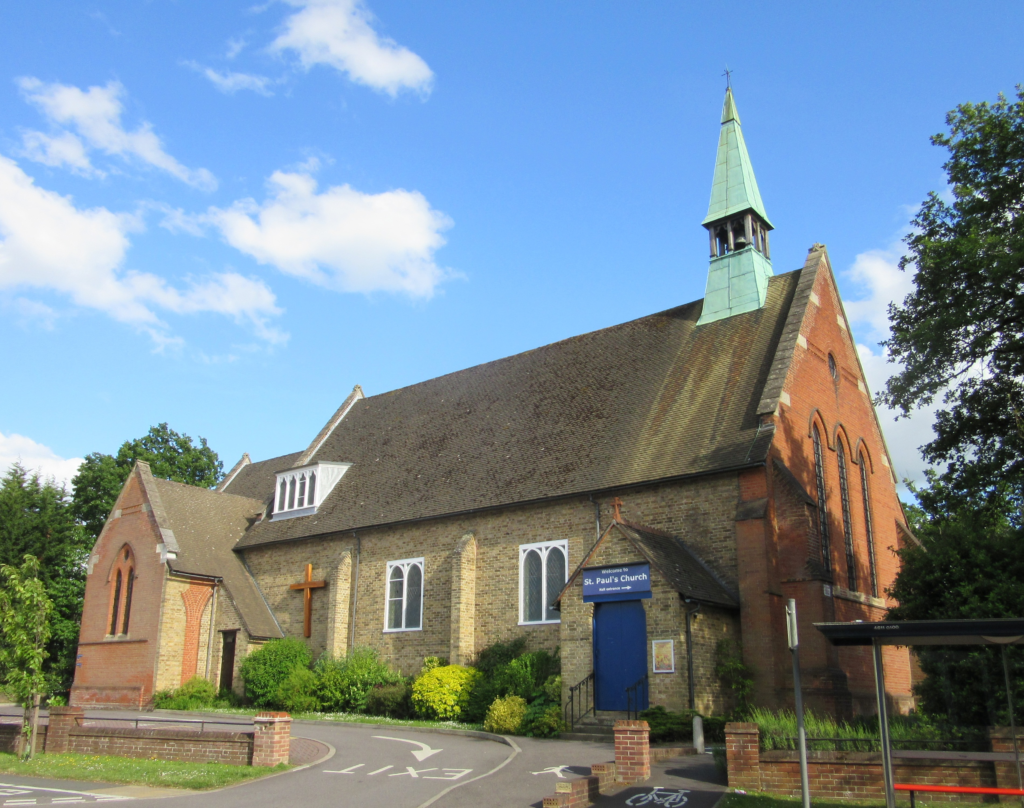
その近くの「St. Paul’s Church」(本文では「the little church」)についての情報はあまりなかったけど、当然のように21世紀でも現存している教会よ。確かに高さ10~15mくらいの「tower」があるわ(下写真)。
火星人はたぶんもうロボット(高さ30m)に乗って、そこからレーザー砲を発射してるのよ。
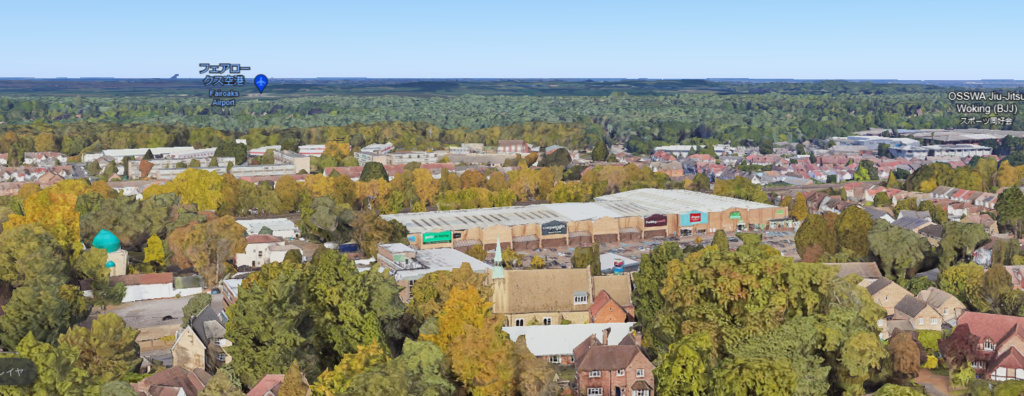
以上の建物をGoogle Earthの3Dで見てみるとこんな感じにゃ。
左側にモスクの緑色の屋根が見えて、真ん中の下に教会があるにゃ。
意外と木の方が高いってことはわかるかにゃ?
※「Oriental Institute」は現存してないにゃ。
解答編
<英文解釈記号ルール>
〔〕→関係詞句・節
【】→接続詞句・節
《》→挿入句・節
[ ] →名詞句・節
()→副詞句・節
〈〉→形容詞句・節
(About six in the evening), 【as I sat at tea (with my wife) (in the summerhouse*) (talking vigorously* about the battle 〔that was lowering* upon us〕)】, I heard a muffled* detonation* (from the common), and (immediately after) a gust* of firing*. (Close on the heels of* that) came a violent rattling* crash*, 《quite close to us》, 〔that shook the ground〕; and, (starting out* upon the lawn*), I saw the tops of the trees about the Oriental College burst into smoky red flame*, and the tower 〈of the little church beside it〉 slide down into ruin*. The pinnacle* of the mosque* had vanished, and the roof line of the college itself looked (as if a hundred-ton gun had been (at work upon it)). One of our chimneys* cracked* (as if a shot had hit it), flew, and a piece of it came clattering* down the tiles* and made a heap* of broken red fragments* (upon the flower bed* by my study* window).
1. オレンジのandが繋いでるものは、a muffled detonationと a gust firing。「immediately after」で「すぐ後に」という熟語的なやつ(afterは副詞)だっていうのを見抜くのが難しかったかな。
2. 赤アンダーラインの主語はa violent rattling crashで、動詞はcame。
3. 青のカッコ内に「~になる」という意味になるように適当な前置詞を入れると、into。変化のintoです。burst intoで熟語で覚えてもいいと思います。
4. 緑のbeを適切な時制に活用させると、had been。as ifの中の動詞の時制は、主節と同じなら過去形、主節より過去なら過去完了形にするんでしたね。
5. 紫のitが指しているものは、one of our chimneys。
6. 茶色のandが繋いでいるものは、cameとmade。
全訳
夕方の6時ごろ、ターちゃんとガーデンハウスでお茶をしながら、差し迫っている戦闘について活発に話していると、ホーセル共有地からこもった爆発音がした。そしてそのすぐ後に一斉射撃の音が聞こえた。さらにすぐに続いて、地面を揺らす荒々しくガラガラと響く音がした。とても近くだった。そして芝生に出てみると、オリエンタル・カレッジのまわりの木々の上部が煙を出して赤い炎に包まれていた。その横の小さな教会の塔は崩れてがれきになっていた。モスクの尖塔はなくなっていて、オリエンタル・カレッジの屋根は100トンの大砲が命中したかのようになっていた。わたしたちのあたりの煙突の1つは、砲弾があたったように砕けて飛び散った。その破片が屋根瓦の上をガチャガチャ音を鳴らしながら落下していき、わたしの書斎の窓のそばの花壇の上に赤い破片の山ができた。
ちなみに、どの砲撃音がどちらの軍かというのはすぐわかる。
「a muffled* detonation*(こもった爆発音) , and immediately after(そのすぐ後に) a gust* of firing*(一斉射撃音)」とある。火星人はレーザー砲、イギリス軍は大砲だから、「firing」(発砲音)がするのはイギリス軍だ。だから、detonationは火星人のレーザー砲が着弾した音だ(弾薬に誘爆でもしたんだろうな)。
第9章 第13段落 (第122話)
わたしたちの家の周りの地図はこれ。
等高線を見てもわかる通り、「Mayburyhill」っていうちょっと高い所だ。
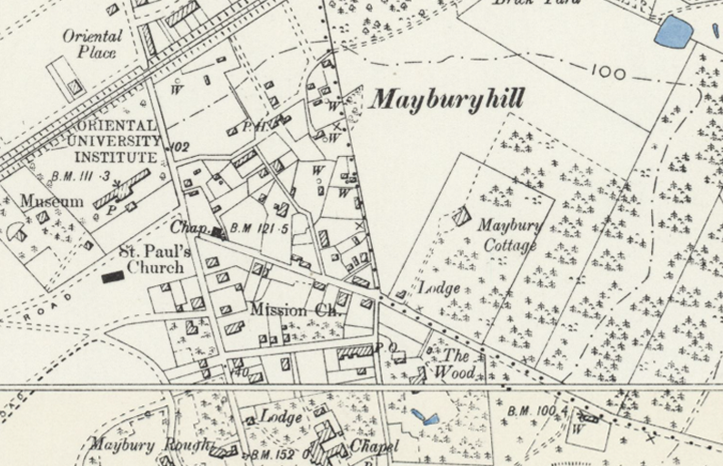
問題編
I and my wife stood amazed. Then I realised that the crest* of Maybury Hill must be within range of the Martians’ Heat-Ray now that the college was cleared* out of the way.
At that* I gripped my wife’s arm, and without ceremony* ran her out into the road. Then I fetched* out the servant*, telling her I would go upstairs myself for the box she was clamouring for*.
“We can’t possibly* stay here,” I said; and as I spoke the firing* reopened* for a moment upon the common.
“But where are we to go?” said my wife in terror*.
I thought perplexed*. Then I remembered her cousins at Leatherhead.
“Leatherhead!” I shouted above the sudden noise.
She looked away from me downhill*. The people were coming out of their houses, astonished*.
“How are we to get to Leatherhead?” she said.
crest頂上・最高地点 clear out of the way取り除く・きれいにする at thatそれからすぐに without ceremony礼儀なしに・前置きなしに servant使用人 fetch呼んでくる clamour for~を強く求める possibly(否定文中で)とうてい~ない firing射撃・発砲 reopen再開する(<re+open) terror恐怖 perplexed途方に暮れて downhillふもとの方(副詞)(cf. downtown) astonished驚いて
1. 青のnow that~の意味は?
2. 緑のandが繋いでいるものは?
3. 青アンダーラインの訳は?
「stand C」は「~の状態にある」という一時的な停止状態も表すよ!
「Cして立ってる」だけじゃないからね!
「立つ」という意味が不要なときに注意ってことね。
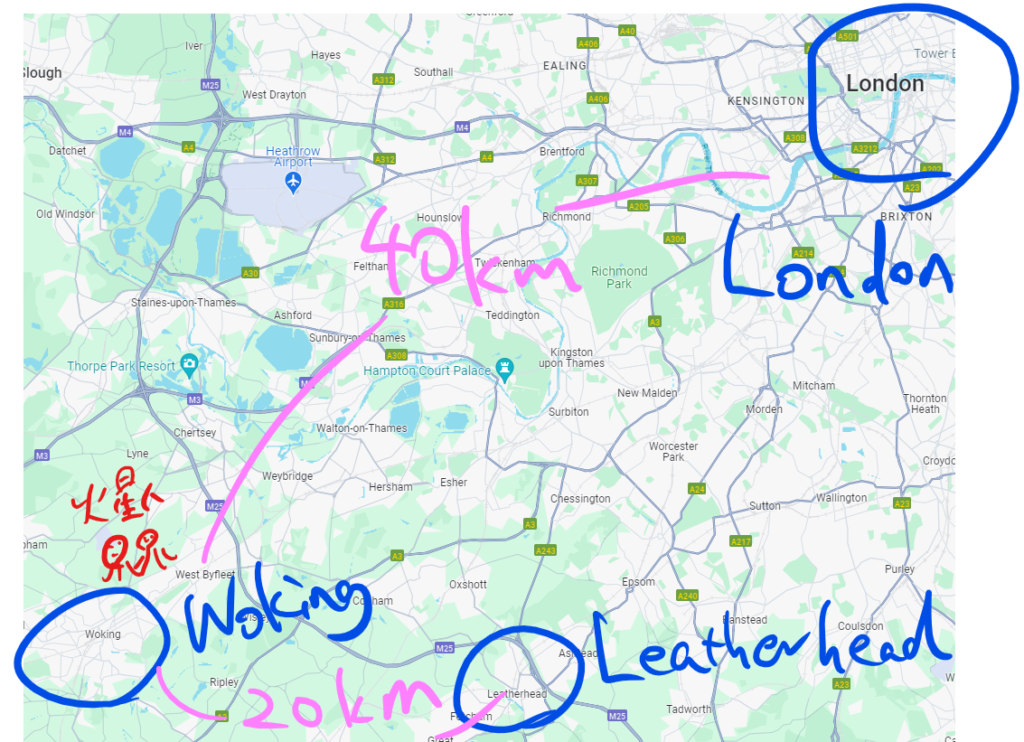
さて今回の地図はこちら。
目的地の「Leatherhead」はWokingから20km(道のり)離れたところ。
徒歩なら4.5時間はかかるわ。だからわたしは「どうやって行くのよ!」って言ったわけ。
解答編
<英文解釈記号ルール>
〔〕→関係詞句・節
【】→接続詞句・節
《》→挿入句・節
[ ] →名詞句・節
()→副詞句・節
〈〉→形容詞句・節
I and my wife stood amazed. Then I realised [that the crest* of Maybury Hill must be (within range of the Martians’ Heat-Ray) 【now that the college was cleared* out of the way】].
(At that*) I gripped my wife’s arm, and (without ceremony*) ran her out into the road. Then I fetched* out the servant*, (telling her I would go upstairs myself (for the box 〔she was clamouring for*〕)).
“We can’t possibly* stay here,” I said; and 【as I spoke】 the firing* reopened* (for a moment) (upon the common).
“But where are we to go?” said my wife (in terror*).
I thought perplexed*. Then I remembered her cousins at Leatherhead.
“Leatherhead!” I shouted above the sudden noise.
She looked (away from me) (downhill*). The people were coming out of their houses, astonished*.
“How are we to get to Leatherhead?” she said.
1. 青のnow that~の意味は「いまや~なので」。まとめて接続詞ですね。
2. 緑のandが繋いでいるものはgrippedとran。
3. 青アンダーラインについては、downhillが「ふもとの方へ」という意味だとわかってれば大丈夫。「from わたし to 丘の下」と視線が移動してるわけです。
全訳
わたしと妻は驚いた。そして、いまやオリエンタル・カレッジが崩されたのだから、メイベリー・ヒルの高いところは間違いなく火星人のレーザー光線の射程内だと気づいた。すぐに妻の腕をつかんで、前置きもなく道路に連れ出して走らせた。そして使用人を呼びだして、彼女がなくては困ると言った箱は自分が二階に上がって取ってきてやるからと言った。「絶対ここにはいられないんだ」と言っていると、ホーセル共有地でしばらくのあいだ射撃音がした。
「でもどこに行けばいいかしら?」と恐怖におののきながら妻は言った。
困惑しながらも考え、レザーヘッドにいる妻のいとこを思い出した。
「レザーヘッドだ!」と叫ぶと突然の爆音が重なった。
彼女はわたしから丘の下の方へと目を向けた。人々は家から驚きながら出てきていた。
「どうやってレザーヘッドまで行けばいいの?」と妻は言った。
そんな大事な箱(the box she was clamouring for)には宝石でも入ってるのかしら。
それなら、ダー様のとこにいるサーヴァント(servant)はアーチャーかな。
おいカタカナのままにするな意味が違うぞ。servantは「使用人」だ。
超金持ちじゃなくても、ヴィクトリア朝末期になってくると中流階級なら使用人一人くらいは雇えるようになってたんだな。
第9章 第14段落 (第123話)
いまは夕方6時だが、まだ太陽が出ているということは夏季だな。以前の段落でも「蒸し暑い」といった表現が出ていたが…
日没時間参考:https://sunrise.maplogs.com/ja/london_uk.140162.html
問題編
Down the hill I saw a bevy* of hussars* ride under the railway bridge; three galloped* through the open gates of the Oriental College; two others dismounted*, and began running from house to house. The sun, shining through the smoke that drove up* from the tops of the trees, seemed blood red, and threw an unfamiliar lurid* light upon everything.
bevy一団 hussar騎兵 gallopギャロップで走る(第84話) dismounted馬に乗っていない drive up立ち上る lurid派手な・ギラギラした
1. 赤のandが繋いでるものは?
2. 青アンダーラインの文型表示は?

地図はこちら。
解答編
<英文解釈記号ルール>
〔〕→関係詞句・節
【】→接続詞句・節
《》→挿入句・節
[ ] →名詞句・節
()→副詞句・節
〈〉→形容詞句・節
(Down the hill) I saw a bevy* of hussars* ride (under the railway bridge); three galloped* through the open gates of the Oriental College; two others dismounted*, and began running from house to house. The sun, 《shining (through the smoke 〔that drove up* (from the tops of the trees)〕)》, seemed blood red, and threw an unfamiliar lurid* light upon everything.
1. 赤のandが繋いでるものは、ちょっと迷うけど、wereとbegan。three gallopedとtwo dismountedは、それぞれwereが省略されてると考えていいのかなと思います。こんかい繋いでるのは、two others were dismounted and began running…という形で、two othersにつながるものです。なんか別案あったら教えてください。
2. 青アンダーラインの文型表示は、The sunが主語、seemedがV1でblood redがC、threwがV2、lightがO。
全訳
丘の下では、騎兵隊が鉄道橋の下を通って来た。3騎はギャロップでオリエンタル・カレッジの開いている門を通って行き、馬に乗っていない他の2人は、一軒一軒走りまわっていた。太陽は煙の向こうで輝き、煙は木から立ち上っていた。太陽は血のように赤く、見慣れないけばけばしい光をいたるところに投げかけていた。
「The sun…」の文章は長い。だから、切ろう。
The sun was shining through the smoke. Smoke drove up from the tops of the trees. The sun was seemed blood red. The sun threw an unfamiliar lurid light upon everything.
の4つの文章に分けられるな。
関係代名詞の制限用法も、非制限用法的に訳してよいときがあるからな。
第9章 第15段落 (第124話)

はじめまして!GuP西絹代です。「Spotted Dog」というパブの主人(landlord)の役です。小説原作では名前がついておりません。
担当国は日本ですが、会話編でも日本について話すことなんてほとんどない気もするんです。
ともあれ、精一杯頑張っていきます!
久しぶりに新しくメンバーが加入して嬉しい限り。
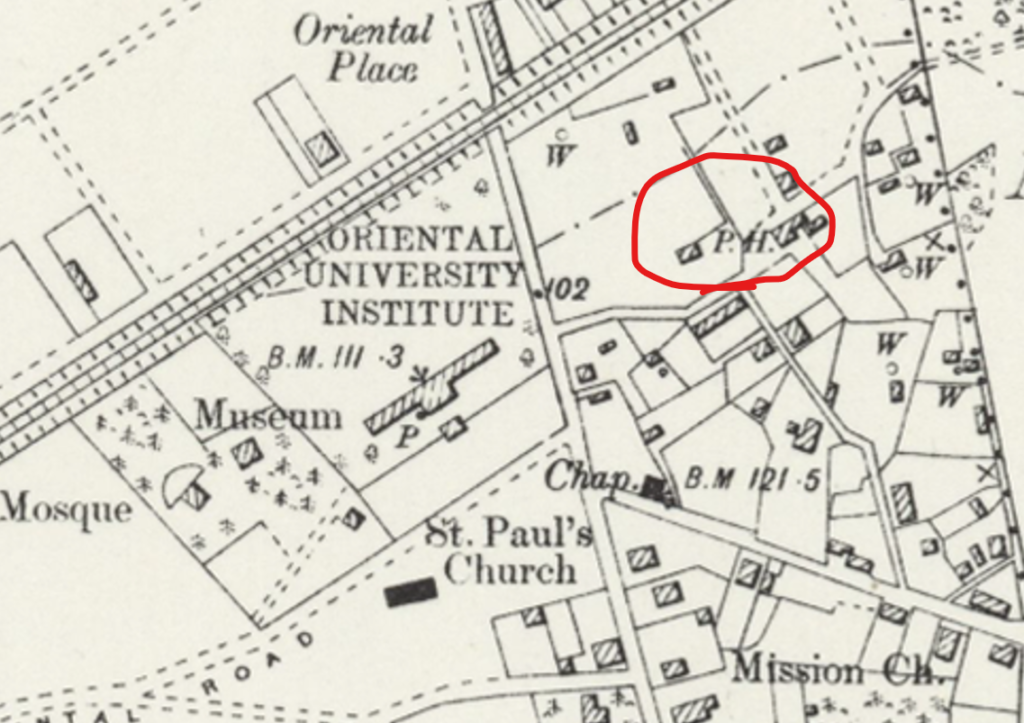
いまはわたし(語り手)とダー様(奥さん)が逃走中。「Spotted Dog」については以下の記事で特定されているぞ。これに関しては現実では「The Princess」っていう名前のパブだったみたいだ。https://wokinghistory.org/onewebmedia/Book%20WOTW%20Guide%202.pdf
OS社の地図には「P.H.」(Public House=パブ)として掲載されているな。
問題編
“Stop here,” said I; “you are safe here”; and I started off at once for the Spotted Dog, for I knew the landlord* had a horse and dog cart*. I ran, for I perceived* that in a moment everyone upon this side of the hill would be moving. I found him in his bar, quite unaware of what was going on behind his house. A man stood ( ) his back to me, talking to him.
“I must have a pound,” said the landlord, “and I’ve no one to drive it.”
“I’ll give you two,” said I, over the stranger’s* shoulder.
“What for?”
“And I’ll bring it back by midnight,” I said.
“Lord*!” said the landlord; “what’s the hurry? I’m selling my bit of a pig. Two pounds, and you bring it back? What’s going on now?”
landlord主人 dog cart馬車 perceiveとらえる・わかる stranger見知らぬ人 Lord!なんと!
1. 青のカッコの中に入る前置詞一語は?
2. 赤のWhat forを一語で言い換えると?
3. 茶色のitが指しているものは?
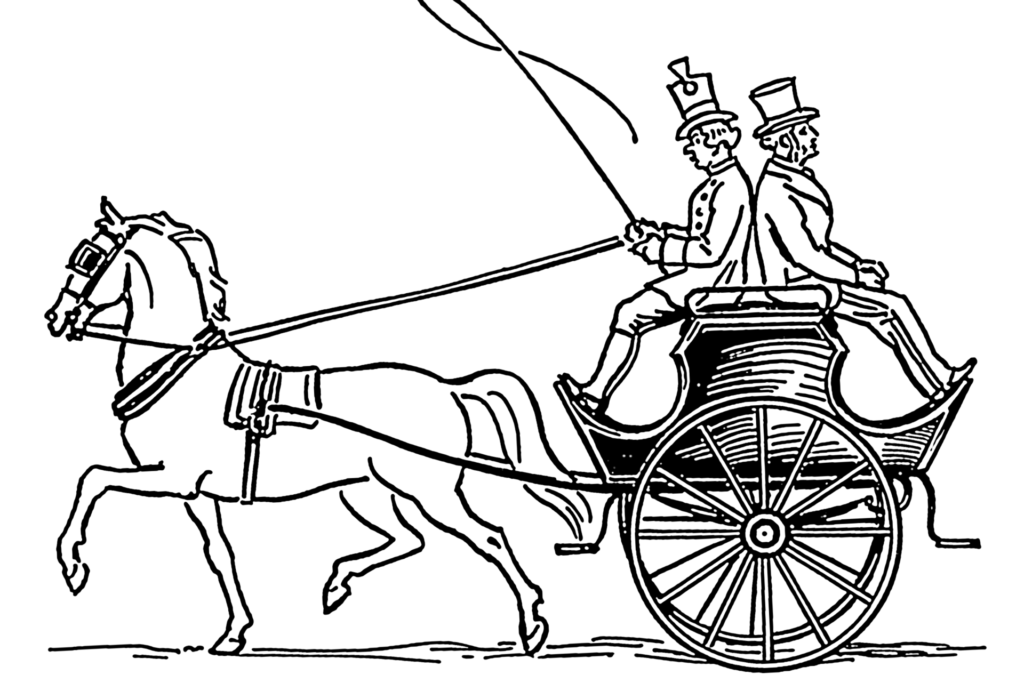
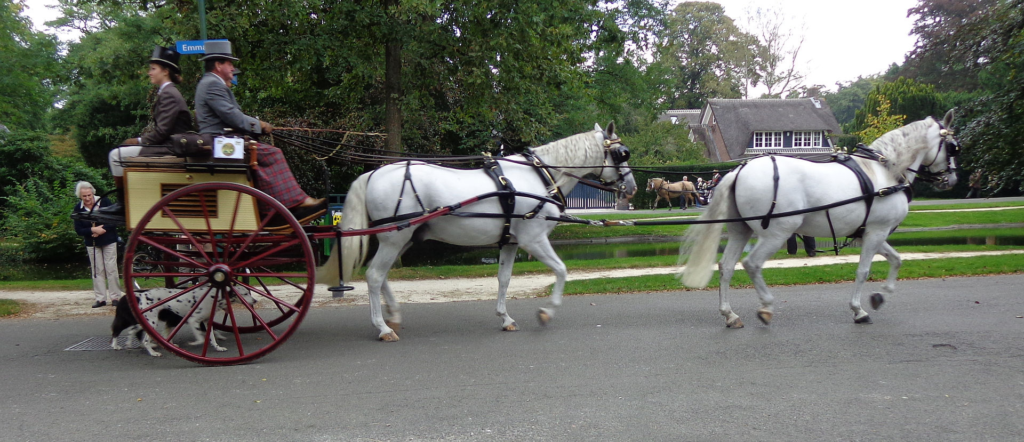
わたしが持っていた「dog cart」はこういうものです。1頭か2頭の馬で引く小さな二輪馬車。
2人乗りのものが多かったみたいです。
https://commons.wikimedia.org/w/index.php?curid=35359089
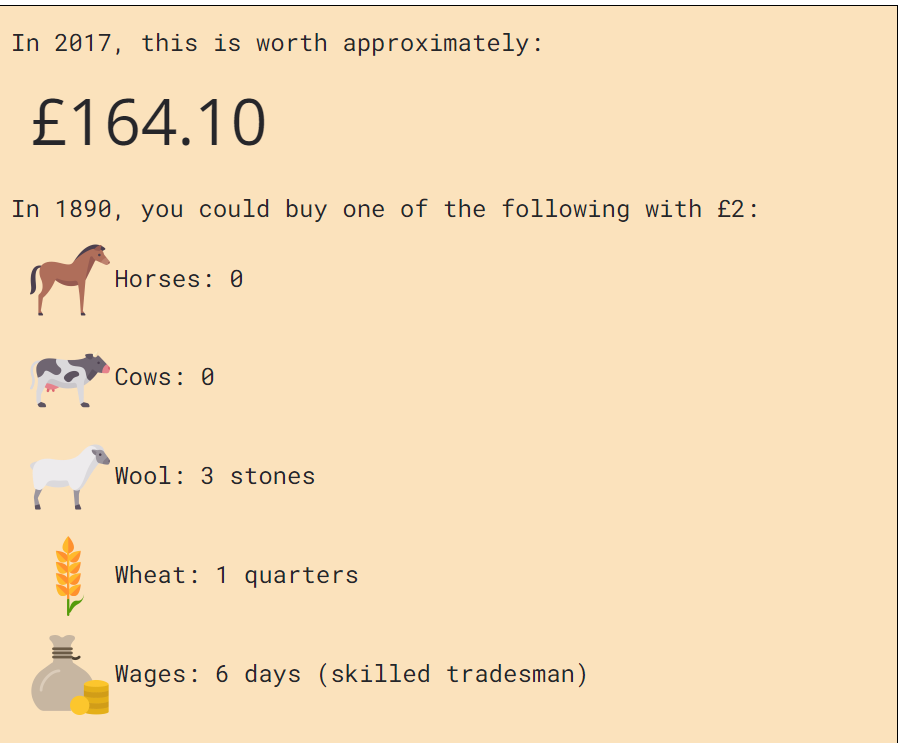
この馬車を借りた代金の「two pounds」は、2024/3のレートの「1ポンド≒200円」に変換するとおよそ400円になっちゃう。
6時間弱(お茶してたのが夕方6時で、返却するのがmidnight(深夜12時))のレンタル料にしても、あまりにも安すぎるわ。
当然、通貨価値は変わるということをおさえなければいけないわね。
イギリス政府が以下のリンクで貨幣価値変換ツールを提供してくれてるからこれを使いましょ。
https://www.nationalarchives.gov.uk/currency-converter/
結果は以下の画像。2017年の価値で164.10ポンドね。これは2017年の日本円(1ポンド≒145円)に直すと24000円程度。
レンタカーを借りる感覚だとちょっと高め。だから「What’s the hurry?」ってシルカちゃんは言ってるのよ。
解答編
<英文解釈記号ルール>
〔〕→関係詞句・節
【】→接続詞句・節
《》→挿入句・節
[ ] →名詞句・節
()→副詞句・節
〈〉→形容詞句・節
“Stop here,” said I; “you are safe here”; and I started off at once for the Spotted Dog, for I knew the landlord* had a horse and dog cart*. I ran, for I perceived that in a moment everyone upon this side of the hill would be moving. I found him in his bar, quite unaware of what was going on behind his house. A man stood with his back to me, talking to him.
“I must have a pound,” said the landlord, “and I’ve no one to drive it.”
“I’ll give you two,” said I, over the stranger’s* shoulder.
“What for?”
“And I’ll bring it back by midnight,” I said.
“Lord*!” said the landlord; “what’s the hurry? I’m selling my bit of a pig. Two pounds, and you bring it back? What’s going on now?”
1. 青のカッコの中に入る前置詞一語は、with。with O Cの付帯状況。
2. 赤のWhat forを一語で言い換えると、Whyですね。
3. 茶色のitが指しているものは、(dog) cartです。
全訳
「ここで止まろう」とわたしはいった。「もう安全だ」。そしてすぐにスポッテド・ドッグへ向かった。というのも、そこの主人(=絹代さん)が馬車を持っていると知っていたからだ。急いで走った。こちら側の丘のみんなもまもなく移動を開始するだろう、そう思っていたからだ。主人をスポッテド・ドッグで見つけたが、家の後ろで何が起きているのかは全く気付いていなかった。わたしに背中を向けて、主人と立ちながら話をしていた人がいた。
「1ポンドは必要です」と主人が言った。「そのうえ運転手はおりませんが」
「2ポンドでいいかな?」とその見知らぬ人の肩越しに言った。
「いったい何のためなんですか?」
「深夜までには戻るよ」とわたしは言った。
「なんと!」と主人。「どうしてそんなに急ぐのですか? いま豚肉を売ってるところなんです。2ポンドでしかも返してくれるですって? 何が起きてるんです?」
きっと逃げ出そうとする人がたくさんいるから、先を見越して、一刻も早く馬車を確保しなきゃいけなかったわけだな。だからそれなりに大金を渡してさっさと逃げようとしたわけだ。
それでもちゃんと馬車を返しに来るあたり、まほちゃん優しいな。
第9章 第16段落 (第125話)
1900年現在の「貴重品」もあんまり21世紀と変わらないんだけど、宝石や時計のほかに「銀食器」というのがあって、今回出てくるわ。
逃げるときに食器を持っていくなんて不思議な気がするけどね。スプーンとかだったのかな。
21世紀でたいていの「銀食器」は銀でできてないのにゃ。
問題編
I explained hastily* that I had to leave my home, and so secured* the dog cart. At the time it did not seem to me nearly so urgent* that the landlord* should leave his. I took care to* have the cart* there and then, drove it off down the road, and, leaving it in charge of* my wife and servant, rushed into my house and packed* a few valuables*, such plate* as we had, and so forth*. The beech* trees below the house were burning while I did this, and the palings* up the road glowed* red. While I was occupied* in this way, one of the dismounted* hussars* came running up. He was going from house to house, warning people to leave. He was going on as I came out of my front door, lugging* my treasures*, done up* in a tablecloth. I shouted after him:
“What news?”
hastily急いで secure確保する urgent緊急で landlord(パブの)主人 take care to V≒make sure to V cart(ここではさっきの)馬車 in charge of~の担当・管理・任せて packかばんに詰める valuable貴重品 plate銀食器 and so forthなど beechブナ paling柵 glow光る be occupied没頭する・かかりきりになる dismounted馬から降りた hussar騎兵 lug(重い物を)引きずる treasure貴重品 do up包む
1. 赤のandが繋いでるものは?
2. 青アンダーラインの訳は?
3. オレンジのhis(彼のもの)とは、彼女の何?
4. 青のandが繋いでるものは?
解答編
<英文解釈記号ルール>
〔〕→関係詞句・節
【】→接続詞句・節
《》→挿入句・節
[ ] →名詞句・節
()→副詞句・節
〈〉→形容詞句・節
I explained hastily* [that I had to leave my home], and so secured* the dog cart. (At the time) it did not seem (to me) 〈nearly so urgent*【that the landlord* should leave his】〉. I took care to* have the cart* there and then, drove it off down the road, and, (leaving it in charge of* my wife and servant), rushed (into my house) and packed* a few valuables*, such plate* as we had, and so forth*. The beech* trees below the house were burning 【while I did this】, and the palings* up the road glowed* red. 【While I was occupied* (in this way)】, one of the dismounted* hussars* came running up. He was going from house to house, warning people to leave. He was going on 【as I came out of my front door, (lugging* my treasures*, (done up* in a tablecloth))】. I shouted after him:
“What news?”
1. 赤のandが繋いでるものは、explained、securedです。
2. 青アンダーラインは、余計な部品を取っ払えば、it didn’t seem so urgent that…。これを、itーthatの構文と解するか、itを状況のitと見て、soーthatで処理するかは文脈によるとは思いますが、so urgent that…のつながりが強そうなので、soーthatの方で。否定のsoーthatなので、「~するほど」と訳しましょうか。
3. オレンジのhis(彼のもの)は、言い換えるとhis homeですね。leaveが使われているところは、一文目にleave my homeとありますからそこがヒント。
4. 青のandが繋いでるものは、took care, drove, rushed and packed。rushedとpackedは結びつきが強いのでandの手前にカンマが打ってないんだと思います。
全訳
わたしは家を出なければならないと急いで説明し、馬車を確保した。主人も家を出なければならないほど切羽詰まっているとはあまり思えなかったからだ。そこで確かに馬車を手に入れ、道を走らせた。妻と使用人に馬車を見てもらって、家に駆けこんで銀食器などの貴重品を詰め込んだ。その間、家の近くのブナの木は燃えていた。道路に面した柵は赤く輝いていた。この風景に心を奪われていると、馬から降りた騎兵の一人が走ってくるのが見えた。その兵は一軒一軒まわりながら、避難を促していた。わたしの家にきたのは、わたしが玄関から出るときだった。わたしは貴重品をテーブルクロスに包んで引きずって出て、兵に向かって叫んだ「なにか情報ありますか?」
第9章 第17段落 (第126話)
わたしが貴重品を自宅から持ち出して、ちょうどそのとき通りかかった騎兵隊の人に「知ってることありませんか?」と声をかけた場面だ。
問題編
He turned, stared, bawled* something about “crawling* out in a thing like a dish cover,” and ran on to the gate of the house at the crest*. A sudden whirl* of black smoke driving across the road hid him for a moment. I ran to my neighbour’s door and rapped* to satisfy* myself of what I already knew, that his wife had gone to London with him and had locked up* their house. I went in again, according to my promise, to get my servant’s* box, lugged* it out, clapped* it beside her on the tail of the dog cart, and then caught the reins* and jumped up into the driver’s seat beside my wife. In another moment we were clear ( ) the smoke and noise, and spanking* down the opposite slope of Maybury Hill towards Old Woking.
bawl叫ぶ crawl這う crest(丘の)頂上 whirl渦 rapコンコン叩く satisfy確信する lock up施錠する servant使用人 lug(重い物を)引きずる clap放り込む rein手綱 spank素早く動く(to move quickly, dashingly, or spiritedly)
1. オレンジのandが繋いでるものは?
2. 紫のthatがかかってる(繋がってる)語は?
3. ピンクのandが繋いでるものは?
4. 青のカッコ内に、「be clear ( )」で「~が晴れた」「~がなくなって」という意味になるように前置詞一語を入れると?
5. 茶色のandが繋いでるものは?
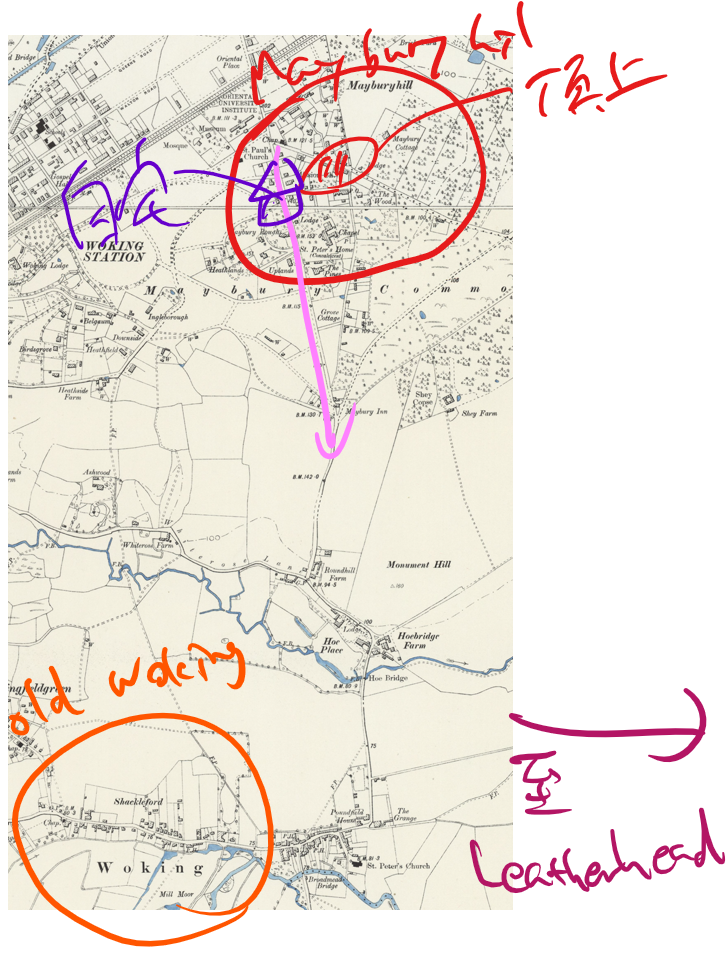
今回のMapだよ!
南東のLeatherheadに向かってるんだったね!
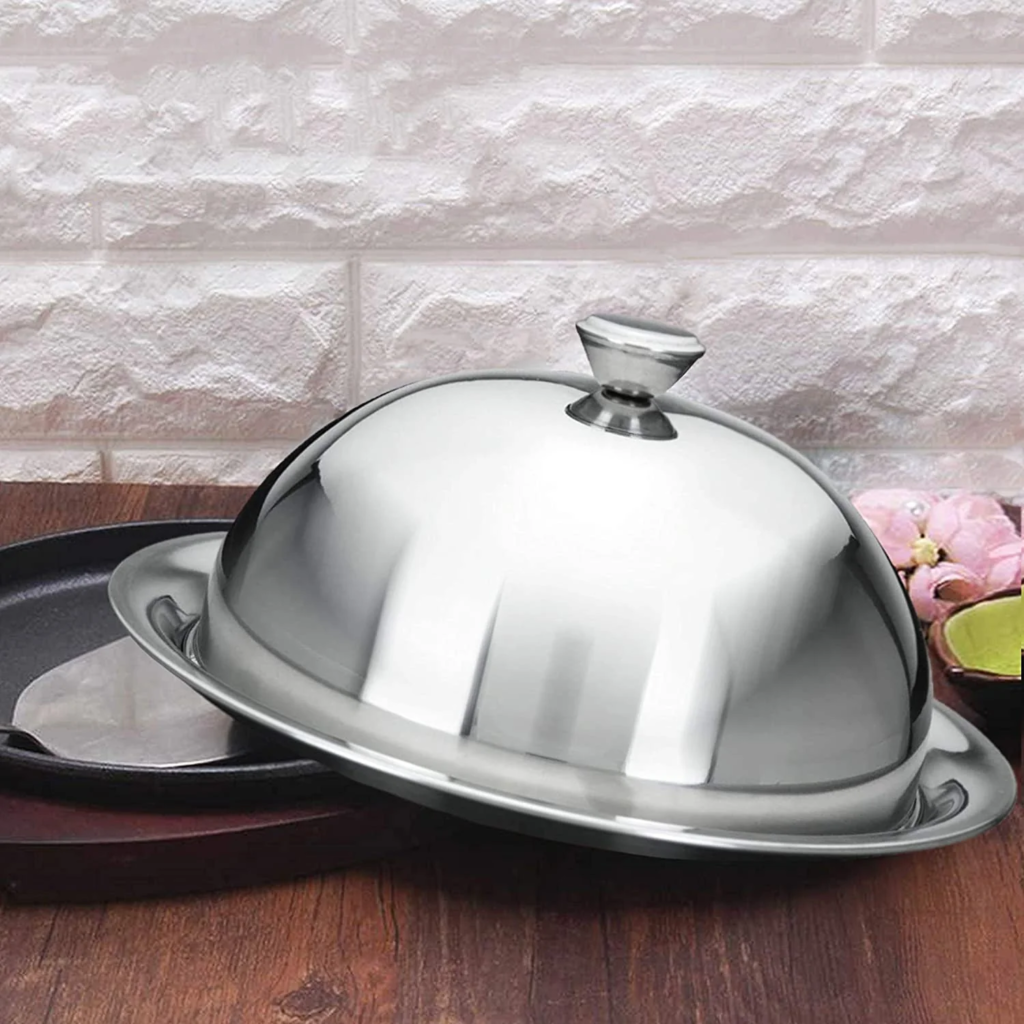
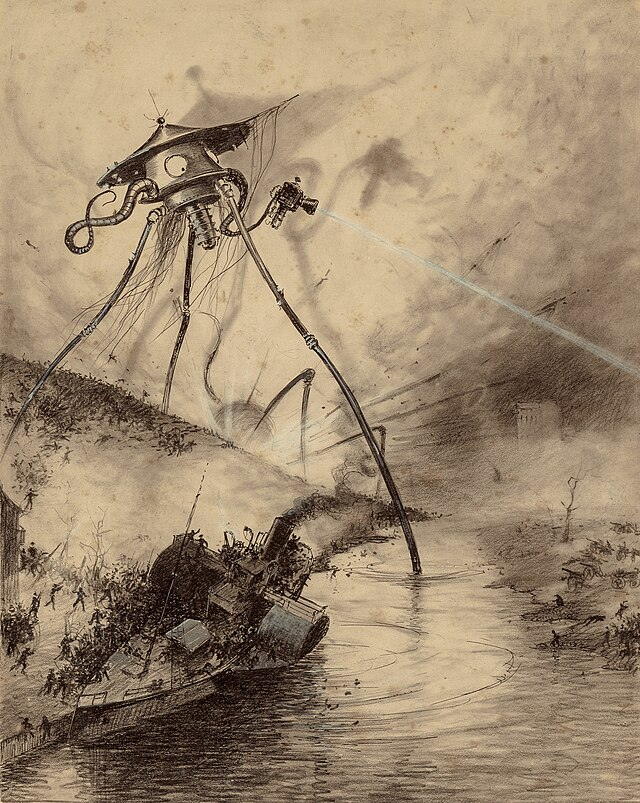
(Marians) crawling out in a thing like a dish cover のところ。
dish coverはお皿を覆う銀色の覆いのあれよ。
火星人の戦闘ロボットの頭部が、dish coverそっくりだったってことね。
解答編
<英文解釈記号ルール>
〔〕→関係詞句・節
【】→接続詞句・節
《》→挿入句・節
[ ] →名詞句・節
()→副詞句・節
〈〉→形容詞句・節
He turned, stared, bawled* something about “crawling* out (in a thing like a dish cover),” and ran on (to the gate of the house at the crest*). A sudden whirl* of black smoke 〈driving across the road〉 hid him (for a moment). I ran to my neighbour’s door and rapped* to satisfy* myself of [what I already knew], 【that his wife had gone (to London) (with him) and had locked up* their house】. I went in again, 《according to my promise》, to get my servant’s* box, lugged* it out, clapped* it (beside her) (on the tail of the dog cart), and (then) caught the reins* and jumped up (into the driver’s seat beside my wife). (In another moment) we were clear (of the smoke and noise), and spanking* (down the opposite slope of Maybury Hill) (towards Old Woking).
1. オレンジのandが繋いでるものは、turned, stared, bawled, ran。
2. 紫のthatがかかってる(繋がってる)語は、satisfyですね。「satisfy myself of/that~を確信している」 という使われ方をします。ちょっとマニアックすぎるかもだけど文脈上ここにしかかかりませんね。
3. ピンクのandが繋いでるものは、went in , lugged, clapped, caught and jumped でしょうかね。
4. 青のカッコ内に、「be clear ( )」で「~が晴れた」「~がなくなって」という意味になるように前置詞一語を入れると、of です。「ofはoff」という格言を思い出しましょう。分離のofってやつ。
5. 茶色のandが繋いでるものは、clearとspanking。
全訳
騎兵隊員は振り向いて、わたしを見ながら「皿のカバーみたいなやつに乗って出て来たぞ」というようなことを叫び、頂上の家の門へと走って行った。突然黒い煙が道に流れ込んできたので、その姿が少しの間見えなくなった。近所の家に走り、ドアを叩いた。既に知っていたことではあったが、その近所の人が奥さんと一緒にロンドンに行っていて施錠しているということを確かめたかったのだ。再び自宅に入り、約束通り使用人の箱を取ってきて引きずり出し、馬車の後部座席に座っている使用人の隣に放りこんだ。そして手綱を握り馬車に飛び乗り、妻の横の運転席に座った。次の瞬間煙と音がやみ、わたしたちは急いで発進した。メイベリー・ヒルの坂を越え、オールドウォーキングの方へ駆けていった。
今回の翻訳ポイント。
「spanking down the opposite slope of Maybury Hill」の「opposite slope」について「反対側の坂を下って行った」とするとどうも変だ。「opposite」とついているのは、今いるところから頂上を越えた向こう側の坂っていう意味だから、まとめて「メイベリーヒルを越えて」くらいでいいんじゃないか。
たしかににゃ。
あとこの段落から、このdog cart(馬車)が4人乗りくらいってことがわかるにゃ。
運転席にマホちゃん(語り手)、助手席にダー様(奥さん)、後ろに使用人さん、そして荷物があるからにゃ。
第9章 第18段落 (第127話)
問題編
In front was a quiet sunny landscape*, a wheat* field ahead on either side of the road, and the Maybury Inn with its swinging* sign*. I saw the doctor’s cart ahead of me. At the bottom of the hill I turned my head to look at the hillside I was leaving. Thick streamers* of black smoke shot with* threads* of red fire were driving up into the still air, and throwing dark shadows upon the green treetops eastward. The smoke already extended* far away to the east and west—to the Byfleet pine woods eastward, and to Woking on the west. The road was dotted with* people running towards us. And very faint now, but very distinct through the hot, quiet air, one heard the whirr* of a machine-gun that was presently stilled, and an intermittent* cracking* of rifles*. Apparently the Martians were setting fire to everything within range of their Heat-Ray.
landscape景色 wheat小麦 swing揺れる sign看板 streamer流れ shot with~混じりの thread一筋の extendのびる be dotted withたくさん散在している whirr機械のブーンという音 intermittent断続的な crackingバンという音 rifleライフル
1. オレンジのeitherの意味は?
2. 緑のandが繋いでるものは?
3. 赤アンダーラインの文型表示は?
4. 青アンダーラインの文型表示は?
5. 赤のandが繋いでるものは?
Maybury Innは1860年ごろからあって(参考)、21世紀も現存しているパブ。老舗が多すぎる…。ホームページもなかなかしっかりしてるぞ。
公式HP:https://www.themayburyinn.co.uk/#/
21世紀のストリートビューだとMaybury Innはこんな感じの建物です(看板は「The Inn at Maybury」となっています)。左側の道路を、手前側に向かって語り手たちは逃げてきたんですね。よく見たら確かに緩やかな坂になってます。
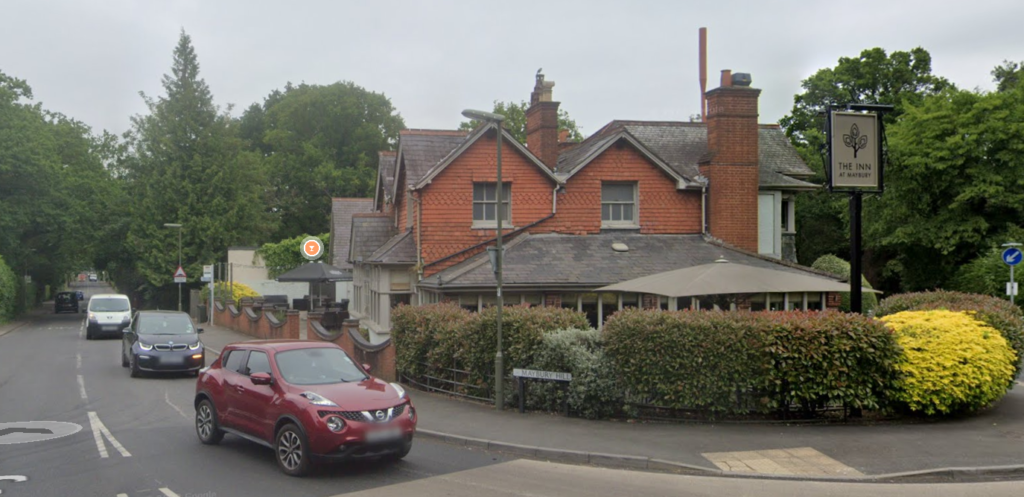
地図はこちら。
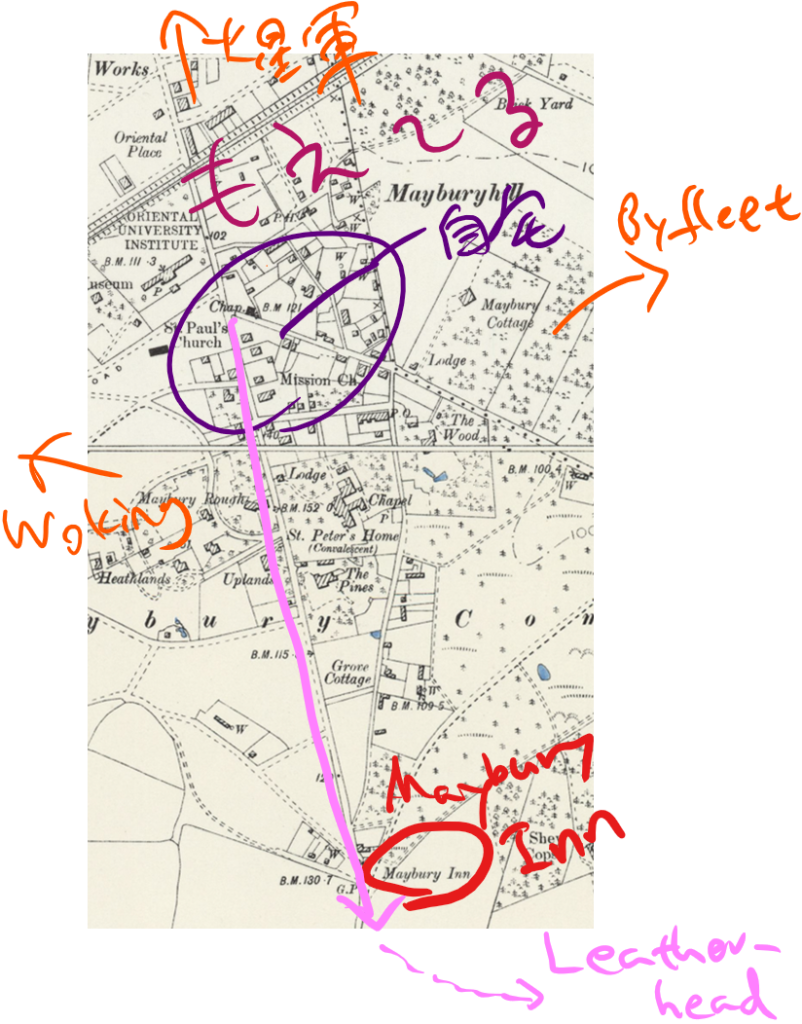
自宅を発ち、奥さんのいとこがいるLeatherhead(南東方面・そこそこ遠い)に向かってるところだったね。
「道の両側の小麦畑」「メイベリーインが見えた」という記述から、だいたいの場所がわかるわ。
解答編
<英文解釈記号ルール>
〔〕→関係詞句・節
【】→接続詞句・節
《》→挿入句・節
[ ] →名詞句・節
()→副詞句・節
〈〉→形容詞句・節
(In front) was a quiet sunny landscape*, a wheat* field (ahead on either side of the road), and the Maybury Inn (with its swinging* sign*). I saw the doctor’s cart (ahead of me). (At the bottom of the hill) I turned my head to look at the hillside 〔I was leaving〕. Thick streamers* of black smoke 〈shot with* threads* of red fire〉 were driving up (into the still air), and throwing dark shadows (upon the green treetops eastward). The smoke already extended* far away (to the east and west)—(to the Byfleet pine woods eastward), and (to Woking on the west). The road was dotted with* people 〈running towards us〉. And (very faint now), but (very distinct through the hot, quiet air), one heard the whirr* of a machine-gun 〔that was presently stilled〕, and an intermittent* cracking* of rifles*. Apparently the Martians were setting fire to everything within range of their Heat-Ray.
very faintとかは分詞構文。
1. オレンジのeitherの意味は「両側」。bothと同じ意味ですね。either side や either handなど、「どちらか1つ」ではなく「どちらも」という意味になることがあります。
2. 緑のandが繋いでるものは、a quiet sunny landscape, a wheat field, the Maybury Inn. かな。訳すときには、In front was a quiet sunny landscape. a wheat field was ahead on either side of the road. The Maybury Inn’s sign was swinging. として訳すんでしょうかね。
3. 赤アンダーラインの文型表示は、thick streamers of black smokeがS、were driving upがV1、throwingがV2。shot withは過去分詞。
4. 青アンダーラインの文型表示は、oneがS、heardがV、whirrがO1、crackingがO2。ここのoneはyouやweと同じで、不特定の人を表すいわゆる「総称用法」です(辞書的な意味としては「人」)。だから訳に反映させてはいけません。
5. 赤のandが繋いでるものは、whirrとcracking。O1とO2。
全訳
目の前には太陽があたって穏やかな景色が広がっていた。小麦畑が道の前方両側にあり、メイベリー・インの看板は揺れていた。前方に医者の馬車が見えた。丘を下ったところで、振り返って、離れていく丘の斜面に目をやった。濃く真っ黒な煙が何条も、静かな空に上っていて、その中にときおり赤い炎が混じっていた。その煙は東の方の緑のこずえに暗い影を投げかけていた。そして、既に東西に遠く広がっていた。東はバイフリートの松林まで、西はウォーキングまで。三々五々こちらの方へ人々が走ってきていた。もう非常にあいまいになっていたが、暑く静かな空気をつたってはっきりと聞こえる音があった。機関銃がうなる音と、断続的にライフルを射撃する音だった。機関銃の音はまもなく静かになった。どうやら火星人はレーザー光線の射程範囲に入るものをすべて攻撃しているようだった。
英語で複数形になってるものを、必ずしも日本語訳で複数形にしなきゃいけないわけじゃないからな。
「streamers of black smoke shot with threads of red fire were driven up」のところは、煙のところは「何条も上がっている」と訳していいと思う。でも、shot with threads of red fireのところまで「何筋もの赤い炎が混ざっている」とはしなくてよさそうだ。
「黒い煙が何条も上がっていて、赤い炎がときおり混じって見えた」くらいにしておこうか(threads of を「ときどき」で補う感じだ)。
第9章 第19段落 (第128話)
「driver」は馬車のドライバーだから古い言葉で言うところの「御者」だ。たぶんこっちの方がいいのかな。ただ、この世界線では21世紀っぽく「運転手」にしておく。Heat-Rayを熱線じゃなくてレーザー光線って書いてることもあるけど、なるべく臨場感を持ちたいからな。
あとこの段落に出てくる「馬に鞭をうって手綱を緩めた」っていう描写について少し言及しとくにゃ。
まず「鞭をうつ」のは指示をするためにゃ。競馬でも使われてるのを見るにゃ。
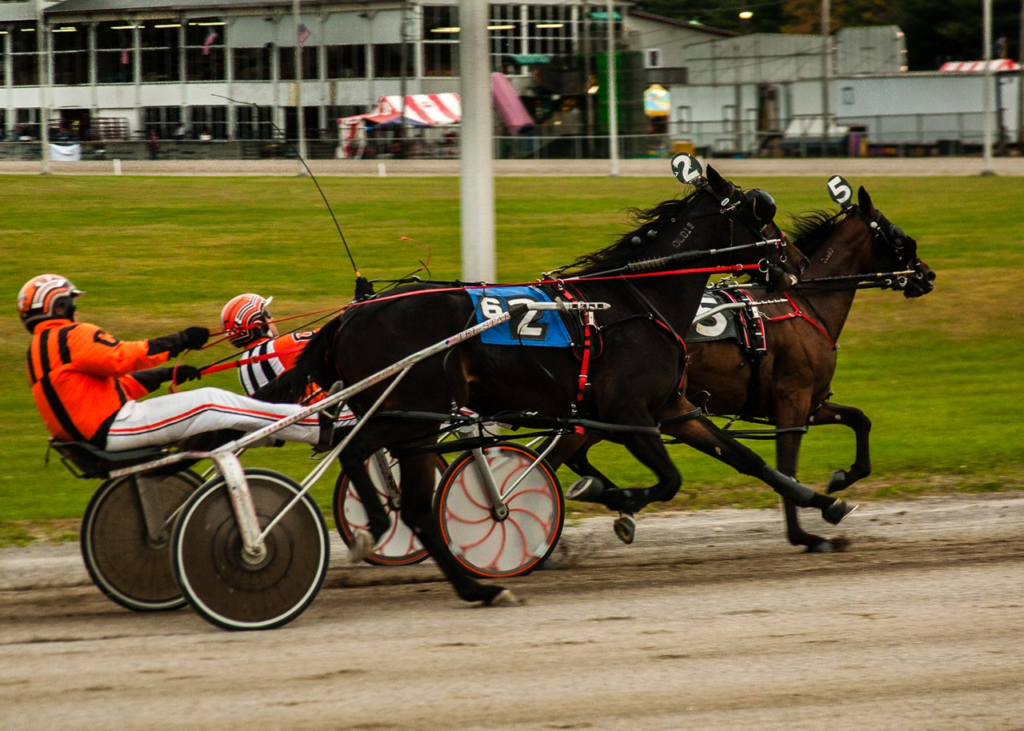
つぎに「手綱を緩める」だけど、馬に指示を与えない、つまり馬の自由にさせてやるってことにゃ。馬が自分のペースで走れる代わり、運転手はコントロールできないから、野原や一本道とか指示がなくても馬が混乱しないところで使われるらしいにゃ。
ということで、ここで手綱を緩めるってことは、方向転換せず一直線で逃げているってことを表していると見ていいにゃ。
詳しくは以下のYouTubeを参照にゃ。
ということで、「馬に鞭をうって、手綱を緩めた」っていうのは、21世紀的に言うと、高速道路で自動運転のスイッチを入れて、ハンドルから手を離したってことにゃ。
問題編
I am not an expert* driver*, and I had immediately to turn my attention to the horse. When I looked back again the second hill had hidden the black smoke. I slashed* the horse with the whip*, and gave him a loose* rein* until Woking and Send lay between us and that quivering* tumult*. I overtook* and passed the doctor between Woking and Send.
expert専門の driver御者 slash打つ whipムチ loose緩い rein手綱 quiver震える・揺れるような tumult騒ぎ overtake追い越す
1. 青のandが繋いでるものは?
2. 緑のhimが指しているものは?
3. 紫のandが繋いでるものは?
4. 青アンダーラインの部分はどういうこと?
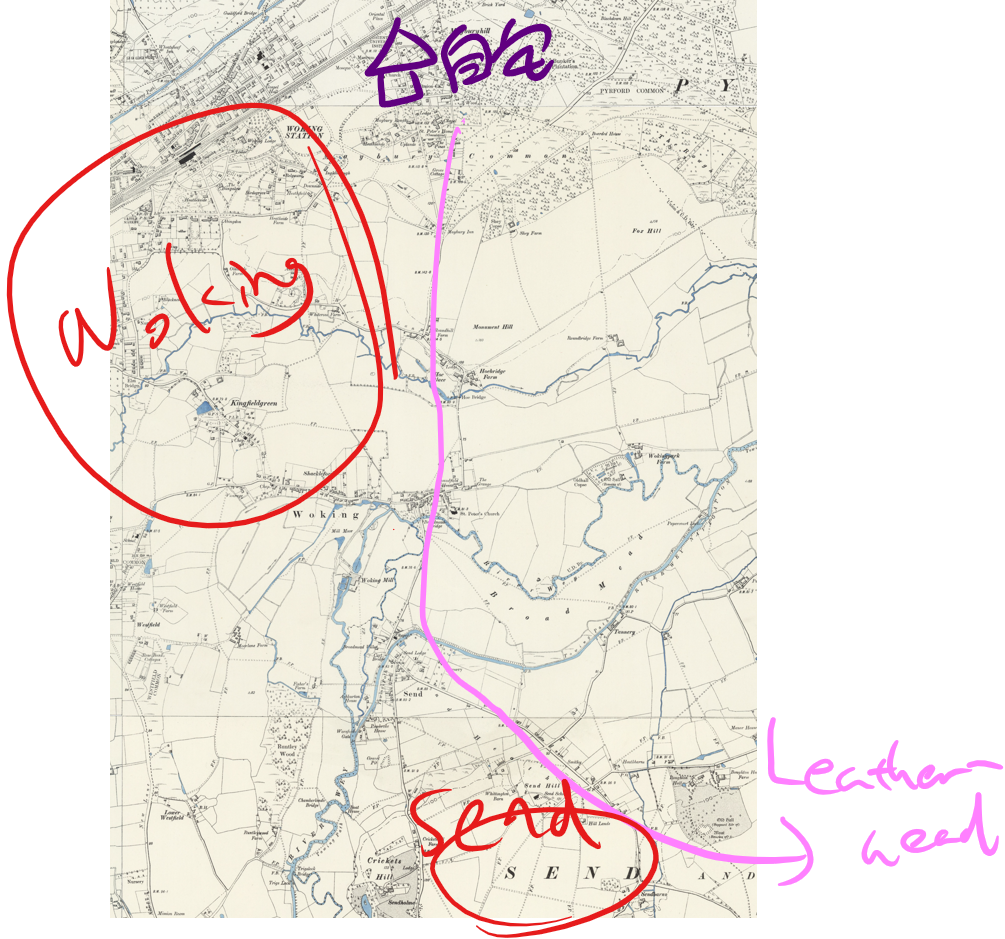
地図です。
この段落の中の「second hill」について。
逃走経路(ピンクのペン)に沿ったところにある、標高を示す記号を書きぬいてみたわ。
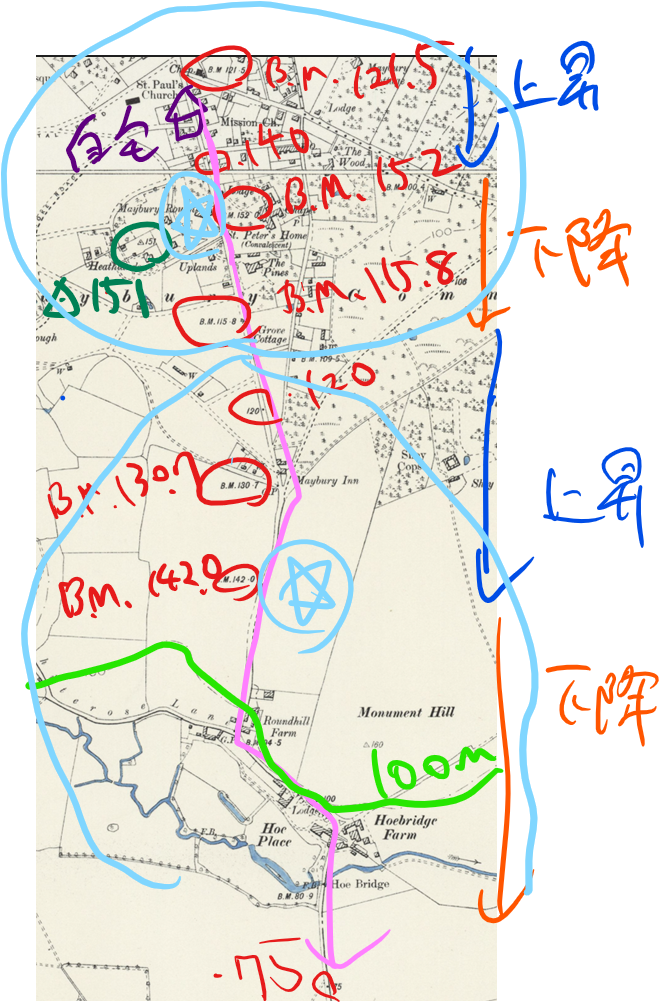
まず、「B.M. 121.5」と書いている「B.M.」は「benchmark」の略。
ベンチマークといったら、パソコンの性能指標のあたりを思い浮かべる人もいると思うけど、「水準点」という意味があるの。
水準点は標高の基準とする点。イギリスでは、目印として以下のような切込みを道路に入れていたこともあったみたいよ。
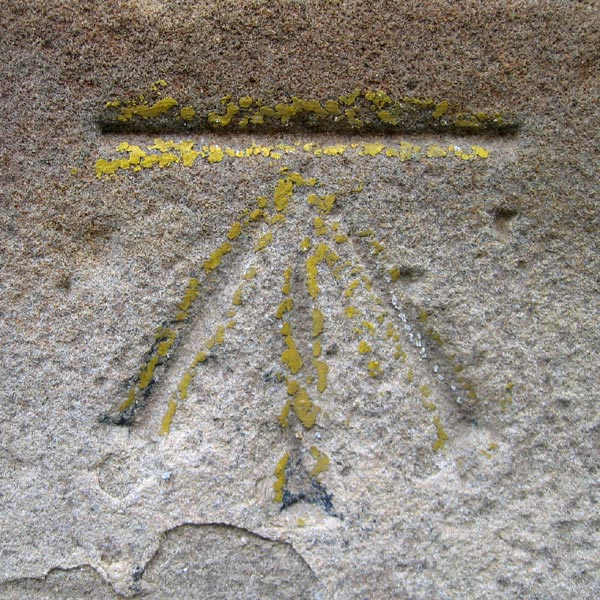
CC BY-SA 2.5, https://commons.wikimedia.org/w/index.php?curid=493066
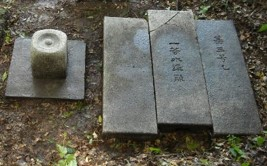
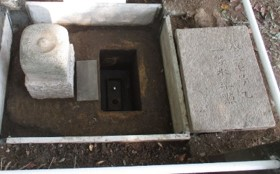
21世紀の日本では以下の写真のような感じで設置され、地図記号は「⊡」(四角の中に点)だね。くわしくは画像元の国交省のページを見てくださいな。
https://www.gsi.go.jp/sokuchikijun/suijun-bm.html
単に「・140」とかと書いてるのは標高点。(地図記号はただの点。21世紀の日本でも同じ)
地図を作るときに測量した点よ。地図を読むときにわかりやすいように、水準点をもとに測量した標高を書いてるってかんじかしら(補助線みたいな感じ)。
だから「140」「120」とかキリがいい値になるのよね。
最後に「△151」(三角の中に点+数字)(上の地図では左上の方、深緑色ペン)は、「三角点」。こちらは標高というよりは位置を測量する(三角測量)ための目印で、見通しのいい山頂などに設置されるわ。
だから逆に言えば、上の地図で三角点があるところが丘の頂上ってことがわかるね。
ともあれ、記号の意味がわかったところで改めて数字を追っていくと、確かに上昇→下降が2セット繰り返されてる。だから丘が2つある(second hill)ってことがわかるよ。
1個目の丘(Maybury Hill)の頂上は三角点のところ(△151)で、2個目の丘(Monument Hill)の頂上はB.M.142.0のところかな。上地図では水色の星マークをつけてあるわ。
解答編
<英文解釈記号ルール>
〔〕→関係詞句・節
【】→接続詞句・節
《》→挿入句・節
[ ] →名詞句・節
()→副詞句・節
〈〉→形容詞句・節
I am not an expert* driver*, and I had (immediately) to turn my attention to the horse. 【When I looked back again】 the second hill had hidden the black smoke. I slashed* the horse (with the whip)*, and gave him a loose* rein* 【until Woking and Send lay (between us and that quivering* tumult*)】. I overtook* and passed the doctor (between Woking and Send).
1. 青のandが繋いでるものは、slashedとgave。
2. 緑のhimが指しているものは、the horse。まあ、この改作では登場人物が全員女の子になってるから、himであらわされるのはこれしかないし。
3. 紫のandが繋いでるものは、usとthat quivering tumult。
4. 青アンダーラインの部分は、「わたしたち」と「騒動(≒避難を始めたところ。自宅)」の間に「WokingとSend」があるということだから、わたしたちは既にWokingとSendを通り過ぎているということ。
全訳
前段落では、馬車を運転しながら振り返って、背後に立ち上る煙や炎を見てたんだったな。その続きからだ。
わたしはプロの運転手ではないので、すぐに馬の操作に集中を戻さなければならなかった。ふたたび後ろを振り返ると、2番目の丘は既に黒い煙で覆われていた。馬にむちをうち、ウォーキングとセンドを過ぎて騒動から十分離れるまで、手綱を緩めて一直線に逃げた。ウォーキングとセンドの間で医者の馬車を追い越した。
ということで、無事Wokingを脱出したところで第9章も終わり!
いよいよ次から第10章。物語が展開していくよ!








コメント